USA Furniture Industry 2026: Demand Powerhouse Driven by Retail, Housing & Consumer Cycles
By The Furniture Times | Global Industry Intelligence Desk | May 2026
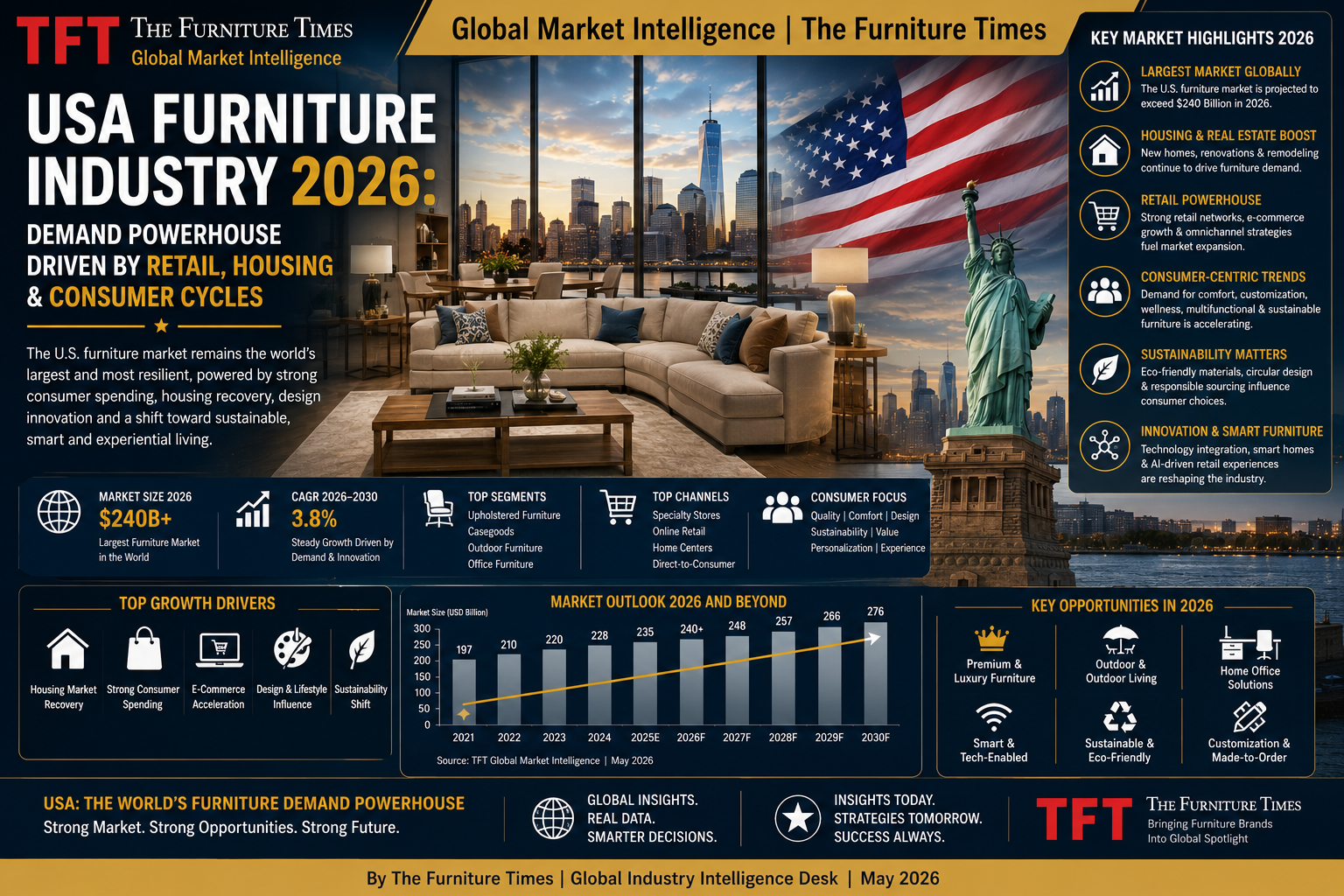
Introduction: The World’s Largest Demand Engine
United States is not just a furniture market.
It is the single most important demand engine in the global furniture ecosystem.
What happens in the U.S. directly impacts:
Global manufacturing
Export markets
Pricing trends
Supply chains
The Big Narrative: Demand Defines the Market
Unlike manufacturing-driven economies, the U.S. is powered by:
Consumption, retail systems, and housing cycles
Core Identity
High consumer demand
Strong retail infrastructure
Housing-driven purchasing
Import-heavy supply
The U.S. does not just buy furniture—it drives global demand patterns
1. Demand Drivers: Why the U.S. Leads
1. Housing Market
Furniture demand is closely tied to:
New home construction
Home sales
Renovation activity
When housing grows → furniture demand rises
When housing slows → demand declines
Housing is the heartbeat of the U.S. furniture market
2. Consumer Spending
The U.S. has:
High purchasing power
Credit-driven consumption
Strong lifestyle spending
Furniture is a key category in:
Home upgrades
Lifestyle improvements
3. Retail Ecosystem
Organized Retail Power
Large retail chains
Online marketplaces
Omni-channel distribution
E-commerce Growth
Online furniture buying increasing
Faster decision cycles
Wider product access
Retail defines how furniture reaches the consumer
2. Market Structure
Import-Driven Supply
The U.S. imports furniture from:
China
Vietnam
Malaysia
Mexico
India
Domestic manufacturing exists but is limited compared to demand
Segmentation
Mass Market
High volume
Price-driven
Mid-Market
Balanced quality and cost
Premium Segment
Design-focused
Brand-driven
Project Segment
Hospitality
Offices
Real estate developments
The U.S. market is diverse and segmented across all price points
3. The Opportunity: Scale Like No Other
Why the U.S. Matters
Largest consumer base for furniture
High-value transactions
Continuous demand cycle
If you win the U.S., you scale globally
For Global Manufacturers
Access to massive demand
Long-term growth potential
Brand-building opportunity
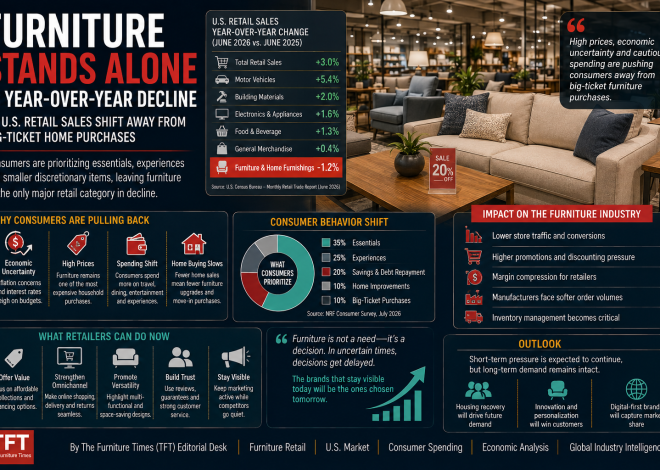
4. The Challenge: Volatility & Pressure
Key Risks
1. Housing Slowdowns
Reduced demand during downturns
2. Tariffs & Trade Policies
Increased cost of imports
Supply chain adjustments
3. Competition
Price pressure
Multiple sourcing options
The U.S. market is powerful—but sensitive to economic cycles
5. The Visibility War in the U.S.
The U.S. is at the center of the global visibility battle.
Buyers Behavior
Search-first
Comparison-driven
Speed-focused
Market Reality
Thousands of suppliers competing
Only the most visible get attention
The U.S. is where visibility determines success
6. TFT Deep Analysis: The U.S. Is Leading the Search Economy
The U.S. market is ahead in:
Phase 1: Retail Economy
Store-driven sales
Phase 2: E-commerce Economy
Online platforms
Phase 3: Search Economy (NOW)
Discovery, speed, and data-driven decisions dominate
7. Role of FISE in the U.S.
The Furniture Industry Search Engine (FISE) can:
For Buyers
Discover global suppliers instantly
Compare across countries
Optimize sourcing
For Suppliers
Enter U.S. market digitally
Gain visibility
Compete globally
For the Ecosystem
Reduce sourcing friction
Improve transparency
Accelerate trade
The Power Statement
From demand → to discovery → to decision
8. Strategic Recommendations
For Global Manufacturers
Target U.S. demand strategically
Ensure compliance and quality
Build strong distribution channels
For Retailers
Diversify sourcing
Optimize pricing
Adapt to consumer behavior
For Buyers
Use structured sourcing
Expand supplier base
Move faster in decision-making
9. Key Takeaways
1. The U.S. Is the Largest Demand Market
2. Housing Drives Furniture Sales
3. Retail Ecosystem Is Highly Developed
4. Market Is Volatile but High Opportunity
5. Visibility Is Critical for Success
Conclusion: The Market That Moves the World
The United States does not just participate in the furniture industry.
It drives it.
Final Thought
The global furniture ecosystem follows demand.
And demand follows the U.S. market.
If you want to scale globally, you must understand—and win—the U.S. market.