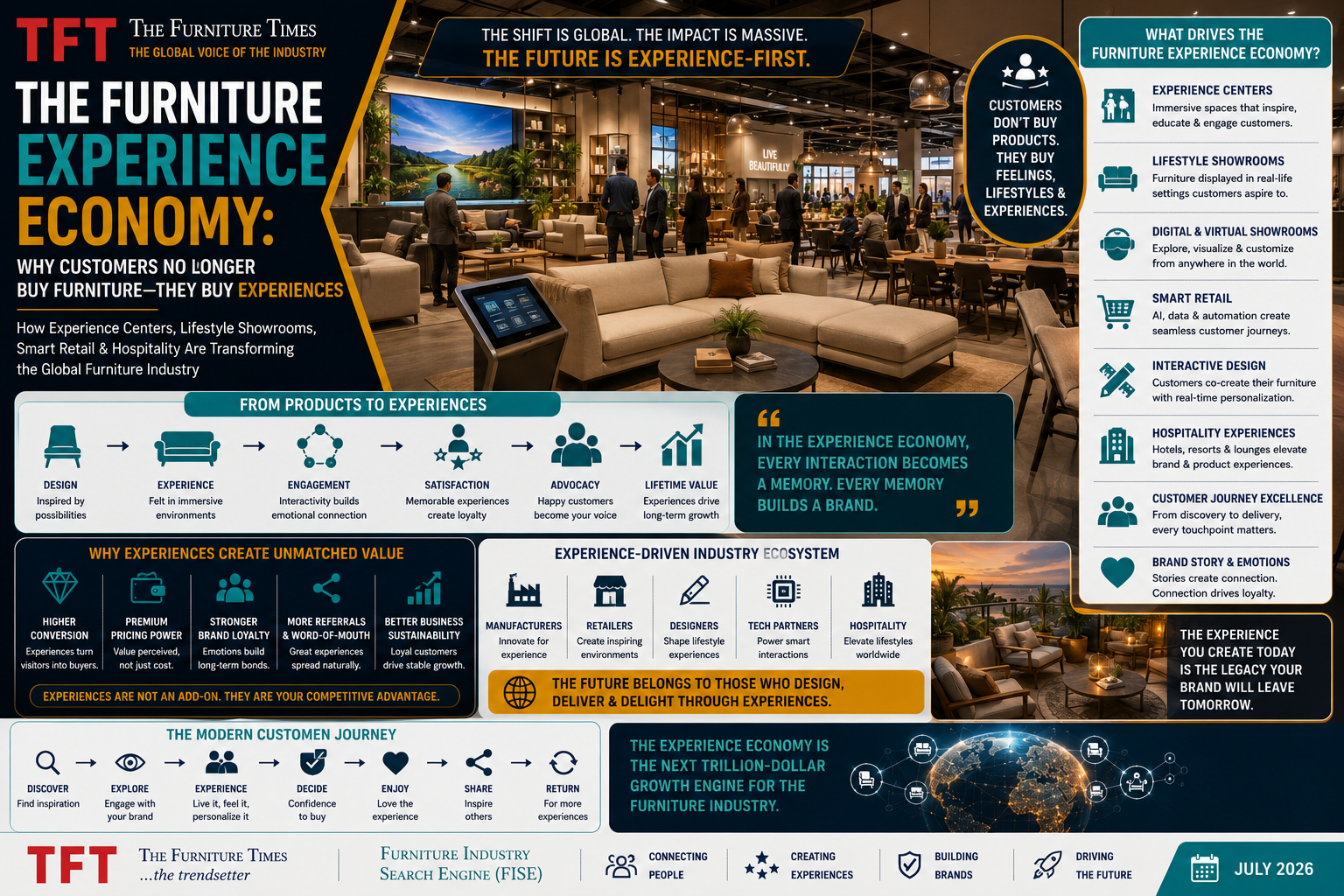
The Furniture Experience Economy: Why Customers No Longer Buy Furniture—They Buy Experiences
How Experience Centers, Lifestyle Showrooms, Smart Retail & Hospitality Are Transforming the Global Furniture Industry
Consumer Experience Intelligence Desk
By The Furniture Times (TFT) & Furniture Industry Search Engine (FISE)
July 2026
There was a time when furniture buying was simple.
Customers walked into a showroom.
Looked at a sofa.
Compared prices.
Checked the material.
Negotiated.
Purchased.
Waited for delivery.
That era is disappearing.
Today’s customers no longer buy furniture the way previous generations did.
They buy inspiration.
Lifestyle.
Comfort.
Identity.
Trust.
Convenience.
Digital experiences.
Personalisation.
They no longer ask only:
“How much does this sofa cost?”
They ask:
“How will this furniture improve my life?”
This is the beginning of what The Furniture Times (TFT) calls the Furniture Experience Economy.
The global furniture industry is no longer competing only through manufacturing excellence.
It is competing through emotional experiences.
Companies that understand this transformation will build stronger brands, higher customer loyalty and greater long-term profitability.
Those that continue selling only products will increasingly struggle.
The future belongs to experience-driven furniture businesses.
Customers No Longer Buy Products
People rarely purchase furniture because they simply need another chair.
They buy because they want:
A beautiful home.
A healthier lifestyle.
A productive office.
A memorable restaurant.
A welcoming hotel.
A luxury outdoor living space.
A better family experience.
Furniture has become part of personal identity.
People purchase emotions.
Not only products.
Welcome to the Furniture Experience Economy
The Furniture Experience Economy combines:
Retail.
Interior design.
Technology.
Hospitality.
Entertainment.
Digital innovation.
Lifestyle branding.
Customer service.
Furniture becomes the centre of an entire experience rather than a standalone product.
Every interaction matters.
Before the sale.
During the sale.
After the sale.
Experience Centres Replace Traditional Showrooms
Traditional showrooms displayed products.
Experience Centres demonstrate lifestyles.
Instead of rows of furniture…
Customers walk into:
Complete living rooms.
Luxury apartments.
Hotel suites.
Outdoor resorts.
Modern kitchens.
Home offices.
Restaurant concepts.
Wellness spaces.
Customers experience furniture exactly as it would appear in real life.
They imagine themselves living inside the experience.
Experience sells better than explanation.
Lifestyle Showrooms Create Emotional Connections
Modern furniture retailers are becoming lifestyle brands.
Lifestyle showrooms combine:
Furniture.
Lighting.
Art.
Decor.
Plants.
Music.
Coffee.
Technology.
Hospitality.
Customers spend more time exploring.
Longer visits often result in stronger purchasing decisions.
People remember how a place made them feel.
Digital Showrooms Never Close
Today’s customers often begin shopping online.
Digital showrooms allow visitors to:
Browse products.
Explore room concepts.
View 360-degree environments.
Use Augmented Reality (AR).
Visualise furniture inside their homes.
Compare colours.
Customize finishes.
Request consultations.
Furniture retail becomes available 24 hours a day.
Digital experiences increase customer confidence before they enter a physical showroom.
Smart Retail Is Transforming Furniture Stores
Future furniture stores will integrate:
Artificial Intelligence.
Interactive screens.
Digital pricing.
Voice assistants.
Product comparison tools.
Virtual room planners.
Self-service design stations.
Personalised recommendations.
Smart retail improves decision-making.
Technology enhances—not replaces—the human experience.
Interactive Design Engages Customers
Customers increasingly want participation.
Instead of selecting standard products, they expect:
Fabric choices.
Material options.
Colour combinations.
Size adjustments.
Configuration flexibility.
Digital room planning.
Furniture customisation.
Interactive design transforms customers into co-creators.
Participation increases emotional attachment.
The Customer Journey Has Become More Important Than the Product
Successful furniture companies map every customer interaction.
The journey begins with:
Online search.
Social media.
Reviews.
Website experience.
Showroom visit.
Consultation.
Purchase.
Delivery.
Installation.
After-sales support.
Maintenance.
Referrals.
Every stage influences customer satisfaction.
One weak experience can affect the entire relationship.
Brand Loyalty Is Built Through Experiences
Price attracts customers.
Experience keeps them.
Brand loyalty develops when customers receive:
Professional consultation.
Friendly service.
Reliable delivery.
Excellent installation.
Fast warranty support.
Helpful follow-up.
Personalised communication.
Satisfied customers return.
They recommend.
They review.
They become ambassadors.
Loyalty becomes one of the company’s most valuable assets.
Hospitality Is Changing Furniture Retail
Some of the world’s most successful furniture retailers now incorporate hospitality.
Examples include:
Coffee lounges.
Business meeting areas.
Children’s play zones.
Interior consultation rooms.
Workspaces.
Lifestyle events.
Community workshops.
Customers no longer visit simply to shop.
They visit to spend time.
Retail becomes hospitality.
Hospitality becomes marketing.
Furniture Business Tourism Builds Experience
Furniture Business Tourism extends the Experience Economy beyond consumers.
International buyers visiting factories expect:
Professional hospitality.
Factory tours.
Innovation centres.
Design galleries.
Meeting lounges.
Demonstration rooms.
Business networking.
The buyer experience becomes part of international trade.
Countries that provide memorable business experiences strengthen long-term export relationships.
Hotels Become Living Furniture Showrooms
Hotels increasingly influence purchasing decisions.
Guests experience:
Beds.
Sofas.
Dining furniture.
Outdoor furniture.
Lighting.
Decor.
Workstations.
Hospitality spaces become real-world furniture showrooms.
Manufacturers gain exposure through experience rather than advertising.
Artificial Intelligence Personalises Every Experience
AI will soon personalise:
Product recommendations.
Room layouts.
Shopping preferences.
Colour suggestions.
Budget planning.
Maintenance reminders.
Warranty services.
Customer support.
Artificial Intelligence creates experiences unique to every customer.
Sustainability Becomes Part of the Experience
Customers increasingly value:
Sustainable materials.
Certified timber.
Recyclable products.
Ethical manufacturing.
Carbon-conscious production.
Transparency.
Sustainability strengthens emotional connection.
People want furniture that reflects their values.
SMEs Can Compete Through Experiences
Experience is not reserved for global brands.
Small businesses can compete by offering:
Personal consultations.
Factory visits.
Custom furniture.
Lifestyle expertise.
Exceptional service.
Community engagement.
Authenticity often becomes the greatest competitive advantage.
Furniture Industry Search Engine (FISE): Discovering Experiences
Future customers will search for more than products.
They will search for:
Furniture Experience Centres.
Lifestyle showrooms.
Interior designers.
Hospitality furniture.
Furniture consultants.
Factory tours.
Smart retailers.
Furniture Industry Search Engine (FISE) can become the platform connecting customers with complete furniture experiences rather than simply product listings.
Why The Furniture Times Created This Vision
According to Togbega Dortor Dr. Bilal Ahmad Bhat, Founder of The Furniture Times (TFT) and Furniture Industry Search Engine (FISE):
“The furniture industry has entered the Experience Economy. Customers no longer remember only what they purchased. They remember how the brand made them feel. Experience has become the most valuable product every furniture company can offer.”
He continues:
“Manufacturers build furniture. Experience builds loyalty. Retailers who understand this will lead the future. Those who continue selling only products will increasingly compete only on price.”
He concludes:
“The future belongs to businesses that create memorable journeys—from digital discovery to installation, from showroom hospitality to lifetime customer care. That is the new Furniture Experience Economy.”
The Role of TFT & FISE
The Furniture Times continues exploring the future of customer behaviour within the global furniture industry.
Furniture Industry Search Engine (FISE) supports discoverability by connecting customers with manufacturers, experience centres, showrooms, designers, hospitality partners and service providers through one searchable ecosystem.
Together they strengthen the complete customer journey.
TFT & FISE Analysis
The furniture industry is evolving from a product economy into an experience economy.
Products attract attention.
Experiences create emotion.
Emotion builds trust.
Trust creates loyalty.
Loyal customers become lifelong advocates.
The future of furniture belongs to businesses that design unforgettable customer experiences—not simply beautiful products.
Final Verdict
Furniture is no longer just something people place inside their homes.
It is part of how they live.
How they work.
How they relax.
How they entertain.
How they express themselves.
The companies that understand this transformation will become the next generation of global furniture leaders.
Experience Centres will replace ordinary showrooms.
Hospitality will become retail.
Artificial Intelligence will personalise every interaction.
Furniture Tourism will expand customer engagement.
Digital platforms will extend experiences worldwide.
The winners of tomorrow’s furniture industry will not simply manufacture furniture.
They will design experiences.
They will build relationships.
They will create memories.
Because in the future, customers will no longer buy furniture.
They will buy experiences that improve the way they live.
By The Furniture Times (TFT) & Furniture Industry Search Engine (FISE)
Consumer Experience Intelligence Desk | July 2026
“TFT tells their story. FISE helps the world find them.”
The furniture industry ecosystem is a $1 Trillion Dollar Industry.