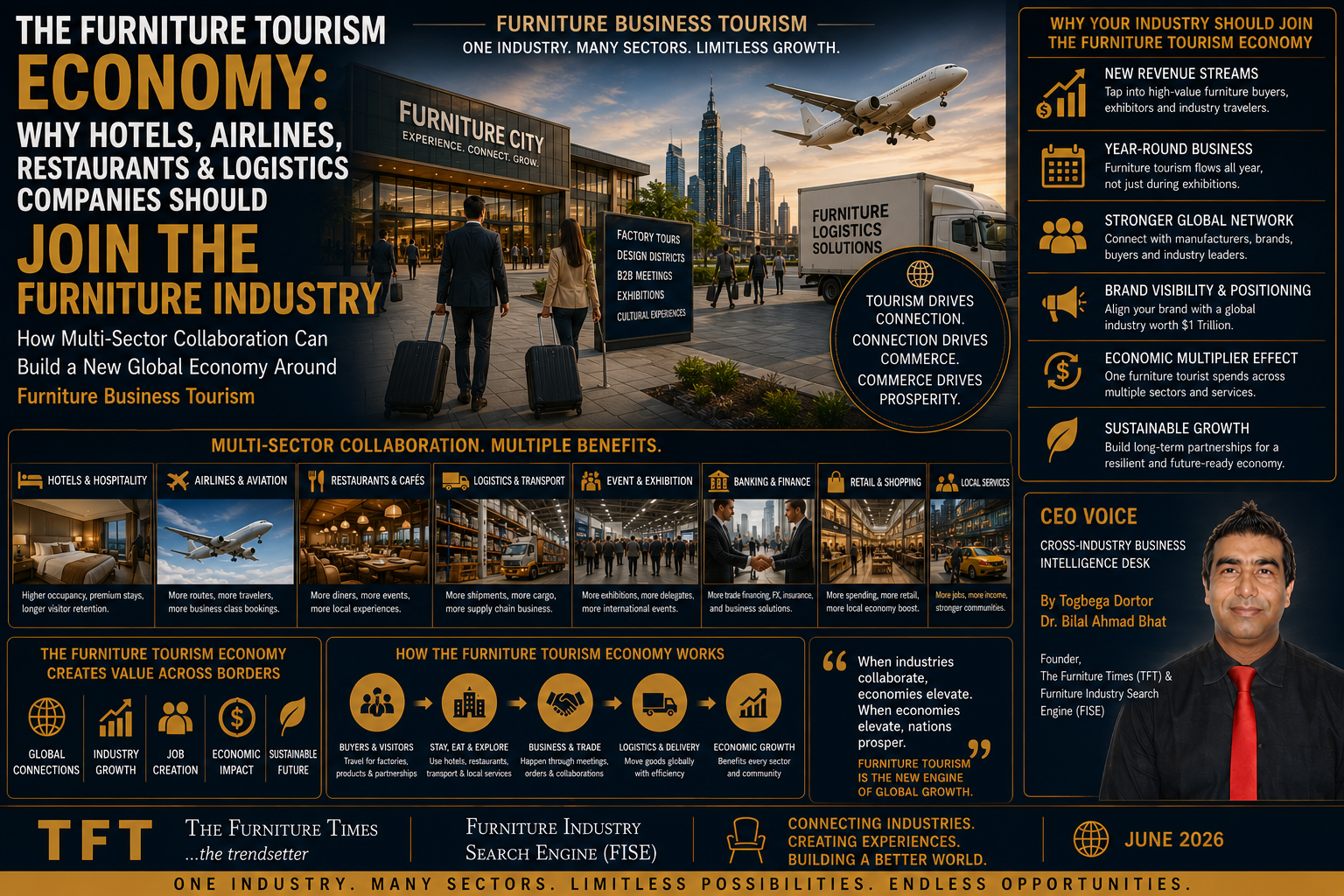
The Furniture Tourism Economy: Why Hotels, Airlines, Restaurants & Logistics Companies Should Join the Furniture Industry
How Multi-Sector Collaboration Can Build a New Global Economy Around Furniture Business Tourism
Cross-Industry Business Intelligence Desk
By The Furniture Times (TFT) & Furniture Industry Search Engine (FISE)
June 2026
For decades, the furniture industry has been viewed as a manufacturing sector.
Factories produce.
Retailers sell.
Designers create.
Consumers buy.
That traditional view is no longer enough.
The furniture industry has evolved into one of the world’s largest business ecosystems, connecting manufacturing, trade, logistics, technology, design, architecture, hospitality, education, finance and international commerce.
Yet one enormous opportunity remains largely untapped.
The Furniture Tourism Economy.
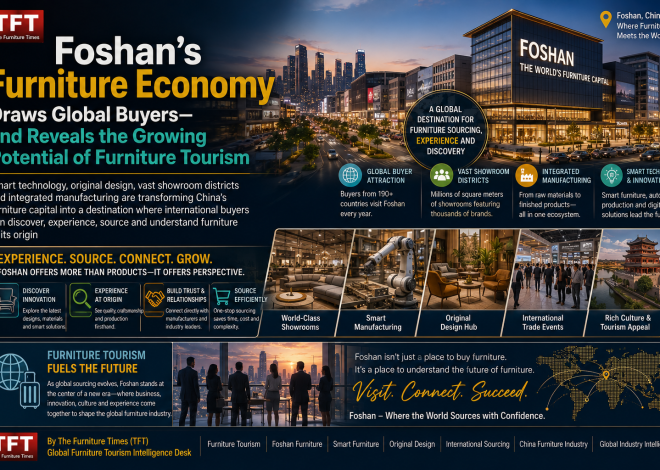
Most people assume Furniture Business Tourism benefits only manufacturers.
The reality is entirely different.
Every international furniture buyer who travels to a furniture-producing country creates opportunities far beyond the factory gates.
That visitor stays in hotels.
Travels on airlines.
Eats in restaurants.
Uses transportation.
Purchases insurance.
Transfers money through banks.
Uses logistics companies.
Visits shopping centres.
Hires translators.
Books meeting venues.
Employs local guides.
Engages digital marketing agencies.
Supports photographers, videographers, event organisers and countless other businesses.
Furniture Business Tourism is not simply a furniture initiative.
It is a cross-industry economic movement.
According to The Furniture Times (TFT), countries that understand this connection will unlock entirely new sources of economic growth.
The Furniture Industry Is No Longer a Standalone Industry
Modern industries do not grow in isolation.
Automotive industries support finance.
Technology supports education.
Healthcare supports tourism.
Furniture now supports multiple sectors simultaneously.
Every sourcing trip creates activity across an entire local economy.
Furniture Business Tourism connects industries that previously operated independently.
This creates an integrated economic ecosystem.
Hotels Become Strategic Business Partners
Hotels are among the first beneficiaries.
International buyers rarely visit factories for only a few hours.
Many remain for several days.
Some spend one or two weeks exploring:
Manufacturers.
Furniture malls.
Design centres.
Innovation hubs.
Material suppliers.
Trade associations.
Hotels therefore become much more than accommodation providers.
They become business infrastructure.
Hotels can develop specialised services including:
Furniture Buyer Packages.
Factory shuttle services.
Business lounges.
Meeting rooms.
Translation assistance.
Airport transfers.
Business concierge services.
Furniture destination guides.
Hotels become active participants in international trade.
Airlines Carry More Than Passengers
Every Furniture Business Tour begins with travel.
Airlines benefit through:
International buyer missions.
Trade delegations.
Factory tours.
Furniture exhibitions.
Business conferences.
Export programmes.
Countries promoting Furniture Tourism create recurring international travel rather than seasonal tourism.
Airlines become long-term partners in industrial development.
Transportation Connects Business
Once visitors arrive, transportation becomes essential.
Taxi companies.
Private chauffeurs.
Bus operators.
Rail services.
Car rental companies.
Ride-sharing platforms.
Factory shuttle operators.
Reliable transportation determines the quality of the visitor experience.
Transportation companies become strategic partners within Furniture Business Tourism.
Restaurants Become Business Meeting Spaces
Business relationships are often built outside meeting rooms.
Many negotiations continue over breakfast.
Lunch.
Dinner.
Coffee.
Restaurants become networking venues.
Local cuisine becomes part of the business experience.
Every international visitor supports local food businesses.
Furniture Tourism therefore strengthens hospitality far beyond hotels.
Logistics Companies Become Growth Partners
Furniture cannot move without logistics.
Every export order requires:
Container shipping.
Warehousing.
Freight forwarding.
Customs clearance.
Cargo insurance.
Packaging.
Inventory management.
Distribution.
As Furniture Business Tourism grows, logistics providers receive greater opportunities to support international trade.
The stronger the logistics ecosystem, the more competitive the furniture industry becomes.
Banking Creates Business Confidence
International business depends on trusted financial systems.
Furniture buyers require:
International payments.
Letters of credit.
Trade financing.
Currency exchange.
Business banking.
Investment support.
Banks become important contributors to Furniture Business Tourism.
Financial confidence strengthens commercial confidence.
Insurance Supports Global Trade
International buyers require protection.
Insurance companies provide:
Cargo insurance.
Factory liability.
Business travel insurance.
Trade credit insurance.
Property coverage.
Professional indemnity.
Risk management becomes another valuable service within the Furniture Tourism Economy.
Retail Benefits Beyond Furniture
Visitors rarely purchase only furniture.
Business travellers also buy:
Electronics.
Clothing.
Local products.
Gifts.
Office supplies.
Business equipment.
Retail businesses benefit from increased visitor spending.
The local economy expands naturally.
Local Services Create Inclusive Growth
Furniture Tourism generates opportunities for hundreds of service providers.
Including:
Translation companies.
Photography.
Videography.
Printing.
Marketing agencies.
IT services.
Event organisers.
Legal advisors.
Tax consultants.
Business registration specialists.
Cleaning services.
Security providers.
Every visitor supports multiple local businesses.
Economic inclusion becomes one of Furniture Tourism’s greatest strengths.
Universities Become Industry Partners
Educational institutions also benefit.
Students gain opportunities for:
Factory visits.
Research.
Internships.
Innovation projects.
International networking.
Furniture Tourism strengthens collaboration between education and industry.
Knowledge becomes an export.
Technology Companies Join the Ecosystem
The future Furniture Tourism Economy requires technology.
Including:
Artificial Intelligence.
Digital maps.
Factory booking systems.
Virtual tours.
Business matching.
Smart translation.
Visitor management.
Industry search platforms.
Technology companies become essential partners.
Public-Private Collaboration Is Essential
Furniture Tourism cannot succeed through one industry alone.
Governments.
Manufacturers.
Hotels.
Airlines.
Banks.
Insurance companies.
Universities.
Technology providers.
Tour operators.
Local authorities.
Media.
All must collaborate.
Furniture Tourism is strongest when every stakeholder participates.
The Economic Multiplier Effect
One international buyer visiting a furniture city may create spending across:
Accommodation.
Food.
Transportation.
Communication.
Professional services.
Retail.
Tourism.
Entertainment.
Trade.
Export.
Education.
Technology.
One visitor supports dozens of businesses.
Thousands of visitors support entire regional economies.
Furniture Tourism multiplies opportunity.
Artificial Intelligence Will Connect Every Industry
Artificial Intelligence will coordinate:
Travel.
Hotel bookings.
Factory schedules.
Translation.
Supplier recommendations.
Business networking.
Transportation.
Digital catalogues.
AI will connect every participant within the Furniture Tourism Economy.
The experience becomes smarter.
More efficient.
More personalised.
Why Searchability Is Critical
Before any visitor arrives…
They search.
If hotels are not visible…
If manufacturers are not visible…
If furniture cities are not visible…
The journey never begins.
Digital discoverability connects the entire ecosystem.
Furniture Industry Search Engine (FISE) provides one of the missing foundations by helping businesses become searchable within a dedicated furniture ecosystem.
Visibility creates visitors.
Visitors create business.
Why The Furniture Times Created This Vision
According to Togbega Dortor Dr. Bilal Ahmad Bhat, Founder of The Furniture Times (TFT) and Furniture Industry Search Engine (FISE):
“Many people think Furniture Tourism is about factories. They are only seeing five percent of the opportunity. The remaining ninety-five percent belongs to the hotels, airlines, restaurants, logistics providers, banks, insurers, universities, technology companies and local businesses that benefit every time an international buyer visits a furniture city.”
He continues:
“Furniture Business Tourism is not a furniture project. It is an economic ecosystem. It creates employment across industries, strengthens regional development and allows every local business to benefit from global trade.”
And concludes:
“This is why TFT is building Furniture Tourism as a complete ecosystem—not only for manufacturers, but for every business that supports the journey from factory to customer.”
The Role of TFT & FISE
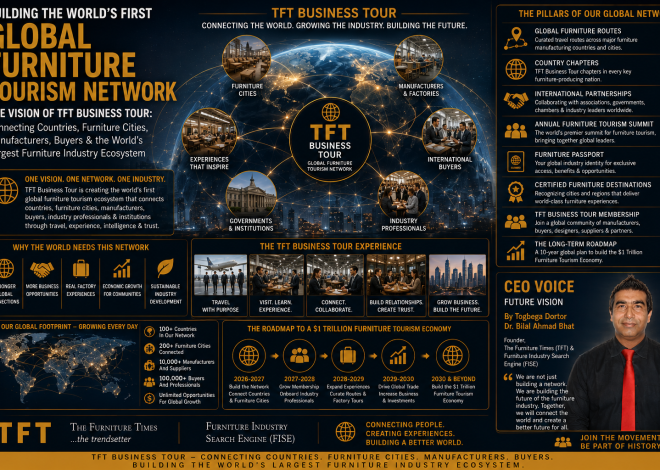
The Furniture Times is introducing Furniture Tourism as one of the world’s newest economic development concepts.
Furniture Industry Search Engine (FISE) provides the digital infrastructure connecting manufacturers, hotels, logistics providers, designers, suppliers and buyers.
Together they create a complete ecosystem where every industry benefits from greater discoverability and international collaboration.
TFT & FISE Analysis
Furniture Business Tourism should never be viewed as a niche industry.
It is a cross-sector growth strategy.
Manufacturing creates products.
Tourism creates visitors.
Hospitality creates experiences.
Logistics creates trade.
Finance creates confidence.
Technology creates discoverability.
Education creates talent.
Together they create sustainable economic growth.
Final Verdict
The future of the furniture industry will not be built by manufacturers alone.
It will be built through collaboration.
Hotels will welcome buyers.
Airlines will connect destinations.
Restaurants will host negotiations.
Banks will finance trade.
Insurance companies will protect investments.
Logistics providers will move products.
Technology companies will connect markets.
Universities will prepare future leaders.
Local businesses will prosper.
Furniture Business Tourism transforms one industry into an entire economic ecosystem.
That is why it has the potential to become one of the most powerful business development movements of the next decade.
The future of furniture is no longer only about what happens inside factories.
It is about what happens across entire cities, industries and nations when they work together.
That is the true Furniture Tourism Economy.
By The Furniture Times (TFT) & Furniture Industry Search Engine (FISE)
Cross-Industry Business Intelligence Desk | June 2026
“TFT tells their story. FISE helps the world find them.”
The furniture industry ecosystem is a $1 Trillion Dollar Industry.