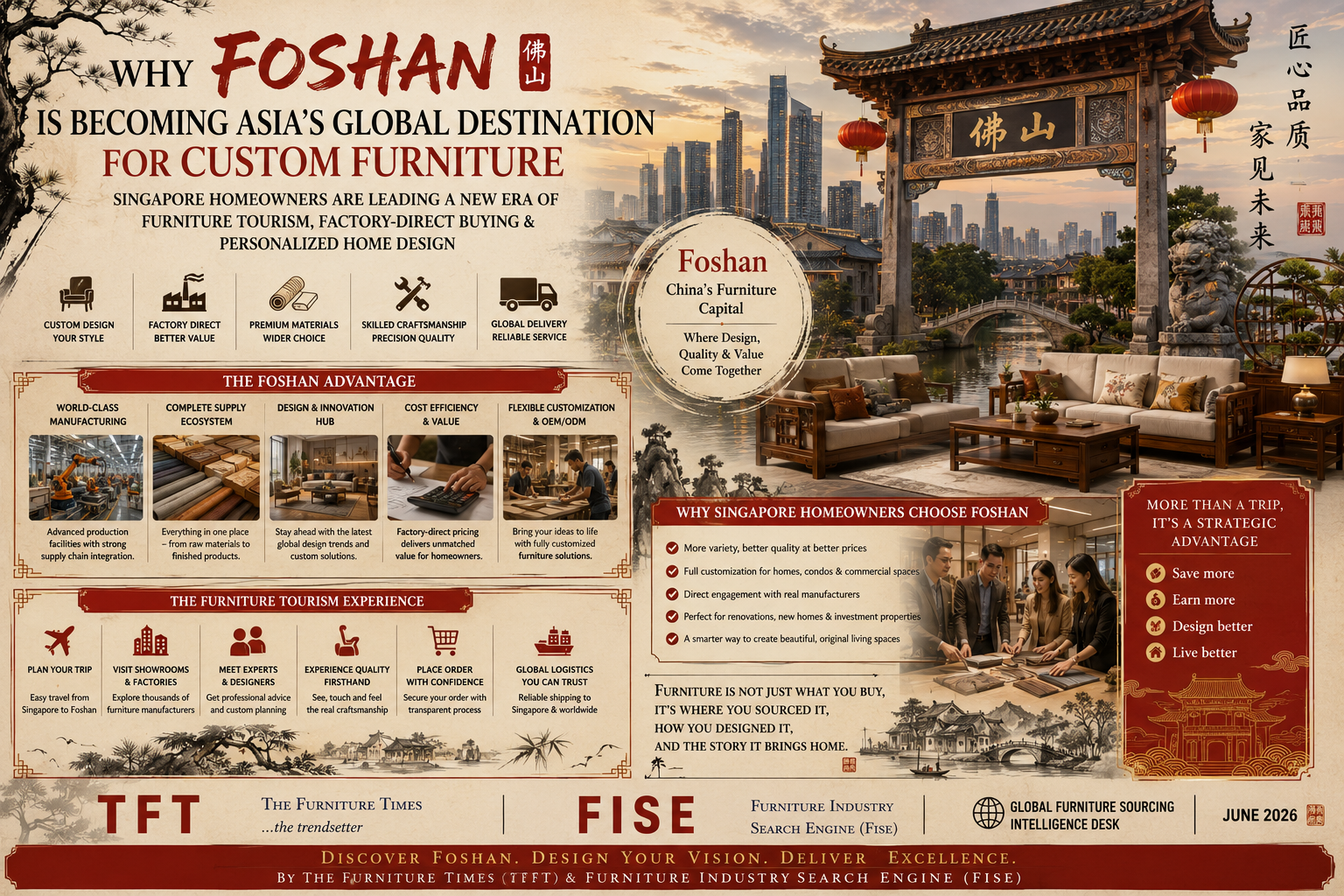
Why Foshan Is Becoming Asia’s Global Destination for Custom Furniture
Singapore Homeowners Are Leading a New Era of Furniture Tourism, Factory-Direct Buying & Personalized Home Design
Global Furniture Sourcing Intelligence Desk
By The Furniture Times (TFT) & Furniture Industry Search Engine (FISE)
June 2026
A new trend is quietly transforming the furniture industry across Asia.
People are no longer travelling only for beaches, shopping, or sightseeing.
Increasingly, they are travelling to furnish their homes.
One city has become the centre of this movement.
Foshan, Guangdong Province, China.
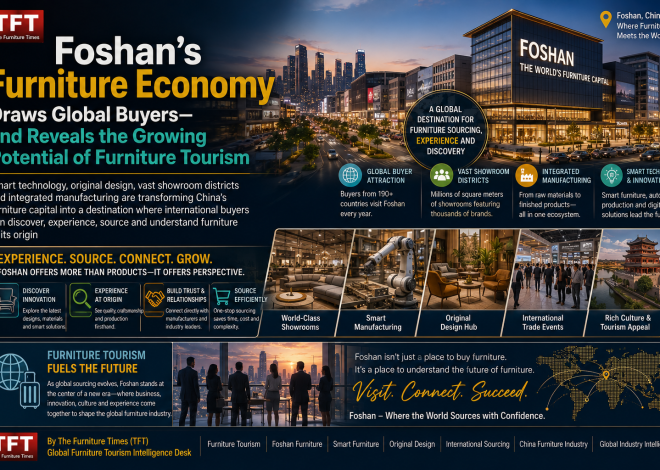
Long recognised within the furniture industry as one of the world’s largest manufacturing hubs, Foshan is now attracting homeowners, interior designers, architects, property investors, developers and furniture buyers from around the world.
Among the fastest-growing groups are Singaporean homeowners, who are travelling directly to Foshan to purchase customised, factory-direct furniture for new homes, condominiums and renovation projects.
What was once a destination reserved for wholesalers and international buyers has evolved into a global sourcing destination for everyday consumers.
The trend is changing how furniture is designed, purchased and delivered.
It is also sending an important message to the global furniture industry.
Consumers increasingly want transparency, customisation, better value and direct access to manufacturers.
Foshan Is More Than a Furniture City
Foshan is not simply a city with furniture shops.
It is one of the world’s most comprehensive furniture manufacturing ecosystems.
Entire districts specialise in different furniture categories.
Visitors can source:
- Sofas
- Dining furniture
- Bedroom furniture
- Outdoor furniture
- Kitchen cabinets
- Wardrobes
- Lighting
- Decorative accessories
- Stone surfaces
- Hardware
- Office furniture
- Hospitality furniture
This highly integrated ecosystem allows buyers to compare thousands of products, manufacturers and design concepts within a relatively compact geographical area.
Few places in the world offer this level of manufacturing concentration.
Factory-Direct Buying Is Reshaping Consumer Behaviour
For decades, consumers purchased furniture through multiple layers of distribution.
Manufacturer.
Distributor.
Importer.
Retailer.
Showroom.
Customer.
Today’s buyers increasingly want to shorten that chain.
Factory-direct sourcing provides:
- Greater pricing transparency
- Wider product selection
- Material customisation
- Better design flexibility
- Direct communication
- Improved value
Many buyers are willing to invest time in travelling because they perceive greater long-term value from customised products.
This trend reflects a growing shift toward informed purchasing rather than impulse buying.
Customisation Has Become the New Luxury
Modern homeowners no longer want furniture designed for the average customer.
They want furniture designed for their home.
Manufacturers in Foshan increasingly offer customisation of:
- Dimensions
- Upholstery
- Fabric
- Leather
- Colours
- Timber finishes
- Stone surfaces
- Cabinet layouts
- Storage solutions
- Hardware
Consumers increasingly design furniture around their homes rather than designing their homes around available furniture.
This represents one of the biggest shifts in residential furniture purchasing.
Singapore Is Leading the Furniture Tourism Trend
Singapore provides an interesting case study.
Limited residential space has created demand for highly efficient furniture solutions.
Homeowners often require:
- Custom wardrobes
- Space-saving storage
- Compact dining furniture
- Modular sofas
- Built-in cabinetry
Because every square metre matters, standard furniture often fails to maximise available space.
Travelling directly to Foshan allows homeowners to customise products precisely for their floor plans while accessing factory-level production.
Furniture Tourism Is Becoming a New Industry
Furniture shopping is increasingly becoming part of international travel.
Visitors often combine sourcing trips with:
- Factory visits
- Interior consultations
- Material selection
- Manufacturing inspections
- Culinary experiences
- Local tourism
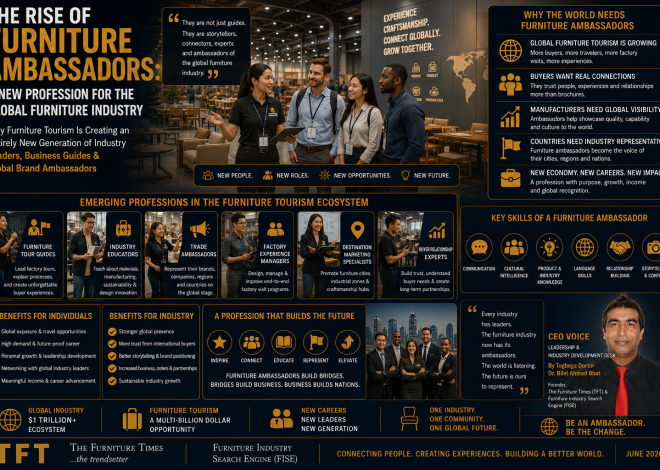
Professional sourcing companies increasingly organise complete furniture tours that include translation, supplier selection, logistics coordination, quality inspections and international shipping.
Furniture tourism is evolving into a specialised service industry.
Technology Is Making Global Buying Easier
Digital communication has dramatically simplified international sourcing.
Today’s buyers can:
- Conduct virtual consultations
- Review digital catalogues
- Join video factory tours
- Approve samples remotely
- Track production
- Monitor shipping
Artificial Intelligence is expected to further improve:
- Product recommendations
- Interior matching
- Space planning
- Material comparisons
- Pricing analysis
Technology is making global furniture sourcing more accessible than ever before.
Interior Design Is Becoming More Personal
Consumers increasingly seek homes that reflect their personality rather than following mass-market trends.
Popular styles include:
- Contemporary luxury
- Scandinavian
- Japandi
- Wabi-sabi
- Modern minimalist
- Mid-century modern
Custom furniture allows homeowners to combine these influences while adapting products to local lifestyles.
Design flexibility is becoming a key purchasing factor.
Logistics Is No Longer a Barrier
International shipping has become significantly more organised.
Professional logistics providers now manage:
- Consolidation
- Export documentation
- Customs clearance
- Quality inspections
- Container loading
- Final delivery
- Installation coordination
For many international buyers, purchasing furniture overseas is becoming increasingly practical.
What This Means for Global Furniture Manufacturers
The rise of furniture tourism sends an important message.
Consumers increasingly expect:
- Factory transparency
- Customisation
- Direct communication
- Better value
- Flexible manufacturing
- Personalised service
Manufacturers outside China may also benefit by adopting similar customer-centric sourcing experiences.
The future may involve opening factories to consumers rather than limiting access to trade buyers.
Artificial Intelligence Will Accelerate Custom Furniture
AI-powered design tools will soon enable customers to:
- Upload floor plans
- Generate furniture layouts
- Compare materials
- Visualise colours
- Estimate budgets
- Receive personalised recommendations
The future furniture buying journey will combine human craftsmanship with Artificial Intelligence.
Factories prepared for this transition will gain significant competitive advantages.
Searchability Will Become Even More Important
As international sourcing expands, discoverability becomes essential.
Future buyers will increasingly search for:
- Custom furniture manufacturers
- Factory-direct furniture
- Furniture sourcing specialists
- OEM furniture suppliers
- Bespoke furniture
- Hospitality furniture manufacturers
Manufacturers that remain invisible online risk missing global opportunities.
Searchability is becoming as important as manufacturing capability.
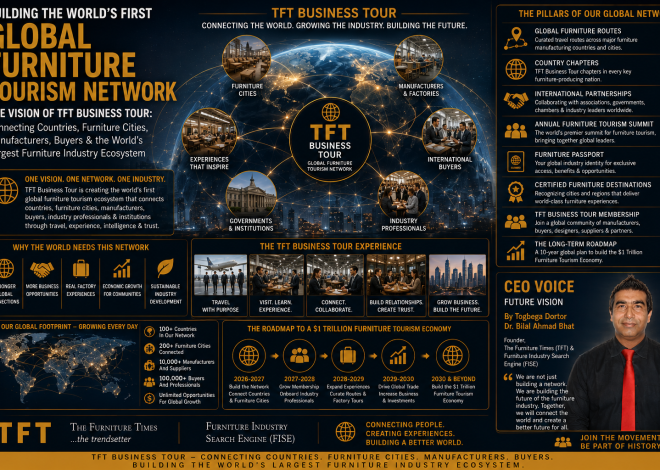
The Role of TFT & FISE
The Furniture Times believes global furniture sourcing is entering a new era.
Consumers no longer simply purchase furniture.
They seek transparency.
Knowledge.
Customisation.
Trust.
Furniture Industry Search Engine (FISE) supports this transformation by helping manufacturers become more discoverable across international markets.
TFT tells their stories.
FISE helps global buyers find them.
Together they strengthen the world’s largest furniture ecosystem.
TFT & FISE Analysis
The rise of Foshan as a destination for furniture tourism reflects broader changes across the global furniture industry.
Customers increasingly value direct access.
Customisation.
Transparency.
Factory relationships.
Digital communication.
Manufacturers that combine quality production with exceptional customer experiences will become increasingly competitive.
The future belongs not only to companies producing excellent furniture.
It belongs to companies creating outstanding buying journeys.
Final Verdict
The growth of furniture tourism demonstrates that the furniture industry is evolving far beyond traditional retail.
Consumers increasingly seek direct relationships with manufacturers.
Factories are becoming destinations.
Customisation is becoming the standard.
Artificial Intelligence will simplify sourcing.
Digital platforms will connect buyers globally.
The future furniture marketplace will be built on transparency, flexibility, craftsmanship and discoverability.
Foshan is not simply exporting furniture.
It is exporting a new way of buying furniture.
And that model is likely to influence the global furniture industry for years to come.
By The Furniture Times (TFT) & Furniture Industry Search Engine (FISE)
Global Furniture Sourcing Intelligence Desk | June 2026
“TFT tells their story. FISE helps the world find them.”
The furniture industry ecosystem is a $1 Trillion Dollar Industry.