The Furniture Website Revolution: Why Your Website Is Now Your Most Important Showroom
How Modern Furniture Websites Are Transforming Discovery, Trust, Customer Experience, Sales & Global Growth
Digital Commerce Intelligence Report
By The Furniture Times (TFT) & Furniture Industry Search Engine (FISE)
June 2026
The furniture industry has entered a new era.
For generations, furniture businesses relied on physical showrooms, exhibitions, catalogs, sales representatives, dealers, and word-of-mouth referrals.
Customers visited stores.
Touched products.
Sat on sofas.
Opened wardrobes.
Tested chairs.
Compared finishes.
Made purchasing decisions.
Today, that process has fundamentally changed.
Before visiting a showroom, customers visit a website.
Before speaking to a salesperson, customers search online.
Before requesting a quotation, customers evaluate credibility digitally.
Before trusting a brand, customers assess its online experience.
The reality is simple:
Your website is no longer a digital brochure.
Your website is your first showroom.
And increasingly, it is becoming your most important showroom.
Industry website design experts emphasize that responsive design, mobile usability, intuitive navigation, product visualization, and customer experience have become critical success factors for furniture businesses operating online.
The Modern Customer Journey Starts Online
The furniture customer of 2026 behaves differently than the customer of 2016.
Today’s buyers:
- Search first
- Compare second
- Visit later
- Buy when confident
The website now influences nearly every stage of the decision-making process.
Consumers want answers immediately.
They want:
- Product information
- Dimensions
- Materials
- Reviews
- Images
- Pricing
- Delivery details
- Company credibility
If they cannot find those answers quickly, they move on.
The competition is only one click away.
Why Furniture Websites Are Different
Furniture is not a simple purchase.
Furniture buying involves:
High Consideration
Customers spend significant time researching.
Emotional Decisions
Furniture reflects lifestyle and identity.
Visual Evaluation
Appearance matters enormously.
Financial Investment
Furniture is often expensive.
Long-Term Usage
Consumers expect durability.
Because of these factors, furniture websites must do more than display products.
They must build confidence.
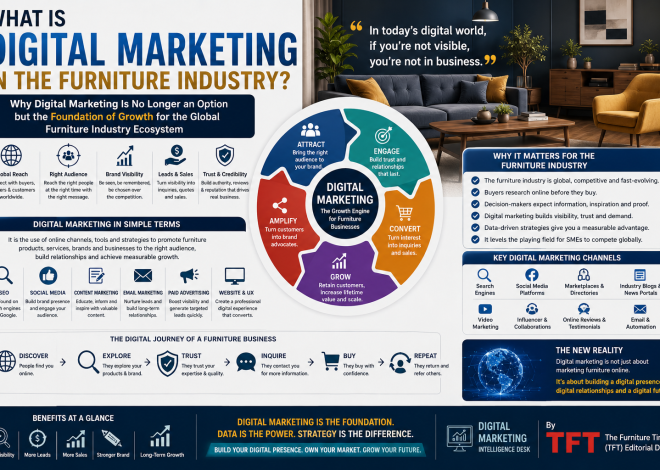
The Death of the Digital Brochure
Many furniture companies still operate websites designed like digital brochures.
A few pages.
A company profile.
Some product images.
Basic contact information.
This model is becoming obsolete.
Modern furniture websites must function as:
- Sales tools
- Discovery platforms
- Education centers
- Trust builders
- Customer experience systems
The companies that understand this shift gain a significant advantage.
Responsive Design Is No Longer Optional
One of the strongest themes highlighted in furniture website design research is responsive design.
Modern consumers browse on:
- Smartphones
- Tablets
- Laptops
- Desktops
A website that performs poorly on mobile devices creates frustration.
Research consistently shows that responsive, mobile-friendly websites improve user experience, engagement, search visibility, and conversion performance.
In today’s mobile-first world, responsiveness is no longer a feature.
It is a requirement.
Mobile Is Winning
The furniture industry has traditionally focused on desktop experiences.
That approach is changing rapidly.
Many consumers now discover furniture products through mobile devices.
They browse while:
- Traveling
- Watching television
- Sitting in cafés
- Visiting exhibitions
- Comparing suppliers
A poor mobile experience can immediately damage trust.
The future belongs to mobile-first furniture businesses.
Why Product Photography Matters More Than Ever
Furniture is visual.
Customers cannot touch products online.
Therefore, photography becomes critical.
High-quality product images help customers:
- Understand scale
- Appreciate details
- Evaluate materials
- Visualize usage
Industry-leading furniture websites invest heavily in professional photography because visuals often influence first impressions more than written descriptions.
In digital commerce, photography often becomes the salesperson.
The Rise of 360° Views and 3D Visualization
One of the most exciting developments in furniture websites is visualization technology.
Customers increasingly expect:
- 360-degree product views
- 3D visualization
- Virtual room placement
- Interactive product exploration
These technologies help solve one of the biggest challenges in furniture e-commerce:
Uncertainty.
When uncertainty decreases, confidence increases.
When confidence increases, purchases become more likely.
Several leading furniture websites now use immersive visualization tools to help customers better understand products before purchasing.
Navigation Determines Whether Customers Stay
Many furniture websites fail because customers cannot find products quickly.
The best websites make navigation simple.
Customers should be able to browse by:
- Room
- Category
- Style
- Material
- Color
- Price
- Collection
User-friendly navigation consistently ranks among the most important website design factors for furniture e-commerce success.
Good navigation reduces frustration.
Reduced frustration improves conversions.
Search Is Becoming the Most Important Feature
Modern consumers expect websites to understand what they want.
A customer searching for:
“Outdoor dining furniture”
should immediately find relevant products.
Not browse dozens of unrelated pages.
Search functionality is becoming one of the most valuable components of furniture websites because it shortens the path between intention and discovery.
Simplicity Wins
One surprising lesson from successful furniture websites is simplicity.
Many businesses believe more features create better experiences.
The opposite is often true.
Overloaded websites create:
- Confusion
- Distraction
- Frustration
Leading furniture design experts consistently recommend simple layouts, clean presentation, and minimal visual clutter.
Customers visit furniture websites to discover furniture.
Not to navigate complexity.
Trust Signals Are Becoming Essential
Furniture purchases often involve substantial financial commitments.
Customers need reassurance.
Strong furniture websites include:
- Customer reviews
- Certifications
- Guarantees
- Company history
- Contact information
- Project portfolios
Trust signals reduce perceived risk.
And reducing risk increases conversion rates.
Content Has Become a Competitive Advantage
Furniture websites can no longer rely solely on product listings.
The most successful brands increasingly publish:
- Buying guides
- Design inspiration
- Product comparisons
- Material education
- Industry insights
Content improves:
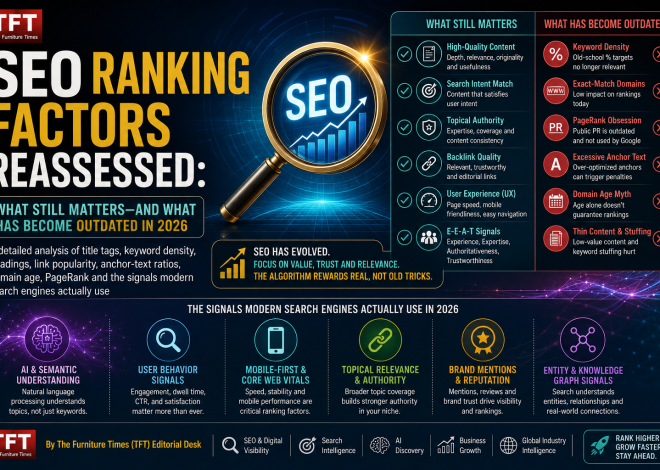
- SEO
- Customer trust
- Brand authority
- AI discoverability
The future belongs to websites that educate, not merely sell.
Why Speed Matters
Website speed directly influences customer behavior.
Slow websites increase bounce rates.
Fast websites improve engagement.
Modern design guidelines increasingly emphasize:
- Fast loading
- Optimized images
- Performance-first architecture
Website performance influences both user experience and search visibility.
In digital commerce, speed creates competitive advantage.
The AI Era Changes Everything
Artificial intelligence is reshaping digital discovery.
Consumers increasingly ask AI:
- What sofa should I buy?
- Which furniture brand is best?
- Who manufactures hospitality furniture?
- Which materials are most durable?
AI systems rely on information.
Furniture websites must therefore become:
- Structured
- Informative
- Searchable
- Authoritative
The future will belong to businesses that are discoverable not only by people but also by AI systems.
What Furniture Manufacturers Must Understand
Many manufacturers still underestimate the importance of their websites.
Yet buyers increasingly evaluate manufacturers online before initiating contact.
Manufacturers should showcase:
Factory Capabilities
Certifications
Export Markets
Product Categories
Custom Manufacturing
Project Experience
Sustainability Programs
The website has become a credibility platform.
What Furniture Retailers Must Understand
Retailers must move beyond static product catalogs.
The modern retailer needs:
Smart Search
Personalization
Product Visualization
Inspiration Content
Mobile Optimization
Trust Signals
Fast Checkout
The customer experience now begins digitally.
Why Searchability Matters
A beautiful website that cannot be found has limited value.
Furniture companies must combine:
- Website design
- SEO
- Content
- Discoverability
The future belongs to businesses that are searchable.
Not merely online.
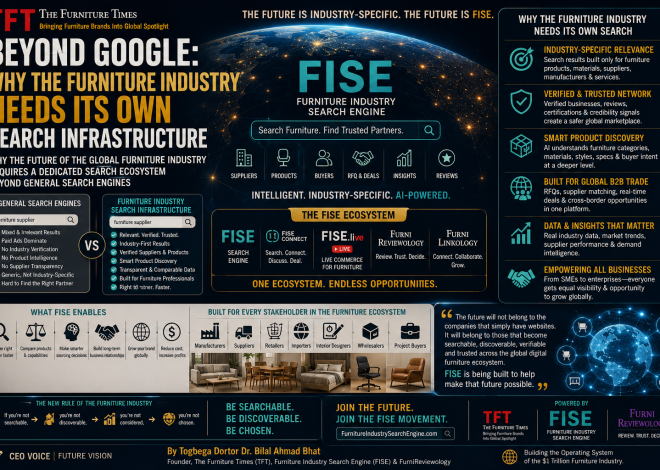
The FISE Perspective
The Furniture Industry Search Engine was built around a simple belief:
The furniture industry should be easier to discover.
A strong website is essential.
But discoverability is equally important.
The future furniture ecosystem will depend on:
- Searchability
- Visibility
- Trust
- Customer experience
The companies that master all four will lead the next generation of growth.
TFT & FISE Analysis
The furniture website is evolving from a digital brochure into a digital experience platform.
The most successful businesses understand that customers no longer evaluate products alone.
They evaluate:
- Experience
- Trust
- Usability
- Speed
- Information quality
- Discoverability
The companies that invest in these areas are building long-term competitive advantages.
Final Verdict
The future furniture market will not be won solely by companies with the best products.
It will be won by companies with the best customer experiences.
And increasingly, those experiences begin on a website.
A modern furniture website must:
- Inspire
- Educate
- Guide
- Reassure
- Convert
Because in 2026:
Your website is not your digital brochure.
Your website is your first showroom.
Your first salesperson.
Your first impression.
And often, your first opportunity to win a customer.
By The Furniture Times (TFT) & Furniture Industry Search Engine (FISE)
Digital Commerce Intelligence Report | June 2026
“TFT tells their story. FISE helps the world find them.”
The furniture industry ecosystem is a $1 Trillion Dollar Industry.