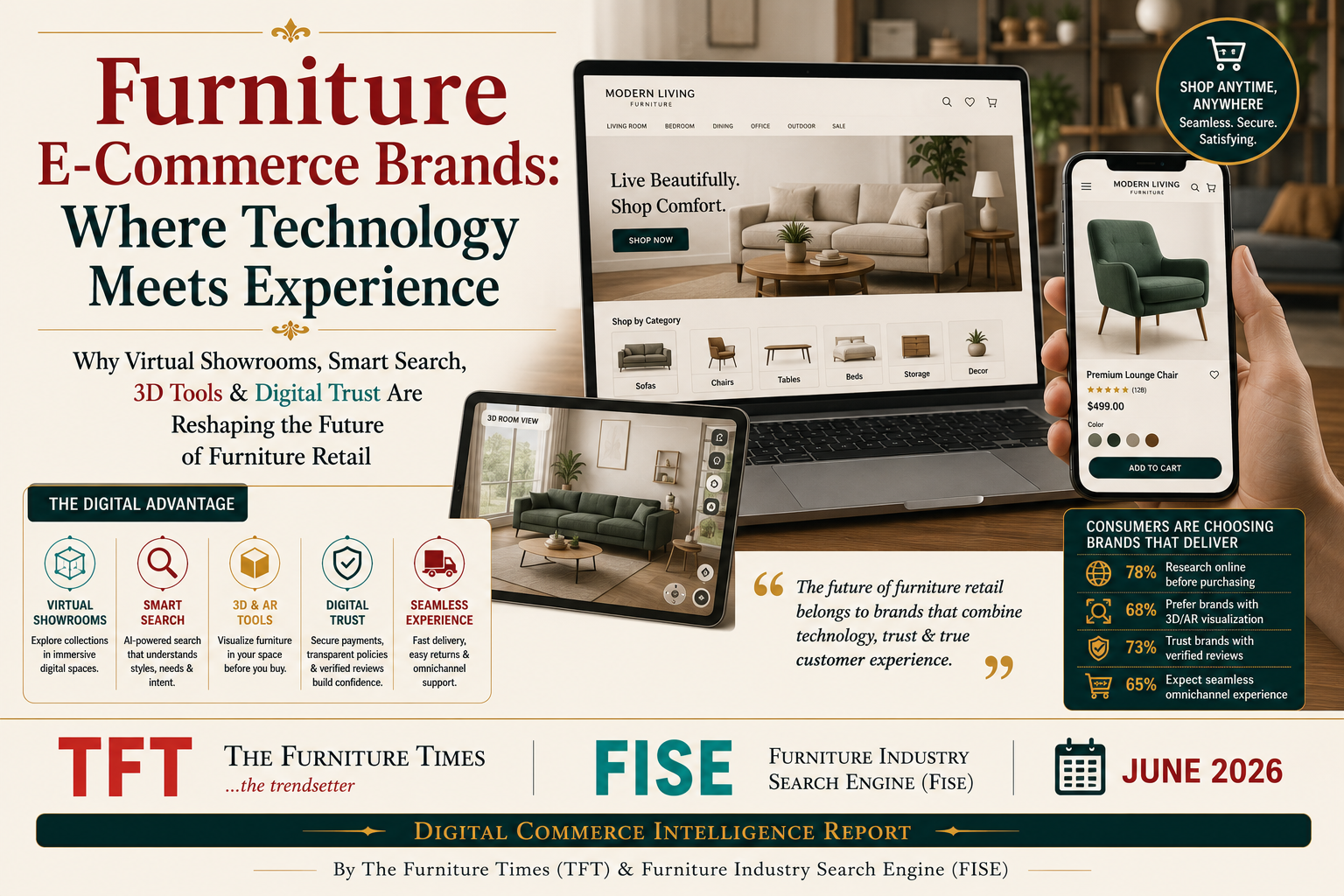
Furniture E-Commerce Brands: Where Technology Meets Experience
Why Virtual Showrooms, Smart Search, 3D Tools & Digital Trust Are Reshaping the Future of Furniture Retail
Digital Commerce Intelligence Report
By The Furniture Times (TFT) & Furniture Industry Search Engine (FISE)
June 2026
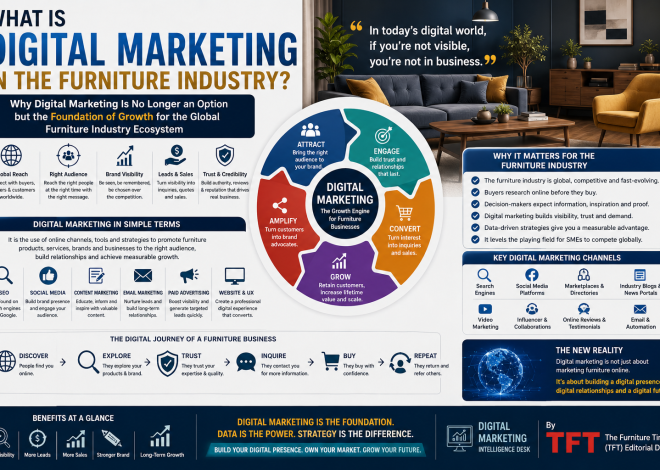
The furniture industry is entering a new digital retail era.
For decades, furniture buying depended heavily on physical showrooms, printed catalogs, sales representatives, exhibitions, dealer networks, and word-of-mouth recommendations.
Consumers wanted to see furniture.
Touch furniture.
Sit on furniture.
Compare finishes.
Understand dimensions.
Imagine how the product would look inside their homes, offices, hotels, restaurants, or commercial spaces.
That physical experience remains important.
But the buying journey has changed.
Today, the first showroom is often not a building.
It is a website.
The first salesperson is often not a human.
It is search.
The first catalog is often not printed.
It is digital.
The first impression is often created through product images, 3D visualization, smart search, reviews, virtual appointments, and online experience.
This is why furniture e-commerce is no longer simply about selling furniture online.
It is about creating confidence before the customer enters the store.
It is about helping buyers visualize before they purchase.
It is about reducing uncertainty.
It is about turning digital browsing into serious buying intent.
The New Furniture Buyer Is Digital First
Modern furniture buyers do not behave like buyers of the past.
Before visiting a store, they search online.
Before speaking to a salesperson, they compare websites.
Before requesting a quotation, they check product details.
Before buying, they evaluate reviews, images, delivery options, payment flexibility, and brand trust.
This means furniture websites are no longer optional brochures.
They have become business infrastructure.
A weak website now weakens the brand.
A strong website strengthens buyer confidence.
In the furniture industry, where products are often expensive, bulky, emotional, and long-term purchases, digital trust is critical.
The Virtual Showroom Is Becoming the New Front Door
One of the most important features highlighted in the e-commerce discussion is the virtual showroom.
This is a major development for furniture retail.
A virtual showroom allows customers to browse products digitally in a more immersive environment.
Instead of looking at flat product images, customers can experience furniture in styled spaces, room settings, and digital layouts.
This matters because furniture buying is visual.
Customers do not only ask:
“What is the price?”
They ask:
“How will it look in my space?”
“Will it match my interior?”
“Does it feel premium?”
“Can I imagine this in my home or project?”
A virtual showroom helps answer these questions.
For furniture companies, this means the website must become more than a product list.
It must become an experience center.
3D Product Configurators Are Changing Buyer Expectations
The rise of 3D product configurators is one of the biggest shifts in furniture e-commerce.
Furniture buyers increasingly want control.
They want to change colors.
Change materials.
Change finishes.
Change sizes.
Change styles.
View products from different angles.
A 3D configurator gives customers the feeling of involvement.
It turns passive browsing into active decision-making.
This is especially valuable for categories such as:
Sofas
Office furniture
Modular wardrobes
Kitchen cabinets
Dining tables
Outdoor furniture
Hospitality furniture
When buyers can customize and visualize, confidence increases.
And when confidence increases, conversion becomes easier.
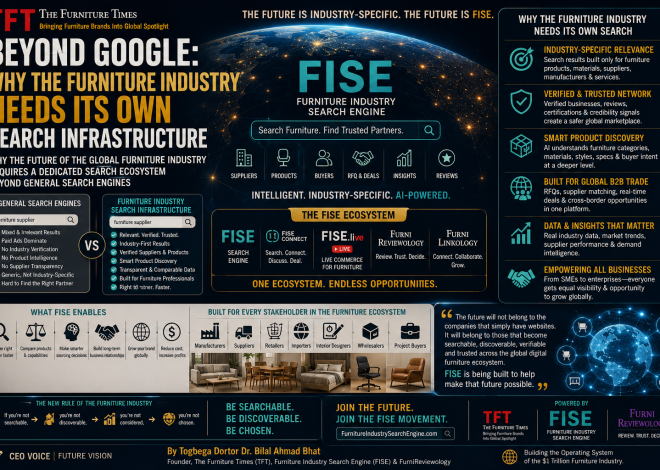
Smart Search Is No Longer Optional
Furniture websites often contain hundreds or thousands of products.
Without smart search, customers become overwhelmed.
A buyer looking for “outdoor dining set for hotel terrace” should not be forced to browse unrelated products.
Smart search improves the journey by understanding intent.
It helps customers find relevant products quickly.
This is critical because digital shoppers are impatient.
If they cannot find what they need, they leave.
For furniture businesses, smart search is not merely a technical feature.
It is a sales feature.
It guides customers toward purchase decisions.
Product Categorization Decides Whether Buyers Stay or Leave
One of the biggest mistakes furniture companies make online is poor categorization.
They upload products without organizing them properly.
The result is confusion.
Customers cannot easily browse by:
Category
Material
Style
Room
Price
Color
Usage
Commercial or residential application
A well-organized website reduces mental effort.
It helps buyers narrow choices.
It improves user experience.
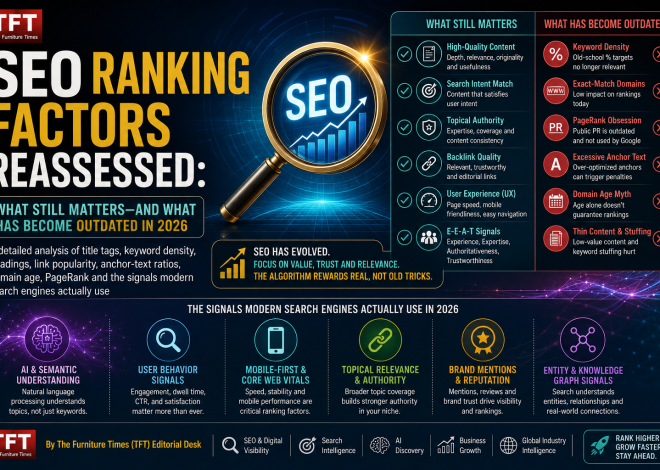
It also supports SEO and AI discoverability.
In the future, the best furniture websites will not be the websites with the most products.
They will be the websites where products are easiest to find.
Order Tracking Builds Trust
Furniture delivery is one of the most sensitive parts of the buying process.
Customers worry about delays.
Damage.
Installation.
Delivery timing.
Availability.
Order tracking gives customers visibility.
It reduces anxiety.
It improves transparency.
It also reduces pressure on customer service teams.
In furniture e-commerce, trust does not end after payment.
Trust continues until the product is delivered, installed, and accepted.
Store Locators Connect Digital and Physical Retail
Furniture is still a touch-and-feel category.
Many customers want to experience comfort physically before buying.
This is why store locators remain important.
A strong furniture e-commerce strategy does not eliminate showrooms.
It connects online discovery with offline experience.
The future is not purely online.
The future is phygital.
Search online.
Explore digitally.
Visit physically.
Buy confidently.
This is the new furniture buying journey.
Virtual Appointments Bring the Salesperson Online
Furniture products often require explanation.
Customers may need help with:
Materials
Dimensions
Comfort
Space planning
Customization
Delivery
Maintenance
Project requirements
Virtual appointments allow brands to bring personalized showroom service into the digital environment.
This is especially important for premium furniture, hospitality furniture, office furniture, kitchen cabinets, wardrobes, and customized products.
The companies that combine digital convenience with human consultation will gain a major advantage.
Digital Product Catalogs Are Replacing Static Brochures
The digital catalog has become one of the most important tools in furniture e-commerce.
A strong catalog should include:
High-quality images
Detailed descriptions
Dimensions
Materials
Finishes
Colors
Pricing
Availability
Application guidance
Maintenance information
Poor product descriptions reduce trust.
Strong product information improves buyer confidence.
In today’s search-driven economy, every product page is a salesperson.
It works 24 hours a day.
Across countries.
Across time zones.
Across buyer segments.
Installment Payments Are Expanding Access
Furniture purchases can be expensive.
Sofas, dining tables, beds, wardrobes, kitchen cabinets, and premium outdoor furniture often require significant investment.
Installment payment options help reduce purchase hesitation.
They allow customers to access higher-value products through flexible payments.
This is especially important for urban consumers, young families, homeowners, and premium lifestyle buyers.
Payment flexibility is becoming part of customer experience.
Wishlists Reveal Future Demand
The wishlist is more powerful than many retailers realize.
It helps customers save products for later.
But it also helps businesses understand interest.
Which products are customers saving?
Which styles attract attention?
Which categories show future demand?
Wishlist data can help brands plan:
Promotions
Inventory
Remarketing
Product development
Customer follow-up
In the digital furniture economy, data is becoming as valuable as display space.
Live Chat and Chatbots Reduce Buying Friction
Furniture buyers often have questions before they purchase.
If those questions are not answered quickly, they may leave.
Live chat and chatbots help reduce friction.
They can support:
Product recommendations
Delivery questions
Store availability
Material guidance
Appointment booking
Quotation requests
For high-value categories, fast response matters.
A delayed answer can become a lost sale.
What Global Furniture Brands Are Teaching the Industry
The linked article highlights several leading furniture e-commerce brands and the advanced features they use, including virtual showrooms, configurators, smart search, store locators, order tracking, reviews, personalization, and product categorization.
The lesson is clear.
The best furniture e-commerce brands are not simply selling products online.
They are building digital ecosystems.
They combine:
Technology
Design
Search
Trust
Convenience
Personalization
Consultation
Data
This is the difference between a basic website and a serious furniture commerce platform.
Why Furniture E-Commerce Is Different From Other E-Commerce
Furniture cannot be treated like ordinary online retail.
A customer buying furniture faces more risk than a customer buying a small accessory.
Furniture involves:
Higher prices
Bigger dimensions
Longer decision cycles
Delivery complexity
Comfort expectations
Interior matching
Return difficulty
Installation concerns
This is why furniture websites need more trust-building features than ordinary e-commerce websites.
A simple “add to cart” model is not enough.
Furniture e-commerce must educate, inspire, guide, and reassure.
The Rise of Phygital Furniture Retail
The future of furniture retail is not only physical.
And it is not only digital.
It is phygital.
Phygital retail combines:
Online search
Virtual showroom
Digital catalog
Smart filtering
Store visit
Sales consultation
Order tracking
After-sales support
This blended journey reflects how modern buyers actually behave.
The winning brands will be those that connect every stage.
What This Means for Manufacturers
Furniture manufacturers must understand that e-commerce is not only for retailers.
Manufacturers also need strong digital systems.
A manufacturer’s website should help buyers understand:
Capabilities
Materials
Production capacity
Product categories
Customization options
Certifications
Projects
Export readiness
B2B buyers increasingly research manufacturers online before contacting them.
A weak digital presence can reduce export opportunities.
What This Means for Retailers
Furniture retailers must upgrade their websites from product galleries to conversion platforms.
Retailers need:
Smart search
Strong categorization
Reviews
Delivery transparency
Flexible payments
Live support
High-quality images
Detailed product content
The buyer must feel guided, not lost.
What This Means for FISE
For the Furniture Industry Search Engine, the message is even stronger.
The furniture industry needs better search infrastructure.
If buyers struggle to find the right products, suppliers, manufacturers, retailers, designers, or service providers, opportunities are lost.
FISE can become the layer that connects:
Search
Discovery
Categories
Products
Suppliers
Buyers
Trust signals
Digital profiles
The future of furniture commerce will not be only about websites.
It will be about searchable ecosystems.
TFT & FISE Analysis
The linked article points toward a larger truth:
Furniture e-commerce is not just about technology.
It is about reducing uncertainty.
Customers hesitate because they cannot touch the product.
They hesitate because they are unsure about size.
They hesitate because they worry about delivery.
They hesitate because they do not know whether the product will match their space.
Every strong e-commerce feature solves one hesitation.
Virtual showroom solves imagination.
3D configurator solves customization.
Smart search solves discovery.
Store locator solves physical verification.
Order tracking solves delivery anxiety.
Live chat solves unanswered questions.
Installment payment solves affordability.
Wishlist solves future intent.
Product catalog solves product understanding.
Together, these features transform online furniture shopping from browsing into buying.
Final Verdict
The future of furniture e-commerce belongs to brands that understand experience.
Not just transactions.
Not just products.
Not just websites.
The brands that win will be those that make furniture easier to discover, easier to visualize, easier to compare, easier to trust, and easier to buy.
A furniture website is no longer enough.
A digital experience is required.
Because in the new furniture economy:
Search creates discovery.
Visualization creates confidence.
Trust creates conversion.
Service creates loyalty.
And technology connects them all.
The furniture industry is moving from digital presence to digital performance.
The companies that understand this shift will lead the next chapter of global furniture commerce.
By The Furniture Times (TFT) & Furniture Industry Search Engine (FISE)
Digital Commerce Intelligence Report | June 2026
“TFT tells their story. FISE helps the world find them.”
The furniture industry ecosystem is a $1 Trillion Dollar Industry.