
From Sketch to Stool: The Lost Art of Furniture Design Development in the Age of Mass Production
Deep Analysis of Craftsmanship, Joinery, Design Engineering & the Philosophy Behind Modern Woodworking Prototypes
By The Furniture Times | Global Furniture Design Intelligence Report | Global Industry Intelligence Desk | May 2026
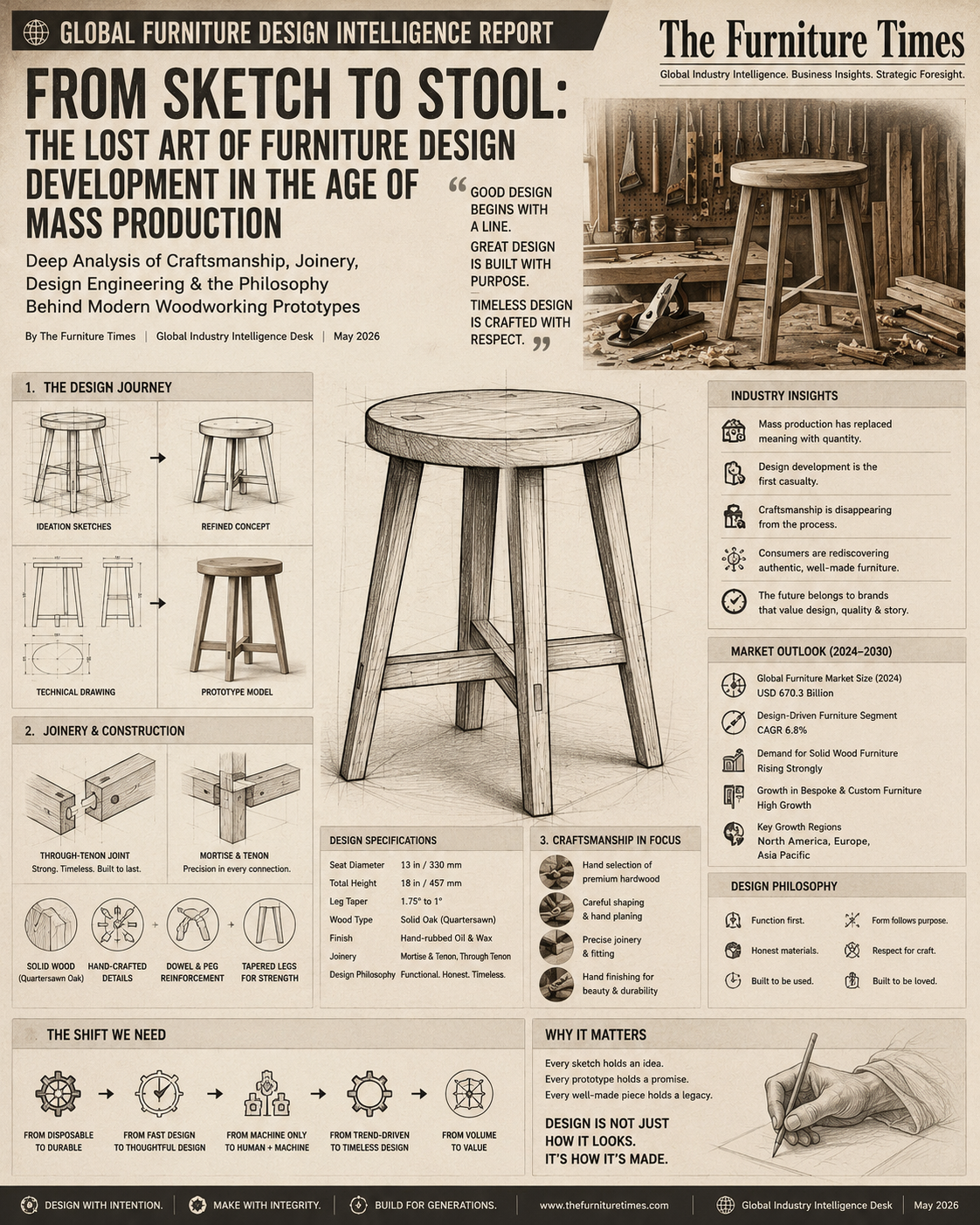
The uploaded image may appear to show a simple wooden stool.
But in reality, it represents something much deeper:
the complete philosophy of furniture craftsmanship.
The image beautifully documents the:
design process
engineering logic
woodworking intelligence
craftsmanship evolution
prototyping discipline
behind the creation of a single furniture product.
In the modern world dominated by:
mass production
flat-pack systems
AI-generated concepts
industrial furniture automation
the image reminds the global furniture industry of a powerful truth:
great furniture is not born instantly.
It is developed through thinking, testing, rejection, correction, engineering, and craftsmanship.
The Image Represents the Soul of Furniture Development
The uploaded image presents:
rejected sketches
final approved design
technical measurements
joinery systems
material selection
woodworking details
physical craftsmanship
This is not merely furniture design.
It is:
industrial problem-solving through craftsmanship.
The stool shown in the image reflects the complete journey from:
concept → refinement → engineering → final product.
Why Furniture Design Development Matters
Modern consumers often see only:
the final chair
the final table
the final sofa
the finished furniture piece
But behind every successful furniture product lies:
multiple failed ideas
engineering calculations
ergonomic testing
material experimentation
structural adjustments
craftsmanship refinement
The image openly shows:
rejected sketches.
And that may be the most important lesson in the entire visual.
Rejection Is Part of Great Furniture Design
The infographic clearly labels:
“Sketch 1 (Rejected)”
“Sketch 2 (Rejected)”
before presenting:
“Final Approved Design.”
This reveals one major industrial truth:
good furniture rarely comes from the first idea.
Furniture development requires:
iteration
improvement
refinement
structural analysis
aesthetic balance
This process is similar to:
architecture
automotive design
industrial engineering
product innovation systems
The Simplicity of the Stool Is Deceptive
At first glance, the stool appears simple.
But the engineering behind it is highly sophisticated.
The image documents:
leg tapering
splay angles
through-tenon joints
mortise & tenon systems
material selection
dimensional balance
This demonstrates:
intelligent structural craftsmanship.
The Stool: One of Humanity’s Oldest Furniture Forms
The stool is one of the oldest furniture categories in human history.
Why?
Because it represents:
simplicity
functionality
stability
utility
accessibility
Across civilizations, stools existed in:
homes
workshops
farms
temples
factories
artisan studios
Even today, stools remain important in:
hospitality
cafés
workshops
bars
kitchens
commercial interiors
Solid Oak: Why Material Choice Matters
The image specifies:
“Solid Oak (Quartersawn)”
This detail is extremely important.
Quartersawn oak is valued because of:
stability
grain consistency
durability
reduced warping
premium appearance
Material selection directly affects:
product lifespan
structural integrity
finish quality
craftsmanship value
The image demonstrates:
furniture engineering begins with material intelligence.
Why Oak Remains a Premium Furniture Material
Oak has historically been respected because it offers:
strength
longevity
workability
premium grain aesthetics
Luxury furniture brands still heavily use oak because consumers associate it with:
durability + heritage craftsmanship.
Through-Tenon Joint Analysis
The Engineering of Stability
One of the most important sections of the image explains:
through-tenon joinery.
This is one of woodworking’s strongest traditional joint systems.
The image demonstrates:
wedged tenons
structural penetration
mechanical locking systems
Unlike cheap fast furniture using:
screws
weak connectors
low-grade fittings
traditional joinery systems create:
long-term structural strength.
Mortise & Tenon: The Foundation of Furniture Craftsmanship
The image also documents:
mortise & tenon joinery.
This joint system has existed for centuries.
Why?
Because it provides:
stability
durability
structural integrity
weight distribution
Many luxury furniture pieces still use:
traditional joinery engineering.
Modern Furniture vs Traditional Craftsmanship
The image quietly compares two worlds:
Industrial Furniture
faster production
lower cost
mass scalability
versus:
Craftsmanship Furniture
precision
durability
artistic intelligence
engineering integrity
This is one of the biggest philosophical debates in the global furniture industry today.
The Importance of Tapered Legs
The image carefully documents:
tapered legs.
Why does this matter?
Because tapering affects:
visual balance
weight distribution
aesthetic elegance
structural dynamics
Furniture design is not only structural.
It is also:
visual engineering.
Ergonomics & Human Comfort
The stool height and dimensions shown in the blueprint reveal:
ergonomic thinking.
Furniture must interact with:
human posture
body balance
comfort
usability
Poorly designed furniture creates:
discomfort
instability
fatigue
poor customer experience
The image reflects:
human-centered design philosophy.
The Workbench Environment Matters
The workshop environment shown in the image is highly symbolic.
It includes:
woodworking tools
hand planes
chisels
timber pieces
workbench systems
This reflects:
the ecosystem behind craftsmanship.
Furniture is not created only through machines.
It is created through:
workshops
skills
tools
discipline
craftsmanship culture
The Human Craftsman in the Process
Although the image focuses heavily on technical design,
the workshop itself reminds us:
furniture is still deeply human.
Even with:
CNC routers
automation
AI systems
many of the finest furniture pieces still require:
human judgment
finishing skill
tactile understanding
material sensitivity
Why Furniture Prototyping Matters
The image represents:
prototyping culture.
Prototyping helps designers test:
stability
appearance
ergonomics
manufacturing feasibility
material efficiency
Without prototyping:
design errors become expensive.
This is why advanced furniture companies heavily invest in:
R&D
sample development
prototype workshops
Furniture Design Is Engineering + Art
The image beautifully demonstrates that furniture design combines:
mathematics
engineering
craftsmanship
ergonomics
artistic proportion
Furniture is not simply decoration.
It is:
functional industrial art.
The Rise of Design Intelligence in the Furniture Industry
Globally, furniture companies increasingly compete through:
design identity
engineering quality
craftsmanship differentiation
ergonomic innovation
Design development has become:
a strategic business advantage.
Sustainability & Long-Life Furniture
Traditional joinery and solid wood construction support:
longer furniture lifespan
repairability
sustainability
lower replacement frequency
This contrasts strongly with:
disposable furniture culture
low-cost weak assembly systems
The image represents:
sustainable craftsmanship philosophy.
Why Consumers Are Returning to Craftsmanship
Modern consumers increasingly seek:
authentic materials
handcrafted aesthetics
durable furniture
timeless design
artisanal identity
Mass-produced furniture often lacks:
emotional value
uniqueness
heritage feeling
The stool in the image symbolizes:
timeless woodworking intelligence.
The Educational Importance of the Image
This infographic is also valuable for:
woodworking schools
furniture academies
design students
carpentry education
industrial training systems
because it teaches:
workflow thinking
joinery logic
structural understanding
craftsmanship philosophy
TFT Academy can eventually support:
woodworking education
joinery systems
furniture design development
craftsmanship entrepreneurship
The Global Market for Handcrafted Furniture
Luxury handcrafted furniture continues growing globally because consumers increasingly value:
authenticity
human-made products
solid wood craftsmanship
engineering quality
Key markets include:
Europe
Japan
UAE
North America
luxury hospitality ecosystems
TFT Philosophical Industry Insight
The uploaded image reveals one of the deepest truths in furniture manufacturing:
Great furniture is not created by accident.
It is created through patience, rejection, refinement, engineering, craftsmanship, and discipline.
The rejected sketches are perhaps more important than the final stool itself.
Because they reveal:
the invisible process behind excellence.
In the modern AI and automation era,
the furniture industry must not lose:
craftsmanship culture
prototyping discipline
design intelligence
woodworking heritage
Final Thought
The stool shown in the image is far more than a seating product.
It represents:
furniture philosophy
woodworking intelligence
structural engineering
craftsmanship culture
industrial discipline
human creativity
And as the global furniture industry evolves toward:
automation
smart factories
AI-generated concepts
modular mass production
the value of:
thoughtful craftsmanship and intelligent furniture development
may become even more important.
Closing Insight
“The future of furniture will not only belong to factories that produce faster.
It will also belong to craftsmen, designers, and engineers who understand how to combine beauty, structure, material intelligence, and human experience into timeless products.”
