
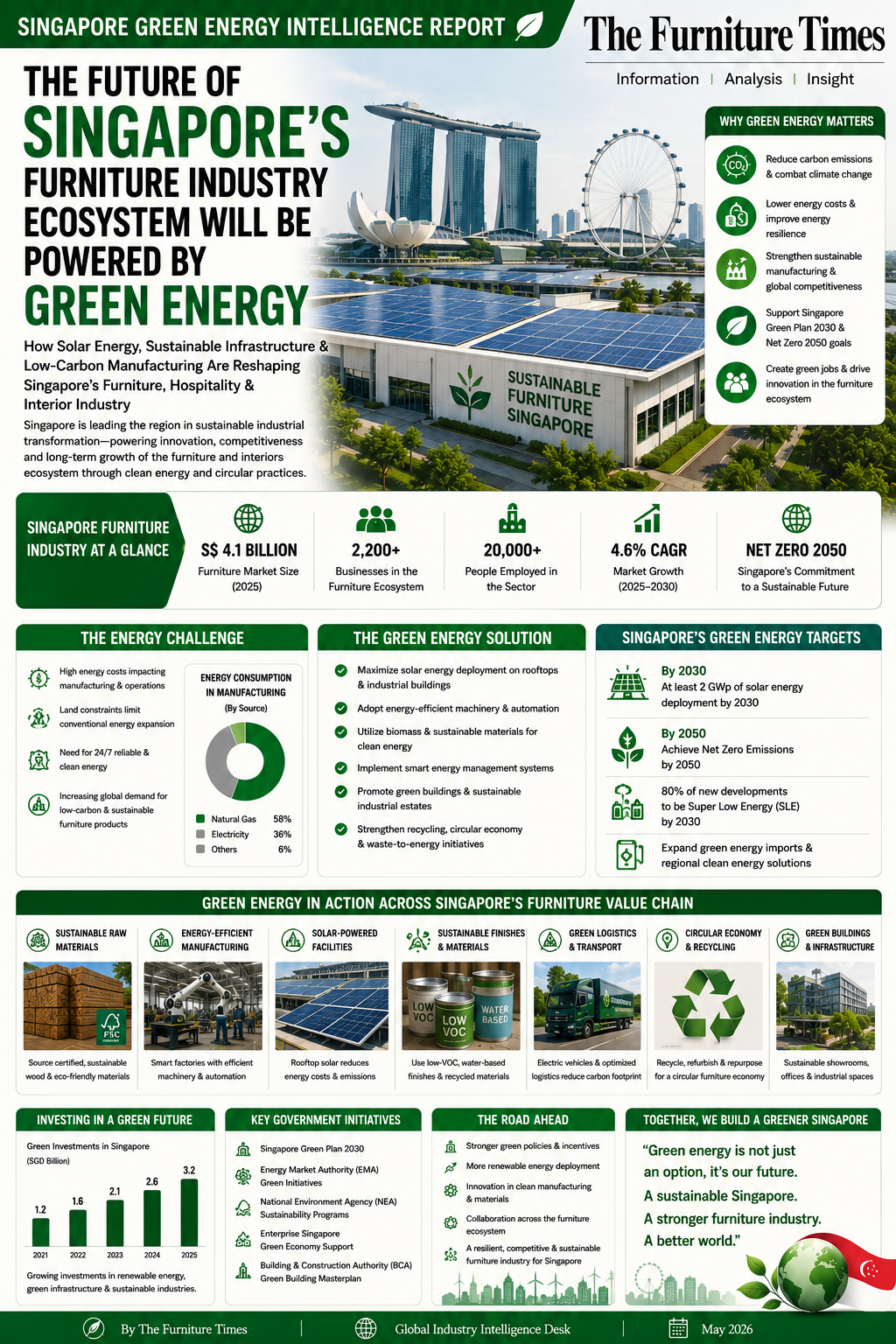
How Renewable Energy, ESG, Smart Interiors & Sustainable Urban Living Are Reshaping Singapore’s Furniture & Interior Ecosystem
Singapore Green Energy Intelligence Report | The Furniture Times
“The Future of Singapore’s Furniture Industry Ecosystem Will Be Driven by Green Energy, Smart Sustainability & Urban Innovation”
By The Furniture Times | Global Industry Intelligence Desk | May 2026
Singapore is entering a new era where:
sustainability
smart urban living
green infrastructure
energy efficiency
intelligent design
are becoming central to the future of business, manufacturing, hospitality, and modern living.
And this transformation is now reshaping:
Singapore’s furniture industry ecosystem.
For years, Singapore built its global identity through:
urban efficiency
advanced infrastructure
innovation
logistics leadership
premium real estate
modern architecture
smart city development
Now another transformation is emerging:
the green energy and sustainable living revolution.
Across:
furniture showrooms
hospitality spaces
luxury apartments
smart homes
offices
interior design projects
commercial developments
urban residential ecosystems
Singapore’s furniture industry is increasingly moving toward:
renewable energy integration
sustainable interiors
energy-efficient furniture systems
low-carbon operations
ESG-driven procurement
environmentally conscious living
🇸🇬 Singapore’s Furniture Industry Is Closely Linked to Urban Living
Unlike many large manufacturing countries, Singapore’s furniture ecosystem is heavily connected to:
urban residential demand
condominium living
hospitality design
premium compact interiors
office ecosystems
smart city infrastructure
luxury lifestyle environments
Singapore’s furniture market is deeply influenced by:
space optimization
interior efficiency
sustainability awareness
modern aesthetics
premium urban lifestyles
This makes Singapore one of Asia’s most important:
“future urban living laboratories.”
Why Green Energy Matters to Singapore’s Furniture Ecosystem
Singapore faces unique structural realities:
limited land space
high energy consumption
urban density
climate pressure
rising sustainability expectations
strong ESG focus
environmental planning requirements
The furniture ecosystem increasingly operates inside:
green-certified buildings
energy-efficient developments
smart condominiums
sustainable hospitality projects
This means furniture suppliers, interior companies, and commercial operators must increasingly align with:
sustainable urban ecosystems.
Sustainability Is Becoming Part of Singapore’s Identity
Singapore has positioned itself globally as:
a smart city
an innovation hub
a sustainability-focused urban economy
Government initiatives increasingly support:
green buildings
low-carbon infrastructure
sustainable transportation
energy-efficient development
environmentally responsible urban planning
This broader sustainability philosophy now influences:
real estate
architecture
hospitality
interiors
furniture procurement
Green Buildings Are Changing Furniture Demand
Singapore has one of Asia’s strongest green building ecosystems.
Modern developments increasingly prioritize:
energy efficiency
low-carbon operations
sustainable materials
environmental certifications
This directly affects furniture demand because green buildings increasingly require:
sustainable furniture
low-emission materials
recyclable components
energy-conscious interior systems
Furniture is becoming part of:
the environmental performance of buildings themselves.
ESG Is Reshaping the Furniture Industry
ESG — Environmental, Social, and Governance — is increasingly becoming a major force inside Singapore’s business ecosystem.
Corporate offices, hospitality operators, developers, and investors increasingly evaluate suppliers through:
environmental impact
sustainability standards
ethical sourcing
carbon awareness
renewable energy alignment
Furniture companies without sustainability positioning may eventually face:
reduced competitiveness
weaker corporate opportunities
limited premium-market access
Renewable Energy & Singapore’s Urban Reality
Singapore does not have large land areas for massive renewable farms like larger countries.
But it strongly supports:
rooftop solar systems
smart-grid infrastructure
energy-efficient buildings
intelligent energy management
This creates opportunities for:
solar-powered showrooms
energy-efficient furniture retail spaces
sustainable office interiors
green hospitality environments
Solar Energy in Commercial Furniture Ecosystem
Solar energy can support:
furniture showrooms
office operations
warehouse systems
logistics hubs
hospitality spaces
Benefits include:
reduced electricity costs
improved ESG performance
sustainability branding
operational efficiency
In Singapore, sustainability itself increasingly becomes:
part of luxury and premium branding.
Smart Interiors Are Becoming the Future
Singapore’s furniture ecosystem is moving toward:
intelligent living systems.
Future interiors may increasingly integrate:
energy-efficient furniture
smart lighting integration
modular sustainable systems
low-energy workspaces
multifunctional urban furniture
Furniture is no longer only decorative.
It is becoming part of:
energy-conscious living
urban efficiency
sustainable lifestyle design
Compact Urban Living Is Driving Sustainable Furniture
Singapore’s urban density creates strong demand for:
modular furniture
multifunctional sofas
compact storage systems
transformable furniture
space-efficient interiors
Sustainable urban living increasingly means:
“doing more with less space and less energy.”
This creates opportunity for:
durable furniture
modular systems
repairable furniture
long-life interior products
Hospitality Industry Is Driving Green Interior Demand
Singapore’s hospitality sector strongly influences furniture trends.
Hotels increasingly market:
sustainability
eco-conscious luxury
environmental responsibility
smart hospitality experiences
This affects procurement of:
sofas
lounge seating
outdoor furniture
hospitality interiors
commercial furnishings
Hospitality operators increasingly seek:
low-emission materials
sustainable upholstery
recyclable furniture systems
environmentally responsible suppliers
Sustainable Materials Are Becoming More Important
Singapore’s premium consumers increasingly prefer:
FSC-certified wood
recyclable materials
eco-friendly upholstery
low-VOC finishes
sustainable fabrics
The future furniture market increasingly values:
durability
environmental responsibility
low environmental impact
instead of:
disposable fast furniture.
Climate Change & Urban Sustainability
Climate instability increasingly affects:
energy costs
logistics
supply chains
insurance
shipping systems
industrial operations
Singapore’s urban planning increasingly focuses on:
climate resilience
sustainability
efficient energy use
Furniture ecosystems must adapt alongside these changes.
The Psychological Shift in Consumer Thinking
Modern consumers increasingly ask:
Is this furniture sustainable?
Was renewable energy involved?
Is the wood responsibly sourced?
Is the brand environmentally conscious?
Does this align with modern ESG values?
Especially among younger urban consumers, sustainability increasingly influences:
purchasing decisions
lifestyle identity
interior preferences
Circular Economy & Furniture Industry
Singapore strongly supports:
circular economy thinking.
This encourages:
furniture repair
recycling
modularity
reusable materials
long-life products
Future furniture ecosystems may increasingly prioritize:
refurbishment
reusability
sustainable product cycles
instead of:
disposable consumption.
Green Logistics & Furniture Distribution
Furniture logistics remain energy-intensive because products are:
bulky
storage-heavy
transportation-dependent
Future transformations may include:
electric delivery fleets
energy-efficient warehousing
smart inventory systems
low-carbon distribution models
Singapore’s logistics leadership creates strong opportunity for:
sustainable furniture logistics innovation.
Smart Offices & Sustainable Furniture
Singapore’s office ecosystem increasingly prioritizes:
employee wellbeing
sustainable workspaces
ergonomic furniture
energy-efficient office interiors
This increases demand for:
sustainable office seating
modular office systems
low-carbon workspaces
smart furniture ecosystems
SMEs Face Sustainability Challenges
Smaller furniture businesses may struggle with:
sustainability investment costs
ESG adaptation pressure
green certification expenses
operational transition costs
This creates need for:
sustainability education
financing support
green partnerships
digital transformation support
Singapore’s Opportunity: Asia’s Sustainable Urban Furniture Hub
Singapore may not become the largest furniture manufacturing nation.
But it has strong opportunity to become:
“Asia’s Smart Sustainable Furniture & Interior Innovation Hub.”
Why?
Because Singapore combines:
urban innovation
ESG leadership
premium interiors
smart city infrastructure
sustainability awareness
luxury compact living culture
Opportunity for Global Furniture Suppliers
Suppliers from:
Malaysia
Italy
Japan
Denmark
Indonesia
Vietnam
China
can benefit strongly if they provide:
sustainable furniture
ESG transparency
modular systems
low-carbon manufacturing
premium urban interior solutions
Singapore buyers increasingly value:
sustainability + efficiency + aesthetics.
Role of TFT & FISE in Singapore’s Green Transformation
Singapore’s furniture ecosystem increasingly needs:
sustainable supplier visibility
ESG communication systems
green product discoverability
digital sustainability storytelling
FISE can help buyers search suppliers by:
sustainability standards
green manufacturing capability
ESG alignment
low-carbon production
FISE.live can showcase:
sustainable interiors
modular furniture systems
smart urban living solutions
eco-friendly hospitality concepts
TFT can educate the industry about:
green transformation
ESG strategy
sustainable interiors
urban living innovation
TFT Philosophical Industry Insight
Singapore’s furniture transformation reflects a deeper global shift:
The future furniture industry will not only be about:
beauty
comfort
luxury
design
It will increasingly be about:
responsibility
energy intelligence
sustainability
environmental balance
long-term urban survival
Final Thought
Singapore’s furniture ecosystem is entering a future where:
smart living
sustainability
renewable energy
ESG
modular urban lifestyles
intelligent interiors
will increasingly work together.
The future winners will not only sell:
sofas
tables
wardrobes
office furniture
They will sell:
sustainable urban experiences
environmentally intelligent living
future-ready lifestyle ecosystems
Closing Insight
“The next generation of Singapore’s furniture industry will not only be defined by design and efficiency.
It will be defined by how intelligently and responsibly the ecosystem supports the future of urban living.”
