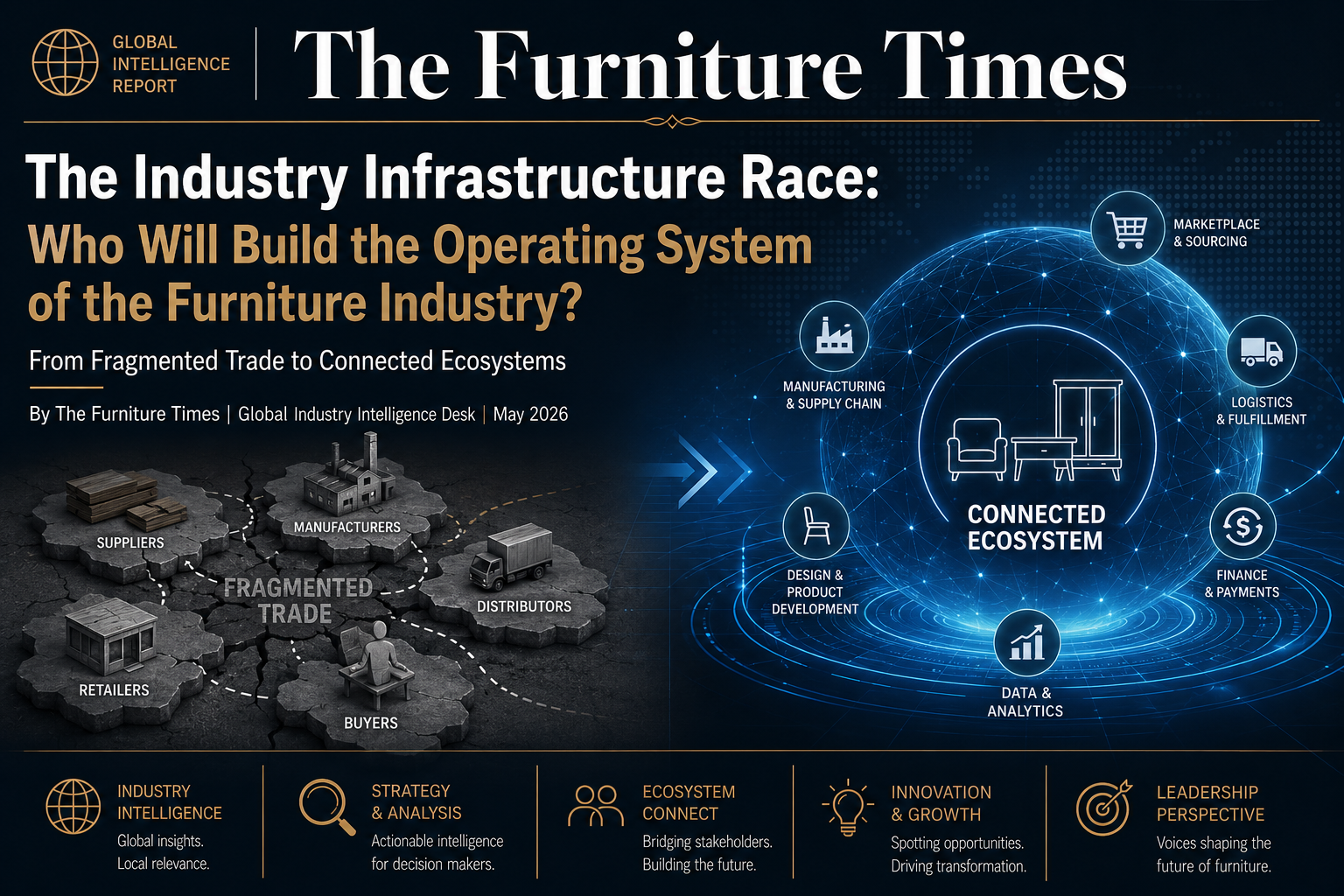
The Industry Infrastructure Race: Who Will Build the Operating System of the Furniture Industry?
Global Intelligence Report | The Furniture Times
From Fragmented Trade to Connected Ecosystems
By The Furniture Times | Global Industry Intelligence Desk | May 2026
The global furniture industry is entering a historic transition.
For decades, the industry evolved through:
- factories
- distributors
- exhibitions
- catalogs
- trade relationships
- physical showrooms
But today, a much larger transformation is beginning.
The furniture ecosystem is now moving toward:
- digital infrastructure
- AI-driven systems
- connected communication
- searchable visibility
- intelligent trade ecosystems
- real-time data networks
The question is no longer simply:
“Who manufactures furniture?”
The question is becoming:
“Who will build the infrastructure that connects the entire furniture industry together?”
Because the next era of the industry may not be controlled only by products.
It may be controlled by:
- systems
- intelligence
- visibility
- communication
- data
- digital ecosystems
The Furniture Industry Is Still Highly Fragmented
Despite being a global trillion-dollar ecosystem, the furniture industry remains structurally fragmented.
Many businesses still rely on:
- disconnected supply chains
- manual sourcing
- WhatsApp communication
- scattered directories
- offline referrals
- fragmented trade visibility
The Result
The ecosystem suffers from:
- poor discoverability
- slow communication
- inefficient sourcing
- disconnected workflows
- visibility inequality
- duplicated effort
The industry is globally massive… but digitally disconnected.
1. The Rise of Industry Infrastructure
Historically, industries evolved through physical infrastructure:
- ports
- roads
- factories
- logistics systems
Now industries are increasingly being reshaped by:
- digital infrastructure
- AI infrastructure
- communication infrastructure
- data infrastructure
The New Power Layer
The businesses that increasingly control industries are not always:
- manufacturers
- retailers
- exporters
They are often the companies controlling:
- search
- visibility
- communication
- data flow
- ecosystem access
Infrastructure is becoming the new competitive advantage.
2. Marketplaces Changed Commerce — But They May Not Be Enough
Marketplaces transformed how businesses:
- listed products
- reached buyers
- expanded digitally
But marketplaces alone may no longer solve the deeper needs of the furniture ecosystem.
Why?
Because the furniture industry requires more than:
- product listings
- transactions
- catalogs
The industry also needs:
- communication
- RFQ systems
- supplier intelligence
- factory transparency
- live engagement
- project coordination
The Industry Is Moving Beyond Basic Marketplaces
The next evolution is:
- connected ecosystems
- integrated infrastructure
- intelligent discovery systems
The future may not belong to marketplaces alone.
It may belong to ecosystem platforms.
3. AI Is Becoming the New Industry Intelligence Layer
Artificial Intelligence is rapidly reshaping:
- sourcing
- search
- customer service
- forecasting
- logistics
- manufacturing
- lead generation
AI Is Changing How Buyers Discover Suppliers
Instead of manually searching through:
- websites
- exhibitions
- directories
AI systems increasingly:
- recommend suppliers
- compare options
- predict buyer intent
- automate sourcing workflows
AI Changes Visibility Dynamics
The future of discoverability may increasingly depend on:
- structured data
- searchable systems
- algorithmic visibility
- intelligent categorization
Businesses that are digitally invisible may become commercially invisible.
4. Communication Infrastructure Is Becoming Critical
One of the biggest weaknesses in the furniture industry is fragmented communication.
The ecosystem still depends heavily on:
- emails
- random chats
- WhatsApp groups
- scattered conversations
This Creates Operational Chaos
- RFQs get buried
- follow-ups are missed
- buyers wait too long
- communication becomes disconnected
The Future Requires Structured Communication
The next generation of industry systems will increasingly require:
- integrated messaging
- RFQ-driven communication
- lead tracking
- centralized business conversations
Communication infrastructure is becoming trade infrastructure.
5. Data Is Becoming the New Industry Currency
The future furniture economy may increasingly depend on:
- market intelligence
- supplier intelligence
- demand forecasting
- buyer behavior analysis
- logistics visibility
The New Competitive Edge
Businesses with stronger:
- data access
- visibility systems
- intelligence networks
may outperform businesses relying only on traditional relationships.
Why Data Matters
Data improves:
- sourcing decisions
- production planning
- market positioning
- pricing strategy
- operational efficiency
The future industry leader may not only build products.
It may build intelligence systems.
6. Visibility Is Becoming a Strategic Asset
Historically, visibility depended on:
- exhibitions
- showrooms
- sales teams
- physical networking
Today, visibility increasingly depends on:
- search systems
- AI discoverability
- digital presence
- ecosystem integration
The Industry Shift
Businesses now compete not only for:
- customers
but for:
- discoverability
- search presence
- algorithmic relevance
- digital authority
Visibility is becoming infrastructure.
7. The Industry Is Moving Toward Connected Ecosystems
The next-generation furniture ecosystem may combine:
Search
AI
Communication
Live commerce
Data intelligence
Supplier discovery
RFQ systems
Networking infrastructure
inside one connected environment.
The Bigger Shift
The furniture industry is evolving from:
- fragmented operations
toward:
- integrated digital ecosystems
The Future Furniture Operating System May Include:
- searchable suppliers
- AI-powered sourcing
- structured communication
- live commerce systems
- intelligent lead flow
- global industry intelligence
The industry is moving toward platform-driven infrastructure.
8. The Rise of the Furniture Industry Operating System
This is where a new category is emerging.
Not simply:
- marketplaces
- directories
- websites
But:
Industry Operating Systems
What Is an Industry Operating System?
An ecosystem that combines:
- discovery
- communication
- intelligence
- visibility
- commerce
- infrastructure
inside one connected framework.
Why This Matters
The future industry leader may increasingly control:
- how businesses are discovered
- how communication happens
- how suppliers connect
- how data flows
- how visibility is distributed
9. The Strategic Positioning of TFT & FISE
This is where:
The Furniture Times
and
Furniture Industry Search Engine
begin representing more than media or search alone.
TFT Represents:
- intelligence
- media
- education
- industry narrative
- ecosystem authority
FISE Represents:
- discovery
- visibility
- communication infrastructure
- connected trade systems
- live commerce integration
Together They Form:
Intelligence + Infrastructure
The Ecosystem Vision
- Furniture Industry Search Engine → Search & Visibility
- FISE Connect → Communication Infrastructure
- FISE.live → Live Commerce
- TFT Intelligence → Market Analysis & Industry Leadership
- Furnipedia → Industry Knowledge Infrastructure
- TFT Academy → Education Infrastructure
The future may belong to connected ecosystem infrastructure rather than isolated platforms.
TFT Deep Industry Insight
The furniture industry is entering a race far bigger than ecommerce.
It is entering:
the infrastructure race.
The next decade may be defined by:
- who controls visibility
- who organizes communication
- who structures data
- who connects ecosystems
- who builds digital trust
The Biggest Opportunity
The furniture industry still lacks:
- unified infrastructure
- connected communication
- organized discoverability
- integrated intelligence systems
This creates one of the largest digital infrastructure opportunities in the global B2B economy.
Final Thought
The future furniture industry may no longer be led only by:
- factories
- products
- showrooms
It may increasingly be led by:
- platforms
- systems
- intelligence
- communication
- infrastructure
The biggest transformation in furniture history may not be what the industry manufactures.
It may be how the industry becomes digitally connected.
And the race to build that future has already begun.