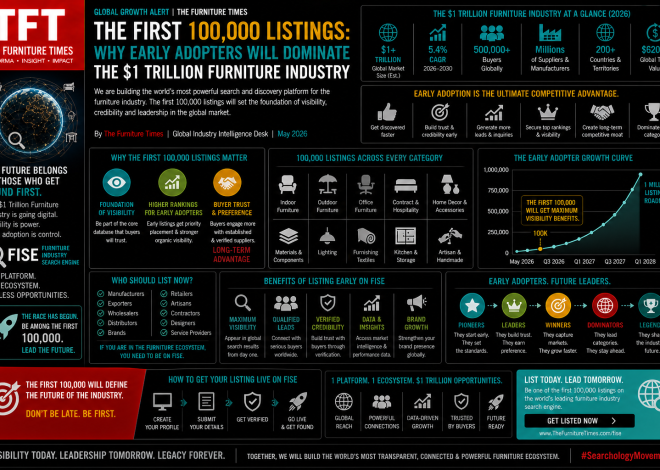
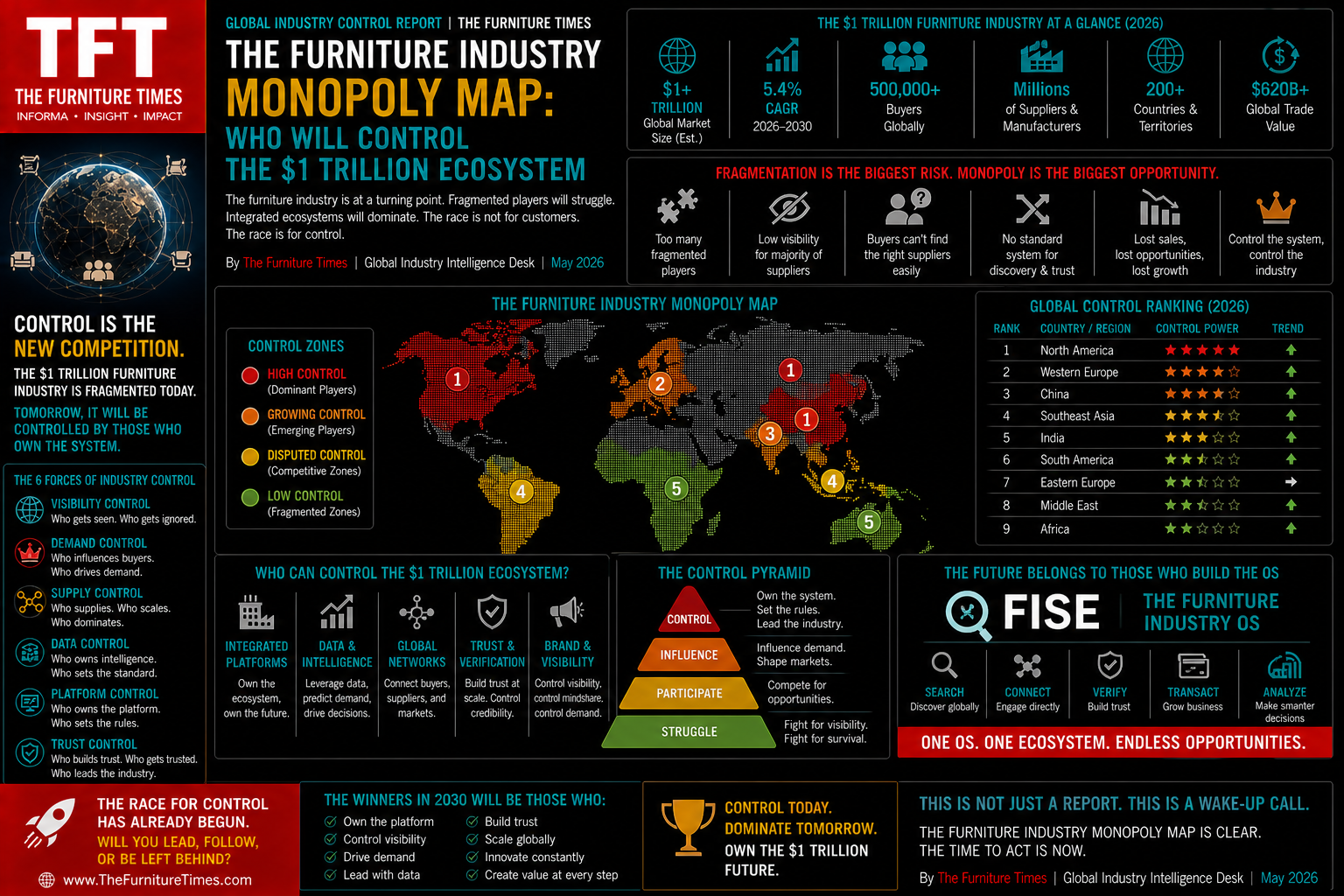
The Furniture Industry Monopoly Map: Who Will Control the $1 Trillion Ecosystem
Global Industry Control Report | The Furniture Times
By The Furniture Times | Global Industry Intelligence Desk | May 2026
Executive Summary: Every Industry Consolidates—Furniture Is Next
The global furniture ecosystem has crossed $1 trillion—yet it remains one of the last major industries without a clear control structure.
No single discovery layer
No unified data system
No dominant transaction infrastructure
That window is closing.
Every fragmented industry eventually consolidates around control layers.
Furniture is now entering that phase.
The Core Thesis
Control does not come from production.
Control comes from owning the layers that connect the industry.
The Monopoly Map: The 4 Control Layers
1) Demand Control Layer
Who captures buyer intent
What It Means
Where buyers start
What they search
Who they see
Current State
Search engines
Marketplaces
Digital platforms
Demand is no longer created at stores.
It is captured at search.
Strategic Insight
Whoever captures demand early… controls the rest of the flow.
2) Visibility Control Layer
Who decides who gets seen
What It Means
Rankings
Listings
Discoverability
Current Reality
Only a small percentage of suppliers are visible
The majority remain hidden
Visibility is now a gatekeeper
Strategic Insight
If you control visibility, you control opportunity.
3) Data Control Layer
Who structures the ecosystem
What It Means
Supplier profiles
Product categorization
Market intelligence
Why It Matters
Data determines:
Matching
Recommendations
Rankings
Unstructured industries cannot scale
Strategic Insight
Data ownership = decision control
4) Transaction Control Layer
Who captures revenue flow
What It Means
Orders
Payments
Deal execution
Current State
Fragmented
Offline
Slow
The transaction layer is still open—and highly valuable
Strategic Insight
Who owns transactions… owns revenue streams
The Power Equation
Control Visibility → Control Demand → Control Deal Flow → Control Revenue → Control Industry
The Current Players (Reality Check)
Who Has Partial Control Today
Manufacturers
Control production
Do NOT control demand
Retailers
Control distribution
Losing digital dominance
Exhibitions
Control temporary visibility
Limited scale
Digital Platforms
Beginning to capture control
Not yet unified
No single entity controls all layers—yet
The Shift in Power
Old System
Physical control
Relationship-driven
Geography-based
New System
Digital control
Data-driven
Global access
Control is moving upstream—to discovery and data
The Emerging Winners
Who Will Win
1. Platform Builders
Build discovery systems
Enable global access
2. Data Owners
Structure the ecosystem
Provide intelligence
3. System Integrators
Connect layers
Control flow
The winners will not be factories.
They will be systems.
The Likely Losers
Who Will Lose
1. Invisible Suppliers
No digital presence
No structured data
2. Slow Adopters
Delay system entry
Miss early positioning
3. Overdependent Businesses
Rely only on old channels
Lack scalability
Invisibility is the biggest risk in 2026
The Role of Furniture Industry Search Engine
FISE is positioned across:
Visibility layer
Discovery layer
Data layer
What This Means
Controls supplier discoverability
Structures ecosystem data
Enables buyer-supplier connection
From platform → to control layer
The Role of The Furniture Times
TFT controls:
Industry narrative
Intelligence
Market perception
Narrative control shapes industry direction
Combined Power
TFT (Intelligence) + FISE (System) = Full-stack influence
TFT Deep Analysis: The Consolidation Phase Has Begun
The furniture industry is entering:
Phase 1: Fragmented Market
Disconnected
Phase 2: Digital Awareness
Web presence
Phase 3: Search Economy
Discovery
Phase 4: System Consolidation (NOW)
Control layers begin to merge
The Monopoly Outcome
Scenario 1: Fragmentation Continues
Slow growth
Inefficiency
Missed opportunities
Scenario 2: System Dominance (Likely)
Centralized discovery
Structured data
Faster deal flow
One system becomes the industry default
Strategic Implications
For Suppliers
Must enter visibility layer
Must compete for discoverability
For Buyers
Will rely on systems
Will choose from visible options
For Investors
Platform plays dominate
Data-driven businesses scale
The Final Reality
The furniture industry will not stay fragmented.
It will consolidate around control layers.
Final Thought
You are not just competing in the furniture industry.
You are competing for a position inside the monopoly map.
Join the system early…
or compete from the outside.

Related Posts
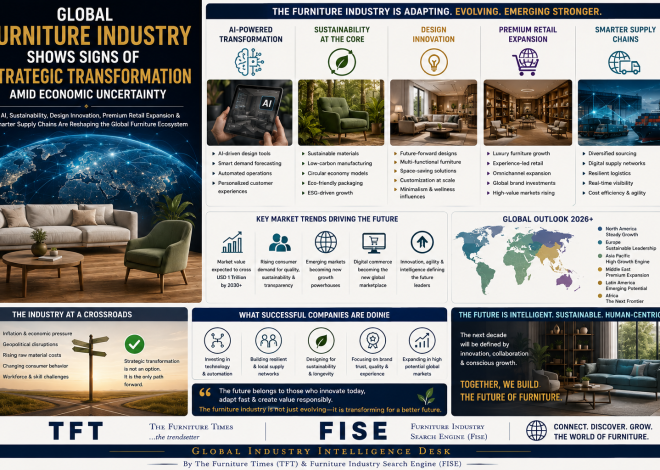
Global Furniture Industry Shows Signs of Strategic Transformation Amid Economic Uncertainty
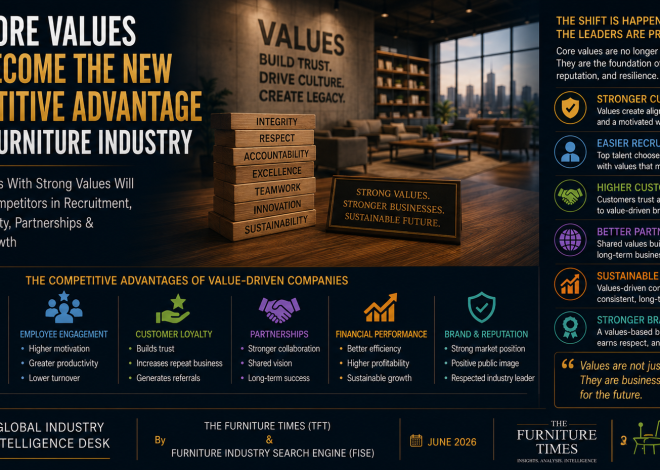
Why Core Values Will Become the New Competitive Advantage in the Furniture Industry