
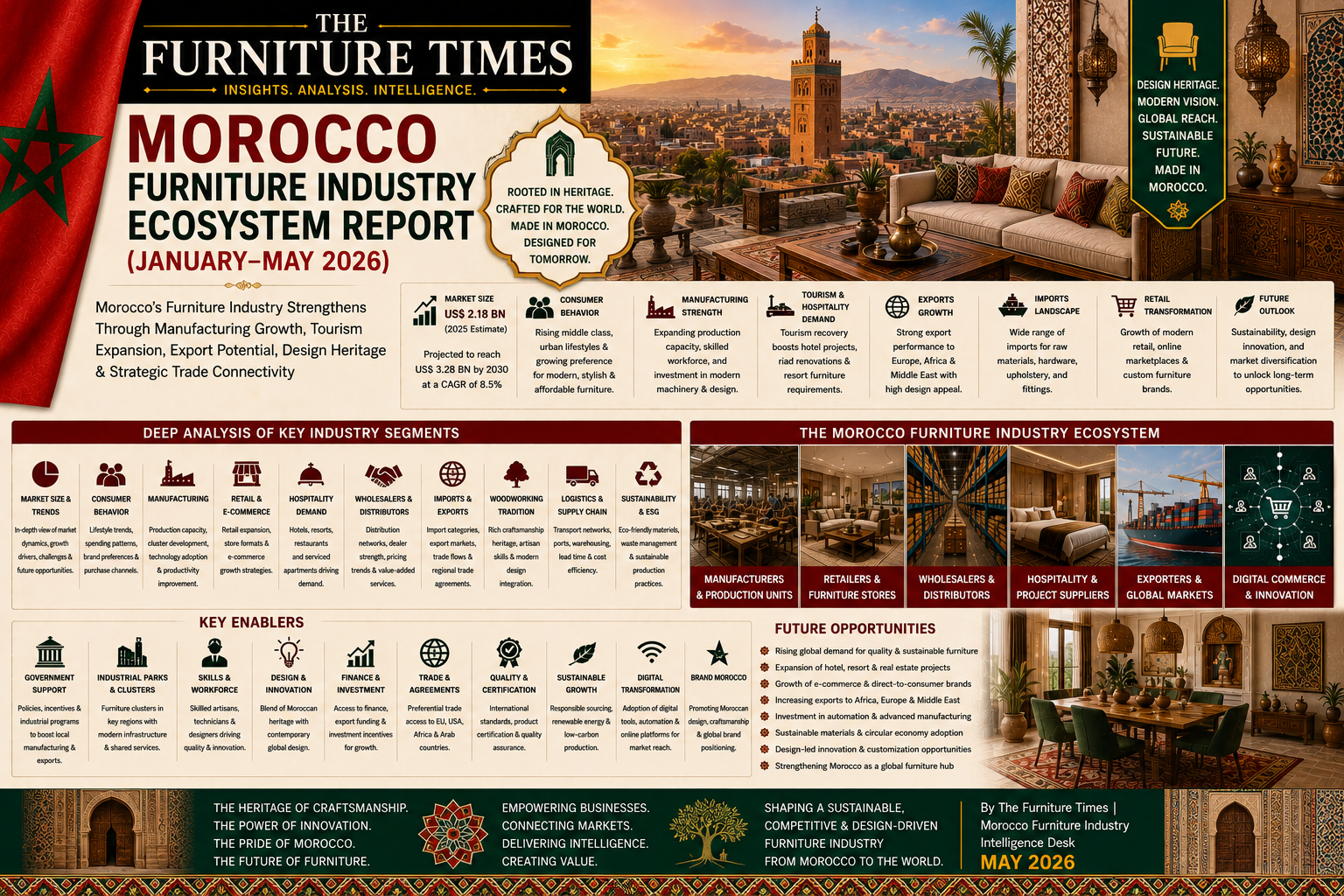
Morocco’s Furniture Industry Strengthens Through Manufacturing Growth, Tourism Expansion, Export Potential, Design Heritage & Strategic Trade Connectivity
Morocco Furniture Industry Ecosystem Report (January–May 2026)
Deep Analysis of Market Size, Consumer Behavior, Manufacturing, Retail, Hospitality Demand, Imports, Exports, Woodworking Tradition, Logistics, Sustainability & Future Opportunities
By The Furniture Times | Morocco Furniture Industry Intelligence Desk | May 2026
Morocco entered 2026 as one of Africa’s most strategically positioned furniture industry ecosystems.
Located at the crossroads of:
Africa
Europe
Mediterranean markets
Middle East
Morocco continues building its reputation as a center for:
furniture manufacturing
interior design
hospitality furnishing
handcrafted furniture
export-oriented production
woodworking craftsmanship
Between January and May 2026, Morocco’s furniture sector benefited from:
tourism growth
hospitality investment
housing demand
export opportunities
urban development
growing consumer spending
The industry is increasingly being shaped by:
Tourism
Hospitality
Manufacturing
Craftsmanship
Export Growth
Sustainability
Digital Visibility
January–May 2026 Industry Overview
The first five months of 2026 highlighted strong long-term potential.
Positive Drivers
tourism recovery
hospitality development
residential construction
export opportunities
woodworking tradition
regional trade access
urban population growth
Key Challenges
imported competition
raw material costs
modernization needs
logistics expenses
manufacturing efficiency
digital visibility gaps
Despite these challenges, Morocco remains one of North Africa’s most attractive furniture markets.
Morocco’s Furniture Market Outlook
Morocco’s furniture market continues benefiting from:
urbanization
tourism
residential growth
commercial construction
hospitality investment
middle-class expansion
Demand remains strong across:
residential furniture
hospitality furniture
office furniture
handcrafted furniture
luxury furniture
outdoor furniture
custom interiors
Morocco’s market benefits from a unique combination of local demand and export opportunity.
Casablanca Remains Morocco’s Furniture Business Capital
Casablanca remains the largest furniture and commercial center in Morocco.
Demand is generated by:
residential projects
corporate offices
hotels
shopping centers
mixed-use developments
luxury residences
Casablanca functions as:
Furniture Trade Hub
Distribution Center
Design Marketplace
Commercial Procurement Hub
Many of Morocco’s largest furniture retailers, distributors, and manufacturers operate from Casablanca.
Marrakech Drives Hospitality Furniture Demand
Marrakech remains one of Morocco’s strongest hospitality markets.
The city’s tourism ecosystem supports demand for:
hotel furniture
resort furniture
restaurant furniture
luxury outdoor furniture
riad furnishings
custom interiors
The hospitality sector increasingly seeks:
Authentic Design
Luxury Comfort
Cultural Identity
Sustainability
Marrakech remains one of Africa’s most influential hospitality design markets.
Rabat Supports Government & Commercial Demand
As Morocco’s capital city, Rabat creates demand through:
government buildings
diplomatic facilities
educational institutions
commercial offices
residential developments
Office furniture and institutional furniture remain important segments in the city.
Morocco’s Design Heritage Is a Competitive Advantage
One of Morocco’s strongest furniture assets is its design identity.
Moroccan furniture is globally recognized for:
handcrafted woodwork
artisan detailing
geometric patterns
traditional craftsmanship
luxury interior styling
Products often combine:
wood
metal
leather
textiles
artisanal finishing
This gives Moroccan furniture a distinctive global identity.
Consumer Behavior Is Changing
Moroccan consumers are becoming more design-conscious.
Purchasing decisions increasingly focus on:
aesthetics
durability
affordability
customization
quality
delivery speed
The modern buying journey increasingly follows:
Search → Compare → Visit → Purchase
Digital research continues influencing furniture decisions.
Residential Furniture Remains the Largest Segment
Housing demand remains one of the strongest drivers.
Popular categories include:
Living Room Furniture
sofas
coffee tables
entertainment units
Bedroom Furniture
beds
wardrobes
storage furniture
Dining Furniture
dining tables
chairs
family dining sets
Kitchen Furniture
cabinetry
storage systems
fitted solutions
Residential furnishing remains the foundation of market demand.
Hospitality Furniture Is a Major Growth Engine
Tourism remains one of Morocco’s strongest economic sectors.
Demand comes from:
hotels
resorts
riads
restaurants
beach clubs
serviced apartments
Major tourism destinations include:
Marrakech
Casablanca
Agadir
Tangier
Fez
Rabat
Products in demand include:
hotel beds
lobby furniture
restaurant seating
outdoor furniture
custom hospitality furniture
FF&E packages
Hospitality remains one of the strongest opportunities for furniture suppliers.
Outdoor Furniture Continues Growing
Morocco’s climate and tourism industry support strong outdoor furniture demand.
Popular products include:
terrace furniture
garden furniture
poolside loungers
café seating
resort furniture
Materials in demand include:
teakwood
aluminium
synthetic rattan
rope furniture
weather-resistant upholstery
Outdoor furniture continues expanding as tourism and hospitality grow.
Furniture Manufacturing Continues Expanding
Morocco possesses a growing furniture manufacturing base.
The sector includes:
woodworking workshops
cabinetry manufacturers
custom furniture makers
hospitality furniture suppliers
artisan furniture producers
Advantages include:
skilled craftsmanship
strategic location
export access
competitive labor costs
The industry’s next growth phase depends on modernization and scalability.
Handcrafted Furniture Remains Important
Morocco continues benefiting from a strong artisan culture.
Handcrafted furniture remains popular in:
luxury hospitality
premium residential projects
export markets
interior design projects
This segment creates differentiation from mass-produced imported furniture.
Imports Continue Influencing Competition
Morocco imports furniture and furniture-related products from:
China
Türkiye
Italy
Spain
Portugal
Malaysia
Vietnam
Imported furniture remains competitive in:
affordable furniture
office furniture
ready-to-assemble products
Local manufacturers increasingly compete through:
Design
Craftsmanship
Customization
Local Service
Export Potential Is Growing
Morocco’s location creates export opportunities into:
Europe
West Africa
North Africa
Middle East
The country benefits from:
Mediterranean access
modern ports
trade agreements
strategic geography
Future export growth remains one of the biggest industry opportunities.
Tangier Med Creates Logistics Advantage
One of Morocco’s strongest assets is:
Tangier Med Port
The port strengthens:
exports
imports
regional distribution
manufacturing supply chains
Tangier Med has become one of Africa’s most important logistics hubs.
This creates a major advantage for furniture exporters.
Sustainability Is Becoming More Important
Environmental awareness continues increasing.
Future buyers increasingly evaluate:
sustainable materials
responsible sourcing
durable products
environmentally friendly production
Hospitality operators and export buyers increasingly prioritize sustainability.
Office Furniture Demand Remains Strong
Demand continues growing from:
government institutions
commercial offices
startups
educational facilities
Popular products include:
desks
ergonomic chairs
meeting tables
storage systems
Office furniture remains a stable commercial category.
Digital Commerce Is Growing
Furniture retailers increasingly use:
websites
social media
online catalogues
WhatsApp inquiries
e-commerce platforms
The customer journey increasingly begins online.
Furniture businesses increasingly recognize:
Visibility Creates Opportunity
Digital Visibility Is Morocco’s Next Opportunity
Many excellent Moroccan furniture businesses remain underrepresented online.
Common challenges include:
limited SEO presence
weak websites
poor international discoverability
lack of digital catalogs
Future success increasingly depends on:
Searchability
Discoverability
Online Trust
AI Visibility
Businesses that become easier to find will attract more buyers.
Competition Is Intensifying
Morocco competes with:
Türkiye
Egypt
China
Vietnam
Italy
Spain
Future competitiveness will depend on:
design
manufacturing quality
export readiness
branding
sustainability
digital visibility
Future Opportunities Through 2035
The strongest opportunities include:
Hospitality Furniture
Tourism growth supports demand.
Luxury Furniture
Premium residential and hotel projects continue expanding.
Outdoor Furniture
Hospitality and residential demand remain strong.
Handcrafted Furniture
Artisan products maintain global appeal.
Furniture Exports
Europe and Africa create opportunity.
Sustainable Furniture
Demand continues increasing.
Digital Commerce
Online furniture discovery accelerates.
The Furniture Times Industry Insight
Morocco’s furniture industry between January and May 2026 revealed a powerful reality:
The country possesses one of Africa’s strongest combinations of:
craftsmanship
tourism
design
logistics
export potential
Future winners will combine:
Manufacturing
Design Excellence
Sustainability
Digital Visibility
Export Capability
Customer Trust
Final Thought
Morocco entered 2026 with strong long-term furniture industry potential.
The country possesses:
rich design heritage
tourism demand
manufacturing capability
artisan expertise
export access
logistics strength
However, businesses must navigate:
imported competition
modernization needs
digital visibility challenges
sustainability requirements
The future Moroccan furniture ecosystem will increasingly reward businesses that become:
Visible
Trusted
Sustainable
Export-Ready
Design-Led
Digitally Discoverable
Because Morocco’s furniture future is not only about making furniture.
It is about transforming craftsmanship, culture, design, and trade into one of Africa’s most influential furniture ecosystems.
