Furniture Tourism: The Missing Trillion-Dollar Opportunity in Global Tourism
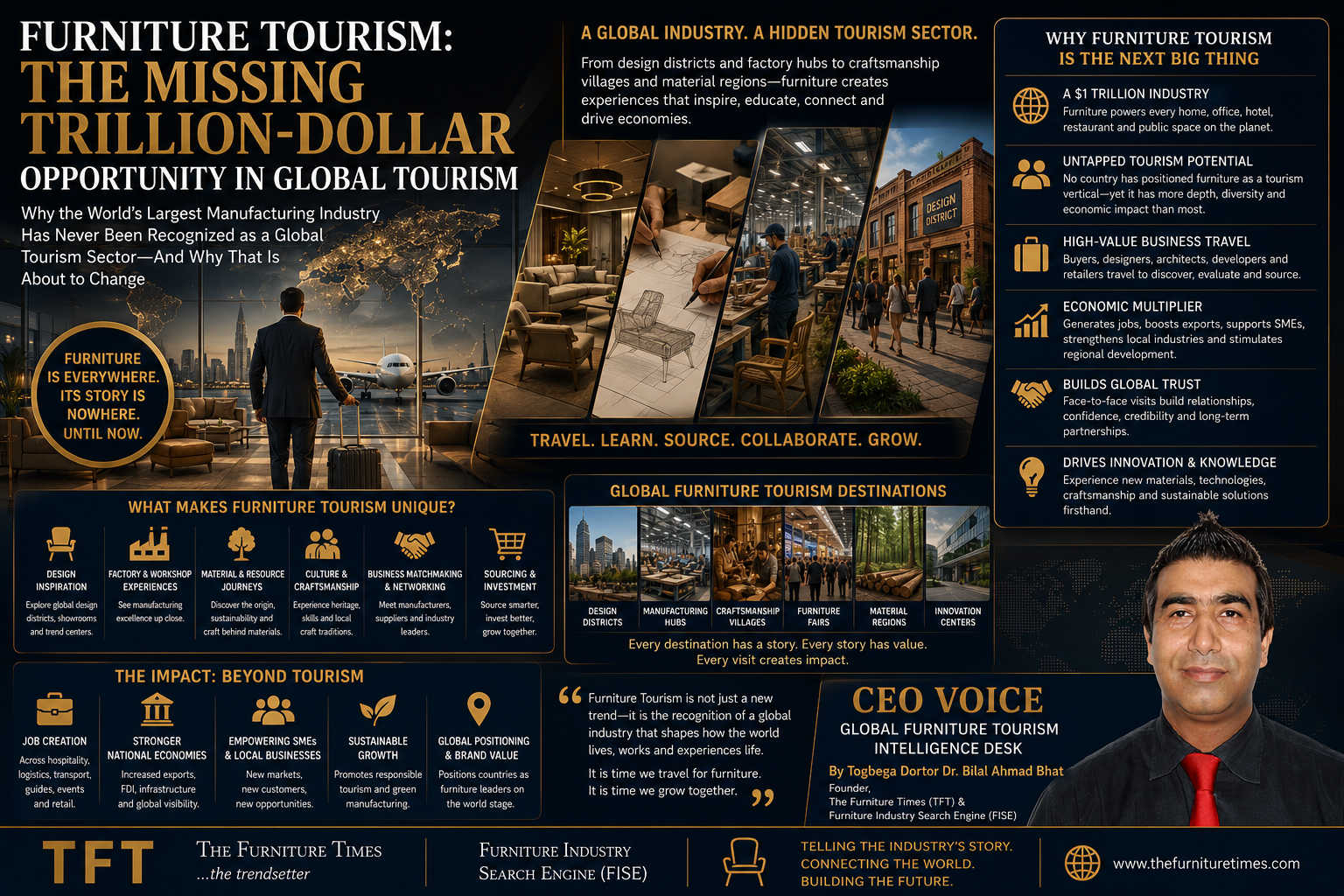
Why the World’s Largest Manufacturing Industry Has Never Been Recognized as a Global Tourism Sector—And Why That Is About to Change
CEO Voice | Global Furniture Tourism Intelligence Desk
By Togbega Dortor Dr. Bilal Ahmad Bhat
Founder, The Furniture Times (TFT) & Furniture Industry Search Engine (FISE)
For decades, governments have invested billions of dollars in developing tourism as a strategic pillar of national economic growth.
Countries compete to attract visitors.
Cities build international brands.
Regions develop unique tourism identities.
The global tourism industry has successfully diversified into numerous specialised sectors.
Medical Tourism.
Educational Tourism.
Sports Tourism.
Religious Tourism.
Adventure Tourism.
Food Tourism.
Wine Tourism.
Cruise Tourism.
Industrial Tourism.
Luxury Tourism.
Business Tourism.
Each sector has generated billions of dollars, created millions of jobs, attracted foreign investment and strengthened national economies.
Yet one of the world’s largest manufacturing industries has never been officially recognised as its own tourism sector.
The furniture industry.
This is one of the greatest missed opportunities in global tourism.
Furniture is not merely a product.
It is culture.
It is craftsmanship.
It is engineering.
It is innovation.
It is design.
It is architecture.
It is manufacturing.
It is sustainability.
It is entrepreneurship.
It is trade.
It is education.
It is technology.
It is lifestyle.
Despite touching every home, hotel, office, school, hospital, airport and commercial building on Earth, furniture has remained largely absent from national tourism strategies.
According to Togbega Dortor Dr. Bilal Ahmad Bhat, Founder of The Furniture Times (TFT) and Furniture Industry Search Engine (FISE), this gap represents one of the biggest untapped opportunities for the global furniture ecosystem.
“For decades, people have travelled for healthcare, education, sports, food, exhibitions and culture. Why has nobody encouraged people to travel for one of the world’s largest manufacturing industries? Furniture Business Tourism is not simply another travel category—it is an economic development strategy that can transform industries, cities and nations.”
Why Has Furniture Never Been Recognized?
The furniture industry has traditionally focused on manufacturing, exports and exhibitions.
Governments promoted furniture fairs.
Manufacturers participated in trade exhibitions.
Export agencies organised buyer missions.
Retailers opened showrooms.
These initiatives generated business.
However, they rarely became part of a long-term tourism strategy.
The industry has been viewed as manufacturing.
Never as a destination.
That perception limited its full economic potential.
The world has been travelling to furniture exhibitions.
But not to furniture ecosystems.
Compare Furniture Tourism with Other Successful Tourism Models
Medical Tourism
Patients travel internationally seeking specialised treatment.
Entire ecosystems developed around hospitals, hotels, transport, insurance and recovery services.
Medical tourism became a multi-billion-dollar industry.
Furniture Business Tourism can achieve similar ecosystem growth.
Instead of hospitals, visitors travel to factories, furniture cities, design centres and innovation parks.
Wine Tourism
Wine-producing regions transformed vineyards into international destinations.
Visitors no longer purchase wine alone.
They experience production.
Culture.
History.
Education.
Local communities.
Furniture manufacturing can offer similar experiences through factory visits, craftsmanship demonstrations and design studios.
Industrial Tourism
Automotive factories.
Aircraft manufacturers.
Technology companies.
Chocolate factories.
Many industrial sectors now welcome visitors.
Furniture manufacturing offers equally fascinating experiences.
Yet comparatively few factories actively welcome international business visitors.
Sports Tourism
People travel to watch competitions.
Visit stadiums.
Attend championships.
Train professionally.
Furniture also has internationally recognised events.
Trade fairs.
Design weeks.
Product launches.
Industry summits.
These events can become year-round tourism ecosystems rather than isolated exhibitions.
Furniture Is Already Attracting Travelers
Without officially calling it Furniture Tourism, millions already travel each year to:
- Furniture exhibitions
- Manufacturing clusters
- Factory inspections
- Supplier audits
- Design weeks
- Furniture sourcing centres
- Interior design studios
- Wholesale furniture markets
Cities like:
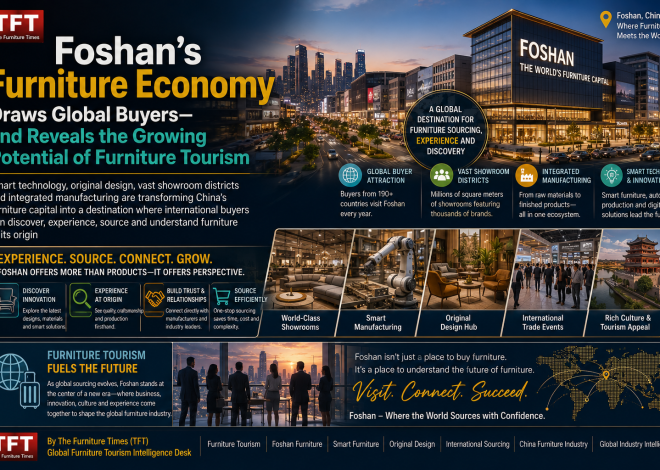
Foshan.
Milan.
High Point.
Muar.
Jepara.
Poznań.
Dongguan.
Guangzhou.
Already receive significant numbers of business visitors connected to furniture.
The activity exists.
The identity does not.
The Economic Potential Is Enormous
Furniture Business Tourism benefits far more than manufacturers.
It stimulates entire economies.
Business visitors require:
Hotels.
Restaurants.
Airlines.
Taxi services.
Rail transport.
Business centres.
Conference facilities.
Translation services.
Inspection companies.
Shipping agents.
Banks.
Insurance.
Retail.
Local tourism.
Educational institutions.
Every sourcing trip creates spending across multiple industries.
Instead of measuring tourism only by leisure travellers, countries can diversify by attracting high-value business visitors.
Tourism Diversification Creates National Strength
Economic resilience depends on diversification.
Countries dependent upon seasonal tourism remain vulnerable.
Furniture Business Tourism operates throughout the year.
Factories continue operating.
Manufacturing continues.
Innovation continues.
Business meetings continue.
Unlike seasonal tourism, industrial business tourism creates continuous economic activity.
This makes national tourism industries stronger and more resilient.
SMEs Become Global Destinations
One of the greatest beneficiaries will be SMEs.
Thousands of small manufacturers produce exceptional furniture.
Unfortunately, international buyers rarely discover them.
Furniture Business Tourism changes this.
Instead of waiting to attend expensive exhibitions, SMEs can welcome buyers directly into their factories.
Relationships become personal.
Trust develops naturally.
Business grows organically.
Global opportunities become accessible.
Furniture Cities Become International Brands
Countries often invest heavily in branding cities.
Furniture cities possess unique competitive advantages.
They combine:
Manufacturing.
Innovation.
Culture.
Craftsmanship.
Education.
Technology.
Trade.
Tourism.
Cities recognised for furniture excellence can promote themselves globally.
Furniture becomes part of national identity.
Building Confidence Across the Industry
Furniture Business Tourism does more than create revenue.
It creates confidence.
Manufacturers gain confidence when buyers visit factories.
Buyers gain confidence when they understand production.
Governments gain confidence through stronger exports.
Investors gain confidence through greater transparency.
Young entrepreneurs gain confidence by witnessing successful businesses.
Confidence strengthens industries.
Education Meets Manufacturing
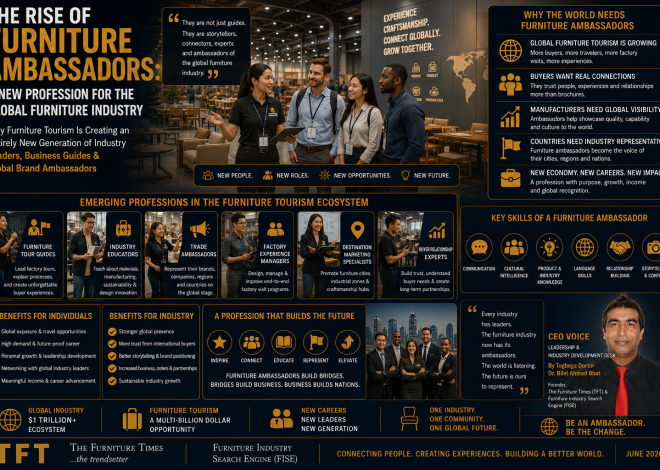
Furniture Business Tourism creates practical learning.
Students.
Architects.
Interior designers.
Engineers.
Researchers.
Business leaders.
Can learn directly from real manufacturing environments.
Education becomes practical rather than theoretical.
Future generations become better prepared for industry leadership.
Artificial Intelligence Will Accelerate Furniture Tourism
Artificial Intelligence will personalise future business tours.
Visitors may receive:
Smart itineraries.
Factory recommendations.
Product matching.
Translation.
Virtual consultations.
Supplier verification.
Business analytics.
Technology will make international sourcing more efficient than ever before.
Why The Furniture Times Created This Vertical
According to Togbega Dortor Dr. Bilal Ahmad Bhat:
“Furniture Business Tourism is one of the most visionary verticals ever introduced by The Furniture Times. We saw an opportunity the industry had never recognised. Governments were promoting tourism. Manufacturers were promoting products. But nobody was promoting the furniture industry itself as a destination. TFT will fill that gap.”
He continues:
“Large corporations already receive international visitors. But thousands of SMEs, startups, family-owned businesses and skilled craftsmen never receive that opportunity. Furniture Business Tourism creates inclusion. It gives visibility to businesses that deserve global recognition.”
And concludes:
“Furniture is one of humanity’s oldest industries. It deserves one of the world’s newest tourism movements.”
The Role of The Furniture Times & FISE
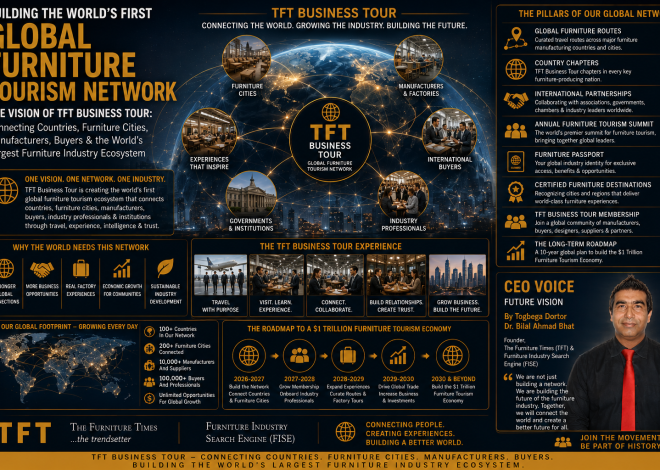
The Furniture Times is introducing Furniture Business Tourism as a strategic global initiative.
Furniture Industry Search Engine (FISE) provides the discoverability required for buyers to locate:
Manufacturers.
Furniture cities.
Design centres.
Innovation hubs.
Factory tours.
Exporters.
Craftsmen.
Furniture clusters.
Together, TFT and FISE create both the vision and the infrastructure required for this new movement.
TFT & FISE Analysis
Furniture Business Tourism represents more than tourism.
It represents:
Export promotion.
SME development.
Investment attraction.
Employment generation.
Education.
Innovation.
National branding.
Regional development.
Industrial recognition.
Global discoverability.
Countries that recognise this opportunity today may become tomorrow’s international furniture destinations.
Final Verdict
The question is no longer whether Furniture Tourism can exist.
It already does.
The real question is:
Who will lead it?
The countries that move first.
The cities that embrace their furniture identity.
The manufacturers that welcome visitors.
The governments that diversify tourism.
The SMEs that open their factory doors.
And the platforms that connect them all.
The Furniture Times believes the world’s largest manufacturing industry deserves its own global tourism movement.
Not simply because it builds furniture.
But because it builds economies.
Creates employment.
Strengthens nations.
Empowers SMEs.
Connects cultures.
And inspires innovation.
Furniture Tourism is no longer an idea.
It is the next frontier of global business tourism.
And The Furniture Times (TFT) is proud to pioneer that journey.
By Togbega Dortor Dr. Bilal Ahmad Bhat
Founder, The Furniture Times (TFT) & Furniture Industry Search Engine (FISE)
CEO Voice | Global Furniture Tourism Intelligence Desk
“TFT tells their story. FISE helps the world find them.”
The furniture industry ecosystem is a $1 Trillion Dollar Industry.