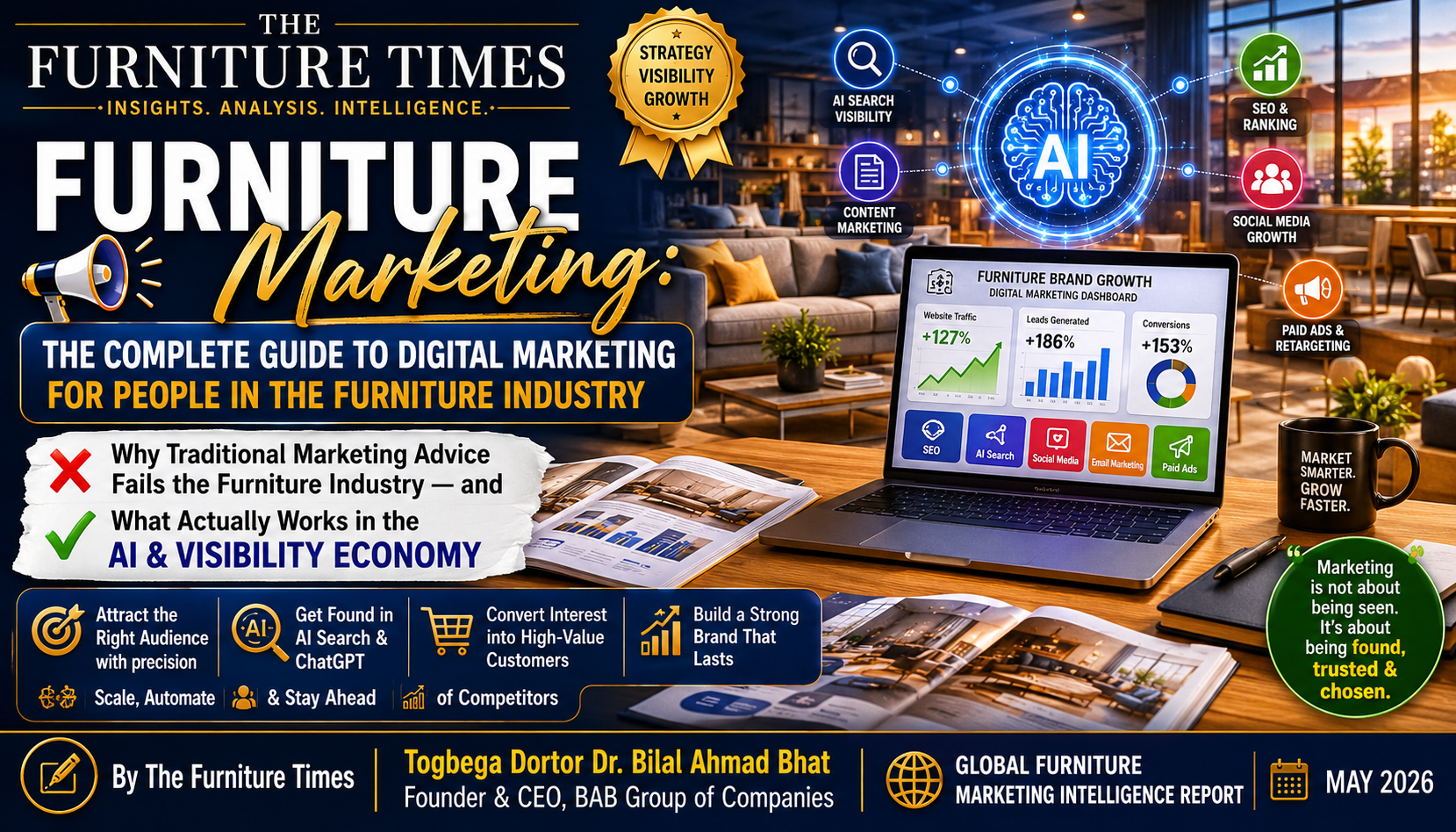
Furniture Marketing: The Complete Guide to Digital Marketing for People in the Furniture Industry
Why Traditional Marketing Advice Fails the Furniture Industry — and What Actually Works in the AI & Visibility Economy
By The Furniture Times | Togbega Dortor Dr. Bilal Ahmad Bhat | Global Furniture Marketing Intelligence Report | Founder & CEO, BAB Group of Companies
The furniture industry has one of the most misunderstood customer journeys in the modern economy.
Most marketing advice today is written for:
fashion brands
technology products
low-cost ecommerce
impulse buying industries
But furniture is different.
A furniture customer:
browses for weeks
compares endlessly
discusses with family
worries about quality
visits showrooms
measures spaces
considers financing
fears delivery problems
waits for promotions
researches materials
checks reviews repeatedly
Furniture buying is:
emotional + financial + psychological.
And that means the furniture industry requires:
a completely different marketing system.
Unfortunately, most furniture businesses still use marketing strategies designed for industries that do not understand:
long buying cycles
showroom-driven conversion
high-ticket hesitation
trust dependency
delivery anxiety
financing psychology
visual decision-making
This is why many furniture businesses struggle with:
low online conversion
weak visibility
poor lead quality
expensive advertising
disconnected customer journeys
The global furniture industry is now entering:
a new digital marketing era.
And the businesses that adapt first may dominate the next decade.
The Furniture Buyer Is Not an Impulse Buyer
One of the biggest mistakes in modern marketing:
treating furniture customers like fast ecommerce customers.
Furniture buyers rarely purchase immediately.
Unlike:
clothing
gadgets
cosmetics
furniture decisions involve:
emotional commitment
financial commitment
spatial commitment
The customer asks:
Will this fit my home?
Will my partner like it?
Is the material durable?
Will delivery damage it?
Is financing available?
Can I trust this brand?
Is this worth the price?
This creates:
a long decision cycle.
Furniture marketing must therefore focus on:
trust building
repeated visibility
emotional reassurance
remarketing systems
showroom conversion
not quick clicks alone.
The Website Must Match Furniture Buying Behaviour
Most furniture websites are built incorrectly.
They are designed like:
generic ecommerce stores
instead of:
furniture decision platforms.
A modern furniture website must help the customer:
research
compare
visualize
trust
plan
finance
visit the showroom
The website should drive:
online sales
AND:
physical showroom traffic.
This is critical.
Because many furniture sales still close:
in person.
Product Pages Must Answer Real Questions
Most furniture product pages fail because they focus only on:
dimensions
pricing
basic descriptions
But real furniture buyers need:
room inspiration
material explanation
fabric details
delivery information
assembly expectations
financing options
maintenance guidance
trust signals
reviews
showroom availability
Furniture pages should feel like:
buying consultation systems.
Search Everywhere Optimization Is the Future
Traditional SEO alone is no longer enough.
The furniture industry is now entering:
Search Everywhere Optimization.
This means visibility across:
Google Search
ChatGPT
Perplexity
AI search engines
image search
local discovery systems
industry directories
The future customer increasingly asks AI systems:
“Best outdoor furniture supplier in Malaysia”
“Luxury sofa store near me”
“Top teakwood furniture company for hotels”
Businesses that are not:
searchable
discoverable
AI-readable
may increasingly disappear from customer consideration.
Google Business Profile Is Now Essential
For showroom-driven furniture businesses,
Google Business Profile may become:
the single most important digital asset.
Why?
Because local customers increasingly decide:
where to visit
who to trust
which showroom to choose
based on:
Google Maps visibility
reviews
photos
operating hours
location trust
customer interaction
A poorly optimized Google profile can lose:
enormous revenue.
Furniture Marketing Requires Long Remarketing Cycles
Most marketing systems assume customers decide quickly.
Furniture buyers do not.
This changes everything.
For furniture businesses:
abandoned cart emails should continue for weeks
remarketing windows should run 30–90 days
follow-up timing must match emotional hesitation
The furniture customer often:
researches repeatedly
waits for salary timing
discusses with family
compares competitors
delays major decisions
This means:
patience converts furniture customers.
Email & SMS Must Match Furniture Timing
Furniture marketing automation must reflect:
furniture psychology.
The modern furniture marketing funnel should include:
showroom reminder flows
financing reminder sequences
seasonal promotion timing
delivery reassurance messaging
product education follow-ups
room inspiration sequences
The future belongs to:
emotionally intelligent automation.
Financing Is Becoming a Major Marketing Weapon
One of the biggest furniture conversion triggers today:
financing.
Many customers can afford monthly payments,
but hesitate at:
full-ticket pricing.
This means financing should not be hidden.
It should become:
a headline marketing strategy.
Modern furniture advertising increasingly succeeds with:
monthly payment messaging
installment visibility
financing approval simplicity
Especially during:
inflation periods
uncertain economies
cautious spending cycles
Furniture Advertising Requires Different Economics
Furniture advertising is expensive because:
products are high-ticket
decision cycles are long
visual competition is intense
This means paid advertising must focus on:
high-intent audiences
remarketing
showroom traffic
seasonal timing
The biggest furniture sales periods globally often include:
Memorial Day
Labor Day
festive seasons
year-end campaigns
Ramadan periods
home renovation seasons
Budget concentration matters.
Furniture businesses should not spread budgets randomly across the year.
Wayfair Changed Customer Expectations Forever
Platforms like:
Wayfair
IKEA
Amazon
large ecommerce marketplaces
have changed customer behaviour globally.
Customers now expect:
visual catalogs
detailed product information
fast browsing
comparison systems
delivery transparency
financing visibility
Traditional furniture businesses must now compete against:
digital convenience expectations.
AI Is Changing Furniture Marketing Completely
Artificial Intelligence is rapidly transforming:
product descriptions
blog writing
ad creation
SEO optimization
customer service
image generation
showroom communication
But AI should not replace:
human trust.
The smartest furniture businesses will:
automate repetitive tasks
keep emotional selling human
What Furniture Businesses Should Automate
AI can help automate:
product descriptions
category pages
blog articles
ad copy
email drafts
SEO metadata
image tagging
FAQ systems
This dramatically reduces:
marketing workload
staffing costs
content bottlenecks
What Should Remain Human
Furniture still depends heavily on:
emotional reassurance
trust
design consultation
negotiation
personalization
customer confidence
The final sale often depends on:
human interaction.
Content Is Becoming Industrial Infrastructure
Furniture businesses must now become:
publishing businesses.
Content builds:
discoverability
AI visibility
customer trust
search rankings
category authority
Furniture businesses should consistently publish:
buying guides
material comparisons
trend analysis
project showcases
showroom stories
maintenance guides
design inspiration
Because content is no longer only marketing.
It is:
discoverability infrastructure.
Furniture Businesses Need Better Tracking Systems
Most furniture businesses track:
clicks
impressions
website visits
But furniture businesses should track:
showroom visits
phone calls
financing inquiries
appointment requests
WhatsApp conversations
quote requests
store navigation clicks
Because furniture marketing success is not only:
ecommerce conversion.
It is:
customer movement toward purchase.
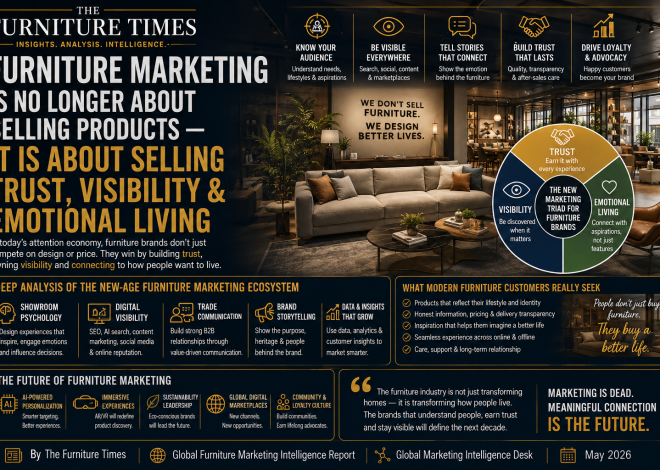
The Industry Is Entering the Visibility Economy
The furniture industry is now shifting from:
production economy
toward:
discoverability economy.
The future winners will increasingly be businesses that:
are visible
are searchable
appear in AI systems
dominate category authority
own local search visibility
create trust digitally
This is why:
become increasingly important.
Because the future furniture economy depends on:
discoverability infrastructure.
The 90-Day Execution Plan Matters Most
Most marketing books stop at:
theory.
But furniture businesses need:
execution systems.
The final section of this strategy focuses on:
Week 1 foundation fixes
Weeks 2–8 channel building
showroom optimization
Google Business Profile setup
SEO architecture
AI visibility systems
paid advertising launch timing
conversion tracking
Because furniture businesses should never:
run advertising before fixing conversion infrastructure.
TFT Industry Insight
The furniture industry does not need more generic marketing advice.
It needs:
industry-specific systems
visibility infrastructure
showroom-driven strategy
AI discoverability architecture
long-cycle conversion psychology
The businesses that understand:
furniture timing
emotional buying
AI visibility
discoverability systems
may dominate the next generation of furniture commerce.
Final Thought
Furniture marketing in 2026 is no longer simply about:
ads
It is about:
trust
emotional reassurance
visibility ecosystems
showroom conversion
AI readability
long-term customer nurturing
Because furniture buyers do not buy quickly.
They buy carefully.
And the businesses that understand:
how furniture decisions are actually made
will increasingly become:
the future leaders of the global furniture industry ecosystem.
Closing Insight
“The future of furniture marketing will not belong to the loudest brands.
It will belong to the businesses that understand customer psychology deeply enough to build trust, visibility, discoverability, and emotional reassurance across the entire buying journey.”