Agentic Commerce Is Coming to the Furniture Industry: Why AI May Soon Become the New Furniture Buyer
Deep Analysis of AI Shopping Agents, Autonomous Commerce, Discoverability, Search Infrastructure & the Future of the Global Furniture Industry Ecosystem
By The Furniture Times | Global AI Search Intelligence Desk | May 2026
The global furniture industry is approaching one of the biggest technological shifts in modern commercial history:
Agentic Commerce.
This is not ordinary e-commerce.
This is not traditional online shopping.
This is the rise of:
AI-powered buying ecosystems.
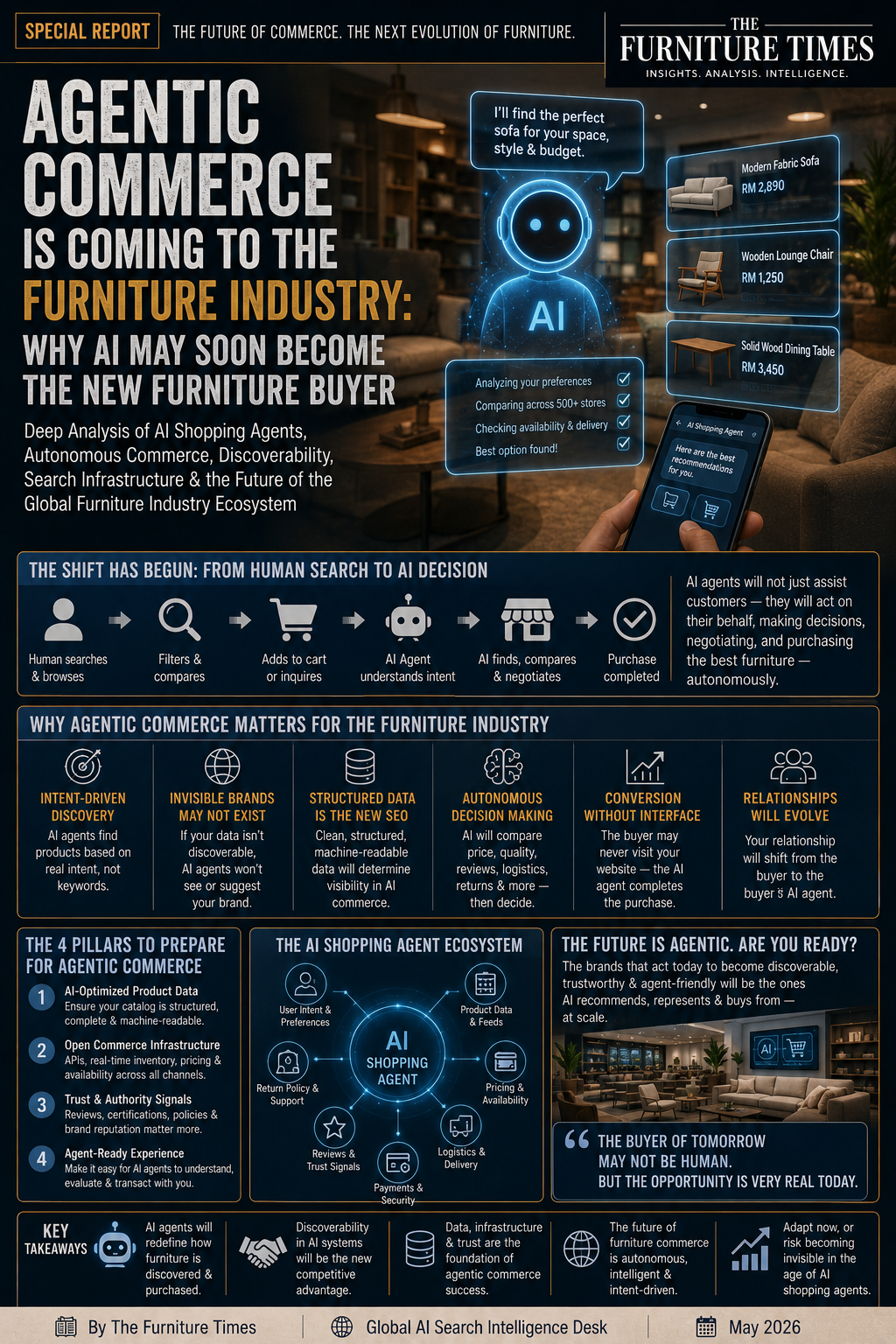
According to IBM, agentic commerce is an approach where AI agents act on behalf of consumers or businesses to:
research
compare
negotiate
select
purchase products
with minimal human intervention.
This transformation may completely reshape how furniture businesses:
get discovered
compete
generate leads
sell products
build trust
And the furniture industry ecosystem is still largely:
unprepared.
The Furniture Industry Is Entering the AI Buyer Era
For decades, furniture businesses sold products primarily through:
showrooms
exhibitions
catalogs
salespeople
distributors
websites
But the future buyer journey may increasingly involve:
AI agents.
Instead of manually searching hundreds of websites, future customers may simply tell AI:
“Find me the best outdoor furniture supplier in Malaysia under my budget.”
Or:
“Compare luxury teakwood sofa manufacturers in Indonesia.”
Or:
“Find sustainable hotel furniture suppliers for my resort project.”
The AI agent may then:
search
compare
evaluate
negotiate
shortlist
even purchase
on behalf of the customer.
This is:
Agentic Commerce.
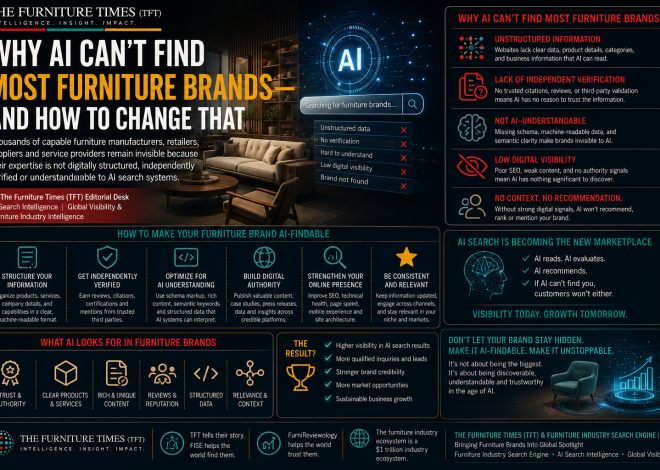
The Furniture Industry Has a Discoverability Problem
This creates a major challenge.
Because millions of furniture businesses globally still lack:
searchable systems
structured data
AI-readable catalogs
digital discoverability
ecosystem visibility
This means future AI systems may:
completely ignore them.
The industry already suffers from:
invisible SMEs
fragmented supplier ecosystems
disconnected infrastructure
poor search visibility
Agentic commerce may widen this visibility gap even further.
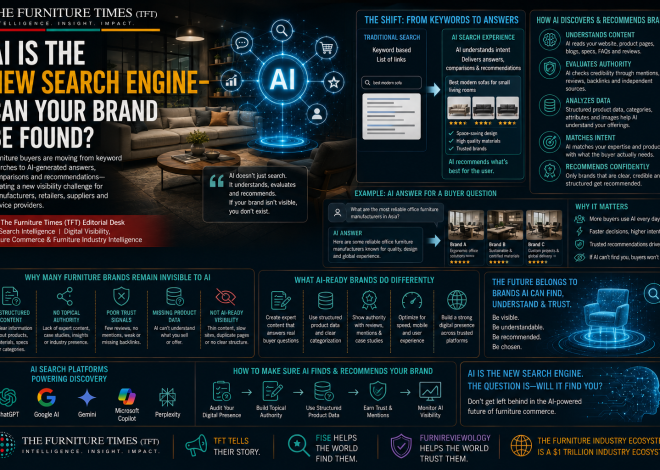
AI Will Not Search Like Humans
One of the biggest misconceptions:
AI shopping systems do not behave like ordinary human buyers.
Humans may:
browse emotionally
explore randomly
ask friends
walk through exhibitions
AI agents instead prioritize:
structured information
discoverability
trust signals
pricing clarity
reviews
data consistency
digital authority
This means furniture businesses that are:
poorly indexed
digitally weak
unstructured online
may increasingly disappear from:
AI recommendations.
The Furniture Industry Is Becoming Machine-Readable
The future global furniture economy is increasingly shifting toward:
machine-readable commerce.
This means AI systems increasingly need:
structured catalogs
searchable inventory
organized specifications
digital trust frameworks
real-time product information
The businesses that prepare for this transition early may dominate the future:
AI-driven supplier discovery.
Why FISE Matters More Than Ever
This is exactly why:
become strategically important.
Because the future furniture economy increasingly requires:
discoverability infrastructure.
The global furniture industry still lacks:
organized supplier visibility
searchable global categorization
intelligent furniture discovery systems
AI-friendly ecosystem architecture
FISE can help solve:
the discoverability crisis.
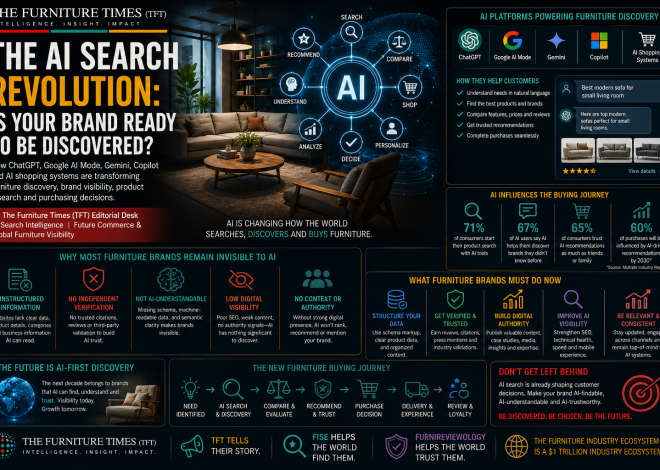
The Industry Is Moving From Search Engines to AI Engines
For years businesses optimized for:
Google rankings
Now they must increasingly optimize for:
AI systems
conversational search
machine discoverability
intelligent recommendations
autonomous commerce ecosystems
This is the rise of:
AI Visibility.
AI Agents May Become the New Salespeople
One of the most disruptive changes:
AI agents may increasingly replace parts of:
sales research
supplier comparison
sourcing workflows
product discovery
IBM and NRF research shows AI-assisted shopping is rapidly growing globally.
This means future furniture businesses may increasingly sell not only to:
humans
but also to:
AI intermediaries.
The Future Furniture Buyer Journey
The traditional journey:
Exhibition → Catalog → Salesperson → Order
may gradually become:
AI Search → AI Comparison → AI Recommendation → Automated Purchase
This changes everything.
Agentic Commerce May Reshape Furniture Exhibitions
Furniture exhibitions may still remain important.
But their role may evolve toward:
relationship building
experiential showcasing
brand positioning
emotional engagement
while AI systems increasingly handle:
supplier filtering
technical comparison
pricing research
sourcing intelligence
This may significantly change:
global furniture trade behavior.
The Invisible Furniture Business Risk
This creates one major danger.
Furniture businesses that remain:
invisible
unstructured
digitally weak
disconnected
may increasingly struggle to appear inside:
AI-driven buying ecosystems.
The future risk is not only:
losing Google visibility
but:
losing AI visibility.
And that may become even more dangerous.
Why Structured Visibility Matters
Future AI systems increasingly rely on:
structured data
organized catalogs
digital consistency
discoverable product ecosystems
This means furniture businesses must increasingly invest in:
searchable profiles
categorized products
optimized content
AI-friendly descriptions
ecosystem visibility systems
Agentic Commerce Will Create New Winners
The next generation of furniture leaders may not simply be:
the biggest factories
the cheapest manufacturers
the oldest brands
The future leaders may increasingly become:
the most discoverable
the most structured
the most AI-readable
the most connected ecosystems
The Search Economy Is Becoming Autonomous
The global economy is now moving from:
search-driven commerce
toward:
autonomous AI-driven commerce.
McKinsey recently described agentic commerce as a major transformation reshaping how consumers buy and how businesses compete.
The implications for the furniture industry are enormous.
AI Visibility Will Become Industrial Power
Future competition may increasingly depend on:
discoverability
structured visibility
digital trust
ecosystem integration
AI readability
This means visibility itself becomes:
industrial infrastructure.
The Future Furniture Ecosystem Must Become Connected
The furniture industry remains highly fragmented globally.
Millions of suppliers still operate through:
PDFs
spreadsheets
disconnected websites
isolated sales systems
Agentic commerce requires:
connected ecosystems.
This is where intelligent infrastructure platforms become critical.
TFT Philosophical Industry Insight
The furniture industry is approaching a historic shift because:
the buyer itself is evolving.
For centuries:
humans manually searched for products.
Now machines increasingly search on behalf of humans.
This changes:
marketing
visibility
trust
discoverability
commerce itself.
The businesses that prepare for this transition early may become the future leaders of the AI-driven furniture economy.
Final Thought
Agentic commerce is no longer science fiction.
It is becoming:
the next evolution of commerce.
And the global furniture industry ecosystem must prepare urgently.
Because future AI systems may increasingly decide:
which suppliers are seen
which products are recommended
which businesses are trusted
which brands become discoverable
The furniture businesses that remain:
invisible
disconnected
unstructured
may increasingly disappear from the future AI economy.
Because in the coming era:
discoverability may become more powerful than existence itself.
Closing Insight
“The future furniture industry may no longer compete only for human attention.
It may compete for AI attention.
And the businesses that machines can understand, trust, index, and discover first may become the new industrial leaders.”