Lighting Color Temperatures and Human Psychology
By The Furniture Times (TFT) | Indoor & Outdoor Lighting | Design & Architecture
Beyond Brightness: How Lighting Color Temperatures Shape Human Psychology, Interior Design, and the Future of the Global Furniture Industry
Walk into a luxury hotel lobby illuminated with warm golden light, and you are likely to feel relaxed and welcomed. Step into a modern technology office filled with cooler white lighting, and the atmosphere immediately feels energetic, focused, and professional. Visit a high-end furniture showroom where lighting perfectly complements every texture, colour, and material, and products suddenly appear more premium and desirable.
The furniture has not changed.
The architecture has not changed.
What has changed is the colour of the light.
Lighting colour temperature is one of the most influential yet often overlooked elements of interior design. While many consumers focus on the brightness of a light fixture, professional architects, lighting designers, interior designers, furniture manufacturers, and hospitality experts understand that colour temperature has an equally profound impact on human emotions, behaviour, comfort, health, and purchasing decisions.
Measured in Kelvin (K), colour temperature determines whether light appears warm, neutral, or cool. It influences how people perceive a room, how long they remain in a space, how productive they become, how well they sleep, and even how they interact with furniture, colours, and architectural features.
As smart homes, Artificial Intelligence (AI), and human-centric lighting technologies become increasingly common, colour temperature is no longer a fixed design decision. It is becoming a dynamic element that adapts throughout the day to support wellbeing, sustainability, and better living.
For the global furniture industry ecosystem, understanding lighting psychology is becoming essential. Furniture manufacturers, architects, interior designers, retailers, hospitality operators, healthcare providers, workplace planners, and lighting companies are collaborating to create environments where furniture and lighting work together to improve not only aesthetics but also human experiences.
The future of lighting is not simply about helping people see.
It is about helping people feel.
Understanding Colour Temperature
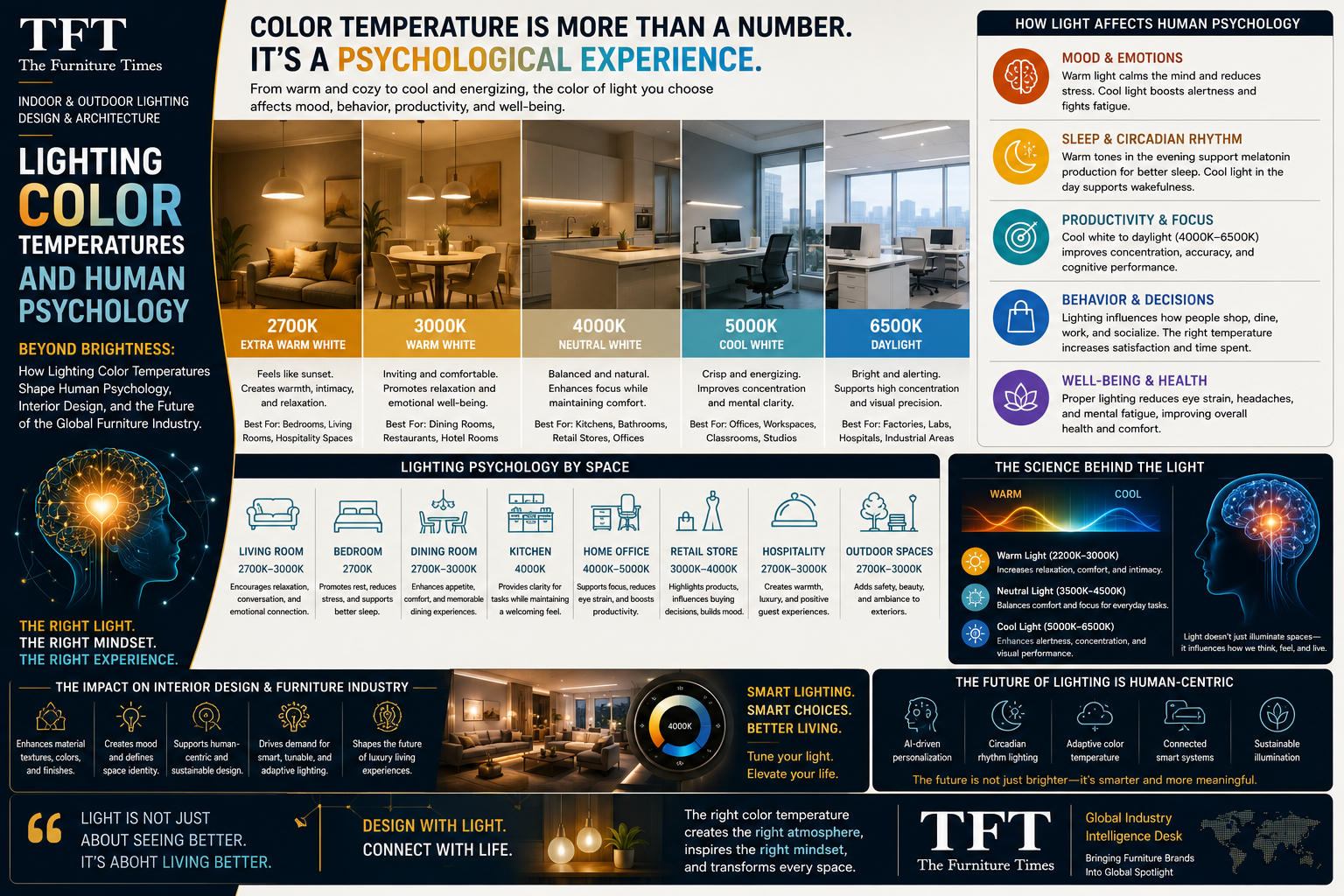
Lighting colour temperature refers to the visual appearance of light and is measured using the Kelvin (K) scale.
Generally:
- Warm White (approximately 2200K–3000K) creates a cosy and relaxing atmosphere.
- Neutral White (approximately 3500K–4500K) provides balanced illumination suitable for everyday activities.
- Cool White to Daylight (approximately 5000K–6500K) delivers crisp, bright light that supports concentration and visual clarity.
Choosing the right colour temperature depends on the function of the space and the emotional experience designers want to create.
Warm Lighting Encourages Comfort and Relaxation
Warm lighting has long been associated with hospitality and residential living.
Its soft golden tones create environments that encourage people to slow down and unwind.
Warm lighting is commonly used in:
- Living rooms.
- Bedrooms.
- Hotels.
- Restaurants.
- Cafés.
- Luxury lounges.
- Wellness centres.
- Libraries.
- Boutique retail stores.
- Outdoor entertainment spaces.
These environments benefit from lighting that feels inviting rather than clinical.
Neutral Lighting Supports Everyday Living
Neutral white lighting provides a balanced atmosphere suitable for spaces where multiple activities take place.
It is widely used in:
- Kitchens.
- Dining rooms.
- Family areas.
- Educational facilities.
- Healthcare waiting areas.
- Retail environments.
- Reception areas.
- Residential workspaces.
- Meeting rooms.
- Hospitality common areas.
Its versatility makes it one of the most commonly selected colour temperatures.
Cool Lighting Enhances Focus and Productivity
Cool white lighting mimics daylight and stimulates alertness.
It is particularly effective in environments requiring precision and concentration.
Applications include:
- Offices.
- Design studios.
- Manufacturing facilities.
- Laboratories.
- Hospitals.
- Warehouses.
- Airports.
- Classrooms.
- Commercial kitchens.
- Industrial workspaces.
Proper use improves visibility while supporting task performance.
Human Psychology Responds to Light
Scientific research continues to demonstrate that lighting influences emotional wellbeing.
Appropriate colour temperatures can affect:
- Mood.
- Stress levels.
- Energy.
- Alertness.
- Creativity.
- Sleep quality.
- Comfort.
- Social interaction.
- Purchasing behaviour.
- Overall satisfaction.
Lighting has become one of the most important environmental factors shaping everyday experiences.
Furniture and Lighting Must Work Together
Furniture colours, textures, and materials appear differently under various lighting temperatures.
Warm lighting enhances:
- Natural timber.
- Leather.
- Fabric upholstery.
- Brass accents.
- Marble surfaces.
Cool lighting complements:
- Glass.
- Stainless steel.
- Contemporary finishes.
- High-gloss cabinetry.
- Modern office furniture.
Interior designers increasingly specify furniture and lighting simultaneously to achieve visual harmony.
Retail Psychology Begins with Light
Lighting colour temperature significantly influences consumer behaviour.
Retailers carefully select lighting to:
- Enhance product colours.
- Create luxury experiences.
- Increase customer comfort.
- Encourage longer visits.
- Improve product perception.
- Highlight craftsmanship.
- Guide customer movement.
- Support seasonal displays.
- Reinforce brand identity.
- Build purchasing confidence.
The right lighting often increases the perceived value of furniture and interior products.
Hospitality Creates Emotional Memories Through Lighting
Hotels, restaurants, and resorts use colour temperature to shape guest experiences.
Warm evening lighting encourages relaxation, while brighter daylight tones support breakfast service, business meetings, and wellness activities.
Lighting transitions throughout the day create natural rhythms that improve guest comfort without requiring conscious attention.
Artificial Intelligence Personalises Lighting Experiences
Artificial Intelligence is transforming static lighting into adaptive environments.
AI-powered systems can:
- Adjust colour temperature automatically.
- Follow circadian rhythms.
- Learn occupant preferences.
- Respond to weather conditions.
- Adapt to daylight availability.
- Coordinate lighting scenes.
- Improve energy efficiency.
- Support wellness programmes.
- Integrate with smart homes.
- Optimise building performance.
Lighting becomes increasingly personalised rather than standardised.
Human-Centric Lighting Is Shaping Future Buildings
Modern architecture increasingly embraces human-centric lighting, where illumination supports biological and psychological wellbeing.
These systems aim to:
- Improve sleep cycles.
- Enhance productivity.
- Reduce fatigue.
- Promote relaxation.
- Increase workplace performance.
- Support learning.
- Improve healthcare environments.
- Enhance residential comfort.
- Strengthen emotional wellbeing.
- Encourage healthier lifestyles.
Lighting is evolving from infrastructure into wellness technology.
Opportunities Across the Furniture Industry Ecosystem
Growing awareness of lighting psychology creates opportunities for:
- Furniture manufacturers.
- Lighting manufacturers.
- Architects.
- Interior designers.
- Hospitality operators.
- Retail brands.
- Property developers.
- Healthcare facilities.
- Educational institutions.
- Smart home technology companies.
Businesses that understand the relationship between furniture, lighting, and human behaviour will deliver more valuable customer experiences.
Challenges Designers Continue to Face
Selecting the correct lighting colour temperature requires balancing multiple considerations.
These include:
- Building function.
- Natural daylight.
- Interior colours.
- Furniture materials.
- Energy efficiency.
- Occupant preferences.
- Smart technology integration.
- Wellness objectives.
- Sustainability.
- Long-term flexibility.
Successful lighting design always considers both technical performance and emotional impact.
The Future Is Adaptive, Intelligent, and Human
Lighting technology continues to evolve rapidly.
Future developments include:
- AI-driven adaptive lighting.
- Circadian lighting systems.
- Digital twins.
- Smart furniture integration.
- Predictive lighting controls.
- Cloud-managed buildings.
- Wellness analytics.
- Environmental sensors.
- Personal lighting profiles.
- Fully connected intelligent homes.
The next generation of lighting will respond automatically to people’s changing needs throughout every hour of the day.
Great Design Speaks to Both the Eyes and the Mind
Outstanding interior design has never been solely about furniture, architecture, or decoration.
It has always been about creating environments that positively influence the people who live, work, learn, and relax within them.
Lighting colour temperature is one of the most powerful tools designers possess to shape those experiences.
For the global furniture industry ecosystem, understanding the psychology of light offers an opportunity to design smarter products, healthier homes, more productive workplaces, and unforgettable hospitality experiences.
Because the true power of lighting is not measured by lumens alone.
It is measured by the emotions it creates, the wellbeing it supports, and the lives it quietly improves every single day.
The Furniture Times (TFT) & Furniture Industry Search Engine (FISE)
“TFT tells their story. FISE helps the world find them.”
“FurniReviewology helps the world trust them.”
The furniture industry ecosystem is a $1 trillion industry ecosystem.