Hotel Lighting That Creates Memorable Guest Experiences
By The Furniture Times (TFT) | Indoor & Outdoor Lighting | Commercial & Hospitality Lighting
How Intelligent Hotel Lighting Is Transforming Guest Experiences, Hospitality Design, Energy Efficiency, and the Future of Global Tourism
The global hospitality industry is undergoing one of the most significant transformations in its history. Hotels are no longer competing solely on location, room size, amenities, or pricing. Today’s travelers expect immersive experiences, personalized services, wellness-focused environments, sustainability, and intelligent technology that enhances every stage of their stay.
Among the many elements shaping guest satisfaction, lighting has become one of the most influential.
Lighting is no longer viewed as a background utility that simply illuminates guestrooms or public spaces. It has become an integral component of hospitality branding, guest comfort, operational efficiency, interior architecture, emotional well-being, and memorable customer experiences. From boutique hotels and luxury resorts to business hotels, serviced apartments, airport hotels, wellness retreats, and eco-lodges, carefully designed lighting influences how guests perceive quality, comfort, and luxury from the moment they arrive.
Powered by Artificial Intelligence (AI), Internet of Things (IoT), LED technology, human-centric lighting, smart building management systems, sustainable innovation, and digital automation, hotel lighting is redefining the future of hospitality across the world.
For hotel owners, architects, interior designers, lighting manufacturers, furniture companies, hospitality consultants, technology providers, real estate developers, and tourism authorities, intelligent lighting has become one of the most strategic investments for improving guest satisfaction, operational performance, and long-term business success.
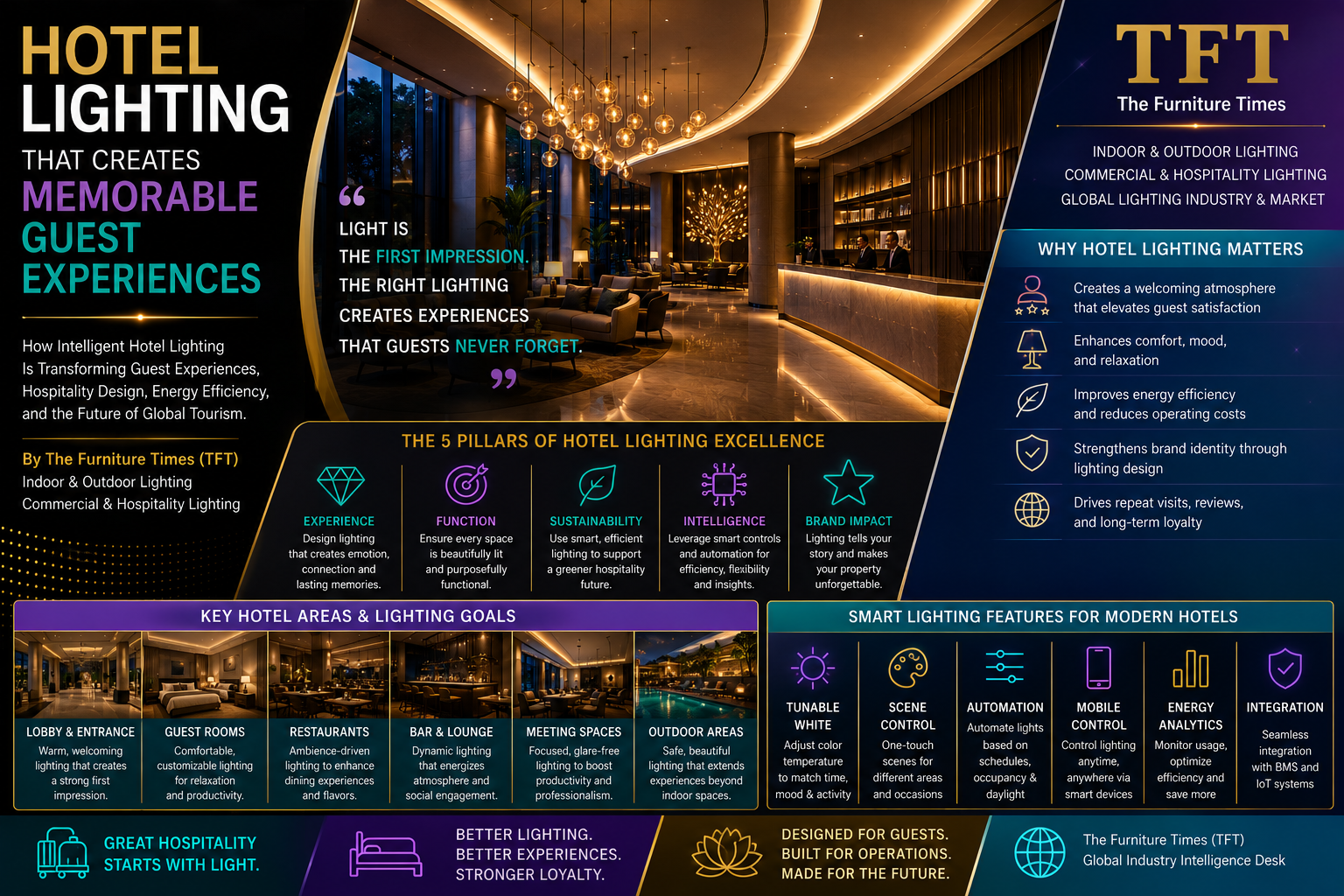
Guest Experience Begins with Lighting
The first impression of a hotel is often created long before a guest enters the room.
Lighting influences perceptions across every stage of the guest journey, including:
- Hotel entrances
- Reception areas
- Lobbies
- Concierge desks
- Corridors
- Elevators
- Guest rooms
- Restaurants
- Bars
- Meeting spaces
- Ballrooms
- Wellness centres
- Swimming pools
- Landscaped gardens
- Rooftop lounges
Every lighting decision contributes to how guests emotionally connect with the property.
Exceptional lighting transforms ordinary spaces into unforgettable experiences.
Hotels Are Competing Through Experience
Modern travelers increasingly value experiences over material luxury.
Lighting helps hotels create:
- Warm welcomes
- Relaxing environments
- Elegant interiors
- Memorable dining experiences
- Premium guest rooms
- Comfortable workspaces
- Wellness atmospheres
- Social gathering spaces
- Instagram-worthy moments
- Distinctive brand identities
In today’s hospitality industry, emotional connection has become a competitive advantage.
Layered Lighting Creates Hospitality Excellence
Professional hospitality designers rely on layered lighting to provide flexibility and visual comfort.
Ambient Lighting
Ambient lighting establishes the overall atmosphere throughout the hotel.
Popular applications include:
- Reception ceilings
- Hotel lobbies
- Guest rooms
- Corridors
- Restaurants
- Ballrooms
- Spa facilities
- Fitness centres
- Conference rooms
- Public lounges
Balanced ambient lighting creates welcoming spaces while maintaining visual comfort.
Task Lighting
Hotels require precise lighting for functional activities.
Applications include:
- Reception desks
- Reading lights
- Bedside lighting
- Bathroom mirrors
- Business centres
- Meeting tables
- Restaurant service stations
- Guest workspaces
- Concierge counters
- Kitchen preparation areas
Well-positioned task lighting enhances efficiency while improving guest convenience.
Accent Lighting
Accent lighting introduces luxury and architectural drama.
Popular applications include:
- Artwork
- Sculptures
- Water features
- Feature walls
- Decorative ceilings
- Premium furniture
- Wine displays
- Hotel bars
- Landscaped gardens
- Architectural facades
Accent lighting strengthens hotel identity while creating memorable visual experiences.
Guest Rooms Become Intelligent Living Spaces
Modern guestrooms increasingly resemble premium smart homes.
Intelligent lighting systems allow guests to:
- Adjust brightness.
- Select lighting scenes.
- Control lighting through mobile devices.
- Operate lights using bedside panels.
- Create sleep-friendly environments.
- Activate reading modes.
- Personalize colour temperatures.
- Save individual preferences.
- Integrate lighting with curtains.
- Improve nighttime comfort.
These features enhance both convenience and guest satisfaction.
Human-Centric Lighting Improves Wellness
Wellness tourism continues expanding worldwide.
Hotels increasingly adopt human-centric lighting that supports natural circadian rhythms.
Morning lighting promotes:
- Alertness
- Productivity
- Positive mood
- Mental clarity
- Energy
Evening lighting encourages:
- Relaxation
- Better sleep
- Reduced stress
- Emotional comfort
- Restful recovery
Human-centric lighting helps travelers recover from fatigue and jet lag while enhancing overall well-being.
LED Technology Powers Hospitality
LED lighting has become the preferred technology throughout the hotel industry.
Its advantages include:
- Energy efficiency
- Long operational lifespan
- Minimal maintenance
- Excellent colour rendering
- Smart automation compatibility
- Low heat generation
- Flexible fixture design
- Reduced operating costs
- Sustainable performance
- Superior guest comfort
LED technology enables hotels to improve experiences while lowering long-term operational expenses.
Smart Hotels Depend on Intelligent Lighting
Artificial Intelligence and IoT technologies continue reshaping hotel operations.
Smart lighting systems enable hotels to:
- Detect occupancy.
- Automate lighting schedules.
- Monitor energy consumption.
- Integrate with room management systems.
- Support predictive maintenance.
- Coordinate with climate control.
- Improve housekeeping efficiency.
- Enhance security.
- Optimize operational costs.
- Deliver personalized guest experiences.
Lighting is becoming part of a comprehensive digital hospitality ecosystem.
Furniture and Lighting Work Together
Hospitality furniture increasingly incorporates integrated lighting.
Applications include:
- Headboards
- Wardrobes
- Bedside tables
- Reception counters
- Bar shelving
- Restaurant seating
- Lounge furniture
- Display cabinets
- Spa treatment rooms
- Conference facilities
Integrated lighting improves functionality while highlighting craftsmanship and premium materials.
Furniture manufacturers and lighting companies continue developing collaborative hospitality solutions.
Restaurants and Dining Spaces Require Atmosphere
Hotel restaurants depend heavily on lighting to create memorable dining experiences.
Effective lighting enhances:
- Food presentation
- Guest comfort
- Interior ambience
- Table privacy
- Luxury perception
- Brand identity
- Social interaction
- Event hosting
- Fine dining experiences
- Customer retention
Lighting influences both guest satisfaction and restaurant profitability.
Outdoor Hospitality Lighting Enhances Destination Appeal
Exterior lighting contributes significantly to hotel branding.
Applications include:
- Building facades
- Driveways
- Walkways
- Gardens
- Swimming pools
- Rooftop bars
- Outdoor dining
- Beachfront areas
- Courtyards
- Event venues
Outdoor lighting creates powerful first impressions while improving safety and navigation.
Sustainability Shapes Hospitality Investment
Hotels increasingly prioritize environmentally responsible lighting systems.
Key initiatives include:
- Energy-efficient LEDs
- Smart occupancy sensors
- Renewable energy integration
- Sustainable manufacturing
- Recyclable materials
- Carbon footprint reduction
- Green building certifications
- Intelligent energy monitoring
- Long product life cycles
- Responsible sourcing
Sustainability now directly influences traveler preferences and investment decisions.
Luxury Hospitality Continues Raising Standards
Luxury hotels increasingly use lighting to differentiate themselves.
Premium trends include:
- Bespoke chandeliers
- Architectural lighting
- Dynamic lighting scenes
- Wellness lighting
- Interactive guest controls
- Smart mirrors
- Decorative feature lighting
- Artistic installations
- Personalized room environments
- Signature brand experiences
Lighting has become one of the defining characteristics of five-star hospitality.
Artificial Intelligence Will Shape Future Hotels
AI-powered lighting systems will continue transforming hospitality.
Future lighting may automatically:
- Recognize returning guests.
- Recall personal preferences.
- Adapt to arrival times.
- Synchronize with weather.
- Support multilingual interfaces.
- Enhance accessibility.
- Optimize housekeeping schedules.
- Predict maintenance requirements.
- Improve guest wellness.
- Integrate seamlessly with entire hotel ecosystems.
Hotels will increasingly become intelligent environments that respond proactively to guest needs.
Opportunities Across the Hospitality Industry
Growing global tourism creates opportunities for:
- Hotel operators
- Lighting manufacturers
- Furniture companies
- Architects
- Interior designers
- Hospitality consultants
- Smart building providers
- Technology companies
- Sustainable product manufacturers
- Tourism developers
Businesses capable of combining intelligent technology, design excellence, sustainability, and exceptional guest experiences will continue leading market growth.
Challenges Facing Hotel Lighting
Despite rapid innovation, the hospitality industry continues addressing:
- Rising energy costs
- Smart system interoperability
- Cybersecurity
- Installation complexity
- Guest privacy
- Product standardization
- Maintenance planning
- Skilled workforce shortages
- Cost management
- Sustainability compliance
Continuous innovation and cross-industry collaboration remain essential.
Lighting the Future of Global Hospitality
Hotel lighting has evolved into one of the most influential elements of modern hospitality design.
It shapes first impressions, enhances guest comfort, strengthens brand identity, improves operational efficiency, supports sustainability, and creates unforgettable travel experiences.
From AI-powered automation and human-centric wellness to architectural lighting, integrated furniture illumination, intelligent guestroom controls, and energy-efficient LED technologies, lighting continues transforming hotels around the world.
For hotel owners, developers, architects, interior designers, furniture manufacturers, lighting companies, tourism organizations, and technology providers, the future lies in creating hospitality environments where every lighting decision enhances the guest journey.
The hotels of tomorrow will not simply provide accommodation.
They will deliver intelligent, personalized, sustainable, and emotionally engaging experiences that guests remember long after they check out.
As the global hospitality sector continues evolving, one truth has become increasingly clear: memorable guest experiences begin with thoughtful design—and exceptional design begins with exceptional lighting.