Oman Cracks Down on Illegal Furniture Manufacturing: A Wake-Up Call for the Global Furniture Industry
Why Quality Standards, Consumer Trust and Ethical Manufacturing Are Becoming More Important Than Ever
Global Consumer Protection & Manufacturing Intelligence Desk
By The Furniture Times (TFT) Editorial Desk
The global furniture industry depends on one fundamental principle.
Trust.
Every customer who purchases a sofa, bed, dining table, office chair or wardrobe expects the product to be safe, durable and manufactured using appropriate materials.
When that trust is compromised, the consequences extend far beyond one company.
They affect the reputation of an entire industry.
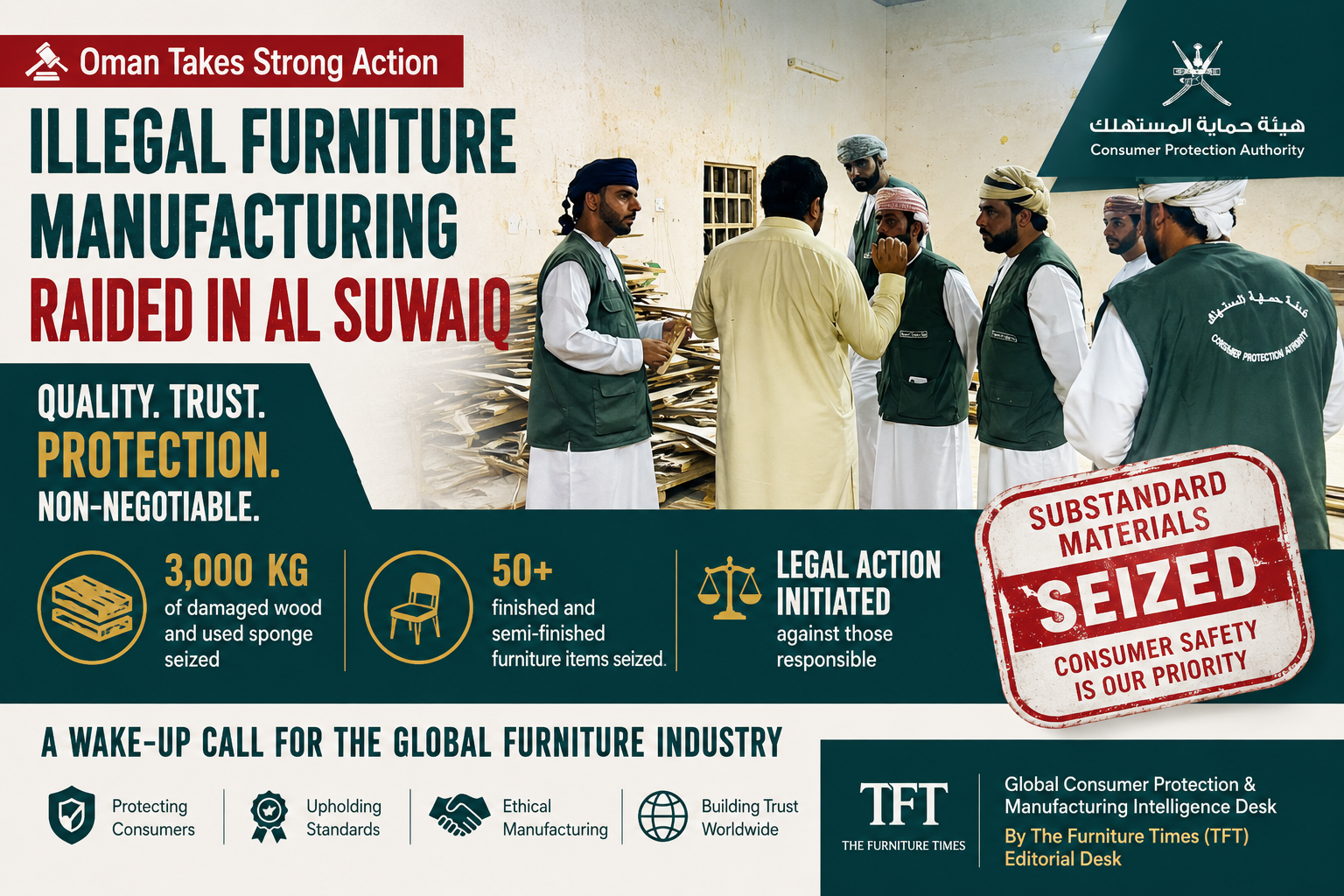
This week, authorities in the Sultanate of Oman took decisive action after uncovering an illegal furniture manufacturing facility in Al Suwaiq, where household furniture was allegedly being produced using damaged wood and used sponge before being sold to consumers as new products. During the operation, officials confiscated approximately 3,000 kilograms of damaged materials and around 50 finished and semi-finished furniture items, while legal proceedings were initiated against those responsible.
Although this incident occurred in one location, its significance extends far beyond Oman.
It highlights the growing importance of:
Consumer protection.
Quality assurance.
Ethical manufacturing.
Supply chain transparency.
Industry accountability.
Brand trust.
According to The Furniture Times (TFT), this is not merely an enforcement story.
It is a reminder that the future of the furniture industry will belong to businesses that consistently deliver quality, transparency and integrity.
Consumer Protection Comes First
Furniture is more than a commercial product.
It becomes part of people’s daily lives.
Families sleep on mattresses.
Children study at desks.
Patients recover on hospital beds.
Employees spend hours in office chairs.
Hotels welcome millions of guests using furniture every year.
When inferior materials are used without proper disclosure, consumers may unknowingly purchase products that fail to meet expected health, safety or durability standards. Oman’s Consumer Protection Authority stated that the seized products were being marketed as new despite being produced with damaged and used materials that did not comply with approved standards.
What Happened in Oman?
According to official reports, inspectors from the Consumer Protection Authority, working with relevant authorities, identified an unauthorised furniture manufacturing site in Al Suwaiq.
Investigators reported that the workshop was producing household furniture using damaged wood and previously used sponge.
Authorities confiscated:
• Approximately 3,000 kilograms of damaged wood and used sponge
• Around 50 finished and semi-finished furniture products
Legal action has since been initiated against those responsible.
The Consumer Protection Authority explained that the operation forms part of its ongoing efforts to prevent misleading commercial practices and safeguard consumers.
One Incident, One Global Lesson
Every country has manufacturers that operate responsibly.
Every country also faces challenges involving non-compliant operators.
The lesson is not about one nation.
It is about protecting the reputation of the global furniture industry.
Consumers everywhere increasingly expect:
Honest product information.
Responsible sourcing.
Safe materials.
Professional manufacturing.
Transparent business practices.
Businesses that consistently meet these expectations strengthen confidence across the entire industry.
Trust Is the Foundation of Every Furniture Brand
Furniture purchases involve significant financial and emotional investment.
Customers expect products to last for years.
Once trust is lost, rebuilding it becomes difficult.
Brand reputation is built through:
Quality.
Consistency.
Honesty.
After-sales support.
Customer satisfaction.
No marketing campaign can replace genuine trust.
Why Quality Standards Matter
Professional manufacturers invest heavily in:
Material testing.
Quality inspections.
Process controls.
Employee training.
Certification.
Compliance.
These investments protect customers while strengthening long-term competitiveness.
High standards are not costs.
They are investments in reputation.
The Cost of Poor Manufacturing
Inferior manufacturing practices can result in:
Customer dissatisfaction.
Higher warranty claims.
Product failures.
Legal action.
Brand damage.
Loss of export opportunities.
Reduced confidence across the market.
Short-term savings often create long-term losses.
Responsible Manufacturers Should Be Recognised
The overwhelming majority of furniture manufacturers operate responsibly.
They invest in:
Modern factories.
Skilled workers.
Quality materials.
Testing procedures.
Research.
Innovation.
These businesses deserve greater recognition because they raise standards across the industry.
Why Transparency Matters
Modern consumers increasingly ask:
Where was this furniture made?
What materials were used?
Is the timber certified?
What warranty is provided?
How is quality controlled?
Transparency helps answer these questions before customers ask them.
Digital Reputation Matters
Today’s customers rarely buy furniture without conducting online research.
They examine:
Company websites.
Customer reviews.
Business profiles.
Industry news.
Project portfolios.
Digital visibility influences purchasing decisions.
Trust increasingly extends beyond the showroom.
Strengthening Industry Confidence
Industry confidence grows through:
Responsible manufacturing.
Fair competition.
Transparent business practices.
Effective regulation.
Professional education.
Consumer awareness.
Each contributes to a stronger furniture ecosystem.
Opportunities for Improvement
The furniture industry can continue strengthening confidence through:
Better training.
Improved quality systems.
Responsible sourcing.
Digital transparency.
Industry certification.
Customer education.
Knowledge sharing.
Continuous improvement benefits both businesses and consumers.
The Role of Industry Platforms
Industry platforms also have an important role.
Professional media can educate.
Search platforms can improve discoverability.
Review platforms can encourage transparency.
Together they support a healthier business environment built on knowledge, visibility and trust.
Global Implications
As international furniture trade continues expanding, buyers increasingly evaluate suppliers using:
Business reputation.
Quality systems.
Digital presence.
Customer feedback.
Industry recognition.
Manufacturers that demonstrate consistent quality will continue strengthening their competitive position in global markets.
TFT Analysis
The Oman enforcement action reflects a broader global trend.
Governments, regulators and consumers increasingly expect:
Higher manufacturing standards.
Greater accountability.
Transparent sourcing.
Responsible business conduct.
The furniture industry continues evolving toward greater professionalism.
Businesses that embrace these expectations will be better positioned for sustainable growth.
Final Verdict
The recent action by Oman’s Consumer Protection Authority is an important reminder that consumer confidence remains one of the furniture industry’s most valuable assets.
Quality cannot be compromised.
Trust cannot be manufactured overnight.
Reputation cannot be purchased.
It must be earned.
For responsible manufacturers, this moment is also an opportunity.
An opportunity to demonstrate professionalism.
Strengthen transparency.
Build stronger customer relationships.
Invest in better quality systems.
And continue raising standards across the global furniture industry.
Because in the future, customers will not only ask:
“How much does this furniture cost?”
They will also ask:
“Can I trust the company that made it?”
The businesses that confidently answer that question will become the leaders of tomorrow.
By The Furniture Times (TFT) Editorial Desk
Global Consumer Protection & Manufacturing Intelligence Desk | July 2026
“TFT tells their story. FISE helps the world find them.”
The furniture industry ecosystem is a $1 Trillion Dollar Industry.