
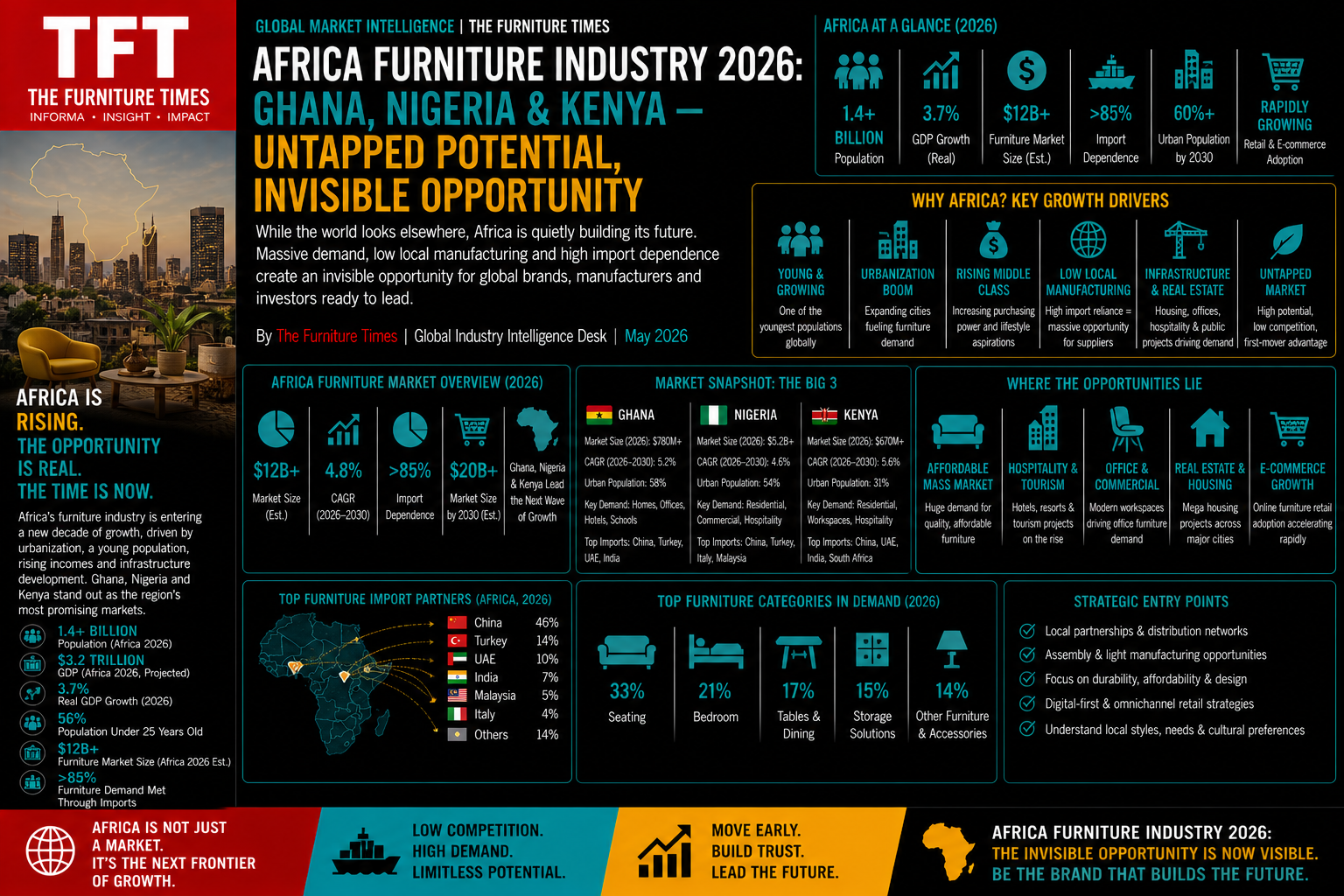
Africa Furniture Industry 2026: Ghana, Nigeria & Kenya — Untapped Potential, Invisible Opportunity
By The Furniture Times | Global Industry Intelligence Desk | May 2026
Introduction: The Most Undervalued Region in the Global Furniture Ecosystem
Across Africa, a powerful furniture ecosystem exists—yet remains largely unseen by the global market.
Focus countries:
Ghana
Nigeria
Kenya
These are not small markets.
They are untapped, underrepresented, and undervalued.
The Big Narrative: Potential Without Visibility
Africa’s furniture sector is defined by:
Strong craftsmanship
Growing urban demand
Expanding middle class
Rich natural resources
Yet:
It remains largely invisible in the global search economy
1. Market Reality: Demand Is Growing Fast
Key Drivers
1. Urbanization
Rapid city expansion
Housing demand increasing
2. Population Growth
Young and growing population
Rising consumer base
3. Infrastructure Development
Commercial spaces
Government projects
Hospitality growth
Demand exists—and it is accelerating
2. Country Highlights
🇬🇭 Ghana: Craftsmanship & Timber Strength
Strong wood resources
Skilled artisans
Growing local market
High-quality craftsmanship—but limited global exposure
🇳🇬 Nigeria: Scale & Consumption Power
Largest population in Africa
Strong domestic demand
Expanding urban markets
Massive demand—but fragmented supply structure
🇰🇪 Kenya: Regional Hub
Gateway to East Africa
Growing middle class
Increasing investment
Strategic position—but still developing supply chains
3. The Supply Side: Rich but Unstructured
Strengths
Handmade furniture
Local materials
Unique designs
Cultural identity
Challenges
Lack of standardization
Limited scalability
Minimal export integration
Supply exists—but lacks structure
4. The Visibility Problem: The Core Issue
Current Situation
Millions of artisans and workshops
Thousands of small manufacturers
But:
Not listed
Not searchable
Not discoverable globally
Africa is producing—but the world cannot find it
5. TFT Deep Analysis: Africa Is Still in Phase 1
The furniture ecosystem is evolving:
Phase 1: Craft Economy (CURRENT)
Local production
Informal systems
Phase 2: Trade Economy (EMERGING)
Regional distribution
Growing imports
Phase 3: Search Economy (FUTURE)
Global visibility + structured discovery
6. The Opportunity: The Largest Untapped Market
Why Africa Matters
Huge population
Rising demand
Untapped supply
Low competition in global visibility
This is one of the last major untapped regions in the furniture industry
For Global Businesses
Enter early
Build presence
Develop local partnerships
For Local Manufacturers
Expand beyond local markets
Build export capabilities
Gain global visibility
7. The Role of FISE: Making Africa Visible
The Furniture Industry Search Engine (FISE) can transform the region:
For Artisans
Create digital identity
Gain global exposure
Access international buyers
For Manufacturers
Become searchable
Expand export reach
Connect with global demand
For Buyers
Discover unique suppliers
Access new markets
Diversify sourcing
The Power Statement
From invisible craftsmanship → to global opportunity
8. Strategic Recommendations
For African Businesses
Adopt digital platforms
Structure product categories
Build visibility
For Governments
Support SME growth
Invest in infrastructure
Promote exports
For Global Buyers
Explore African sourcing
Build early relationships
Support local ecosystems
9. Key Takeaways
1. Africa Is an Untapped Furniture Market
2. Demand Is Growing Rapidly
3. Supply Exists but Is Unstructured
4. Visibility Gap Is the Biggest Barrier
5. Search Economy Will Unlock Growth
Conclusion: The Invisible Giant
Africa is not a small player.
It is an invisible giant in the global furniture ecosystem.
Final Thought
The next decade of growth will not come only from established markets.
It will come from markets that are currently unseen.
Africa is not behind.
It is just undiscovered.
