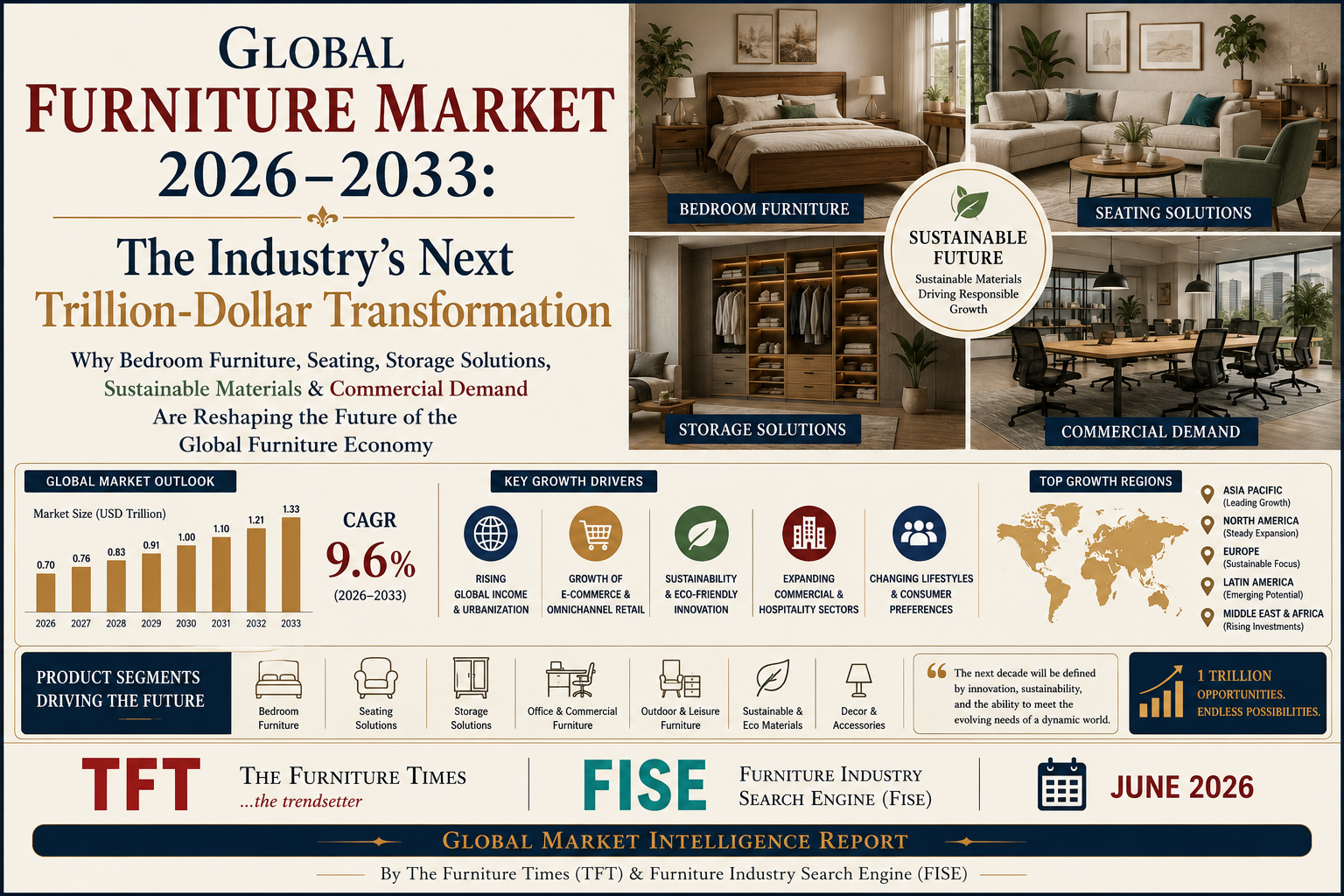
Global Furniture Market 2026–2033 The Industry’s Next Trillion-Dollar Transformation
Why Bedroom Furniture, Seating, Storage Solutions, Sustainable Materials & Commercial Demand Are Reshaping the Future of the Global Furniture Economy
Global Market Intelligence Report
By The Furniture Times (TFT) & Furniture Industry Search Engine (FISE)
June 2026
The global furniture industry is entering one of the most transformative periods in its history.
Furniture is no longer viewed merely as a household necessity.
It has become a reflection of lifestyle.
A symbol of economic development.
A contributor to sustainability goals.
A driver of interior design trends.
A major component of real estate development.
And increasingly, a technology-enabled consumer experience.
According to industry analysis by Grand View Research, the global furniture market is expected to continue growing through 2033, driven by rising urbanization, housing development, commercial expansion, changing lifestyles, and increasing consumer spending on home improvement and interior aesthetics.
The next decade will not simply be about selling more furniture.
It will be about understanding how consumers live, work, interact, and experience spaces.
The Global Furniture Economy Is Changing
Historically, furniture demand was closely linked to population growth and housing construction.
Today, demand is influenced by a much broader set of factors:
- Urbanization
- Remote work
- Hospitality growth
- Commercial development
- Sustainability awareness
- E-commerce
- Digital discovery
- Smart homes
- Lifestyle aspirations
Consumers are investing more heavily in their living environments.
Furniture is becoming part of personal wellbeing.
Part of productivity.
Part of identity.
Part of experience.
This shift is fundamentally changing the market.
Bedroom Furniture: The Largest Emotional Category
Among all furniture categories, bedroom furniture continues to play a dominant role in global demand.
Consumers increasingly view bedrooms as:
- Wellness spaces
- Personal retreats
- Hybrid living environments
Recent design trends show growing demand for built-in wardrobes, personalized storage solutions, statement beds, upholstered headboards, and integrated furniture systems that combine aesthetics with functionality.
Bedroom furniture demand is growing particularly strongly in:
Asia-Pacific
Driven by urban housing expansion.
North America
Driven by renovation and remodeling activity.
Europe
Driven by sustainability and design innovation.
Middle East
Driven by luxury residential development.
Consumers increasingly seek furniture that enhances comfort, organization, and emotional wellbeing.
Seating Furniture Continues To Dominate Living Spaces
Seating furniture remains one of the most important segments globally.
This category includes:
- Sofas
- Sectionals
- Lounge chairs
- Dining chairs
- Hospitality seating
- Office seating
Several key trends are influencing growth.
Consumers increasingly prefer:
- Curved silhouettes
- Larger seating arrangements
- Modular furniture
- Comfort-focused designs
- Multi-functional seating
Industry design reports indicate strong demand for personalized seating experiences, larger-scale furniture, and comfort-oriented interiors.
The rise of hybrid work and home-centered lifestyles continues to support seating demand worldwide.
Storage Furniture Is Becoming Smarter
Storage furniture is evolving rapidly.
Consumers no longer want simple cabinets.
They want intelligent storage.
The growth of:
- Compact living
- Urban apartments
- Home offices
has increased demand for:
- Wardrobes
- Modular storage
- Built-in systems
- Multi-functional furniture
Storage is becoming both practical and aesthetic.
Modern consumers expect storage furniture to enhance interior design while maximizing space efficiency.
Material Trends Reshaping Manufacturing
Furniture materials continue to evolve.
Wood Remains King
Wood remains one of the most preferred materials globally due to:
- Warm aesthetics
- Sustainability perception
- Durability
- Design flexibility
Recent interior design trends indicate growing interest in richer wood tones such as walnut, oak, mahogany, and reclaimed wood.
Metal Gains Popularity
Metal furniture continues to expand in:
- Commercial projects
- Hospitality environments
- Outdoor applications
- Industrial-inspired interiors
Its durability and modern appeal make it increasingly attractive.
Plastic Evolves Through Innovation
Plastic furniture remains important due to:
- Affordability
- Lightweight construction
- Weather resistance
However, sustainability concerns are encouraging manufacturers to explore recycled and eco-friendly alternatives.
Glass Adds Luxury & Modernity
Glass furniture remains popular within premium residential and commercial applications.
Demand is particularly strong in:
- Hospitality projects
- Corporate environments
- Luxury residences
Glass continues to symbolize sophistication and openness in modern interior design.
Residential Applications Continue Leading Demand
Residential demand remains the largest driver of global furniture consumption.
Several factors contribute:
Housing Development
Growing populations require more homes.
Home Renovation
Consumers increasingly upgrade interiors.
Lifestyle Changes
People spend more time at home.
E-Commerce Accessibility
Furniture discovery and purchasing have become easier.
Consumers increasingly prioritize comfort, personalization, and aesthetics within their living environments.
Commercial Furniture Is Entering A New Era
Commercial furniture demand is undergoing significant transformation.
Key sectors include:
Corporate Offices
Hybrid work is redefining workspace design.
Hospitality
Hotels, resorts, and serviced apartments continue investing heavily in furniture upgrades.
Healthcare
Healthcare furniture demand is increasing globally.
Education
Learning environments are being redesigned around flexibility and comfort.
Commercial buyers increasingly prioritize:
- Ergonomics
- Durability
- Sustainability
- Design flexibility
This is creating new opportunities for manufacturers.
Regional Analysis
Asia-Pacific: The Growth Engine
Asia-Pacific remains the fastest-growing furniture market.
Growth is supported by:
- China
- India
- Indonesia
- Vietnam
- Malaysia
- Philippines
Urbanization and middle-class expansion continue driving demand.
Manufacturing leadership also remains concentrated within the region.
North America: Premiumization & Renovation
The United States and Canada continue to see strong demand driven by:
- Home renovation
- Luxury furniture
- Smart home adoption
- Outdoor living
Consumers increasingly invest in quality rather than simply quantity.
Europe: Sustainability Leadership
European consumers continue leading global sustainability trends.
Demand is strongest for:
- Eco-friendly furniture
- Circular economy products
- Long-lasting materials
- Sustainable sourcing
Manufacturers face increasing pressure to demonstrate environmental responsibility.
Middle East: Luxury & Hospitality Expansion
The region continues benefiting from:
- Tourism growth
- Mega developments
- Luxury residential projects
- Hospitality expansion
Furniture demand remains closely linked to construction and tourism.
Africa: Emerging Opportunity
Africa remains one of the most promising long-term growth markets.
Drivers include:
- Population growth
- Urbanization
- Infrastructure development
- Rising consumer spending
While challenges remain, opportunities are significant.
Technology Is Changing Furniture Retail
The future furniture market will increasingly depend on technology.
Consumers now expect:
- Virtual showrooms
- 3D visualization
- Smart search
- Digital catalogs
- Online customization
Furniture e-commerce is becoming a major growth driver.
Technology is no longer optional.
It is becoming essential.
Sustainability Will Define The Next Decade
Perhaps the most important long-term trend is sustainability.
Consumers increasingly ask:
Where was this product made?
What materials were used?
Can it be recycled?
Will it last?
Manufacturers that invest in sustainable practices will likely gain significant competitive advantages.
The Rise Of The Experience Economy
Furniture is moving beyond function.
Consumers increasingly purchase based on:
- Emotional value
- Design appeal
- Lifestyle alignment
- Personal expression
This trend is reshaping product development globally.
The future consumer wants more than furniture.
The future consumer wants experiences.
TFT & FISE Analysis
The global furniture market between 2026 and 2033 will be defined by five major forces:
Urbanization
Sustainability
Technology
Lifestyle Transformation
Consumer Experience
The manufacturers, retailers, and brands that align with these trends will be best positioned for long-term success.
The industry’s future will not belong solely to those who manufacture products.
It will belong to those who understand changing human behavior.
Final Verdict
The global furniture market is entering a new growth cycle.
Bedroom furniture, seating systems, storage solutions, sustainable materials, and commercial applications will continue driving demand worldwide.
At the same time, technology, sustainability, and consumer experience are becoming equally important growth drivers.
The next decade will reward companies that combine:
- Manufacturing excellence
- Design innovation
- Digital visibility
- Sustainability leadership
- Consumer understanding
The future of furniture is no longer simply about making products.
It is about creating environments where people live better, work smarter, and experience greater comfort.
By The Furniture Times (TFT) & Furniture Industry Search Engine (FISE)
Global Market Intelligence Report | June 2026
“TFT tells their story. FISE helps the world find them.”
The furniture industry ecosystem is a $1 Trillion Dollar Industry.