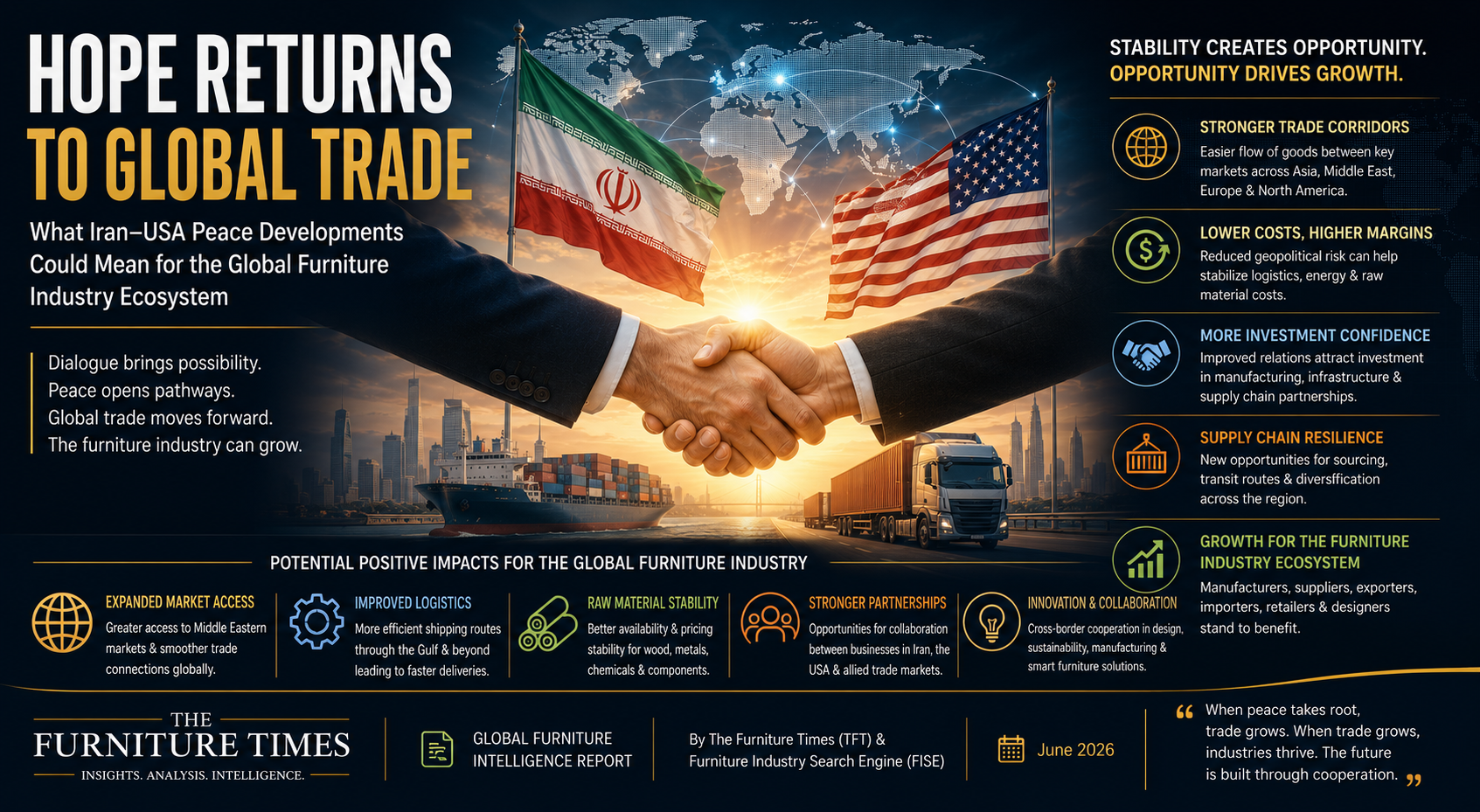
Hope Returns to Global Trade
What Iran–USA Peace Developments Could Mean for the Global Furniture Industry Ecosystem
Global Furniture Intelligence Report | By The Furniture Times (TFT) & Furniture Industry Search Engine (FISE) | June 2026
After months of geopolitical uncertainty, supply chain disruptions, rising logistics costs, energy market volatility, and concerns across global manufacturing sectors, a new sense of cautious optimism is emerging.
Recent diplomatic developments between Iran and the United States, including reports of a preliminary peace framework, ceasefire extensions, and discussions surrounding the reopening of the Strait of Hormuz, have created hope across international markets. Oil prices have already reacted positively, while global financial markets have welcomed signs of de-escalation.
For the global furniture industry, this is more than a political story.
It is an economic story.
It is a logistics story.
It is a manufacturing story.
And perhaps most importantly, it is a story about stability.
Why the Furniture Industry Is Watching Closely
The furniture industry is one of the world’s most interconnected industries.
A dining table may be designed in Italy.
Manufactured in Vietnam.
Fitted with hardware from China.
Upholstered with fabrics sourced from Turkey.
Shipped through Middle Eastern trade routes.
Sold in Europe, North America, Africa, or the Gulf region.
When geopolitical tensions disrupt global trade corridors, furniture businesses feel the impact immediately.
The Strait of Hormuz is one of the world’s most strategically important maritime routes. Concerns over disruptions in the region have historically affected oil prices, freight rates, insurance costs, and overall business confidence. Recent peace developments have helped ease some of those concerns.
Lower Energy Costs Could Benefit the Entire Furniture Value Chain
One of the first positive reactions to the peace developments has been a decline in oil prices. Brent crude fell sharply on expectations that shipping routes could normalize and regional tensions could ease.
For furniture manufacturers, lower energy prices can influence:
Factory operating costs
Transportation expenses
Raw material processing
International shipping
Warehousing costs
Distribution networks
Furniture companies across Asia, Europe, and the Americas have spent years managing cost pressures created by inflation, logistics disruptions, and energy volatility.
Any sustained stabilization in energy markets could provide welcome relief.
A Positive Signal for Global Logistics
The furniture industry depends heavily on predictable logistics.
Manufacturers need certainty.
Retailers need reliability.
Buyers need confidence.
Recent reports indicating progress toward reopening key maritime routes have been welcomed by global markets.
If shipping conditions improve, the industry could benefit through:
Faster transit times
Reduced freight uncertainty
Better inventory planning
Improved project delivery schedules
More stable import-export operations
For furniture exporters, stability is often just as valuable as growth.
The Hospitality Industry Could Regain Momentum
One of the most important customer segments for furniture manufacturers is hospitality.
Hotels.
Resorts.
Restaurants.
Beach clubs.
Tourism developments.
Luxury residential projects.
Periods of geopolitical uncertainty often delay investment decisions in these sectors.
However, peace signals tend to encourage confidence.
Confidence encourages investment.
Investment creates projects.
Projects create furniture demand.
The hospitality furniture sector is therefore one of the industries most likely to benefit if regional stability continues improving.
Gulf Markets Remain Critical
The Middle East remains one of the most important furniture-importing regions in the world.
Countries such as:
Saudi Arabia
UAE
Qatar
Bahrain
Kuwait
Oman
continue investing heavily in:
Tourism infrastructure
Hospitality projects
Luxury real estate
Smart cities
Commercial developments
Any reduction in regional uncertainty can strengthen investor confidence and support ongoing development activity.
For furniture manufacturers worldwide, that matters.
The Psychological Impact Is Equally Important
Business is not driven only by numbers.
It is driven by confidence.
When businesses fear uncertainty, they postpone decisions.
When confidence returns, activity resumes.
The furniture industry has spent recent years navigating:
Inflation pressures
Freight disruptions
Supply chain uncertainty
Labor shortages
Economic volatility
Regional conflicts
A credible diplomatic breakthrough sends an important message:
That stability remains possible.
And stability is one of the most valuable assets in international commerce.
What This Means for Furniture Manufacturers
Furniture businesses should view this moment strategically.
Rather than waiting for markets to react, companies should prepare for opportunities.
Areas to focus on include:
Strengthening Export Readiness
Companies should ensure they are prepared for increased international demand.
Expanding Market Visibility
When confidence returns, buyers begin searching for new suppliers.
Visibility becomes critical.
Strengthening Supply Chains
More resilient sourcing networks create competitive advantages.
Investing in Digital Discoverability
The next wave of growth will increasingly be driven by search, AI discovery, and global buyer visibility.
TFT & FISE Analysis
The furniture industry does not benefit from conflict.
It benefits from stability.
It benefits from trade.
It benefits from connectivity.
It benefits from confidence.
The recent Iran–USA diplomatic progress does not automatically solve every challenge facing the global economy.
Important issues remain under negotiation, and long-term outcomes are still uncertain.
However, the developments provide something the business world desperately needs:
Hope.
Hope that trade routes remain open.
Hope that energy markets stabilize.
Hope that logistics improve.
Hope that businesses can plan for growth rather than disruption.
Final Verdict
The global furniture industry is entering the second half of 2026 facing both challenges and opportunities.
While uncertainty remains, recent Iran–USA peace developments have introduced a more positive outlook for international trade, logistics, manufacturing, hospitality, and investment sentiment.
For furniture manufacturers, suppliers, retailers, designers, exporters, and industry stakeholders around the world, one message stands out:
Peace creates confidence.
Confidence creates investment.
Investment creates opportunity.
And opportunity remains the foundation of the global furniture economy.
By The Furniture Times (TFT) & Furniture Industry Search Engine (FISE)
Global Furniture Intelligence Desk | June 2026
“TFT tells their story. FISE helps the world find them.”

Related Posts
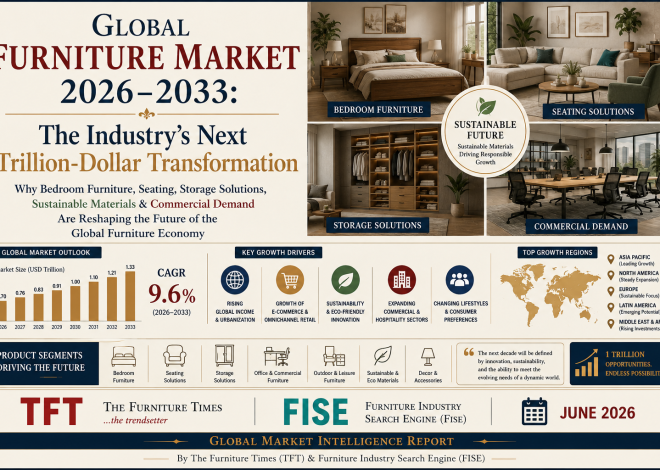
Global Furniture Market 2026–2033 The Industry’s Next Trillion-Dollar Transformation
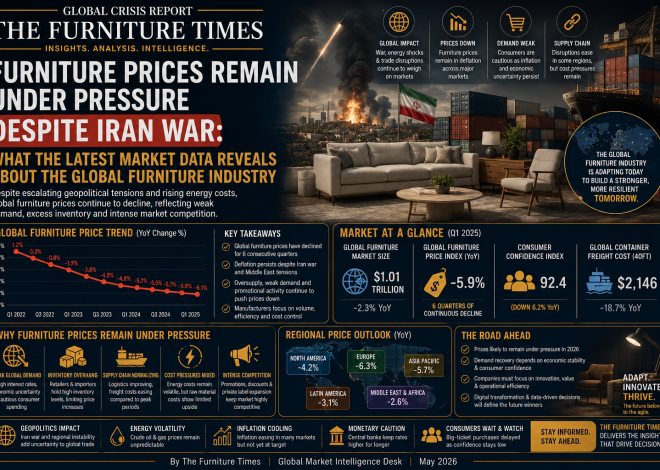
Furniture Prices Remain Under Pressure Despite Iran War: What the Latest Market Data Reveals About the Global Furniture Industry