
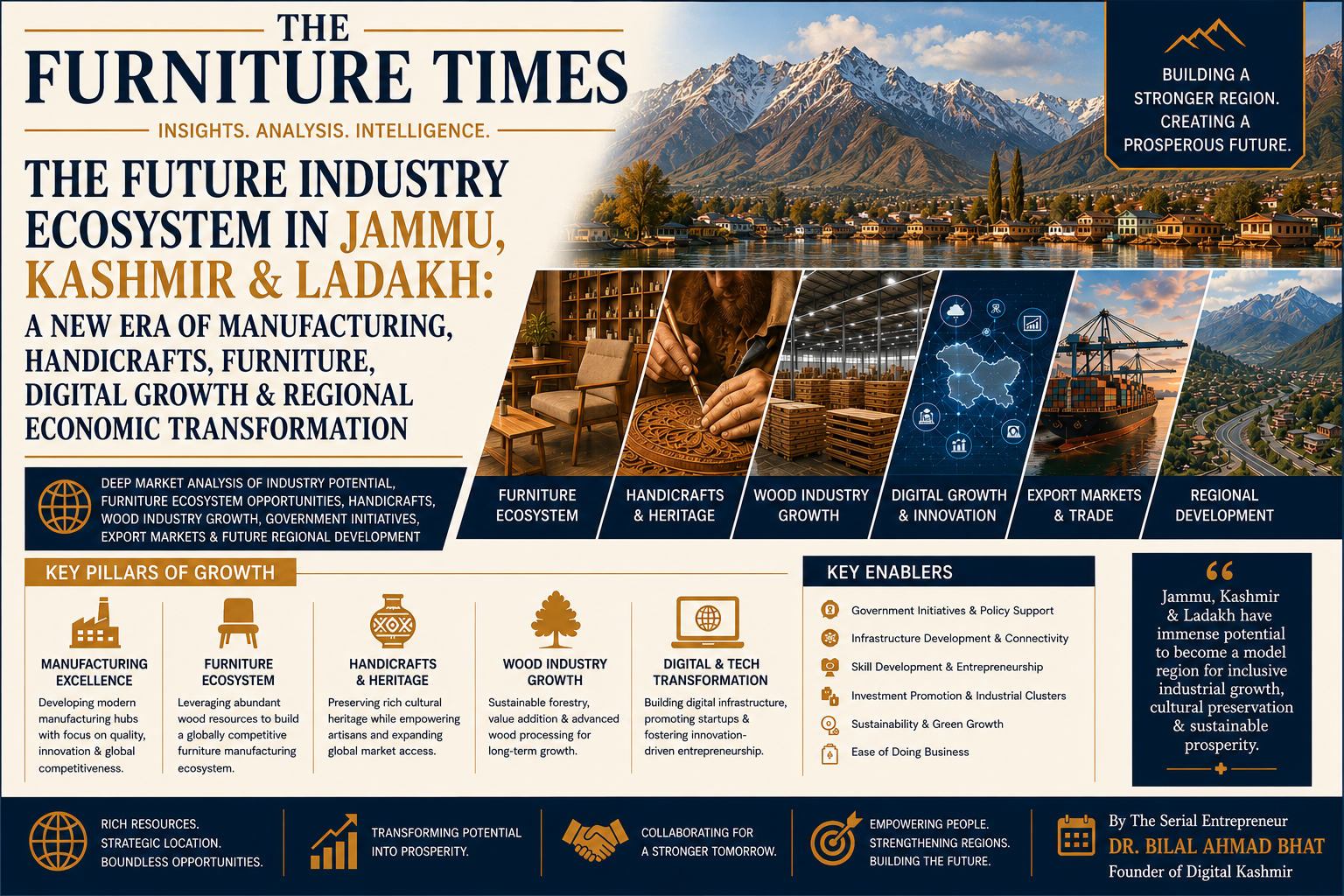
The Future Industry Ecosystem in Jammu, Kashmir & Ladakh: A New Era of Manufacturing, Handicrafts, Furniture, Digital Growth & Regional Economic Transformation
Deep Market Analysis of Industry Potential, Furniture Ecosystem Opportunities, Handicrafts, Wood Industry Growth, Government Initiatives, Export Markets & Future Regional Development
By The Serial Entrepreneur Dr. Bilal Ahmad Bhat, Founder of Digital Kashmir
The future industrial ecosystem of Jammu, Kashmir, and Ladakh is entering a critical transformation phase.
For decades, the region has been globally recognized for:
handicrafts
walnut wood carving
carpets
shawls
papier-mâché
tourism
horticulture
Yet beneath these traditional strengths lies a much larger opportunity.
The region possesses the foundations to build a modern ecosystem that combines:
manufacturing
furniture production
handicrafts
digital economy
tourism infrastructure
exports
sustainability
entrepreneurship
The future of Jammu, Kashmir, and Ladakh may no longer depend on one industry alone.
It may depend on:
ecosystem development.
The Region Holds Untapped Economic Potential
Jammu, , and Ladakh collectively represent one of the most unique economic regions in South Asia.
The region possesses:
strategic geography
tourism strength
cultural heritage
artisan skills
forest resources
agricultural diversity
growing infrastructure
Yet many industries remain underdeveloped relative to their long-term potential.
The future opportunity lies in integrating traditional strengths with:
modern industrial ecosystems.
The Furniture Industry Opportunity
One of the largest underexplored sectors in the region is:
furniture manufacturing.
Kashmir already has global recognition for:
walnut wood craftsmanship
handmade carving
luxury wood products
artisan furniture
However, most businesses still operate at:
small scale
fragmented levels
limited export capacity
The region has the potential to expand into:
premium furniture manufacturing
hospitality furniture
luxury villa furniture
handcrafted exports
custom interior products
The future furniture ecosystem could become a major employment generator.
Walnut Wood Remains a Global Asset
Kashmir walnut wood remains one of the most valuable woodworking resources in the region.
Globally, walnut furniture is associated with:
luxury
heritage
craftsmanship
premium interiors
The challenge is not product quality.
The challenge is:
branding
discoverability
global market access
export positioning
The future opportunity lies in creating:
global walnut furniture brands.
Hospitality Growth Creates New Demand
Tourism continues expanding across:
Kashmir Valley
Jammu region
Ladakh
This growth creates increasing demand for:
hotel furniture
resort furniture
restaurant interiors
outdoor furniture
hospitality design products
As hospitality infrastructure expands, local manufacturing ecosystems can benefit significantly.
Furniture can become directly connected to:
tourism economics.
Interior Design Is Becoming a Growth Sector
Urbanization and real estate development continue increasing demand for:
modular kitchens
wardrobes
interior design services
home renovation
office furniture
Cities such as:
Srinagar
Jammu
are witnessing growing demand for:
premium interiors
modern furniture
customized living solutions
This creates opportunities for:
carpenters
designers
furniture workshops
manufacturing SMEs
The Handicraft Industry Must Enter the Digital Era
The region’s handicrafts remain globally respected.
Products include:
carpets
wood carving
copperware
embroidery
papier-mâché
However, many artisans still struggle with:
market access
visibility
digital discoverability
The future handicraft economy increasingly depends on:
e-commerce
global branding
storytelling
digital exports
The challenge is no longer only production.
The challenge is:
visibility.
Government Schemes Are Supporting Industrial Growth
Multiple government initiatives continue supporting industrial and entrepreneurial development across Jammu, Kashmir, and Ladakh.
These include:
industrial development incentives
MSME support programs
startup initiatives
handicraft promotion schemes
tourism infrastructure investments
export development support
Industrial promotion policies aim to encourage:
investment
manufacturing
employment generation
infrastructure expansion
These initiatives create long-term opportunities for local entrepreneurs.
Startup Ecosystems Are Emerging
The younger generation increasingly shows interest in:
startups
technology
digital businesses
e-commerce
creative industries
The region can benefit from combining:
traditional industries
with:
modern entrepreneurship
Future opportunities include:
furniture technology
tourism technology
digital handicraft platforms
AI-powered marketplaces
regional branding ecosystems
The Digital Economy May Become a Major Growth Driver
One of the biggest future opportunities is:
digital transformation.
The future economy increasingly rewards:
discoverability
searchability
visibility
content ecosystems
online commerce
Many businesses in the region remain:
digitally invisible
under-indexed
difficult to discover globally
Digital infrastructure may become as important as physical infrastructure.
Export Potential Remains Massive
The region possesses strong export opportunities across:
handicrafts
furniture
saffron
horticulture products
carpets
handmade luxury products
However, future export growth requires:
international branding
quality standards
logistics support
digital discoverability
Global buyers increasingly search online before purchasing.
This means exports increasingly depend on:
visibility infrastructure.
Green Industries Can Become a Regional Advantage
The region’s natural environment creates opportunities in:
sustainable furniture
eco-tourism
green manufacturing
renewable energy projects
environmentally responsible production
Global markets increasingly reward:
sustainability
traceability
environmentally responsible businesses
This aligns strongly with the region’s natural strengths.
Ladakh Holds Unique Future Potential
Ladakh offers opportunities beyond traditional industry.
Potential sectors include:
eco-tourism
renewable energy
sustainable hospitality
adventure tourism infrastructure
cultural exports
Its global tourism visibility creates unique opportunities for:
destination branding
hospitality ecosystems
experience-driven businesses
Why Regional Branding Matters
One of the biggest challenges facing Jammu, Kashmir, and Ladakh remains:
fragmented branding.
Many exceptional products exist.
But global visibility remains limited.
The future requires:
regional promotion
digital branding
search visibility
The world increasingly buys what it can:
find
trust
discover
The Furniture Times Industry Insight
The future of Jammu, Kashmir, and Ladakh does not lie in one industry.
It lies in creating:
an interconnected ecosystem.
Tourism supports hospitality.
Hospitality supports furniture.
Furniture supports woodworking.
Woodworking supports artisans.
Artisans support exports.
Exports support branding.
Branding supports visibility.
Visibility supports growth.
The future economy becomes stronger when industries stop operating separately and begin operating as:
ecosystems.
Final Thought
Jammu, Kashmir, and Ladakh stand at an important moment in their economic journey.
The region possesses:
craftsmanship
culture
natural resources
entrepreneurial potential
The future opportunity is not merely industrial growth.
It is:
ecosystem transformation.
By combining:
furniture
handicrafts
manufacturing
exports
the region can build a more resilient and globally connected economic future.
The next decade may determine whether Jammu, Kashmir, and Ladakh remain known only for tradition,
or become recognized globally for:
innovation, entrepreneurship, manufacturing, exports, and ecosystem development.
The opportunity exists.
The question is whether the region can organize itself quickly enough to capture it.
