
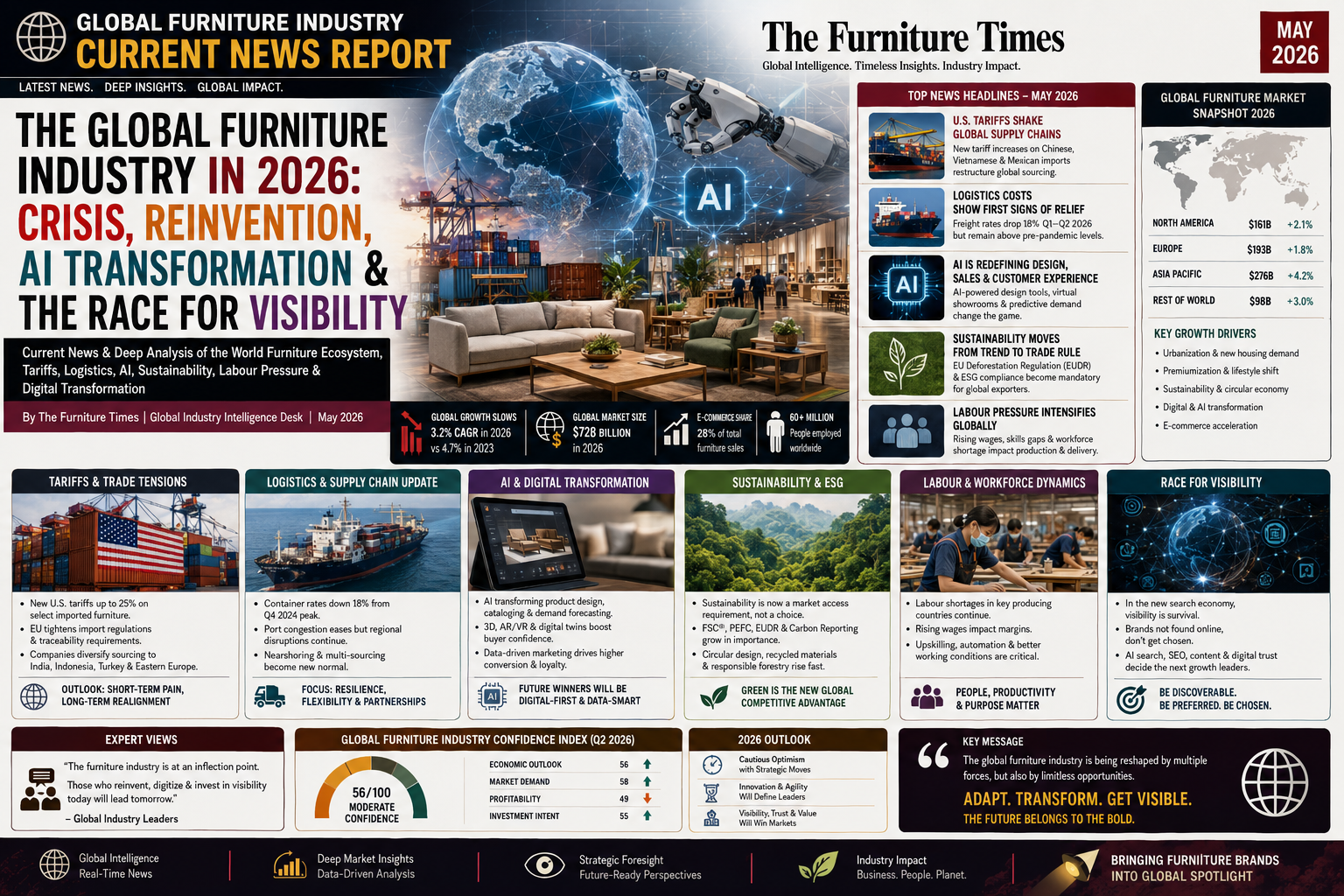
The Global Furniture Industry in 2026: Crisis, Reinvention, AI Transformation & the Race for Visibility
Global Furniture Industry Current News Report | The Furniture Times
Current News & Deep Analysis of the World Furniture Ecosystem, Tariffs, Logistics, AI, Sustainability, Labour Pressure & Digital Transformation
By The Furniture Times | Global Industry Intelligence Desk | May 2026
The global furniture industry is entering one of the most transformative periods in modern history.
The industry — now valued at more than:
$1 Trillion globally
is being reshaped simultaneously by:
geopolitical uncertainty
tariffs
AI transformation
sustainability pressure
logistics instability
labour shortages
digital visibility wars
changing consumer behaviour
The global ecosystem is no longer operating under traditional business rules.
Instead,
the entire furniture economy is being:
rewritten.
The Global Industry Faces Economic Uncertainty
Across the world,
furniture businesses continue navigating:
inflation pressure
slower consumer spending
geopolitical fragmentation
supply chain disruption
trade protectionism
Global trade experts report that 2026 continues facing:
slower growth
fragmented trade systems
tighter regulations
digital transition pressure.
This uncertainty heavily affects furniture because the industry depends on:
global sourcing
container shipping
raw materials
export markets
labour-intensive manufacturing
Tariffs Are Reshaping Global Furniture Trade
One of the biggest current global concerns:
tariff uncertainty.
Trade tensions between major economies continue reshaping:
sourcing decisions
manufacturing movement
export strategies
supply chain structures.
Many furniture businesses now increasingly reconsider:
manufacturing locations
supplier diversification
regional sourcing strategies
This is accelerating:
the restructuring of global furniture supply chains.
Vietnam Continues Rising as a Global Furniture Power
Vietnam remains one of the fastest-growing furniture export economies.
Recent industry analysis shows Vietnam’s wood and furniture exports have surpassed:
US$17 billion
despite ongoing global pressure.
Vietnam continues benefiting from:
manufacturing efficiency
export infrastructure
sustainability investment
automation adoption
global buyer diversification
At the same time,
other countries such as:
Indonesia
India
Malaysia
are increasingly trying to strengthen their global positioning.
Sustainability Is No Longer Optional
One of the strongest global shifts:
sustainability pressure.
Furniture buyers increasingly demand:
certified timber
ESG compliance
traceable sourcing
environmentally responsible manufacturing
Global industries overall are moving rapidly toward:
green transition models
sustainability reporting
cleaner manufacturing systems.
This transformation heavily impacts:
wood sourcing
upholstery materials
chemical usage
packaging systems
logistics operations
AI Is Quietly Transforming the Furniture Industry
Artificial Intelligence is becoming one of the most disruptive forces inside the global furniture ecosystem.
AI now increasingly affects:
search visibility
product discovery
customer support
design systems
manufacturing automation
inventory planning
digital marketing
The rise of AI-driven industrial systems is accelerating across global industries.
For furniture businesses,
this means future competition increasingly depends on:
discoverability.
The Industry Is Moving From Production to Visibility
The old furniture economy rewarded:
factory size
production volume
showroom expansion
The new economy increasingly rewards:
discoverability
digital visibility
searchability
AI indexing
ecosystem connectivity
This transformation is creating:
the Visibility Economy.
Businesses that remain:
invisible
unsearchable
digitally weak
may increasingly disappear from future buyer ecosystems.
Logistics Pressure Continues to Affect the Industry
Shipping and logistics remain major global concerns.
Industry supply chain reports continue to warn about:
geopolitical instability
freight volatility
Red Sea uncertainty
fragmented global trade systems.
Furniture businesses remain highly vulnerable because:
products are bulky
container costs matter heavily
margins remain sensitive
This especially affects:
SMEs
exporters
hospitality suppliers
outdoor furniture manufacturers
Raw Material Costs Continue Rising
Global commodity fluctuations continue to impact furniture production costs.
For example,
industrial metals like copper recently reached record highs due to:
tariffs
supply disruption
green transition demand.
This indirectly affects:
furniture hardware
fittings
lighting systems
electrical furniture integration
manufacturing machinery
Meanwhile:
timber costs
foam costs
fabric pricing
freight expenses
also continue pressuring manufacturers globally.
SMEs Are Under Massive Pressure
Small and medium-sized furniture businesses globally continue struggling with:
rising costs
visibility gaps
weak margins
digital transformation challenges
Many SMEs remain:
operationally strong
but:
digitally invisible.
This creates one of the biggest structural risks in the modern furniture economy.
The Hospitality Sector Is Supporting Recovery
One major positive signal:
hospitality furniture demand continues growing.
Globally,
luxury hospitality projects continue expanding in:
Middle East
Southeast Asia
resort destinations
tourism economies
This supports demand for:
outdoor furniture
teakwood systems
villa interiors
hospitality seating
luxury living environments
Countries like:
Indonesia
Vietnam
Malaysia
continue benefiting from this trend.
Outdoor Living Continues Growing Globally
The outdoor living economy remains one of the strongest furniture growth segments.
Consumers increasingly invest in:
patios
gardens
terraces
rooftop spaces
poolside environments
This trend strongly supports:
teakwood furniture
aluminium furniture
hospitality systems
outdoor upholstery
The Search Economy Is Becoming Reality
One of the most important industry transformations:
Search Is Becoming the New Marketplace.
Global buyers are increasingly:
search before contacting
compare digitally
verify online
discover through AI systems
This means:
visibility now influences trust.
Businesses without:
searchable infrastructure
strong websites
indexed catalogs
AI-friendly systems
risk becoming:
economically invisible.
Why FISE & TFT Matter More Than Ever
The furniture industry remains:
fragmented
disconnected
poorly indexed globally
This creates enormous opportunity for:
TFT
because future furniture ecosystems increasingly depend on:
discoverability
searchable architecture
ecosystem organization
visibility infrastructure
Labour Challenges Continue Globally
Furniture manufacturing remains heavily labour-intensive.
Globally, industries continue facing:
workforce shortages
rising labour costs
ageing craftsmanship populations
skill transition pressure
Many younger workers increasingly move toward:
technology industries
digital work
AI-related sectors
instead of traditional:
woodworking
upholstery
factory craftsmanship
This creates long-term risk for:
traditional furniture manufacturing ecosystems.
The Future Belongs to Adaptive Businesses
The global furniture industry is no longer rewarding only:
size
history
manufacturing scale
Increasingly,
future success depends on:
adaptability
discoverability
sustainability
digital intelligence
ecosystem integration
The businesses that evolve quickly may dominate the next decade.
TFT Philosophical Industry Insight
The global furniture industry is not collapsing.
It is:
transforming.
The old industry model based on:
static production
physical-only visibility
exhibition dependency
isolated manufacturing
is gradually being replaced by:
AI discoverability
digital ecosystems
sustainability-driven trade
intelligent visibility infrastructure
The industry is moving toward:
a connected ecosystem economy.
Final Thought
The global furniture industry in 2026 is entering:
uncertainty
reinvention
restructuring
digital transformation
visibility competition
Businesses now compete not only through:
products
but through:
discoverability
ecosystem presence
AI visibility
digital trust
And increasingly:
You are either visible…
Or invisible.
Because in the future global furniture economy:
only the discoverable may survive.
Closing Insight
“The next generation of global furniture leaders may not simply be the biggest manufacturers.
They may become the businesses, ecosystems, and platforms that organize visibility, trust, discoverability, and connection inside the future AI-driven furniture economy.”
