The Green Furniture Economy: Sustainability Is No Longer Optional
Global Sustainability Intelligence
ESG, FSC, Carbon Footprint & the Future of Green Manufacturing
By The Furniture Times | Global Industry Intelligence Desk | May 2026
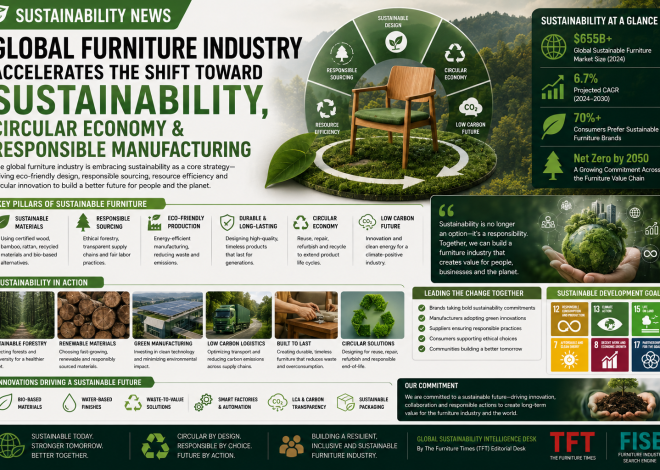
The global furniture industry is entering a new era where sustainability is no longer a branding advantage alone.
It is becoming:
- a market requirement
- a sourcing condition
- a compliance expectation
- a competitive differentiator
Across the world, governments, buyers, investors, developers, and consumers are increasingly demanding:
- responsible sourcing
- lower carbon emissions
- sustainable manufacturing
- traceable supply chains
- environmentally responsible products
The result is the rapid rise of what many analysts now call:
The Green Furniture Economy
The future furniture industry may not only compete on price and design.
It may increasingly compete on sustainability, transparency, and environmental responsibility.
The Furniture Industry Is Under Environmental Pressure
Furniture manufacturing affects:
- forests
- energy consumption
- transportation
- chemicals
- packaging
- waste generation
As environmental awareness increases globally, the industry faces growing scrutiny.
The New Questions Buyers Are Asking
Today’s buyers increasingly want to know:
- Where was this wood sourced?
- Is the factory environmentally responsible?
- What materials are used?
- Is the product recyclable?
- What is the carbon footprint?
- Does the supplier follow ESG standards?
Sustainability is becoming part of purchasing decisions.
1. ESG Is Reshaping Business Expectations
Environmental, Social, and Governance (ESG) standards are increasingly influencing global trade and investment.
Large buyers, developers, hospitality groups, and institutional procurement teams now evaluate suppliers not only by:
- price
- quality
- delivery
but also by:
- sustainability practices
- labor standards
- environmental responsibility
- governance systems
Why ESG Matters
Companies with stronger ESG positioning may gain:
- buyer trust
- investor confidence
- export opportunities
- long-term competitiveness
ESG Is Moving Beyond Corporate Language
It is increasingly becoming:
- operational reality
- procurement criteria
- market access infrastructure
Sustainability is shifting from optional branding into strategic business infrastructure.
2. FSC & Responsible Wood Sourcing Are Becoming Critical
One of the biggest sustainability discussions in furniture manufacturing involves timber sourcing.
The industry increasingly faces pressure to prove:
- legality
- traceability
- responsible forestry practices
The Role of FSC
Forest Stewardship Council (FSC) certification has become one of the most recognized global systems for responsible forestry and wood sourcing.
Why FSC Matters
FSC-certified supply chains help businesses demonstrate:
- responsible sourcing
- environmental awareness
- compliance readiness
- buyer credibility
Growing Buyer Expectations
Large international buyers increasingly prioritize:
- certified wood
- transparent sourcing
- documented supply chains
The future furniture market may increasingly reward traceable and verified sourcing systems.
3. Carbon Footprint Is Becoming a Global Industry Issue
Every stage of furniture production contributes to carbon emissions:
- material extraction
- manufacturing
- logistics
- packaging
- transportation
- warehousing
As climate discussions intensify globally, carbon footprint awareness is entering the furniture industry rapidly.
Why This Matters
Governments and large procurement systems are increasingly evaluating:
- emissions
- sustainability reporting
- environmental impact
Businesses Are Beginning to Measure:
- energy consumption
- transport emissions
- production waste
- material sustainability
The Logistics Factor
Global shipping disruption and long-distance sourcing have also increased awareness around:
- freight emissions
- supply-chain sustainability
- regional manufacturing strategies
Sustainability is no longer only about materials.
It is also about systems, logistics, and operational efficiency.
4. Eco Materials Are Becoming a Competitive Advantage
The industry is seeing growing innovation in:
- recycled materials
- bamboo products
- engineered wood
- low-emission panels
- eco fabrics
- sustainable coatings
- biodegradable packaging
Why Eco Materials Matter
Consumers increasingly associate sustainability with:
- modern living
- responsible consumption
- long-term value
Hospitality & Commercial Projects Are Driving Demand
Hotels, offices, and large developments increasingly seek:
- green-certified interiors
- sustainable FF&E
- environmentally responsible sourcing
Sustainability is becoming part of premium market positioning.
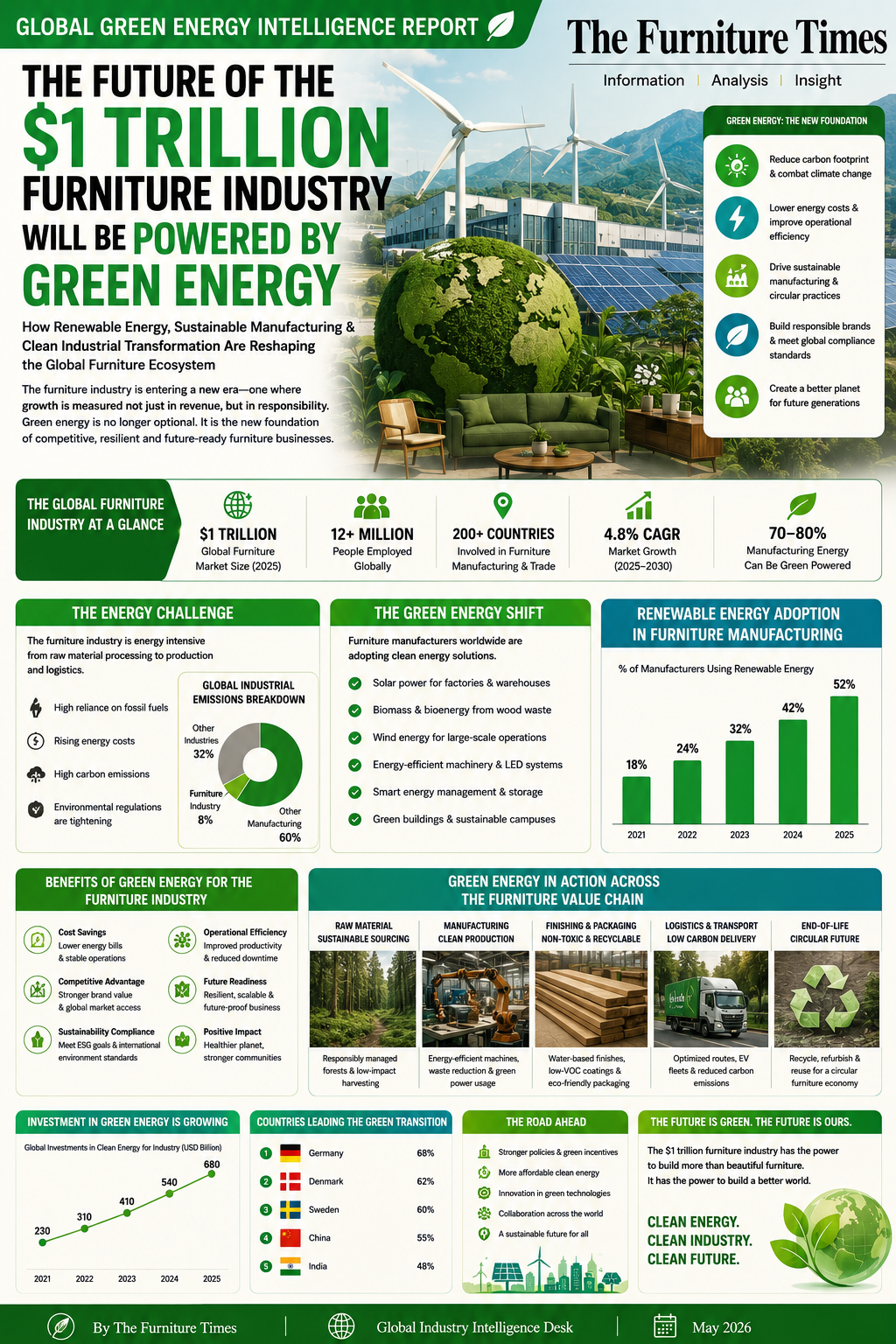
5. Green Manufacturing Is Becoming the Future
Factories globally are increasingly investing in:
- energy-efficient systems
- waste reduction
- cleaner production methods
- smarter machinery
- sustainable operations
Green Manufacturing Includes:
Lower energy consumption
Reduced production waste
Better material optimization
Cleaner finishing systems
Water efficiency
Sustainable packaging
Automation & Sustainability Are Becoming Connected
Smart factories increasingly help manufacturers:
- reduce waste
- improve precision
- optimize production
- lower operational inefficiency
The future smart factory may also become the future green factory.
6. Sustainability Is Creating New Global Trade Dynamics
Environmental regulation is increasingly influencing global trade.
Countries and buyers are becoming more selective about:
- sourcing regions
- supplier certifications
- environmental compliance
This Creates Pressure on Suppliers
Furniture businesses increasingly need:
- sustainability documentation
- environmental transparency
- traceable sourcing systems
SMEs Face Both Opportunity & Pressure
Smaller manufacturers may struggle with:
- certification costs
- compliance complexity
- operational upgrades
But they may also gain opportunities through:
- niche sustainability positioning
- craftsmanship
- local sourcing
- eco-material specialization
Sustainability may create a new competitive landscape within the furniture ecosystem.
7. Digital Visibility Will Influence Green Positioning
As buyers search digitally, sustainability positioning increasingly affects discoverability.
Businesses that clearly communicate:
- certifications
- green practices
- sustainability initiatives
gain stronger credibility online.
The Industry Shift
Sustainability is becoming:
- a branding layer
- a visibility layer
- a trust layer
- a procurement layer
Green visibility is becoming commercial visibility.
TFT Deep Industry Insight
The green furniture economy is not a temporary trend.
It represents a long-term transformation in:
- sourcing
- manufacturing
- logistics
- buyer expectations
- industry reputation
The future industry leaders may increasingly be businesses that combine:
- design
- efficiency
- sustainability
- transparency
- digital visibility
- intelligent infrastructure
Strategic Recommendations
For Manufacturers
Begin gradual sustainability integration and operational efficiency improvements.
For Exporters
Strengthen certification readiness and environmental documentation.
For SMEs
Focus on sustainable specialization and local sourcing advantages.
For Industry Platforms
The future ecosystem will increasingly require:
- verified sustainability data
- supplier transparency
- searchable green credentials
- digital trust infrastructure
Final Thought
The global furniture industry is entering a new era.
An era where:
- buyers demand transparency
- governments demand accountability
- consumers demand responsibility
Sustainability is no longer optional.
It is becoming part of how the future furniture economy operates.
The businesses that adapt early may not only survive the green transition.
They may lead it.
Caption
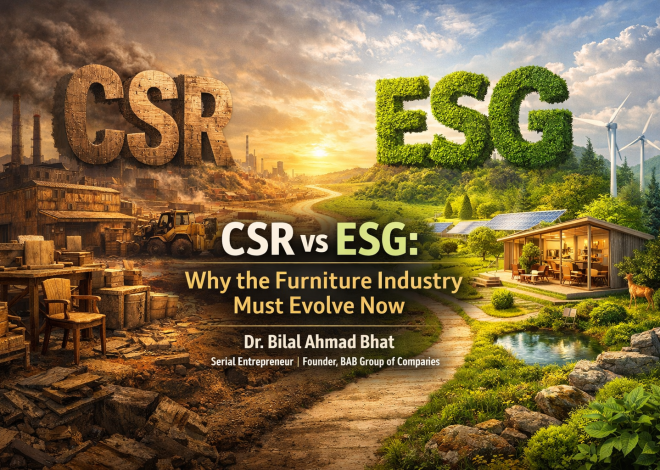
The furniture industry is entering the era of ESG, FSC-certified sourcing, carbon accountability, eco materials, and green manufacturing.