
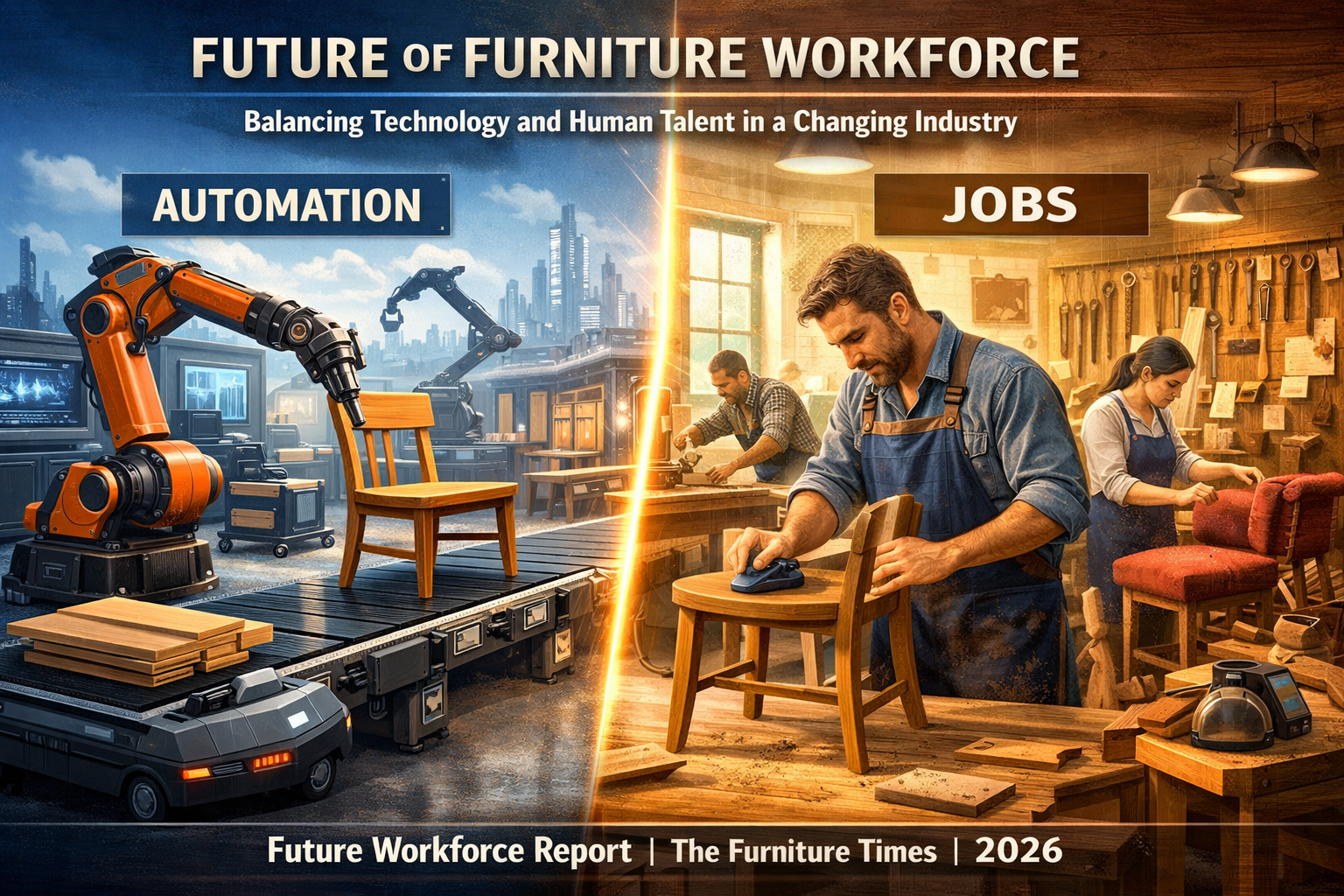
Automation vs Jobs: Future of Furniture Workforce
Balancing Technology and Human Talent in a Changing Industry
Future Workforce Report | The Furniture Times | 2026
As automation accelerates across the furniture industry, a critical question emerges:
👉 Will machines replace people — or redefine their roles?
The Rise of Automation
Smart manufacturing technologies are rapidly expanding:
- robotics in production
- AI-driven design
- automated logistics
👉 Result: faster, more efficient production systems
The Changing Role of Workers
Jobs are not disappearing—they are evolving.
From:
- manual labor
- repetitive tasks
To:
- machine operation
- data analysis
- system management
👉 Workers are becoming technology-enabled professionals
Automation vs Employment: The Reality
❌ Myth: Automation eliminates jobs
✅ Reality: Automation transforms jobs
- some roles decline
- new roles emerge
- skills requirements increase
The Skills Shift
Future workforce demands:
- digital literacy
- technical skills
- problem-solving ability
- adaptability
👉 Training and upskilling become critical
Global Workforce Transformation
Countries investing in:
- workforce training
- smart manufacturing education
- digital skills development
👉 will lead the future
Business Responsibility
Companies must:
- support employee transition
- invest in training programs
- create inclusive growth models
👉 Technology must be balanced with human impact
Future Outlook (2026–2030)
- human + machine collaboration
- hybrid workforce models
- smarter, safer work environments
- higher productivity with fewer manual tasks
Final Insight
The future of the furniture industry is not:
👉 humans vs machines
It is:
👉 humans + machines working together
The future of work in furniture is not about replacement — it’s about transformation.
