Your Competitors Are Getting Published. Why Aren’t You?
How news coverage, press releases and industry thought leadership are helping visible companies build search authority, AI discoverability, customer trust and commercial opportunity—while silent businesses fall behind
By The Furniture Times (TFT) Editorial Desk | Media Visibility | Public Relations | Furniture Marketing | Search & AI Discovery | Business Growth | Global Industry Intelligence
Your competitors are launching products, completing projects, entering markets, attending exhibitions, publishing research and sharing their expertise.
But that may not be the only reason they appear more successful.
They are communicating what they are doing.
Their announcements appear in industry publications. Their executives contribute expert commentary. Their projects become case studies. Their product developments are transformed into searchable news. Their achievements are supported by dates, facts, photographs and third-party coverage.
As a result, customers repeatedly encounter their names.
Meanwhile, many equally capable businesses remain invisible. They may manufacture excellent products, employ skilled people and deliver major projects, but the market rarely hears about them.
The difference is not always capability. It is often visibility.
In a world where buyers research companies before making contact, remaining silent carries a significant commercial cost. If competitors consistently appear in credible publications while your business does not, the market may begin to assume that they are more active, established, innovative or trustworthy.
That assumption can influence enquiries, partnerships, supplier shortlists and purchasing decisions.
The uncomfortable question is therefore necessary:
Your competitors are getting published. Why aren’t you?
Business achievement has little market value when nobody can find it
Companies frequently underestimate how much valuable news they already possess.
Management may believe that only large corporations, listed companies or internationally recognised brands deserve media coverage. In reality, useful business news exists at every level of the economy.
A company may have a publishable story when it:
- Launches a new product
- Opens a showroom or factory
- Enters an export market
- Completes a significant project
- Receives a certification
- Introduces sustainable materials
- Appoints a senior executive
- Creates employment
- Invests in machinery or technology
- Participates in an exhibition
- Forms a strategic partnership
- Reaches an anniversary
- Supports a community initiative
- Publishes market research
- Solves an industry problem
- Introduces a new service
- Wins an award
- Expands its distribution network
- Develops a new manufacturing capability
- Shares expert insight on a market issue
The problem is rarely a complete absence of news. The problem is that organisations do not recognise, structure and distribute their stories.
An achievement that remains inside a company meeting, email or social-media post has limited reach. Once transformed into a credible news article, it becomes a public business asset that customers, journalists, search engines and AI systems can discover.
Getting published is no longer merely about publicity
Traditional public relations focused heavily on immediate media attention. A company issued a press release, hoped journalists would cover it and evaluated success through circulation or mentions.
The value of publishing is now broader.
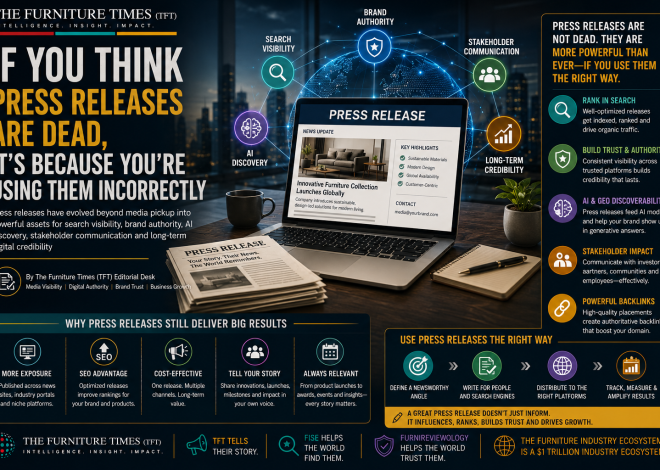
A well-prepared news article or press release can support:
- Brand recognition
- Search visibility
- AI discovery
- Website authority
- Executive credibility
- Customer reassurance
- Dealer recruitment
- Export development
- Investor communication
- Talent acquisition
- Sales conversations
- Long-term reputation
A published article can continue appearing in searches long after the original announcement. Salespeople can send it to prospects. Executives can include it in presentations. Distributors can use it when introducing the brand. Customers may discover it while evaluating whether a company is credible.
Publishing creates evidence.
Advertising says that a company is capable. Credible news coverage demonstrates what the company has actually done.
Media coverage creates third-party validation
Information published only on a company’s own website remains self-declared.
That information is still valuable, but customers understand that the business controls it. Independent or industry publication provides an additional layer of validation because the story appears outside the company’s owned channels.
This does not mean that every published article represents an endorsement. News coverage should not be confused with certification, testing or a customer guarantee.
However, third-party publication demonstrates that the company has established a public record. Its announcements can be examined, compared and referenced.
For unfamiliar manufacturers, exporters and service providers, that record can reduce uncertainty.
A buyer investigating a supplier may feel more confident after finding:
- A recent expansion announcement
- Coverage of completed projects
- Interviews with company leadership
- Technical articles demonstrating expertise
- Exhibition participation reports
- Sustainability or certification updates
- Customer reviews supporting the company’s claims
The combined evidence helps transform an unknown business into an understandable one.
Your competitors are building searchable histories
Every credible article adds another piece to a company’s digital history.
Over time, published content can answer important questions:
- How long has the business been operating?
- Which products does it specialise in?
- Which countries does it serve?
- Who leads the organisation?
- What projects has it completed?
- What technologies has it adopted?
- Has it received certifications or awards?
- Does it contribute knowledge to its industry?
- Is it still active?
A company with consistent, factual coverage becomes easier to research.
A silent company may have an impressive history, but if that history is not documented online, buyers may never discover it.
This creates a growing information gap between companies that publish and those that remain quiet. Each month of silence allows active competitors to build a larger searchable footprint.
Eventually, the difference becomes difficult and expensive to close.
Search engines reward clarity, relevance and authority
Search visibility is influenced by many factors, and no single press release can guarantee rankings. However, publishing credible and relevant content can contribute to a stronger digital presence.
News articles can help search systems connect a company with:
- Product categories
- Geographic markets
- Industry terminology
- Executive names
- Events and exhibitions
- Technologies
- Certifications
- Projects
- Customer applications
For example, a furniture manufacturer that repeatedly publishes factual information about hotel projects, production capabilities and export markets gives search engines more context than a manufacturer with a five-page website that has not been updated in years.
This context helps digital systems understand what the company does.
The objective is not to produce hundreds of low-quality articles filled with repeated keywords. That approach can damage credibility.
The objective is to create a meaningful body of original, accurate and useful information.
AI discovery makes public information even more important
Brand discovery is moving beyond conventional search rankings.
Customers increasingly ask AI assistants to recommend manufacturers, compare suppliers, identify furniture brands, summarise market options or suggest companies for a particular application.
AI systems require evidence before they can confidently identify and explain a business. They may analyse websites, directories, news coverage, product information, reviews and other accessible sources.
If little information exists, an AI system may:
- Fail to identify the company
- Confuse it with another business
- Misunderstand its product categories
- Omit it from recommendations
- Provide outdated information
- Lack sufficient evidence to describe it confidently
Competitors with stronger public information profiles are more likely to be understood.
Getting published therefore contributes to what may be called AI visibility: the ability of intelligent systems to find, interpret and potentially recommend a company.
A business cannot demand an AI recommendation. It can, however, improve the quality, consistency and credibility of the information available about it.
The furniture industry has a serious documentation problem
The furniture ecosystem contains thousands of capable but poorly documented businesses.
A manufacturer may produce for international brands while remaining unknown under its own name. An artisan may preserve generations of craftsmanship without a searchable portfolio. A component supplier may solve important engineering problems but never publish technical information. A regional retailer may serve its community for decades without documenting its history.
This invisibility affects the entire ecosystem:
- Manufacturers struggle to find suppliers.
- Buyers cannot identify capable factories.
- Designers cannot discover specialist craftspeople.
- Exporters remain dependent on intermediaries.
- Small businesses miss partnership opportunities.
- Consumers cannot evaluate unfamiliar brands.
- Industry knowledge remains fragmented.
Publishing can help convert hidden capability into discoverable intelligence.
The furniture industry does not lack stories. It lacks systems for finding, documenting and distributing them.
Why many businesses are not getting published
Several common barriers keep companies out of the news.
“We are not a large company”
Newsworthiness is not determined exclusively by size. A small company can possess a highly relevant story if it introduces an innovative product, preserves a craft, enters a new market or solves a meaningful customer problem.
“We have nothing important to announce”
Many businesses do not recognise their own progress as news. Product improvements, export shipments, factory investments, community projects and market insights can all be valuable when presented with relevance and evidence.
“Media coverage is too expensive”
Large campaigns can be costly, but credible publishing does not always require a major budget. Businesses can begin with targeted industry publications, expert commentary and carefully selected announcements.
“We only post on social media”
Social media is useful, but posts move quickly and often remain inside one platform. Published news can provide a more durable, searchable and structured record.
“We tried one press release and nothing happened”
One announcement is not a complete visibility strategy. Authority is built through continuity. Results also depend on story quality, relevance, timing, distribution and follow-up.
“Our customers already know us”
Existing customers may know the company, but future buyers, designers, investors, distributors, employees and AI systems may not.
“We do not have a public-relations team”
A full internal team is not always necessary. Leadership can create a simple process for identifying stories, collecting facts, obtaining images and working with appropriate publications.
“We are waiting for better market conditions”
Difficult periods can be valuable times to communicate because competitors often reduce activity. A quieter market may make credible stories more noticeable.
Social-media activity is not the same as being published
A social post can generate immediate engagement, but its visibility may decline quickly. Reach depends on algorithms, follower behaviour and platform rules.
News coverage offers different advantages.
A published article usually has:
- A permanent headline
- A dedicated web address
- A publication date
- Searchable text
- A clear author or editorial source
- Structured context
- Greater suitability for citation and sharing
The strongest strategy uses both.
The published article becomes the authoritative source. Social media distributes it to relevant audiences. Email delivers it to customers. Sales teams use it in conversations. Executives share it with partners.
One credible story can therefore support multiple channels.
Thought leadership can turn expertise into authority
Not every article needs to announce company news.
Executives, designers, manufacturers and technical specialists possess knowledge that can help the market understand important issues.
A furniture leader might write about:
- Product durability
- Export challenges
- Sustainable materials
- Furniture testing
- Retail transformation
- Artificial intelligence
- Supply-chain risk
- Hospitality procurement
- Circular furniture
- Consumer behaviour
- Component quality
- Skilled-worker shortages
- Furniture tourism
- Digital product data
When professionals share useful knowledge consistently, they become associated with the subject.
This can create commercial opportunities because customers often prefer to work with businesses that demonstrate understanding before asking for a sale.
Thought leadership is not self-praise. It is the disciplined practice of making expertise useful to others.
Getting published gives sales teams stronger evidence
Sales representatives frequently make similar claims:
- “We provide excellent quality.”
- “We are reliable.”
- “We have strong experience.”
- “Our products are innovative.”
- “We serve international customers.”
Prospects hear these claims from almost every supplier.
Published evidence makes the conversation more credible.
A salesperson can send a prospective buyer:
- Coverage of a recent factory expansion
- A report on a completed hotel project
- An interview explaining production capabilities
- A certification announcement
- A case study
- A technical article written by company leadership
- An independent review profile
This evidence helps the prospect verify claims without relying solely on a sales presentation.
News coverage therefore supports the sales process rather than operating separately from it.
Publishing can help smaller companies compete fairly
Large companies can purchase extensive advertising, attend major exhibitions and maintain global sales offices. Smaller businesses may not possess the same resources.
But publishing can give smaller companies a credible voice.
A carefully documented story about craftsmanship, specialisation or innovation can reach audiences beyond the company’s physical location. It can introduce a local manufacturer to international buyers or help an artisan become visible outside a regional network.
This does not remove every competitive disadvantage. Production capacity, logistics, pricing and certification still matter.
However, it gives smaller companies an opportunity to be evaluated.
Fair competition begins when capable businesses can be found.
What makes a company story publishable?
A strong business story normally contains several elements.
A clear development
Something has happened: a product was launched, a facility opened, a project completed or a new capability introduced.
Relevance
The story explains why the development matters to customers, the industry or the wider economy.
Evidence
Dates, locations, figures, specifications, photographs and named participants strengthen credibility.
Human perspective
Quotes from leaders, employees, customers or partners explain the significance of the development.
Wider context
The announcement is connected to a larger issue such as sustainability, digitalisation, employment, exports or changing customer demand.
Accuracy
Claims must be supportable. Certifications, partnerships and performance statements should be verified before publication.
A useful conclusion
The reader should understand what happens next and how to obtain further information.
What businesses should avoid
Getting published should strengthen trust, not undermine it.
Companies should avoid:
- Exaggerated claims
- Invented market figures
- Unsupported “number one” statements
- Misleading partnerships
- Keyword-stuffed articles
- Repetitive low-value releases
- False customer testimonials
- Unlicensed images
- Publishing confidential information
- Presenting paid placement as independent endorsement
- Announcing plans as completed achievements
- Hiding important limitations
A business’s digital history can remain accessible for years. Accuracy must therefore take priority over temporary attention.
A practical publishing strategy
Companies can build a credible media presence through a disciplined process.
1. Conduct a story audit
Review the previous 12 months and identify launches, projects, hires, investments, certifications, partnerships, events and milestones that were never properly documented.
2. Create an editorial calendar
Plan stories around real business activity, exhibitions, market developments and customer questions.
3. Assign responsibility
One person should coordinate facts, approvals, photographs, quotes and publication opportunities.
4. Match the story with the audience
A technical innovation may suit a manufacturing publication. A retail launch may suit consumer media. An export development may interest trade and regional business publications.
5. Prepare supporting assets
Provide high-quality photographs, correct company information, executive biographies, product specifications and contact details.
6. Publish consistently
A steady flow of meaningful information is more credible than a sudden burst followed by a year of silence.
7. Distribute the coverage
Share articles through the company website, newsletters, social channels, dealer networks and sales teams.
8. Measure the right results
Track referral traffic, branded searches, enquiries, quotation requests, partnership approaches and sales-team use—not only page views.
Media coverage should become part of business infrastructure
Publishing is often treated as a promotional activity added after the “real work” is finished.
That view is outdated.
News documentation should be integrated into business operations. Every important project, product development, certification and expansion should have a communication plan.
This turns business activity into a growing library of public evidence.
Over time, that library can support:
- Customer acquisition
- Reputation management
- Search optimisation
- AI discovery
- Recruitment
- Investor relations
- Export development
- Distributor confidence
- Historical documentation
- Crisis communication
Publishing is not simply about receiving attention today. It is about building the information infrastructure through which the company will be discovered and evaluated tomorrow.
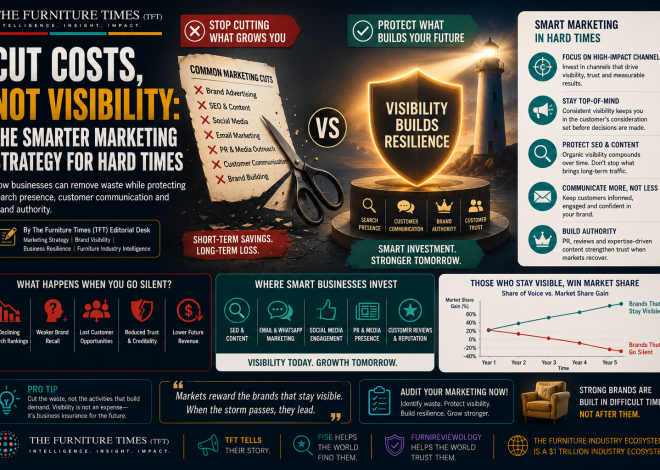
The cost of remaining silent
Silence rarely appears as a direct expense on a financial statement.
Its cost becomes visible elsewhere:
- Fewer branded searches
- Lower customer recall
- Reduced website authority
- Limited media recognition
- More difficult sales conversations
- Greater dependence on discounts
- Weak AI visibility
- Missed supplier shortlists
- Lower distributor confidence
- Competitors occupying the category narrative
The longer the silence continues, the more difficult it becomes to rebuild the company’s public position.
Competitors are not merely getting another article. They are building an expanding record of market activity while your record remains incomplete.
TFT, FISE and FurniReviewology: the visibility, discovery and trust infrastructure
The Furniture Times helps companies across the furniture industry ecosystem tell their stories through news, analysis, interviews and industry intelligence.
The Furniture Industry Search Engine helps manufacturers, retailers, suppliers, designers, architects, artisans and service providers become searchable and discoverable.
FurniReviewology helps the market evaluate those businesses through customer experience, reputation and review intelligence.
Together, the platforms support three connected stages of modern commercial discovery:
TFT tells their story.
FISE helps the world find them.
FurniReviewology helps the world trust them.
The furniture industry ecosystem is a $1 trillion industry ecosystem.
Final call to action: stop allowing competitors to tell the entire industry story
Your competitors are being quoted, indexed, shared and remembered.
They are not always more capable than you. They may simply be better at documenting their activity and presenting it to the market.
If your company is manufacturing, innovating, exporting, hiring, expanding, solving problems or serving customers, it has a story worth examining.
Do not wait until the market improves. Do not wait until you become a global corporation. Do not assume customers will somehow discover achievements you have never communicated.
Turn your work into evidence. Turn your expertise into authority. Turn your company’s progress into a searchable history.
Your competitors are getting published. The question is no longer why they are visible—it is why you are still silent.
Get featured. Get searchable. Get trusted.