Global Decking Market Outlook: What Manufacturers Should Prepare For
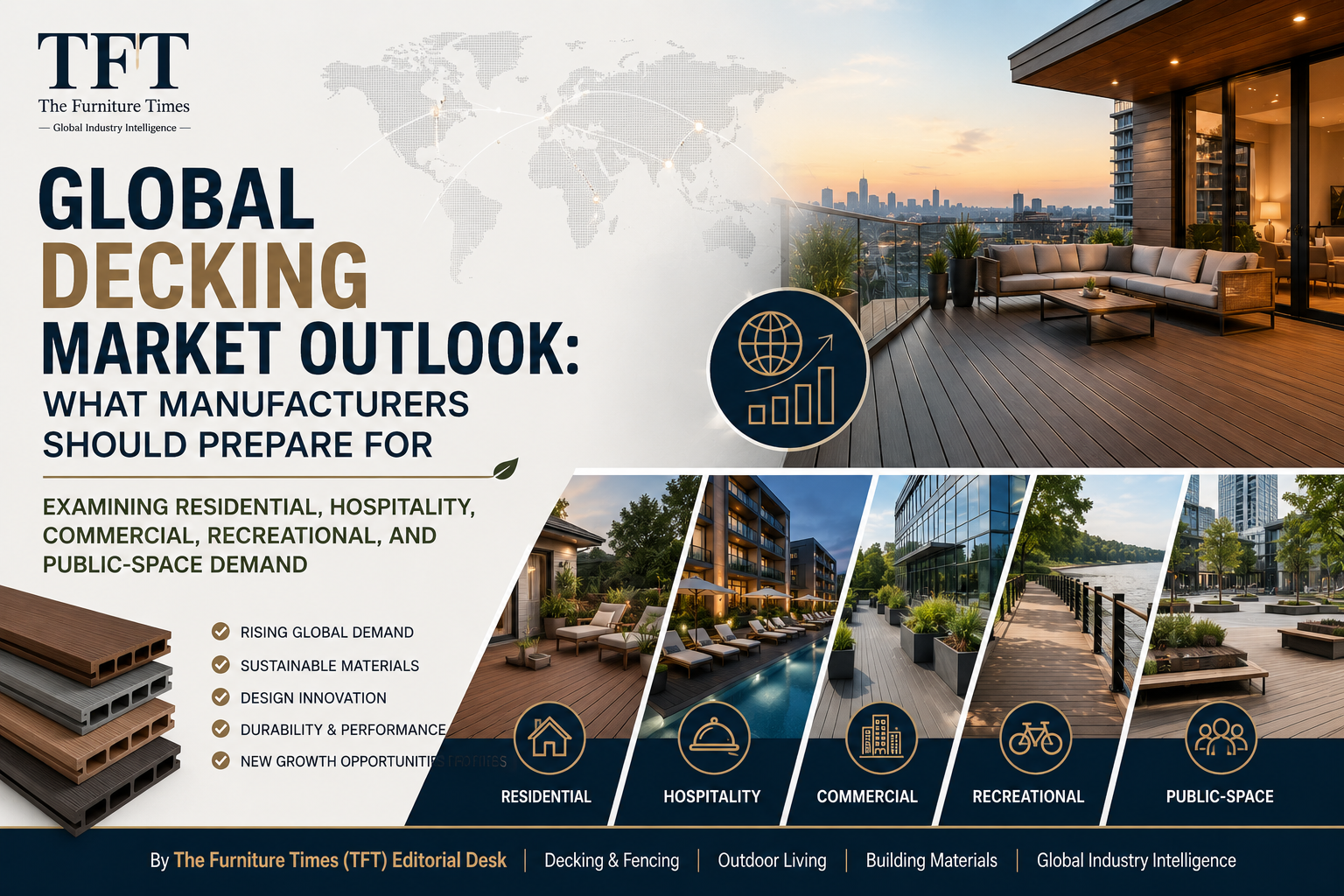
Examining Residential, Hospitality, Commercial, Recreational, and Public-Space Demand
By The Furniture Times (TFT) Editorial Desk | Decking & Fencing | Outdoor Living | Building Materials | Global Industry Intelligence
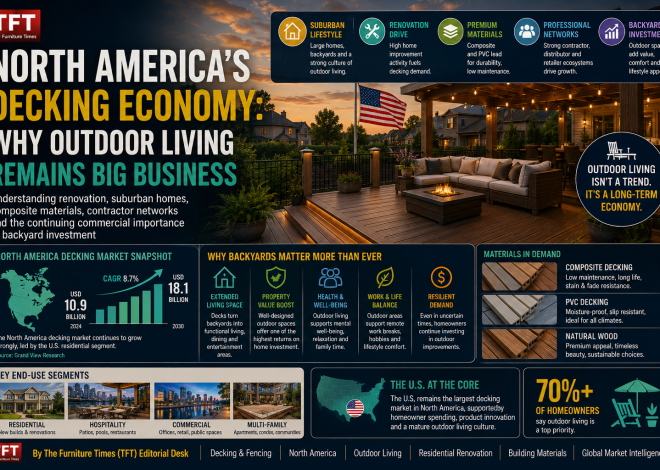
The global decking industry is entering a period in which its future will be determined by far more than the construction of backyard terraces.
Decking is increasingly becoming part of a much broader physical environment spanning residential properties, hotels and resorts, restaurants, commercial developments, swimming pools, parks, rooftop spaces, recreational facilities, waterfront developments and public infrastructure.
At the same time, manufacturers face a rapidly changing competitive landscape.
Natural timber must compete and coexist with wood-plastic composites, PVC, aluminium and other engineered alternatives. Customers are paying closer attention to maintenance, durability, sustainability, surface temperature, slip resistance, appearance and lifecycle cost. Architects want better technical documentation. Contractors want faster and more reliable installation systems. Developers want predictable performance. Consumers want attractive outdoor spaces that require manageable maintenance.
Perhaps most importantly, decking is gradually moving from being viewed merely as a building material toward becoming the flooring infrastructure of the outdoor-living economy.
For manufacturers, this creates considerable opportunity—but it also raises the level of competition.
The next generation of successful decking companies will need to understand not simply how to manufacture boards, but where future demand will emerge, why customers will buy, how projects will be specified, which materials will gain acceptance, and how products will perform in increasingly demanding environments.
The Decking Market Is Becoming More Diverse
Historically, residential construction and home improvement represented the most recognizable decking applications.
That market remains critically important.
But today’s decking opportunity is considerably broader.
A single manufacturer may potentially serve:
residential homes, apartments, condominiums, hotels, resorts, restaurants, cafés, shopping centres, office developments, schools, parks, swimming pools, marinas, rooftop gardens, public walkways and recreational facilities.
Each application has different requirements.
Residential consumers may prioritize appearance, affordability and maintenance.
Hotels may prioritize durability, design and guest experience.
Restaurants may prioritize commercial traffic and ease of cleaning.
Public projects may prioritize accessibility, safety, durability and lifecycle value.
Pool environments may require stronger consideration of slip resistance, moisture and heat.
Manufacturers therefore need to stop thinking about “the decking customer” as though there were only one.
The future market will increasingly consist of multiple specialized customer groups.
1. Residential Demand: The Foundation of the Market
Residential applications are likely to remain one of the most important pillars of global decking demand.
Homeowners increasingly want exterior spaces that function like additional rooms.
A traditional backyard can become:
an outdoor lounge, dining area, entertainment space, children’s play environment, poolside retreat or outdoor kitchen.
Decking provides a practical way to define these spaces.
This trend is particularly important because the value proposition of a deck extends beyond the boards themselves.
Once a deck exists, consumers often purchase additional products:
outdoor sofas, dining sets, parasols, pergolas, lighting, planters, grills, outdoor kitchens, storage and decorative accessories.
Residential decking therefore stimulates spending across the wider outdoor-living and furniture ecosystem.
Renovation Could Be as Important as New Housing
Manufacturers should pay particular attention to renovation.
The global opportunity does not depend solely on newly constructed homes.
There are enormous numbers of existing decks that eventually require repair, resurfacing or complete replacement.
Ageing outdoor spaces create a natural replacement cycle.
Consumers may replace damaged timber.
They may upgrade from basic materials to premium products.
They may expand an existing deck.
They may add railings, lighting or privacy screens.
They may redesign an entire backyard.
This creates recurring demand.
For manufacturers, replacement markets can provide valuable stability during periods when new housing construction slows.
Smaller Homes Could Create Smarter Decking
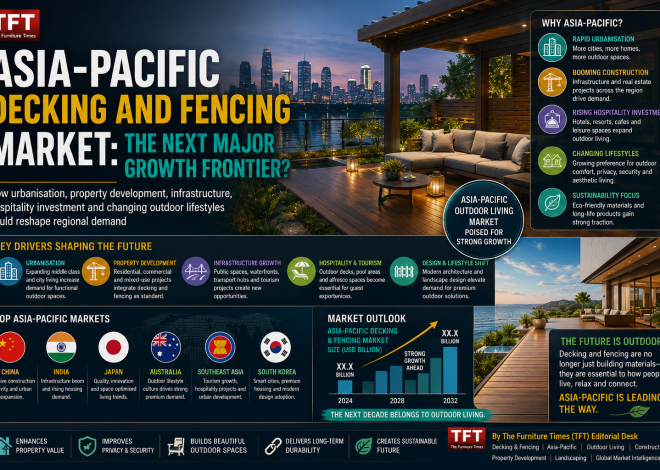
Urbanization does not necessarily reduce decking opportunities.
It changes them.
Apartments, townhouses and compact urban homes may have smaller outdoor areas, but consumers can place high value on every usable square metre.
Balconies, courtyards and compact gardens therefore represent interesting opportunities.
Manufacturers may increasingly develop:
modular decking, deck tiles, lightweight systems, adjustable pedestal systems and products designed specifically for small spaces.
The future residential market may therefore involve both enormous suburban decks and highly optimized urban balconies.
2. Hospitality: Outdoor Space Can Generate Revenue
Hospitality represents one of the most strategically important decking applications.
Hotels and resorts understand something that many other industries are only beginning to recognize:
Attractive outdoor space can generate revenue.
A hotel terrace can accommodate dining.
A rooftop can become a bar.
A resort pool deck supports loungers and cabanas.
A beachfront platform can host events.
A garden deck can accommodate weddings.
A restaurant terrace can increase seating capacity.
For hospitality operators, decking can therefore become part of a revenue-producing asset.
This changes purchasing economics.
The cheapest product may not necessarily provide the greatest value.
Durability, aesthetics, downtime, maintenance, safety and guest experience can become more important considerations.
Resorts Create Premium Opportunities
Luxury resorts represent an especially attractive market for premium decking.
Guests experience resort environments visually and physically.
The appearance of walkways, pools, villas, restaurants and beachfront areas contributes to the overall perception of quality.
This can support demand for:
premium hardwood, sophisticated composites, concealed fastening, integrated lighting, custom profiles and coordinated railing systems.
Manufacturers serving this sector should understand hospitality design rather than simply construction procurement.
3. Commercial Decking Is Expanding the Market
Commercial environments provide another important opportunity.
Office developments increasingly incorporate outdoor employee areas.
Shopping centres create outdoor dining and entertainment zones.
Mixed-use developments integrate landscaped public areas.
Restaurants require terraces.
Retail destinations create pedestrian environments.
Corporate campuses incorporate gardens and outdoor meeting spaces.
Decking can serve many of these applications.
However, commercial projects introduce different performance expectations.
Products may experience much heavier traffic than residential decks.
Maintenance schedules may be stricter.
Fire performance can become relevant.
Accessibility requirements may apply.
Documentation and certifications can influence specification.
Manufacturers entering commercial markets therefore need stronger technical capabilities.
Restaurants and Cafés Deserve Special Attention
Outdoor dining represents a particularly interesting subcategory.
For a restaurant, additional outdoor seating can translate directly into additional revenue.
Decking can transform uneven, unused or unattractive exterior areas into organized dining environments.
A complete restaurant terrace may combine:
decking, fencing, privacy screens, tables, chairs, parasols, lighting, planters and heating or cooling solutions.
Once again, the commercial opportunity extends far beyond the flooring itself.
4. Recreational Demand Creates Specialized Applications
Recreation is another potentially important source of decking demand.
Swimming pools are perhaps the most obvious example.
But the category can extend to:
sports facilities, theme parks, holiday parks, camping destinations, playground environments, wellness resorts, spas, golf facilities, marinas and leisure developments.
These projects often require products capable of handling significant traffic and challenging weather conditions.
The requirements can differ dramatically from those of a residential backyard.
Poolside Decking Requires Specialized Performance
Swimming-pool environments create particularly demanding conditions.
Decking can face:
water exposure, intense sunlight, heat, cleaning chemicals and frequent foot traffic.
This makes characteristics such as surface temperature, slip resistance, drainage, dimensional stability and maintenance especially important.
Manufacturers capable of engineering products specifically for pool environments could develop valuable specialized positions.
Wellness Tourism Could Create New Opportunities
The growth of wellness-focused hospitality and recreation creates another interesting market.
Spas, retreats, yoga destinations and wellness resorts frequently emphasize natural environments and indoor-outdoor connections.
Decking can help create:
meditation areas, outdoor treatment zones, pool environments, walking paths and viewing platforms.
Materials that combine attractive appearance with environmental credentials could become particularly relevant.
5. Public Spaces Could Become a Major Long-Term Market
Public-space decking is sometimes overlooked because residential products receive more consumer attention.
Yet cities worldwide are increasingly investing in the quality of public environments.
Waterfronts are being redeveloped.
Parks are being upgraded.
Pedestrian areas are expanding.
Urban rooftops are being activated.
Public seating environments are being improved.
Decking can participate in these projects.
Potential applications include:
boardwalks, promenades, viewing platforms, public gardens, park walkways, waterfront areas, outdoor event spaces and recreational infrastructure.
These applications can involve substantial volumes.
But they also demand significant technical performance.
Public Procurement Changes the Competitive Rules
Manufacturers pursuing public projects need to understand that the sales process may be very different from residential retail.
Governments and municipalities may require:
technical specifications, safety documentation, sustainability information, warranty commitments, accessibility considerations and lifecycle-cost analysis.
Price remains important, but long-term performance can become equally significant.
A product that costs less initially but requires frequent replacement may ultimately be more expensive for a public authority.
Manufacturers able to demonstrate lifecycle value may therefore gain an advantage.
Rooftop Decking Could Become an Urban Growth Category
One of the most interesting future opportunities is located above existing buildings.
Urban rooftops represent enormous amounts of underutilized space.
Residential buildings can create communal terraces.
Hotels can create rooftop bars.
Restaurants can expand upward.
Office buildings can provide employee gardens.
Shopping centres can create entertainment spaces.
Decking can help transform these areas into functional environments.
Rooftop applications can create demand for lightweight systems, adjustable pedestals, modular installation and drainage solutions.
This could become an increasingly specialized product category.
The Material Battle Will Continue
One of the biggest strategic decisions facing manufacturers concerns materials.
There is no universal winner.
Instead, multiple material families will compete across different price points and applications.
Natural Timber
Wood remains important because of its natural beauty, familiarity and established supply chains.
Premium hardwood can continue to serve luxury projects.
Treated softwoods can remain competitive in value-oriented markets.
Thermally modified wood creates another performance category.
Wood-Plastic Composites
Composite decking can appeal to customers seeking lower maintenance and consistent appearance.
Continued innovation in surfaces, colours, recycled content and performance will likely strengthen competition.
PVC
PVC decking can address particular moisture and maintenance requirements.
Aluminium
Aluminium may find opportunities where durability, lightweight construction, fire considerations or specialized architectural applications matter.
Manufacturers should avoid assuming that one material will replace every other material.
The future will likely be application-specific.
Sustainability Will Become a Procurement Requirement
Environmental considerations are moving deeper into construction procurement.
Architects, developers and institutional buyers increasingly want information about where products come from and what happens to them after use.
Decking manufacturers should prepare for questions about:
recycled content, responsible timber sourcing, carbon footprint, durability, recyclability, manufacturing waste and environmental declarations.
Companies that wait until sustainability becomes mandatory may find themselves reacting too late.
The better strategy is to build environmental accountability into product development now.
Durability Will Become Part of Sustainability
One important idea deserves greater attention.
Sustainability is not only about recycled materials.
Product longevity matters.
If one decking system remains functional significantly longer than another, fewer resources may be required for replacement, transportation and installation.
Manufacturers should therefore communicate durability carefully and credibly.
Longer product life can represent both an economic and environmental advantage.
Climate Adaptation Will Become Critical
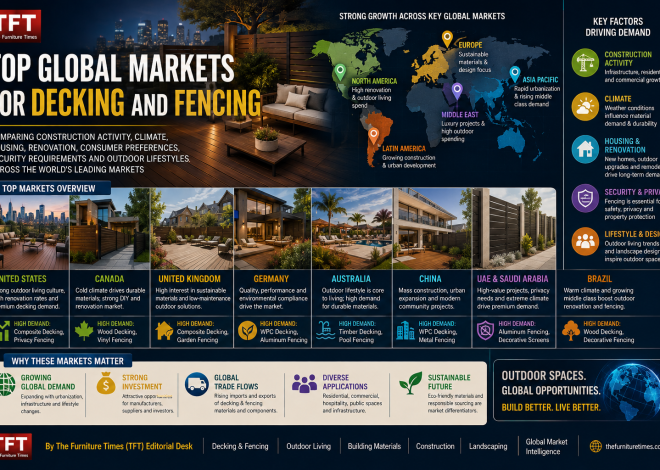
Climate conditions vary dramatically across global markets.
Decking installed in Malaysia faces different challenges from decking installed in Canada.
Middle Eastern products may face extreme heat and UV exposure.
Coastal products face salt and moisture.
Cold climates experience freezing and thawing.
Tropical environments face humidity and heavy rainfall.
Manufacturers should therefore consider developing regional product strategies.
Future competitive differentiation could involve products optimized for:
tropical climates, desert climates, coastal environments, cold regions and high-traffic commercial settings.
Surface Temperature Could Become a Bigger Consumer Issue
As outdoor temperatures increase in many regions, the temperature of decking surfaces deserves more attention.
Dark surfaces exposed to intense sunlight can become uncomfortable.
This is particularly important around pools, resorts and residential environments where people may walk without footwear.
Material formulation, colour, texture and heat-reflective technologies could therefore become important areas of innovation.
Manufacturers that can demonstrate improved thermal comfort may develop a meaningful advantage in hot-climate markets.
Safety Will Influence Specification
Decking manufacturers should prepare for increasing scrutiny around safety.
Important areas include:
slip resistance, structural performance, fire characteristics, drainage, accessibility and fastening integrity.
Commercial and public projects may demand substantially more documentation than residential consumers.
Manufacturers hoping to move into higher-value projects should invest in testing and technical data.
A beautiful product without reliable documentation may never reach an architect’s specification.
The Hidden Opportunity Beneath the Deck
Decking is not only about surface boards.
The substructure represents an important industry of its own.
Joists.
Pedestals.
Clips.
Fasteners.
Connectors.
Drainage.
Support systems.
Edge profiles.
Railings.
Lighting.
Installation accessories.
Manufacturers should consider whether they want to sell boards—or complete systems.
System-based businesses can potentially capture more project value while giving installers greater confidence that components will work together.
Installation Networks Could Become a Competitive Advantage
Manufacturers often invest heavily in production but comparatively little in installation.
That can be a mistake.
Consumers judge the finished deck.
If installation fails, the product brand may receive the blame.
Leading manufacturers should therefore consider creating stronger contractor ecosystems.
Training programmes.
Certified installers.
Technical support.
Installation manuals.
Project calculators.
Digital education.
Warranty-linked installation standards.
The contractor can become one of the manufacturer’s most important brand ambassadors.
Digital Design Will Change Consumer Buying
Imagine a homeowner photographing a garden.
Artificial intelligence recognizes the dimensions and surroundings.
The customer selects a decking collection.
Different colours appear instantly.
A fence is added.
Furniture is positioned.
A pergola is introduced.
Lighting is simulated.
The system calculates approximate quantities.
A nearby installer receives the enquiry.
This purchasing journey is technically becoming increasingly realistic.
Decking manufacturers should prepare for a future where visualization becomes a normal part of product discovery.
AI Search Will Reshape Manufacturer Visibility
There is another digital shift that manufacturers should not underestimate.
Buyers increasingly ask AI systems for recommendations.
They may ask:
“What decking is best for tropical weather?”
“Which companies manufacture recycled composite decking?”
“Which decking is suitable for a hotel pool?”
“Where can I source commercial decking?”
AI systems can only recommend companies they can find and understand.
Manufacturers therefore need websites containing clear information about:
products, materials, applications, certifications, markets served, technical specifications, installation, sustainability and contact details.
In the AI-search economy, vague websites will become a competitive disadvantage.
Manufacturers Need Better Data
The next generation of decking companies should become data-driven.
Manufacturers should understand:
which applications generate enquiries, which colours sell best, which markets produce repeat business, why customers choose competitors, what contractors complain about, which products experience warranty claims, which search terms generate traffic and which sectors offer the greatest margins.
Manufacturing capacity without market intelligence can lead to overproduction in the wrong categories.
Data can help companies manufacture closer to actual demand.
Manufacturers Must Prepare for Five Different Markets
The future decking industry should not be treated as one market.
It should be understood as at least five major demand environments:
Residential — lifestyle, renovation, affordability and maintenance.
Hospitality — aesthetics, guest experience, durability and revenue generation.
Commercial — traffic, performance, specification and lifecycle value.
Recreational — safety, moisture, weather exposure and specialized applications.
Public Space — durability, accessibility, sustainability, documentation and long-term value.
A product strategy that succeeds in one may not succeed in another.
Manufacturers need segmentation.
What Manufacturers Should Prepare For Now
The next decade will reward manufacturers that begin preparing before demand fully shifts.
Priority areas should include:
Material Innovation — improve durability, surfaces, thermal performance and environmental characteristics.
Application Specialization — create solutions for residential, hospitality, commercial, pool, rooftop and public projects.
Climate Engineering — design products for specific environmental conditions.
System Selling — expand beyond boards into substructures, fasteners, railings and accessories.
Sustainability Documentation — provide credible sourcing, recycled-content and environmental information.
Technical Specification — make it easier for architects and developers to specify products.
Installer Development — build qualified contractor networks.
Digital Visualization — help customers see projects before purchasing.
AI Visibility — ensure digital information can be discovered and understood by modern search technologies.
Partnerships — connect with architects, landscapers, furniture manufacturers, hospitality designers and developers.
From Decking Manufacturer to Outdoor-Living Company
Perhaps the greatest strategic opportunity involves changing how manufacturers define themselves.
A business may technically manufacture decking.
But what does its customer actually want?
The homeowner wants an outdoor living environment.
The hotel wants a better guest experience.
The restaurant wants more seating.
The developer wants an attractive property.
The municipality wants a durable public space.
The architect wants a reliable design material.
Once manufacturers understand the customer’s underlying objective, the market becomes considerably larger.
Instead of asking:
“How many decking boards can we sell?”
the strategic question becomes:
“How much value can we create from outdoor space?”
That is the question likely to shape the future of the industry.
The Furniture Times (TFT) Outlook
The global decking market is moving toward a broader, more sophisticated and interconnected future.
Residential demand will remain fundamental, but hospitality, commercial, recreational and public-space applications can expand the industry’s opportunity.
At the same time, manufacturers will face higher expectations around performance, sustainability, documentation, installation and digital visibility.
The companies positioned for the next era will not necessarily be those producing the greatest volume.
They will be those capable of understanding where demand is going before competitors do.
Decking is becoming part of architecture.
It is becoming part of hospitality.
It is becoming part of landscaping.
It is becoming part of furniture.
It is becoming part of public infrastructure.
Most importantly, it is becoming part of a much larger global movement toward better-designed outdoor environments.
For manufacturers, that represents both the challenge and the opportunity.
The Furniture Times (TFT) & Furniture Industry Search Engine (FISE)
“TFT tells their story. FISE helps the world find them.”
“FurniReviewology helps the world trust them.”
The furniture industry ecosystem is a $1 trillion industry ecosystem.