Airport Lighting Systems and Passenger Experience
By The Furniture Times (TFT) | Indoor & Outdoor Lighting | Commercial & Hospitality Lighting
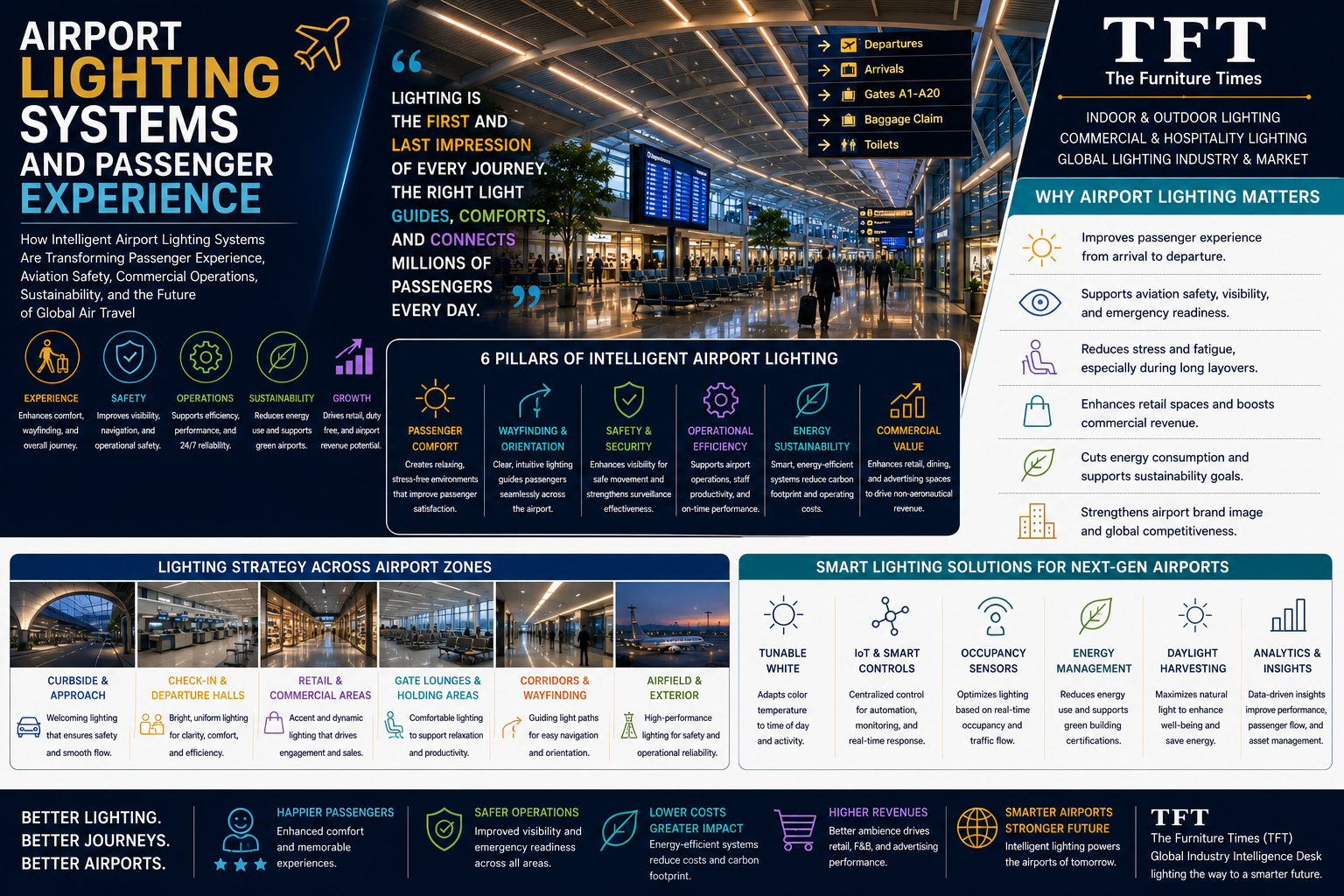
How Intelligent Airport Lighting Systems Are Transforming Passenger Experience, Aviation Safety, Commercial Operations, Sustainability, and the Future of Global Air Travel
Airports are no longer simply transportation hubs where passengers arrive and depart. They have evolved into highly sophisticated commercial ecosystems that integrate aviation, retail, hospitality, logistics, technology, business services, and customer experience into a single destination. As global passenger traffic continues to grow and airports compete to become preferred international gateways, the quality of infrastructure has become just as important as operational efficiency.
Among the most critical yet often overlooked components of airport infrastructure is lighting.
Airport lighting has evolved far beyond runway illumination and terminal visibility. Today, intelligent lighting systems enhance passenger comfort, improve aviation safety, support airport security, optimize commercial activities, strengthen operational efficiency, reduce energy consumption, and contribute significantly to the overall travel experience.
From international airports and regional terminals to private aviation centres, cargo airports, business aviation hubs, and smart airports, lighting has become an essential part of creating safe, efficient, sustainable, and memorable passenger journeys.
Powered by Artificial Intelligence (AI), Internet of Things (IoT), LED technology, human-centric lighting, smart building systems, digital airport management, renewable energy integration, and intelligent automation, airport lighting is redefining the future of global aviation.
For airport authorities, architects, commercial developers, lighting manufacturers, furniture companies, aviation consultants, airlines, technology providers, hospitality operators, and government agencies, investing in intelligent lighting has become a strategic priority for future airport development.
Passenger Experience Begins Before Boarding
The airport journey begins long before passengers reach the departure gate.
Lighting influences perceptions of:
- Safety
- Professionalism
- Efficiency
- Comfort
- Cleanliness
- Modern infrastructure
- Navigation
- Hospitality
- Luxury
- National identity
A well-lit airport creates confidence while reducing travel-related stress and uncertainty.
Today’s airports are expected to deliver experiences comparable to premium hotels, shopping malls, and business centres.
Lighting Supports Every Stage of the Passenger Journey
Passengers encounter lighting throughout multiple airport environments, including:
- Terminal entrances
- Check-in halls
- Security screening
- Immigration areas
- Departure lounges
- Retail stores
- Restaurants
- Business lounges
- Boarding gates
- Arrival halls
- Baggage claim areas
- Parking structures
- Ground transportation
- Hotel connections
- Outdoor walkways
Each area requires carefully designed lighting that balances functionality, comfort, and operational efficiency.
Human-Centric Lighting Reduces Travel Fatigue
Long-distance travel often disrupts natural sleep cycles and contributes to stress and fatigue.
Human-centric lighting is increasingly being implemented throughout modern airports to support passenger well-being.
Morning lighting encourages:
- Alertness
- Mental clarity
- Positive mood
- Orientation
- Energy
Daytime lighting supports:
- Comfortable navigation
- Reading
- Shopping
- Business activities
- Social interaction
Evening lighting transitions toward warmer colour temperatures that encourage:
- Relaxation
- Reduced anxiety
- Better comfort
- Improved waiting experiences
- Lower visual fatigue
Human-centric lighting helps airports create calmer, healthier environments for travellers.
Aviation Safety Depends on Precision Lighting
Beyond passenger areas, airport lighting plays a fundamental role in aviation safety.
Critical lighting systems include:
- Runway edge lights
- Taxiway lighting
- Approach lighting systems
- Precision guidance lighting
- Apron lighting
- Aircraft stand illumination
- Obstruction lighting
- Emergency lighting
- Navigation lighting
- Airfield signage illumination
These systems help pilots, air traffic controllers, and ground crews operate safely in varying weather and visibility conditions.
Layered Lighting Enhances Terminal Design
Modern airport terminals rely on layered lighting systems.
Ambient Lighting
Ambient lighting provides consistent illumination throughout public spaces.
Applications include:
- Check-in halls
- Waiting areas
- Departure lounges
- Corridors
- Immigration zones
- Customs areas
- Public seating
- Information centres
- Arrival halls
- Retail concourses
Balanced ambient lighting creates comfortable environments while reducing glare.
Task Lighting
Task lighting supports operational efficiency.
Applications include:
- Security checkpoints
- Passport control
- Airline counters
- Customer service desks
- Boarding gates
- Business centres
- Medical facilities
- Airline offices
- Control rooms
- Baggage handling operations
Proper task lighting improves precision while supporting faster passenger processing.
Accent Lighting
Accent lighting enhances architectural identity and commercial engagement.
Applications include:
- Retail storefronts
- Luxury lounges
- Public art
- Digital displays
- Water features
- Premium restaurants
- Architectural façades
- Brand installations
- Information zones
- Event spaces
Accent lighting contributes to memorable passenger experiences while strengthening airport branding.
Commercial Airports Depend on Retail Lighting
Airports increasingly generate substantial revenue from commercial activities.
Lighting improves:
- Duty-free shopping
- Luxury boutiques
- Fashion stores
- Electronics retailers
- Food courts
- Cafés
- Restaurants
- Wellness centres
- Business lounges
- Entertainment spaces
Well-designed retail lighting encourages browsing, increases dwell time, and supports higher commercial sales.
Furniture and Lighting Create Passenger Comfort
Airport furniture increasingly incorporates integrated lighting.
Applications include:
- Passenger seating
- Charging stations
- Lounge furniture
- Information kiosks
- Reception counters
- Business workstations
- Waiting areas
- Family lounges
- Children’s play zones
- Premium VIP facilities
Integrated lighting improves functionality while enhancing comfort throughout the passenger journey.
Furniture manufacturers and lighting companies continue developing innovative airport solutions.
Smart Airports Depend on Intelligent Lighting
Artificial Intelligence and IoT technologies continue transforming airport management.
Smart lighting systems enable airports to:
- Detect occupancy.
- Adjust lighting automatically.
- Monitor energy usage.
- Integrate with building management systems.
- Coordinate with flight schedules.
- Improve emergency response.
- Support predictive maintenance.
- Enhance security.
- Optimise operational costs.
- Improve passenger experiences.
Lighting has become an essential component of smart airport ecosystems.
Sustainability Drives Airport Investment
Airports increasingly invest in environmentally responsible lighting systems.
Common initiatives include:
- Energy-efficient LEDs
- Renewable energy integration
- Occupancy sensors
- Smart energy monitoring
- Sustainable manufacturing
- Recyclable materials
- Green airport certifications
- Carbon reduction strategies
- Responsible sourcing
- Long-life lighting systems
Sustainable lighting contributes to both environmental goals and long-term operational savings.
Digital Wayfinding Improves Passenger Navigation
Large international airports can be challenging to navigate.
Lighting supports:
- Directional guidance
- Interactive signage
- Emergency exits
- Accessibility
- Parking navigation
- Public transport links
- Airline zones
- Boarding gates
- Immigration routes
- Baggage collection
Effective lighting reduces passenger confusion while improving operational flow.
Artificial Intelligence Will Define the Future of Airports
Future airport lighting systems may automatically:
- Adapt to passenger traffic.
- Synchronise with flight schedules.
- Personalise lounge environments.
- Optimise energy consumption.
- Predict maintenance requirements.
- Improve emergency management.
- Enhance security operations.
- Integrate with autonomous airport vehicles.
- Support biometric travel systems.
- Connect with complete smart airport infrastructure.
Artificial Intelligence will transform airport lighting into an intelligent operational platform.
Opportunities Across the Aviation Industry
The continued growth of global aviation creates opportunities for:
- Airport authorities
- Airlines
- Lighting manufacturers
- Furniture companies
- Architects
- Commercial developers
- Smart technology providers
- Sustainability consultants
- Hospitality operators
- Aviation infrastructure investors
Businesses capable of combining intelligent technology, passenger experience, sustainable design, and operational excellence will lead future airport development.
Challenges Facing Airport Lighting
Despite remarkable innovation, airports continue addressing:
- Rising energy costs
- Installation complexity
- Smart system interoperability
- Cybersecurity
- Regulatory compliance
- Product standardisation
- Long-term maintenance
- Skilled workforce shortages
- Sustainability requirements
- Budget management
Addressing these challenges requires collaboration across aviation, technology, and infrastructure sectors.
Lighting the Future of Air Travel
Airport lighting has become one of the most influential investments in modern aviation infrastructure.
It enhances passenger comfort, strengthens airport branding, improves aviation safety, supports commercial growth, increases operational efficiency, contributes to sustainability, and creates travel experiences that inspire confidence.
From AI-powered automation and human-centric lighting to intelligent LED systems, integrated airport furniture, digital wayfinding, adaptive terminals, and smart aviation infrastructure, lighting continues transforming airports around the world.
For airport authorities, architects, airlines, furniture manufacturers, lighting companies, technology innovators, hospitality providers, and policymakers, the opportunity lies in designing airport environments where every lighting decision improves both passenger satisfaction and operational performance.
The airports of tomorrow will not simply transport people.
They will become intelligent global mobility hubs where technology, architecture, commerce, hospitality, sustainability, and lighting work together to deliver seamless travel experiences from arrival to departure.
As aviation continues expanding worldwide, one reality has become increasingly clear: successful airports are defined not only by their runways and terminals—but by the quality of the experiences they create, and intelligent lighting is one of the brightest foundations of that future.