The Misunderstanding of SEO
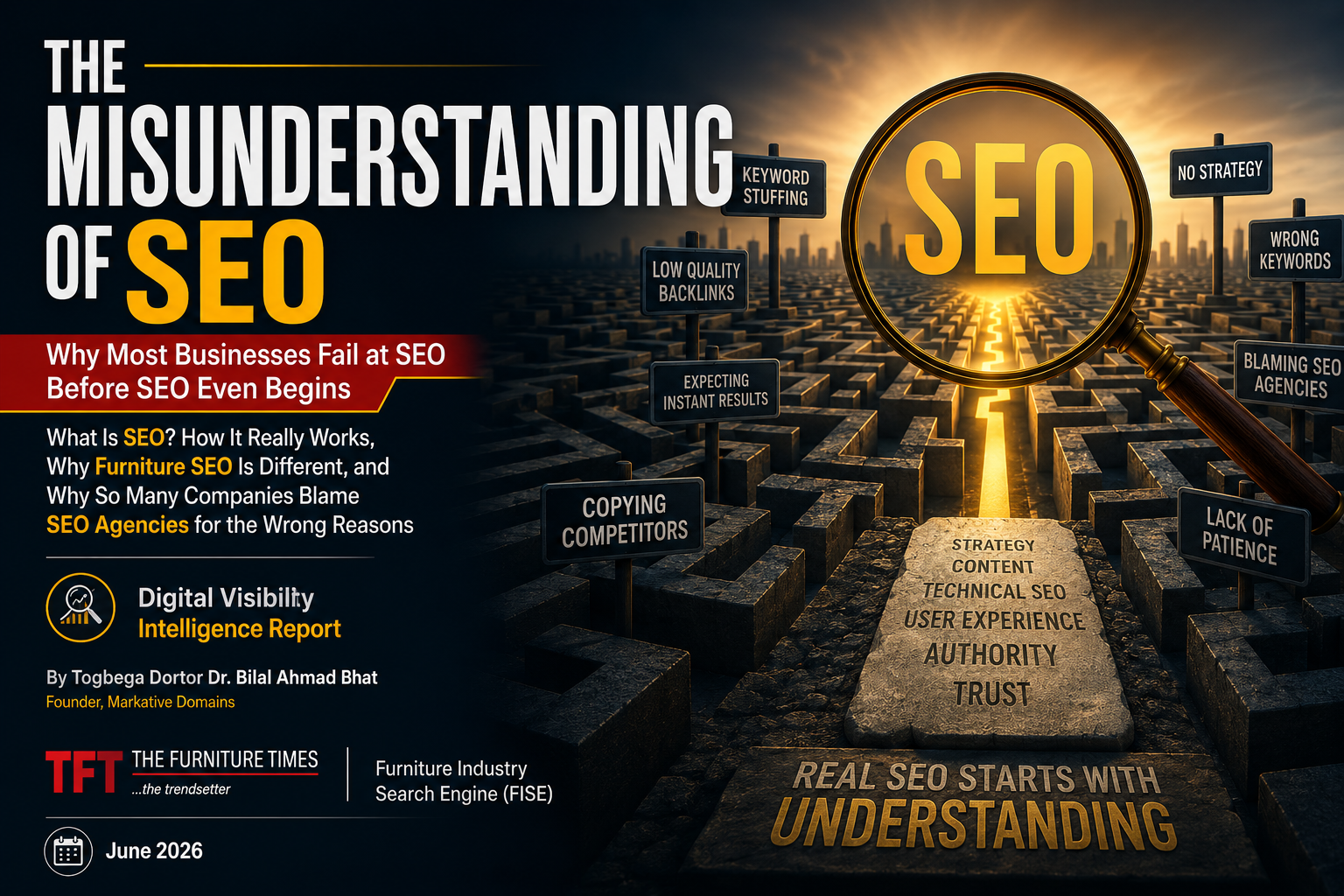
Why Most Businesses Fail at SEO Before SEO Even Begins
What Is SEO? How It Really Works, Why Furniture SEO Is Different, and Why So Many Companies Blame SEO Agencies for the Wrong Reasons
Digital Visibility Intelligence Report / By Togbega Dortor Dr. Bilal Ahmad Bhat
Founder, Markative Domains
The Furniture Times (TFT) & Furniture Industry Search Engine (FISE), June 2026
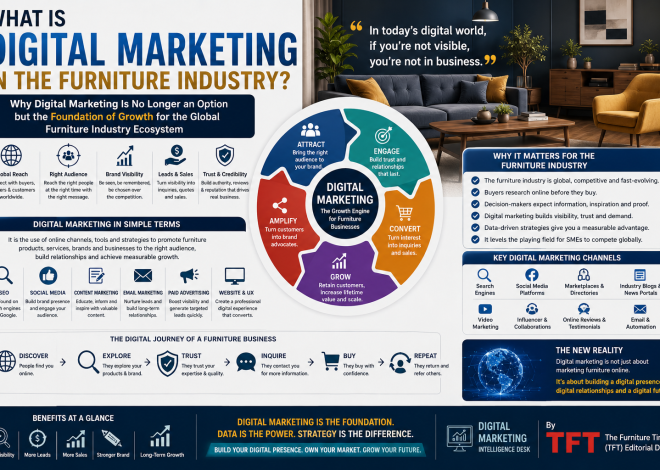
There is perhaps no digital marketing term more misunderstood than SEO.
Every day, business owners around the world say:
“We need SEO.”
“We hired an SEO agency.”
“SEO is not working.”
“SEO failed.”
“SEO takes too long.”
“SEO doesn’t generate leads.”
After nearly three decades of observing businesses across industries and helping organizations understand visibility, search, discoverability, and digital growth, I have reached a simple conclusion:
Most businesses do not fail because of SEO.
They fail because they misunderstand SEO.
And when expectations do not match reality, the SEO agency often becomes the easiest target.
The problem is not always the SEO.
The problem is often the understanding of SEO.
What Is SEO?
SEO stands for Search Engine Optimization.
At its simplest level:
SEO is the process of helping search engines understand, trust, categorize, and recommend your business, website, products, services, and expertise to people searching for them.
SEO is not magic.
SEO is not advertising.
SEO is not a shortcut.
SEO is not instant visibility.
SEO is the systematic process of increasing discoverability.
Think of SEO this way:
If your business is a shop in the middle of a desert, SEO builds roads leading to that shop.
Without roads, nobody finds you.
With roads, people can discover you.
The Biggest SEO Misunderstanding
Many businesses believe SEO means:
“Get me to page one.”
This is an incomplete understanding.
The real purpose of SEO is:
Visibility.
Visibility creates discovery.
Discovery creates traffic.
Traffic creates opportunities.
Opportunities create leads.
Leads may create sales.
Notice something important.
Sales are at the end of the chain.
Not the beginning.
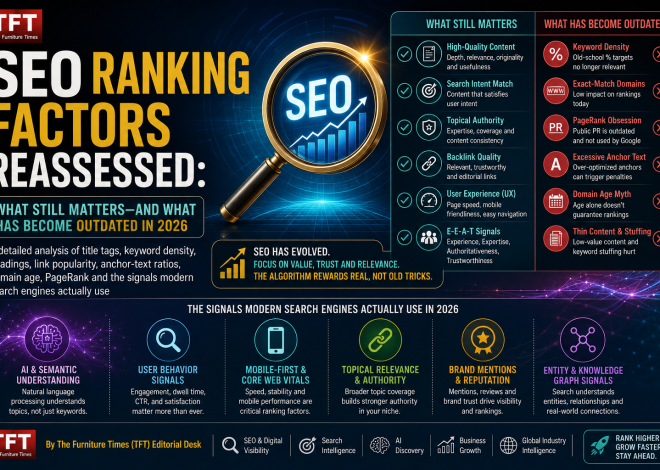
How SEO Actually Works
Search engines attempt to answer one question:
“Who is the best result for this search?”
To answer that question, they evaluate:
Relevance
Does your content match the search?
Authority
Do people trust your website?
Experience
Is the website useful?
Structure
Can search engines understand it?
Reputation
Do others reference your business?
Consistency
Do you continuously provide value?
SEO is not one activity.
It is hundreds of activities working together.
SEO Is Not a Switch
One of the biggest mistakes businesses make is treating SEO like a switch.
They expect:
Month 1 → Rankings
Month 2 → Leads
Month 3 → Revenue
That is rarely how SEO works.
SEO is more similar to agriculture than advertising.
You plant.
You nurture.
You optimize.
You improve.
You build authority.
Then results begin to compound.
Businesses seeking immediate results often misunderstand the nature of SEO itself.
Is SEO Lead Generation?
This is where confusion begins.
Is SEO lead generation?
Yes.
And no.
SEO creates visibility.
Visibility creates opportunities.
Some of those opportunities become leads.
SEO is therefore a lead-generation channel.
But SEO itself is not a lead.
SEO creates the environment where leads can happen.
A website ranking for:
“Outdoor furniture supplier Malaysia”
can generate inquiries.
However, whether those inquiries convert depends on:
- Product quality
- Pricing
- Trust
- Sales process
- Customer experience
SEO opens doors.
Your business must close the deal.
Is SEO Branding?
Absolutely.
In fact, SEO is one of the most powerful branding activities available.
Every search result is a branding opportunity.
When someone repeatedly sees your:
- Company name
- Products
- Articles
- Industry expertise
your brand becomes familiar.
Visibility creates recognition.
Recognition creates trust.
Trust creates preference.
SEO is therefore a branding engine.
Is SEO a Sales Process?
Not directly.
This is another major misunderstanding.
SEO is not sales.
SEO supports sales.
The sales process involves:
- Qualification
- Consultation
- Negotiation
- Closing
SEO helps prospects find you before sales begins.
A poor sales team can waste excellent SEO.
A strong sales team can maximize SEO opportunities.
SEO and sales are partners.
Not substitutes.
Is SEO Marketing?
Yes.
SEO is one of the most important forms of marketing.
But it is a specific type of marketing.
Traditional marketing interrupts people.
SEO attracts people.
Advertising says:
“Look at me.”
SEO says:
“I’ll be here when you’re looking.”
This distinction matters.
Modern consumers increasingly prefer discovery over interruption.
Why Furniture SEO Is Different
One of the biggest mistakes agencies make is treating furniture SEO like every other industry.
Furniture SEO is unique.
Furniture purchases involve:
- High consideration
- Visual evaluation
- Emotional decisions
- Long buying cycles
- Multiple stakeholders
A person may spend:
Minutes buying a phone accessory.
Weeks buying a sofa.
Months planning a hotel furniture project.
Years selecting suppliers for hospitality developments.
Furniture SEO therefore requires a different strategy.
The Furniture Industry Has a Search Problem
Many furniture companies still rely heavily on:
- Trade shows
- Referrals
- Dealers
These channels remain valuable.
But buyers increasingly begin elsewhere.
They search.
They search for:
- Dining tables
- Outdoor furniture
- Hotel furniture
- Office furniture
- Kitchen cabinets
- Wardrobes
- Manufacturers
- Exporters
- Suppliers
The challenge is that many furniture companies remain invisible.
Not because they lack products.
Because they lack discoverability.
Furniture SEO Is About Categories
Many industries rank through services.
Furniture businesses rank through categories.
For example:
Not just:
“Furniture Manufacturer”
But:
- Outdoor Furniture Manufacturer
- Hotel Furniture Supplier
- Poolside Lounger Manufacturer
- Restaurant Furniture Supplier
- Custom Kitchen Cabinet Company
- Built-In Wardrobe Specialist
The more precise the category structure, the better the discoverability.
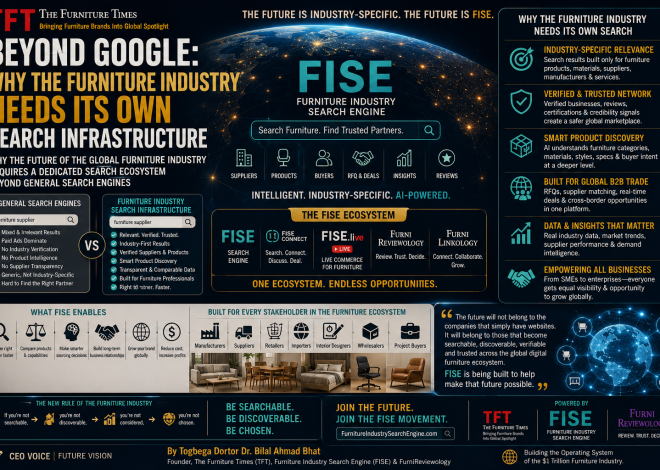
The AI Revolution Is Reshaping SEO
Search is changing.
AI is becoming a new layer of discovery.
Consumers increasingly ask AI:
- Best furniture suppliers?
- Best outdoor furniture for tropical climates?
- Trusted kitchen cabinet companies?
- Hospitality furniture manufacturers?
SEO is evolving into:
Search Engine Optimization + AI Discoverability Optimization
Businesses that ignore this shift may struggle in the coming years.
The Current Situation of SEO in 2026
SEO is no longer just Google rankings.
SEO now includes:
- Search visibility
- AI visibility
- Brand authority
- Knowledge graphs
- Reviews
- Trust signals
- Structured data
- Content ecosystems
The businesses winning today are not necessarily those spending the most.
They are often the businesses creating the most useful information.
The future belongs to expertise.
Not manipulation.
Why Businesses Blame SEO Agencies
This is a difficult but necessary conversation.
Many businesses hire SEO agencies without understanding SEO.
They expect:
- Instant rankings
- Immediate sales
- Guaranteed leads
- Overnight success
When those expectations are unrealistic, disappointment follows.
Not every SEO agency is good.
But not every client understands what SEO is designed to do.
SEO agencies cannot fix:
- Poor products
- Weak customer service
- Bad sales teams
- Unrealistic expectations
- Lack of patience
SEO amplifies businesses.
It does not replace business fundamentals.
My Advice to Every Business Owner
Before investing in SEO, ask yourself:
Do I understand what SEO is?
Do I understand what SEO is not?
Am I prepared for long-term visibility building?
Do I have realistic expectations?
Can my business convert traffic into customers?
If the answer is no, learn first.
Then invest.
Final Verdict
SEO is one of the most powerful business growth systems ever created.
But it is also one of the most misunderstood.
SEO is:
✔ Visibility
✔ Discoverability
✔ Branding
✔ Lead generation support
✔ Marketing
✔ Authority building
✔ Trust building
SEO is not:
✘ Instant sales
✘ Overnight rankings
✘ Guaranteed revenue
✘ A replacement for good business practices
The businesses that understand SEO properly build sustainable growth.
The businesses that misunderstand SEO often blame the agency, the algorithm, or the platform.
Before starting SEO, understand SEO.
Because if you don’t understand SEO, you may never understand the results it produces.
And when expectations are wrong, frustration becomes inevitable.
My Message
If you don’t understand SEO, don’t start it.
Otherwise, you may end up blaming the SEO agency for problems SEO was never designed to solve.
By Togbega Dortor Dr. Bilal Ahmad Bhat
Founder, Markative Domains
The Furniture Times (TFT) & Furniture Industry Search Engine (FISE)
“TFT tells their story. FISE helps the world find them.”
The furniture industry ecosystem is a $1 Trillion Dollar Industry.
10 Frequently Asked Questions About SEO
1. What is SEO in simple words?
SEO is the process of helping search engines and AI systems find, understand, trust, and recommend your business to people searching for it.
2. Is SEO a lead generation tool?
SEO supports lead generation by creating visibility and attracting potential customers, but it does not guarantee leads by itself.
3. Is SEO marketing?
Yes. SEO is one of the most effective forms of inbound marketing because it attracts people already looking for solutions.
4. Is SEO branding?
Absolutely. Every search result strengthens brand awareness, trust, and recognition.
5. Is SEO a sales process?
No. SEO generates opportunities. Sales teams convert those opportunities into customers.
6. How long does SEO take?
Typically several months. Competitive industries may require 6–18 months of continuous effort before significant results appear.
7. Why is furniture SEO different?
Furniture buyers have longer decision cycles, emotional purchasing behavior, visual evaluation requirements, and category-driven search patterns.
8. Does AI affect SEO?
Yes. AI is becoming a major discovery channel, making structured content, expertise, and authority more important than ever.
9. Can SEO work without content?
Very rarely. Content helps search engines and AI understand what your business does and why it matters.
10. What is the biggest SEO mistake?
Expecting SEO to generate immediate sales while ignoring branding, trust, content quality, customer experience, and business fundamentals.