Global Wardrobes & Kitchen Cabinets Market Analysis Report 2026
Built-In Storage, Modular Kitchens & Home Interior Systems Become One of the Fastest-Growing Segments in the Furniture Economy
Global Market Intelligence Report | By The Furniture Times (TFT) & Furniture Industry Search Engine (FISE) | June 2026
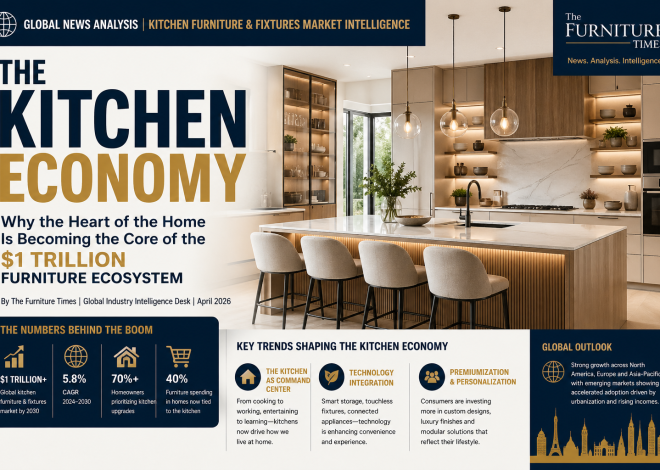
The global wardrobes and kitchen cabinets market is entering a powerful growth phase as urbanization, apartment living, home renovation, modular interiors, rising middle-class income, and customized storage demand reshape the furniture industry.
Once viewed as simple storage furniture, wardrobes and kitchen cabinets are now becoming central components of modern home design, real estate value, lifestyle planning, and interior investment.
Across Asia, Europe, North America, the Middle East, Africa, and Oceania, consumers are no longer asking only for furniture. They are asking for organized homes, smarter kitchens, better storage, space-saving design, premium finishes, and long-lasting materials.
Global Market Size
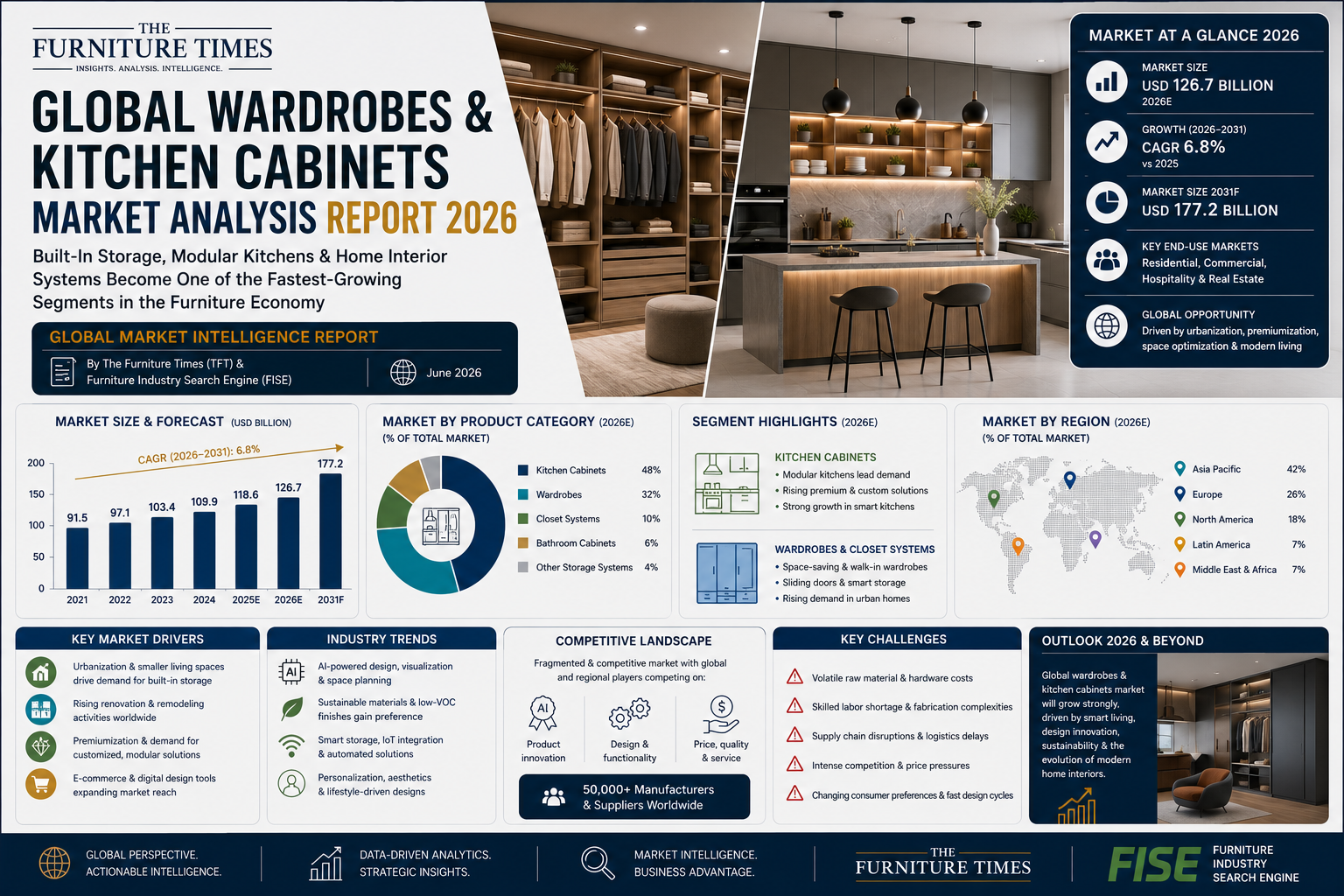
The wider global cabinet market was valued at around US$141 billion in 2025 and is expected to reach about US$189.32 billion by 2031, according to Mordor Intelligence. This includes kitchen cabinets, bathroom vanities, and storage systems.
For kitchen cabinets specifically, Mordor Intelligence estimates the market at US$95.95 billion in 2026, projected to reach US$124.42 billion by 2031.
Fortune Business Insights gives a higher estimate, placing the global kitchen cabinets market at US$107.86 billion in 2025, with a forecast to reach US$218.23 billion by 2034.
These differences show one important reality: the cabinetry and built-in storage market is large, growing, and strategically important, but estimates vary depending on whether the report includes only kitchen cabinets, all cabinet systems, bathroom vanities, wardrobes, closets, and broader household storage.
Market Health Check 2026
Global Kitchen Cabinet Demand: 8.2 / 10
Wardrobe & Built-In Storage Demand: 8.0 / 10
Asia-Pacific Growth: 8.8 / 10
North America Renovation Demand: 8.3 / 10
Europe Sustainability Demand: 7.7 / 10
Africa Long-Term Potential: 7.4 / 10
Oceania Premium Renovation Market: 7.6 / 10
Material Innovation: 8.5 / 10
Overall Market Health Score: 8.1 / 10
Why Demand Is Growing
The demand for wardrobes and kitchen cabinets is growing because homes are becoming smaller, more expensive, and more design-conscious.
Key growth drivers include:
Urban apartment living
Home renovation and remodeling
Real estate development
Rising demand for modular kitchens
Growing middle-class income
Space-saving furniture demand
Hospitality and serviced apartment expansion
Premium interior design culture
E-commerce and online design platforms
Smart storage systems
In many countries, wardrobes and cabinets are no longer bought as loose furniture. They are now planned as part of complete interior systems.
Asia-Pacific: The Fastest Growth Engine
Asia-Pacific is one of the strongest growth regions for wardrobes and kitchen cabinets.
The Asia-Pacific kitchen furniture market is estimated at US$13.37 billion in 2025 and expected to reach US$17.45 billion by 2030, growing at a CAGR of 5.47%.
Major demand markets include:
China
India
Indonesia
Malaysia
Vietnam
Thailand
Philippines
Japan
South Korea
Australia
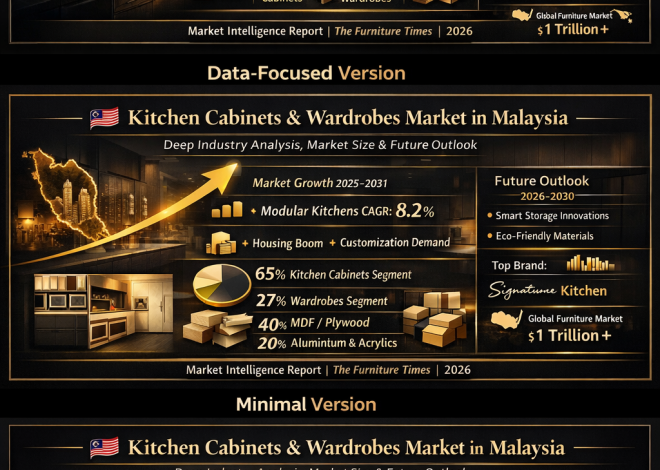
India is especially important. India’s home interiors market is estimated at around US$12.33 billion and projected to reach US$24.52 billion by 2030, driven by urbanization, rising income, and demand for customized interiors.
Asia is being driven by modular kitchens, compact apartments, new condominiums, renovation demand, and rising consumer expectations.
North America: Renovation, Remodeling & Premium Kitchens
North America remains one of the most valuable markets for kitchen cabinets and wardrobes.
Demand is driven by:
Kitchen remodeling
Suburban home upgrades
Custom cabinetry
Walk-in closets
Garage storage systems
Premium hardware
Sustainable wood products
Smart kitchens
The United States remains highly important because kitchen renovation is one of the strongest categories in home improvement. Consumers often treat cabinets as a long-term investment that improves both lifestyle and property value.
Europe: Sustainability, Design & Built-In Systems
Europe is a mature but high-value market.
Demand is strongest in:
Germany
Italy
France
UK
Spain
Poland
Nordic countries
European consumers increasingly prefer:
Low-emission boards
FSC-certified wood
Minimalist designs
Handleless kitchens
Soft-close systems
Integrated lighting
Recyclable materials
Made-to-measure storage
Europe is not only buying cabinets. It is buying design, sustainability, durability, and compliance.
Africa: Long-Term Growth Potential
Africa’s wardrobes and kitchen cabinets market is still developing, but long-term potential is strong.
Growth is being driven by:
Urbanization
Housing development
Middle-class expansion
Apartment construction
Hospitality projects
Real estate investment
Retail mall development
Imported modular furniture
Local carpentry modernization
Key opportunity markets include:
Nigeria
South Africa
Kenya
Ghana
Egypt
Morocco
Tanzania
Ethiopia
Africa’s challenge is affordability, skilled installation, material availability, and formal retail infrastructure. But over the next decade, demand for modular kitchens and wardrobes is expected to rise sharply as urban housing grows.
Middle East: Luxury, Hospitality & Premium Interiors
The Middle East remains a high-value market for premium kitchen cabinets and wardrobes.
Strong markets include:
UAE
Saudi Arabia
Qatar
Kuwait
Bahrain
Oman
Demand is driven by villas, luxury apartments, hotels, serviced residences, and real estate megaprojects.
Premium finishes, European hardware, marble-look surfaces, veneer panels, lacquer finishes, and customized wardrobes are popular in this region.
Oceania: Premium Renovation Market
Australia and New Zealand represent strong renovation-led cabinet markets.
Demand is supported by:
Home remodeling
Outdoor lifestyle homes
Premium kitchens
Laundry cabinets
Walk-in wardrobes
Sustainable materials
High labor costs encouraging prefabricated systems
Consumers in Oceania are highly quality-conscious, and the market rewards durable materials, moisture resistance, clean design, and reliable installation.
Latin America: Urban Housing & Mid-Market Growth
Latin America offers steady opportunities in wardrobes, kitchen cabinets, and modular furniture.
Important markets include:
Brazil
Mexico
Chile
Colombia
Argentina
Peru
Growth comes from apartment development, retail expansion, home improvement, and rising demand for affordable modular systems.
Mexico is also gaining importance due to nearshoring and proximity to the US furniture and cabinet market.
Materials Used in Wardrobes & Kitchen Cabinets
The most common materials include:
Plywood
Strong, durable, moisture-resistant, widely used in premium kitchens and wardrobes.
MDF
Smooth, cost-effective, suitable for painted finishes and decorative panels.
Particleboard
Affordable, widely used in modular furniture and flat-pack systems.
Solid Wood
Premium, durable, expensive, used in luxury kitchens, wardrobes, and heritage interiors.
HDF
Used for back panels, drawer bases, and some decorative surfaces.
Aluminium
Popular in humid climates, commercial kitchens, and modern wardrobes.
Stainless Steel
Used in commercial kitchens, healthcare, hospitality, and high-hygiene environments.
Glass
Used for wardrobe shutters, display cabinets, and premium kitchen designs.
Laminates
Highly popular because they are affordable, durable, and available in many finishes.
Acrylic
Used for glossy kitchen finishes and premium modern interiors.
Veneer
Used for luxury natural wood appearance.
PVC / Membrane Finishes
Common in cost-sensitive markets and modular kitchen systems.
Quartz / Solid Surface Countertops
Strongly linked with kitchen cabinet demand.
Hardware Is Becoming a High-Value Category
Cabinet quality is no longer judged only by boards and finishes.
Hardware has become critical.
Important components include:
Soft-close hinges
Drawer channels
Lift-up systems
Pull-out baskets
Corner units
Wardrobe sliding systems
Handles
Concealed hinges
LED lighting
Drawer organizers
Tall pantry systems
Brands that offer better hardware create better customer experience and longer product life.
Major Trends Shaping the Market
1. Modular Kitchens Are Becoming Mainstream
Consumers want faster installation, cleaner design, and better space planning.
2. Built-In Wardrobes Are Replacing Loose Storage
Urban homes need customized storage, especially in apartments.
3. Small Spaces Need Smart Storage
Compact homes require multifunctional design.
4. Sustainability Is Becoming a Buying Factor
Low-emission boards and certified wood are gaining importance.
5. Premium Finishes Are Growing
Matte, fluted, ribbed, textured, stone-look, and woodgrain finishes are trending.
6. Digital Design Tools Are Influencing Sales
3D design, AR previews, online quotations, and AI planning tools are becoming important.
7. Installer Quality Is Becoming a Competitive Advantage
Good products fail when installation is poor.
8. E-Commerce Is Entering the Cabinet Market
While installation remains offline, discovery and quotation increasingly begin online.
Key Challenges
The market faces several challenges:
Rising raw material costs
Board quality inconsistency
Skilled labor shortage
High installation dependency
Moisture and termite issues in tropical climates
Price competition from low-quality suppliers
Long delivery times
Customer expectation mismatch
Warranty disputes
Supply chain delays
The businesses that solve design, quality, installation, and after-sales service will win.
TFT & FISE Analysis
Wardrobes and kitchen cabinets are becoming one of the most important segments of the global furniture economy.
This market sits at the intersection of:
Furniture
Interior design
Construction
Real estate
Home improvement
Hardware
Materials
Technology
Installation services
The future winners will not only be cabinet makers. They will be complete interior system providers.
The strongest companies will combine:
Design consultation
Material knowledge
Digital visibility
Transparent pricing
Skilled installation
Reliable warranty
Strong supplier network
Customer reviews
After-sales service
Future Outlook 2026–2032
The market outlook is positive.
Demand will be strongest in:
Asia-Pacific
Middle East
North America
Africa’s urban centers
European renovation markets
Oceania premium renovation sector
The biggest opportunities will come from:
Modular kitchens
Built-in wardrobes
Compact apartment storage
Premium kitchen systems
Hospitality cabinetry
Sustainable boards
Smart cabinet hardware
Online-to-offline design services
Final Verdict
The wardrobes and kitchen cabinets market is no longer a small sub-category of furniture.
It is becoming one of the most strategic growth engines in the global furniture ecosystem.
Consumers want homes that are organized, beautiful, functional, durable, and personalized.
Developers want ready-to-move interior solutions.
Hotels want durable and space-efficient cabinetry.
Retailers want modular products that can be sold faster.
Manufacturers want scalable systems.
This is why wardrobes and kitchen cabinets will continue to grow globally.
The next decade will belong to companies that combine craftsmanship with technology, materials knowledge with design, and visibility with trust.
In the new furniture economy, storage is not just storage.
It is lifestyle infrastructure.
By The Furniture Times (TFT) & Furniture Industry Search Engine (FISE)
Global Market Intelligence Desk | June 2026
“TFT tells their story. FISE helps the world find them.”