
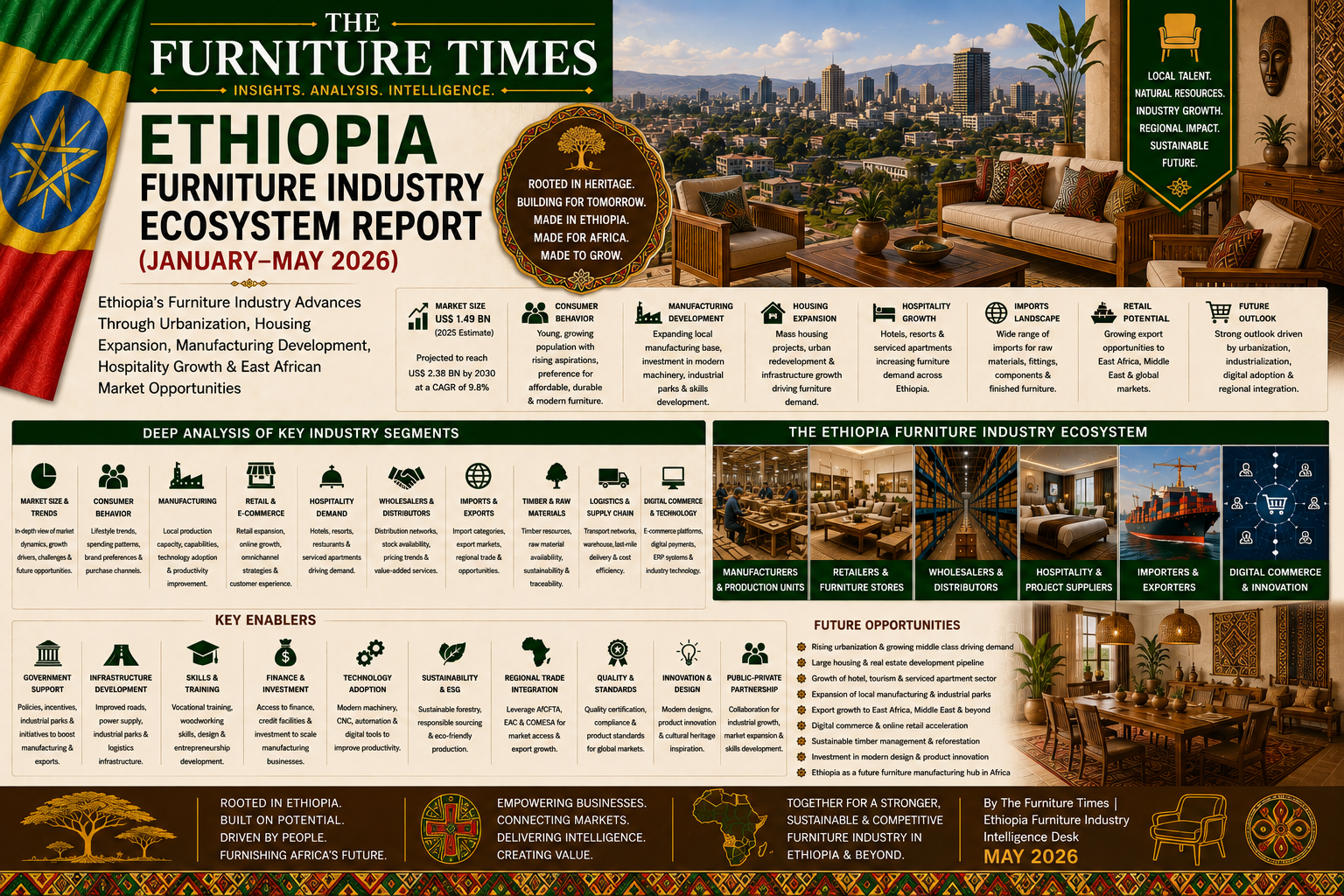
Ethiopia’s Furniture Industry Advances Through Urbanization, Housing Expansion, Manufacturing Development, Hospitality Growth & East African Market Opportunities
Ethiopia Furniture Industry Ecosystem Report (January–May 2026)
Deep Analysis of Market Size, Consumer Behavior, Manufacturing, Retail, Hospitality Demand, Imports, Exports, Timber Resources, Logistics, Digital Commerce & Future Opportunities
By The Furniture Times | Ethiopia Furniture Industry Intelligence Desk | May 2026
Ethiopia entered 2026 as one of Africa’s most promising emerging furniture industry ecosystems.
With a population exceeding 130 million people, rapid urbanization, growing infrastructure investments, and an expanding manufacturing sector, Ethiopia continues creating significant opportunities for furniture producers, retailers, importers, and investors.
Between January and May 2026, Ethiopia’s furniture sector continued benefiting from:
housing development
urban expansion
commercial construction
hospitality investments
industrialization initiatives
growing middle-income consumers
infrastructure development
The industry is increasingly being shaped by:
Population Growth
Housing Demand
Urbanization
Manufacturing Development
Hospitality Expansion
Industrialization
Digital Visibility
January–May 2026 Industry Overview
The first five months of 2026 highlighted a furniture market with strong long-term fundamentals.
Positive Drivers
residential construction growth
government infrastructure projects
hospitality development
office expansion
furniture retail growth
manufacturing investment
urban migration
Key Challenges
imported machinery dependence
logistics costs
foreign currency constraints
financing limitations
manufacturing modernization needs
imported furniture competition
Despite these challenges, Ethiopia remains one of Africa’s most important future furniture markets.
Ethiopia’s Furniture Market Outlook
Ethiopia’s furniture industry is driven primarily by:
population growth
housing demand
urbanization
commercial expansion
hospitality projects
government development initiatives
The strongest furniture categories include:
residential furniture
office furniture
hospitality furniture
educational furniture
healthcare furniture
kitchen furniture
custom carpentry
Furniture demand remains closely linked to Ethiopia’s broader economic transformation.
Addis Ababa Remains the Center of the Furniture Ecosystem
Addis Ababa continues serving as Ethiopia’s primary furniture market.
The city drives demand through:
residential apartments
condominiums
commercial buildings
hotels
government projects
educational institutions
mixed-use developments
Addis Ababa functions as:
Furniture Retail Hub
Manufacturing Center
Design Marketplace
Commercial Procurement Hub
Most major furniture businesses operate within or around the capital.
Urbanization Is Fueling Furniture Demand
Ethiopia continues experiencing significant urban migration.
Growing cities include:
Addis Ababa
Adama
Hawassa
Dire Dawa
Bahir Dar
Mekelle
Urban growth creates strong demand for:
beds
wardrobes
sofas
dining furniture
office furniture
storage systems
Urbanization remains one of the strongest long-term furniture demand drivers.
Housing Development Supports Industry Growth
Housing remains one of Ethiopia’s largest opportunities.
Government housing programs and private developments continue generating furniture demand.
Every new housing project creates demand for:
bedroom furniture
sofas
dining sets
wardrobes
mattresses
kitchen cabinetry
Housing remains the backbone of Ethiopia’s furniture ecosystem.
Consumer Behavior Is Evolving
Ethiopian consumers are becoming increasingly informed and quality-conscious.
Purchasing decisions increasingly focus on:
affordability
durability
functionality
craftsmanship
delivery reliability
after-sales support
The modern furniture customer increasingly follows:
Search → Compare → Visit → Purchase
Digital influence continues growing among younger consumers.
Furniture Retail Continues Expanding
Ethiopia’s furniture retail sector includes:
furniture showrooms
independent retailers
woodworking workshops
custom furniture businesses
imported furniture distributors
Retailers increasingly utilize:
social media
WhatsApp marketing
digital catalogues
websites
online inquiries
Furniture retail is becoming increasingly digitized.
Local Manufacturing Has Significant Potential
One of Ethiopia’s greatest strengths is local manufacturing potential.
The country already supports:
woodworking workshops
furniture factories
cabinet makers
upholstery businesses
joinery companies
Advantages include:
growing workforce
lower labor costs
domestic market demand
manufacturing development initiatives
Future growth depends on:
modernization
technology adoption
productivity improvements
export readiness
Industrial Parks Could Support Furniture Growth
Ethiopia’s industrialization strategy creates opportunities for furniture manufacturing.
Industrial parks may support:
furniture production
wood processing
export-oriented manufacturing
supply chain development
The country continues positioning itself as an African manufacturing destination.
Timber Resources Support Production
Ethiopia possesses forestry resources including:
eucalyptus
cypress
indigenous hardwood species
plantation timber
These resources support:
carpentry
furniture production
cabinetry
wood processing
Sustainable forestry management remains important for long-term industry growth.
Imports Continue Playing an Important Role
Ethiopia imports furniture and furniture-related products from:
China
Türkiye
Malaysia
India
Vietnam
Indonesia
Imported furniture remains strong in:
office furniture
hospitality furniture
luxury furniture
ready-to-assemble products
Local manufacturers increasingly compete through:
Customization
Local Service
Faster Delivery
Market Understanding
Hospitality Furniture Is Emerging as a Major Opportunity
Tourism and hospitality continue supporting furniture demand.
Demand comes from:
hotels
resorts
restaurants
conference centers
serviced apartments
Major hospitality centers include:
Addis Ababa
Hawassa
Bahir Dar
Lalibela
Gondar
Products in demand include:
hotel beds
restaurant furniture
lobby seating
outdoor furniture
hospitality sofas
conference furniture
Hospitality remains one of Ethiopia’s strongest future growth sectors.
Office Furniture Demand Continues Growing
Commercial expansion continues supporting office furniture demand.
Products include:
executive desks
ergonomic chairs
workstations
conference tables
storage systems
Demand comes from:
government institutions
banks
NGOs
international organizations
private companies
educational institutions
Office furniture remains a stable and expanding segment.
Educational Furniture Creates Opportunity
Ethiopia’s growing education sector generates demand for:
classroom desks
student chairs
library furniture
dormitory furniture
administrative office furniture
Educational furniture remains an important specialized segment.
Healthcare Furniture Is Expanding
Healthcare investments continue creating demand for:
hospital beds
medical furniture
waiting room seating
clinic furnishings
healthcare cabinetry
Healthcare infrastructure development supports long-term furniture demand.
Logistics Remain a Key Challenge
One of the industry’s major challenges remains logistics.
Furniture businesses face:
transportation costs
import logistics complexity
supply chain limitations
warehousing constraints
However, ongoing infrastructure improvements continue supporting better connectivity.
Regional Trade Opportunities Continue Growing
Ethiopia’s strategic location creates opportunities across:
East Africa
Horn of Africa
COMESA markets
Future opportunities may include exports to:
Kenya
Djibouti
South Sudan
Somalia
Uganda
Regional integration remains a long-term opportunity.
Sustainability Is Becoming More Important
Environmental awareness continues increasing.
Consumers and institutional buyers increasingly evaluate:
sustainable wood
durable furniture
responsible sourcing
environmentally friendly production
Sustainability is expected to become more important in future procurement decisions.
Manufacturing Modernization Is Needed
Many furniture businesses still rely on traditional production systems.
Future competitiveness requires:
CNC machinery
digital design software
automated cutting systems
modern finishing technology
quality control systems
efficient packaging
Technology adoption will improve competitiveness and productivity.
Digital Commerce Is Growing
Furniture businesses increasingly use:
Telegram
websites
digital catalogues
Consumers increasingly discover furniture online before visiting stores.
The future furniture market increasingly rewards:
Online Presence
Searchability
Customer Trust
Digital Visibility Is Ethiopia’s Biggest Untapped Opportunity
Many excellent Ethiopian furniture businesses remain difficult to find online.
Common challenges include:
weak websites
limited SEO visibility
poor international discoverability
limited digital catalogues
Future success increasingly depends on:
Visibility
Searchability
Discoverability
Digital Authority
Businesses that become easier to find gain stronger competitive advantage.
Smart Furniture & Technology Trends
Technology adoption remains at an early stage but presents opportunity.
Future growth categories include:
ergonomic workstations
smart office furniture
home office solutions
technology-integrated hospitality furniture
As Ethiopia’s digital economy expands, these segments may grow significantly.
Future Opportunities Through 2035
The strongest opportunities include:
Housing Furniture
Population growth and urbanization remain powerful drivers.
Hospitality Furniture
Tourism continues creating demand.
Office Furniture
Commercial expansion supports growth.
Educational Furniture
Growing institutions require furniture solutions.
Healthcare Furniture
Healthcare investments create opportunity.
Manufacturing Development
Industrialization supports local production.
Digital Commerce
Online furniture discovery continues accelerating.
The Furniture Times Industry Insight
Ethiopia’s furniture industry between January and May 2026 revealed a powerful reality:
The country possesses many of the ingredients needed to become one of Africa’s most important furniture manufacturing and consumption markets.
Its strengths include:
population size
urban growth
manufacturing potential
housing demand
workforce availability
industrialization initiatives
Future winners will combine:
Manufacturing
Digital Visibility
Sustainability
Customer Trust
Technology Adoption
Regional Expansion
Final Thought
Ethiopia entered 2026 with one of Africa’s strongest long-term furniture growth stories.
The country possesses:
a large population
housing demand
urban expansion
manufacturing potential
hospitality opportunities
industrial development
However, businesses must navigate:
logistics challenges
modernization needs
imported competition
financing constraints
digital visibility gaps
The future Ethiopian furniture ecosystem will increasingly reward businesses that become:
Visible
Trusted
Sustainable
Discoverable
Manufacturing-Ready
Customer-Focused
Because Ethiopia’s furniture future is not only about producing furniture.
It is about building one of East Africa’s next-generation furniture ecosystems capable of serving domestic demand, regional markets, and future export opportunities.
