
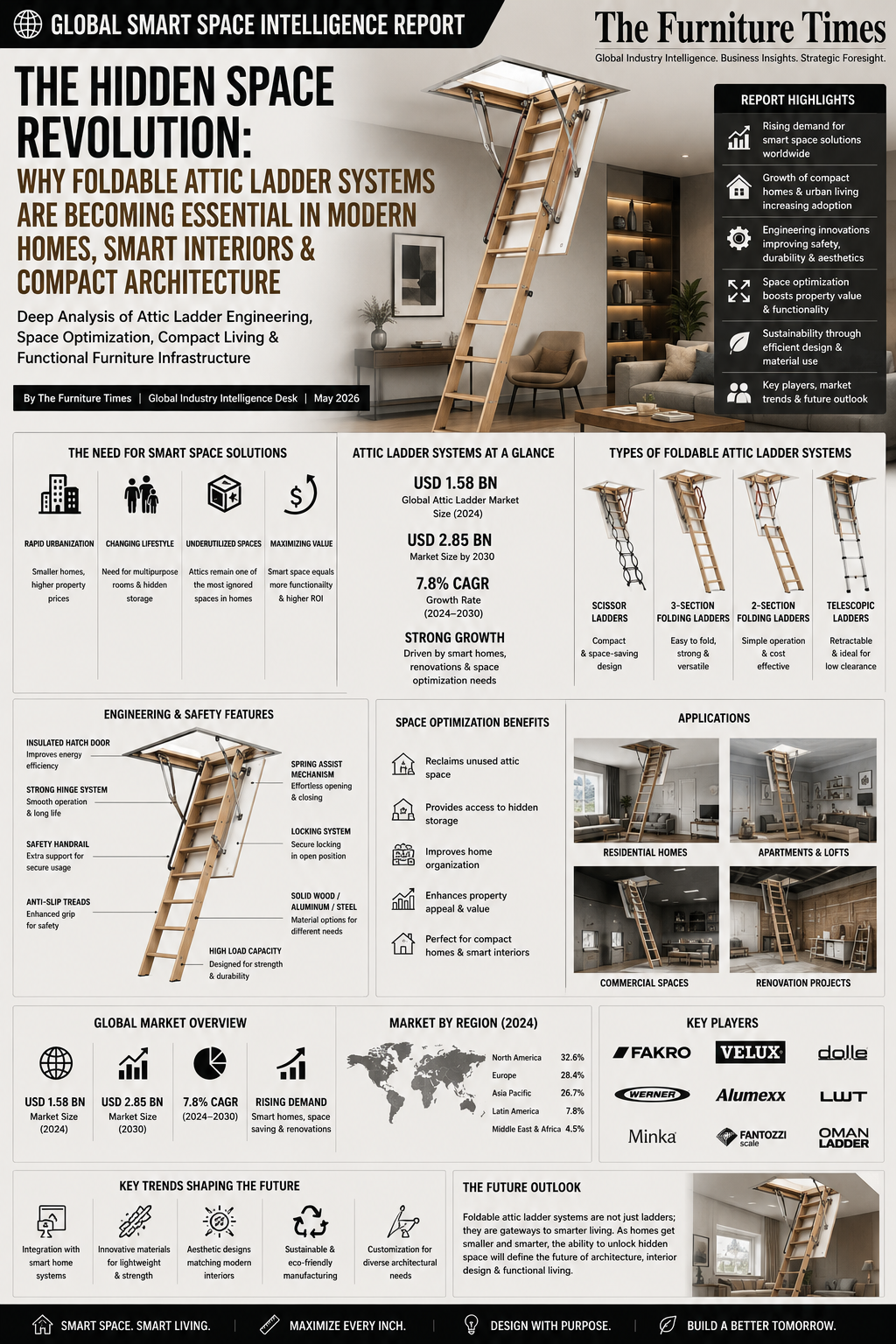
The Hidden Space Revolution: Why Foldable Attic Ladder Systems Are Becoming Essential in Modern Homes, Smart Interiors & Compact Architecture
Deep Analysis of Attic Ladder Engineering, Space Optimization, Compact Living & Functional Furniture Infrastructure
By The Furniture Times | Global Smart Space Intelligence Report | Global Industry Intelligence Desk | May 2026
The uploaded image may appear to show a simple foldable attic ladder system.
But in reality, the image represents something far bigger:
the future of intelligent space management.
As cities become:
denser
more expensive
vertically compact
space-constrained
the global furniture and interior ecosystem is rapidly shifting toward:
functional engineering.
The foldable attic ladder shown in the image is not merely a staircase.
It is:
a space-saving system
a compact architecture solution
a mechanical furniture product
a smart interior infrastructure component
a modern living optimization system
And globally, products like these are becoming increasingly important in:
urban housing
compact apartments
tiny homes
modular interiors
smart architecture ecosystems
The Rise of Functional Living
Modern living is changing dramatically.
In previous generations:
homes were often:
larger
horizontally designed
storage-rich
Today, however:
urban density is rising
property prices are increasing
apartment sizes are shrinking
multi-functional spaces are becoming essential
This creates growing demand for:
intelligent furniture and architectural systems.
The attic ladder in the image represents exactly this transformation.
The Image Represents Mechanical Space Intelligence
The uploaded image carefully documents:
ladder dimensions
folding mechanics
spring systems
opening angles
compact storage design
installation structure
This is not simply carpentry.
It is:
engineering integrated into furniture and architecture.
Why Attic Ladder Systems Are Growing Globally
Foldable attic ladders are increasingly used because they solve several modern problems simultaneously:
1. Space Optimization
They reduce floor-space consumption.
2. Hidden Storage Access
They create access without permanent staircases.
3. Compact Architecture
Perfect for smaller homes and apartments.
4. Multi-Functional Living
Homes increasingly require flexible systems.
5. Modern Minimalism
Consumers increasingly prefer clean interiors.
The Hidden Storage Economy
One of the biggest global interior trends today:
hidden storage.
Consumers increasingly seek:
concealed storage systems
under-floor storage
wall-integrated furniture
hidden compartments
ceiling access systems
because modern homes must maximize:
every square meter.
The attic ladder system reflects:
vertical storage utilization.
Why Vertical Space Matters Now
Traditionally, many homes underutilized:
ceiling height
attic zones
overhead storage areas
But rising property prices globally are forcing homeowners to:
use unused vertical space efficiently.
This is especially important in:
urban apartments
compact homes
hospitality projects
modular housing systems
Analysis of the Ladder Engineering
The image carefully documents:
folding mechanisms
spring-assisted systems
structural joints
angular movement
compact retraction engineering
This reveals:
mechanical furniture intelligence.
The ladder is designed not only for:
movement
but also for:
stability
compactness
ergonomic access
safety
Spring Systems & Mechanical Assistance
One of the most important engineering details shown:
spring-loaded support systems.
The springs help:
reduce lifting force
improve folding efficiency
stabilize movement
enhance safety
This reflects:
assisted mechanical ergonomics.
Without spring systems:
the ladder would:
feel heavier
operate less smoothly
become less user-friendly
Compact Folding Technology
The image demonstrates:
sequential folding geometry.
The ladder folds into:
multiple compact sections
retractable movement paths
concealed ceiling integration
This is very similar to:
transformable furniture
modular engineering
aerospace compact systems
The future of interior design increasingly depends on:
movable functionality.
The Global Compact Living Trend
Globally, living spaces are shrinking because of:
urbanization
real estate inflation
population density
changing lifestyle behaviour
This creates huge demand for:
compact furniture
modular systems
foldable infrastructure
smart storage solutions
Products like attic ladders become increasingly important in:
modern architectural ecosystems.
Europe & Compact Architecture Leadership
Europe has long been a leader in:
compact design
efficient housing
functional furniture engineering
Countries such as:
Germany
Italy
Scandinavia
Netherlands
strongly influenced:
space optimization culture.
Foldable attic systems became highly popular because European homes often prioritize:
efficient storage
minimalism
intelligent interiors
Asia’s Growing Demand
Asia is rapidly becoming one of the strongest markets for:
compact interiors
multifunctional furniture
hidden storage systems
Especially in:
Japan
Singapore
Hong Kong
Malaysia
South Korea
where:
space efficiency is critical.
Why Tiny Homes & Modular Housing Matter
The rise of:
tiny homes
modular housing
prefab architecture
container living
is accelerating demand for:
transformable systems
foldable furniture
hidden-access infrastructure
Attic ladders become part of:
flexible architecture ecosystems.
Safety Engineering Matters
The image also highlights:
safety geometry.
The ladder dimensions demonstrate:
balance control
weight distribution
angle optimization
structural alignment
Poorly designed folding ladders can create:
instability
accidents
structural failure
unsafe climbing angles
This is why engineering precision matters heavily.
Material Selection & Durability
The ladder shown appears to use:
wood structures
metal support systems
spring hardware
reinforced hinges
This hybrid construction reflects:
modern material integration.
Furniture and interior systems increasingly combine:
wood aesthetics
with:
metal engineering strength.
Why Wood Remains Important
Wood continues dominating interior products because consumers associate it with:
warmth
comfort
natural aesthetics
timeless interiors
Even highly mechanical products increasingly integrate:
wooden design language.
Hospitality & Commercial Applications
Foldable ladder systems are increasingly used in:
boutique hotels
loft apartments
storage-access systems
hospitality maintenance zones
smart compact interiors
Commercial real estate increasingly values:
hidden functionality.
Smart Homes & Hidden Infrastructure
The future smart home may increasingly integrate:
hidden ladders
retractable furniture
concealed workspaces
movable walls
integrated storage systems
The attic ladder represents:
intelligent infrastructure invisibility.
The Psychology of Minimalism
Modern consumers increasingly seek:
uncluttered interiors
clean aesthetics
hidden storage
minimalist spaces
This creates strong demand for:
invisible functional systems.
The ladder disappears when unused,
allowing interiors to remain:
visually calm
spatially efficient
architecturally clean
Furniture Industry Evolution
Traditionally, furniture focused mainly on:
appearance
seating
storage
decoration
Today, however, furniture increasingly merges with:
engineering
architecture
mechanics
space optimization systems
This creates:
functional living ecosystems.
Sustainability & Smaller Living
Compact living systems may also support:
reduced material usage
lower energy consumption
efficient urban density
sustainable housing models
As sustainability pressure rises globally,
space-efficient products become increasingly valuable.
The Future of Transformable Furniture
The future may increasingly include:
foldable beds
retractable kitchens
hidden desks
movable partitions
ceiling-integrated systems
robotic furniture mechanisms
The attic ladder shown in the image is part of this broader movement:
transformable architecture.
TFT Philosophical Industry Insight
The uploaded image reveals one important truth about the future of living:
Modern homes are no longer only places to live.
They are becoming engineered ecosystems designed to maximize functionality, efficiency, flexibility, and intelligent use of space.
The attic ladder represents:
invisible productivity inside architecture.
As cities become more crowded and expensive,
the ability to intelligently use hidden space may become one of the most important elements of future interior design.
Final Thought
The foldable attic ladder shown in the image is far more than a staircase.
It represents:
compact living philosophy
smart engineering
hidden infrastructure
functional architecture
mechanical furniture innovation
intelligent space optimization
And as the world continues moving toward:
urban density
modular housing
smaller apartments
smart interiors
products like these may become increasingly essential in the future global furniture and interior ecosystem.
Closing Insight
“The future of furniture and interior design may not only belong to beautiful products.
It may belong to systems that intelligently transform limited space into flexible, functional, and highly efficient living environments.”
