The Algorithm Advantage
Modern markets are increasingly controlled by algorithms. Search engines, recommendation systems, digital platforms, and AI-driven discovery engines now influence what buyers see, what businesses gain attention, and which companies receive opportunities.
Searchology defines this shift as the algorithm economy.
In this economy, visibility is no longer determined only by advertising budgets or physical presence. It is influenced by how well businesses align with the systems that organize digital discovery.
Algorithms reward structure.
They reward relevance.
They reward consistency.
Businesses that understand this gain a major competitive edge—the algorithm advantage.
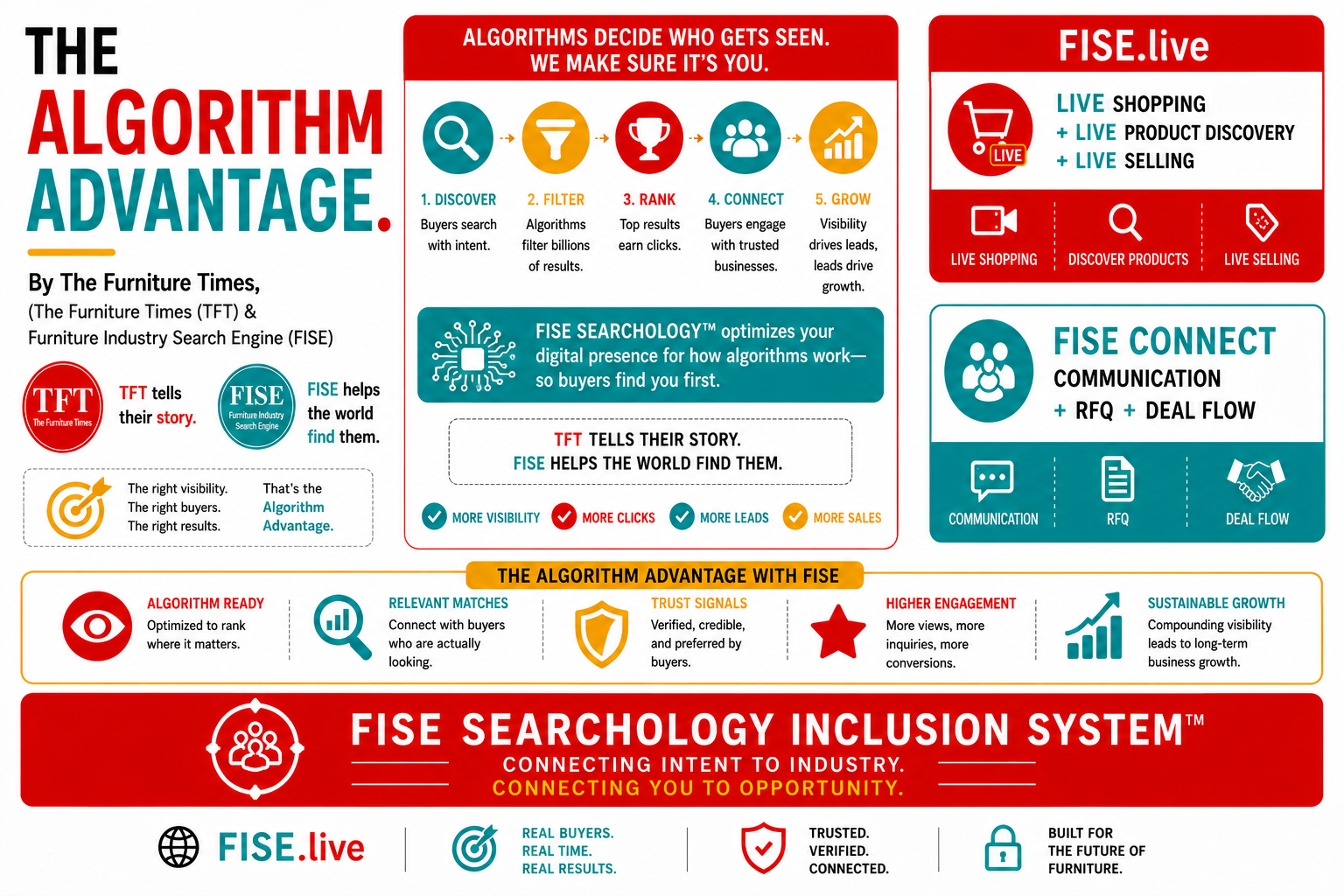
The algorithm advantage means positioning your business in ways that search and discovery systems can recognize, categorize, and surface to buyers efficiently.
Invisible businesses are often not invisible because they lack quality.
They are invisible because they lack discoverability structure.
This is exactly why TFT and FISE were built around Searchology principles.
The Furniture Times (TFT) creates authority signals through industry intelligence, ecosystem visibility, strategic narratives, trends, interviews, and content relevance. These signals strengthen credibility inside digital ecosystems.
FISE creates discoverability signals.
It structures businesses through categories, searchable indexing, optimized visibility layers, and search alignment so algorithms can understand what businesses offer and where they belong.
FISE Live creates interaction signals through real-time product engagement, demonstrations, launches, and live buyer activity.
FISE Connect creates communication signals through inquiries, networking, RFQs, deal flow, and active ecosystem interaction.
Searchology teaches that algorithms do not randomly distribute visibility.
They prioritize structured relevance.
Businesses that align with discoverability systems gain greater exposure, more inquiries, stronger positioning, and higher visibility over time.
This creates compounding advantage.
Because in the digital economy:
Algorithms influence visibility.
Visibility influences trust.
Trust influences decisions.
And decisions influence growth.
The businesses that understand algorithms early often dominate markets later.
That is the real algorithm advantage.