
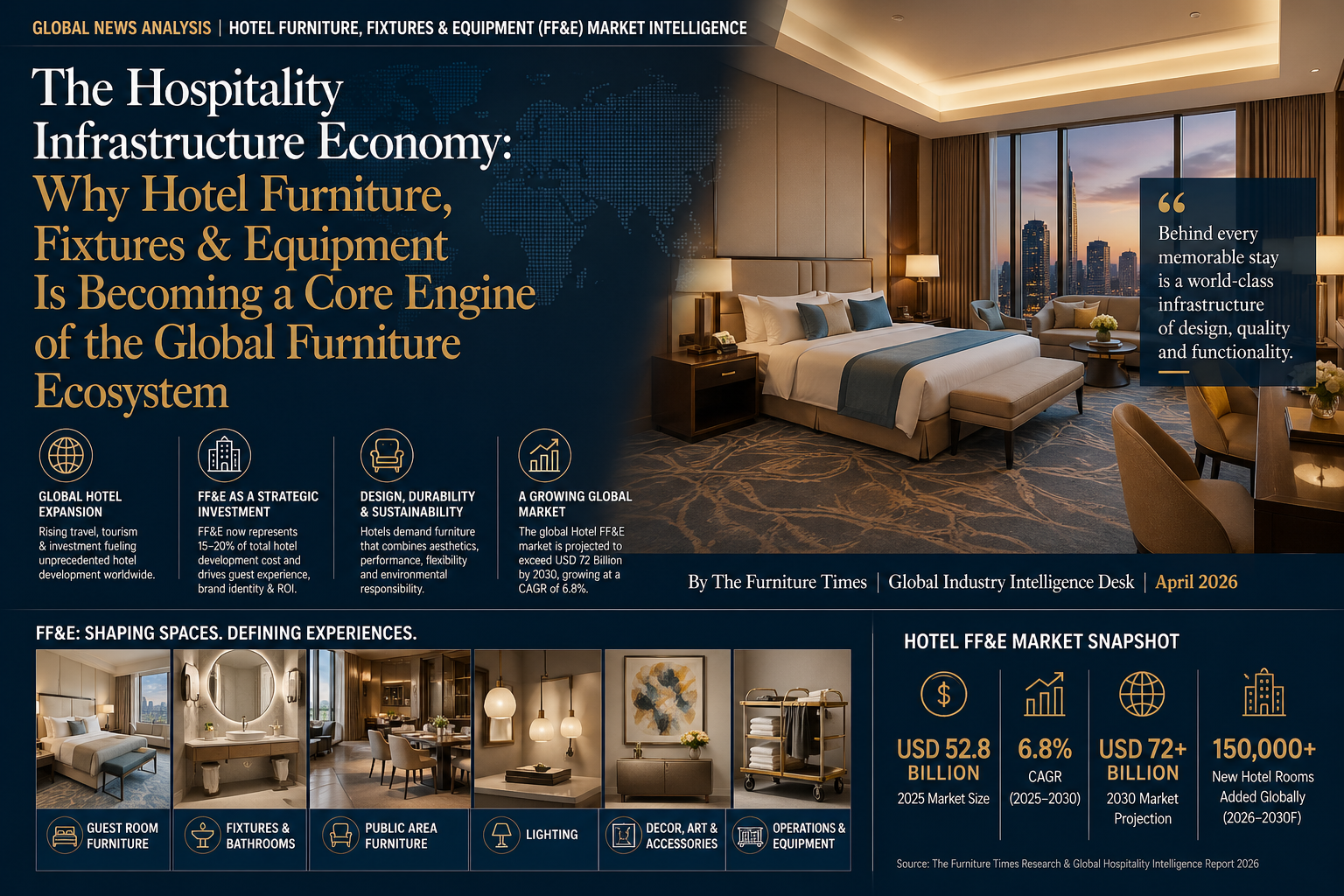
The Hospitality Infrastructure Economy: Why Hotel Furniture, Fixtures & Equipment Is Becoming a Core Engine of the Global Furniture Ecosystem
Global News Analysis | Hotel Furniture, Fixtures & Equipment (FF&E) Market Intelligence
By The Furniture Times | Global Industry Intelligence Desk | April 2026
Introduction: Beyond Furniture—The Rise of the FF&E Economy
The global hospitality industry is undergoing a structural transformation—and at the center of it lies:
Hotel Furniture, Fixtures & Equipment (FF&E)
This is not just furniture. It is the complete physical experience layer of hotels—covering:
- Guest room furniture
- Lobby and lounge design
- Restaurant and bar setups
- Outdoor hospitality furniture
- Lighting, fixtures, fittings
- Technology-integrated interiors
According to Research and Markets, the global hotel FF&E market is entering a high-growth strategic phase, driven by tourism recovery, new hotel development, and renovation cycles.
The Big Picture: Why FF&E Is a Strategic Growth Segment
1. Global Hospitality Expansion Is Back
The hotel industry is expanding again across:
- Asia-Pacific
- Middle East
- Europe
- North America
New hotels, resorts, and serviced apartments are being built, while existing properties are undergoing upgrades.
Hospitality brands—from luxury to mid-scale—are investing heavily in:
- Interior redesign
- Guest experience
- Brand identity through furniture
Hotels like One World Hotel and Four Seasons Hotel Kuala Lumpur demonstrate how furniture, fixtures, and interiors define premium guest experiences through design, comfort, and layout.
2. Renovation Cycles Are Driving Continuous Demand
Unlike residential furniture, hotel FF&E is not a one-time purchase.
Hotels must regularly upgrade:
- Rooms
- Lobbies
- Dining areas
- Outdoor spaces
This creates recurring demand cycles, making FF&E a stable and long-term business segment.
3. Experience Economy Is Reshaping Furniture Demand
Hotels are no longer just places to stay.
They are:
- Lifestyle destinations
- Experience centers
- Social and business hubs
Furniture must now deliver:
- Design impact
- Comfort
- Brand storytelling
- Instagram-worthy aesthetics
This shift is pushing demand toward:
- Custom furniture
- High-quality finishes
- Unique design concepts
4. Integrated Hospitality Ecosystems
Modern hotels combine:
- Accommodation
- Dining
- Events
- Co-working
- Wellness
For example, hospitality groups like Sunway Hotels & Resorts integrate multiple functions within one property, requiring diverse FF&E solutions across different zones.
Market Structure: What FF&E Includes
The hotel FF&E market covers multiple categories:
1. Furniture
Beds, sofas, chairs, wardrobes, desks, outdoor furniture
2. Fixtures
Lighting, mirrors, built-in fittings
3. Equipment
Appliances, technology, operational systems
4. Soft Furnishings
Curtains, carpets, upholstery, bedding
The Hidden Challenges
Despite strong growth, the FF&E market faces serious structural issues:
1. Complex Procurement Systems
Hotel FF&E sourcing involves:
- Architects
- Interior designers
- Procurement companies
- Contractors
- Multiple suppliers
This creates a long and complex decision chain.
2. High Customization Requirements
Unlike mass furniture:
- Each hotel project is unique
- Design varies by brand
- Specifications are detailed
This increases production complexity.
3. Cost Pressure & Tariffs
The FF&E market is highly sensitive to:
- Raw material costs
- Global tariffs
- Logistics pricing
These factors directly affect project budgets and supplier competitiveness.
4. Fragmented Supplier Ecosystem
There are thousands of:
- Furniture manufacturers
- Fixture suppliers
- Equipment providers
But no unified global system to organize them.
The Real Problem: The FF&E Search Gap
Here is the critical issue:
Hotel projects are large—but supplier discovery is still inefficient.
Developers, hotel chains, and contractors struggle to:
- Find the right FF&E suppliers
- Compare global vendors
- Verify capability and experience
- Shortlist suppliers quickly
This leads to:
- Delayed projects
- Increased costs
- Limited supplier competition
TFT Deep Analysis: FF&E Is Entering the Intelligence Economy
The hotel FF&E market is evolving through three phases:
Phase 1: Supply-Driven
Focus on production and delivery
Phase 2: Design-Driven
Focus on aesthetics and branding
Phase 3: Intelligence-Driven (Next Phase)
Focus on:
- Data
- Search
- Verified suppliers
- Faster procurement decisions
Strategic Solutions: What the Industry Must Do
1. Build Project-Based Visibility
Suppliers must position themselves as:
- Hotel furniture manufacturers
- Hospitality FF&E contractors
- Resort furniture specialists
- Custom hotel interior suppliers
2. Develop “Project-Ready” Profiles
Suppliers must showcase:
- Past hotel projects
- Product categories
- Certifications
- Production capacity
- Delivery timelines
3. Focus on Hospitality Specialization
Hotels require different standards than residential furniture:
- Durability
- Fire safety
- Heavy usage resistance
- Brand alignment
4. Strengthen Digital Discovery Infrastructure
This is the biggest gap.
The industry needs:
- Structured supplier databases
- Category-based FF&E search
- Verified supplier profiles
- Global procurement platforms
Role of FISE: The Missing Infrastructure
The FF&E market highlights a major global gap:
There is no dedicated search engine for hotel furniture and FF&E discovery.
Furniture Industry Search Engine (FISE) can solve this by enabling:
- Global hotel furniture supplier listings
- FF&E category-based search
- Country and region-level sourcing
- Verified supplier profiles
- AI-powered project matching
Example Use Case
A hotel developer searching for:
“FF&E suppliers for a 300-room hotel in Dubai”
Today:
- Requires multiple consultants
- Time-consuming sourcing
With FISE:
- Structured supplier discovery
- Verified profiles
- Faster procurement
Key Takeaways (April 2026)
1. Hotel FF&E Is a High-Value Segment
Driven by global tourism and hospitality expansion
2. Renovation Cycles Ensure Continuous Demand
Hotels must upgrade regularly
3. Experience Economy Is Driving Design
Furniture is part of branding
4. Procurement Is Still Complex
Multiple stakeholder’s slow decisions
5. Discovery Remains Broken
Supplier visibility is fragmented
Conclusion: Hospitality Is Becoming a Furniture Power Sector
Hotel furniture, fixtures, and equipment are no longer just supporting elements.
They are:
- Experience creators
- Brand builders
- Revenue enablers
- Investment drivers
But to unlock the full potential of this segment, the industry must evolve from:
Project-driven → Intelligence-driven
Final Thought
Hotels are built with structure.
But they are experienced through furniture.
The next phase of the global furniture ecosystem will be defined by:
Search + Trust + Intelligence + Experience
