
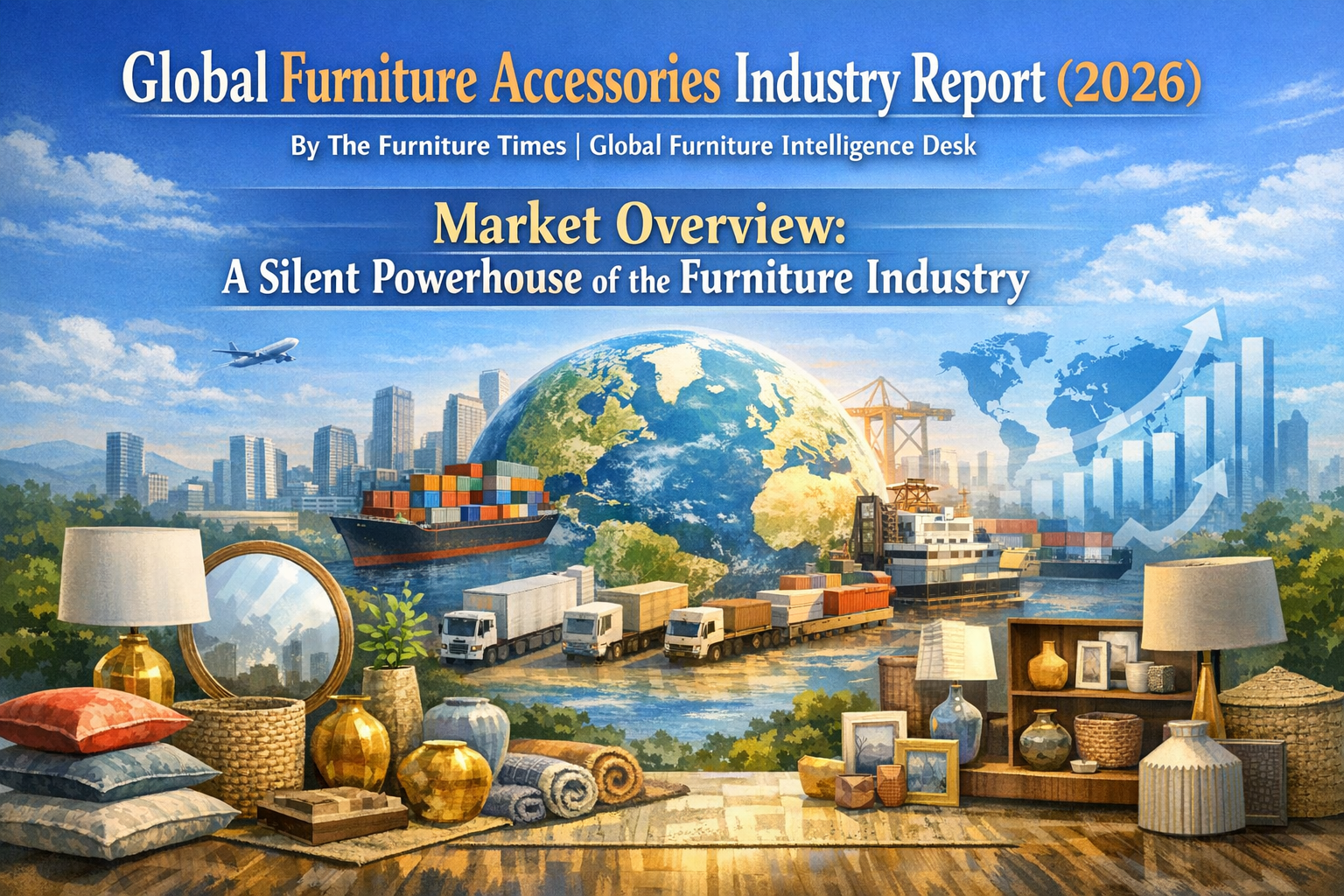
Global Furniture Accessories Industry Report (2026)
By The Furniture Times | Global Furniture Intelligence Desk
Market Overview: A Silent Powerhouse of the Furniture Industry
The global furniture accessories and hardware market—including hinges, handles, drawer systems, fittings, and functional components—has evolved into a multi-billion-dollar backbone of the furniture ecosystem.
- Global furniture hardware market (2025): ~$22.2 billion
- Projected market (2034): ~$31.7 billion (CAGR ~4%)
- Furniture fittings market (2026): ~$37.1 billion → $56.4 billion by 2035
- Accessories segment alone: ~$24.8 billion (2025), expected to reach $38.5 billion
This positions furniture accessories as one of the most critical value drivers, supporting over 65% of global modular furniture production.
Industry Analysis: Why Accessories Matter More Than Ever
Furniture accessories are no longer “support components”—they are now performance, design, and experience enablers.
1. Functionality → The Core of Modern Furniture
- Soft-close hinges, sliding systems, and lift-up mechanisms dominate
- Over 62% of cabinets globally now use concealed or soft-close systems
- Accessories improve:
- Durability (+40%)
- Assembly efficiency (+30%)
Accessories define how furniture works—not just how it looks
2. Aesthetic Power → “Jewelry of Furniture”
Recent design trends confirm a major shift:
- Hardware is now seen as design identity
- Rise of:
- Textured handles & sculptural pulls
- Vintage brass, bronze, and patina finishes
- Colorful and statement hardware
- Designers call hardware the “jewelry of furniture”
Small accessories now drive premium perception and differentiation
3. Modular Living Boom
- Over 58% of demand comes from kitchens and storage furniture
- Urban density + smaller homes = higher need for:
- Space-saving fittings
- Smart storage accessories
- Multi-functional systems
Accessories are the engineering layer behind modular living
4. Material Innovation
Dominant materials:
- Steel (48%)
- Aluminum (27%)
- Zinc alloys (19%)
Emerging trends:
- Corrosion-resistant coatings
- Eco-friendly and recycled materials
- Lightweight composites
The future is durability + sustainability + precision engineering
Regional Insights: Where Growth Is Coming From
Asia-Pacific (Dominant Growth Engine)
- Fast urbanization + rising middle class
- Massive furniture production hubs (China, India, Southeast Asia)
- Strong modular kitchen demand
Asia-Pacific is projected to lead global demand growth
North America & Europe (Premium Innovation Markets)
- Focus on:
- High-end fittings
- Smart hardware
- Ergonomic design
- Strong adoption of:
- Concealed systems
- Automation-friendly accessories
Middle East & Emerging Markets
- Growth driven by:
- Hospitality projects
- Luxury interiors
- Mega real estate developments
Accessories here are premium + design-driven
Key Trends Shaping the Future
1. Smart Furniture Accessories
- Motion-sensor drawers
- Automated lift systems
- Integrated lighting & IoT
Furniture is becoming interactive
2. Sustainability Revolution
- Recyclable materials
- Low-emission manufacturing
- Long lifecycle (>15 years residential use)
Green accessories will define future compliance & brand value
3. DIY & E-Commerce Growth
- Rise of flat-pack furniture
- Accessories sold online directly to consumers
- Growth of customization
Accessories are now consumer-facing products
4. Customization & Personalization
- Unique handles, finishes, textures
- Designer collaborations
- Bespoke solutions
The industry is shifting from mass production → mass personalization
Challenges & Risk Outlook
- Raw material price volatility (steel, aluminum)
- Supply chain disruptions (global conflicts, tariffs)
- High competition among global brands
- Standardization vs customization conflict
Despite growth, margins are under pressure
Competitive Landscape
Key global players include:
- Blum
- Hettich
- Häfele
- Grass
- Salice
- Accuride
These companies dominate through:
- Innovation
- Precision engineering
- Global distribution
Strategic Opportunities (2026–2035)
1. Smart Hardware Ecosystems
Integration with smart homes
2. Emerging Market Expansion
Southeast Asia, Middle East, Africa
3. Hospitality & Commercial Growth
Hotels, resorts, co-working spaces
4. Premiumization Strategy
High-margin designer accessories
The Furniture Times – Industry Insight
The furniture accessories sector is entering a golden transformation phase:
- From invisible components → visible value creators
- From mechanical parts → experience-driven innovations
- From standard fittings → design-led differentiation
Future Winners Will Be Those Who:
- Combine engineering + design + technology
- Build global supply chains
- Lead in sustainability & smart innovation
2026–2030 Forecast
- Steady CAGR: 4%–5.5% globally
- Market size to exceed $50+ billion combined segments
- Smart & premium accessories to drive highest margins
Final Conclusion
Furniture accessories are no longer secondary—they are the intelligence layer of modern furniture.
In a world moving toward:
- Modular living
- Smart homes
- Personalized interiors
Accessories will define performance, aesthetics, and user experience