A Planet Under Pressure: War Beyond the Battlefield
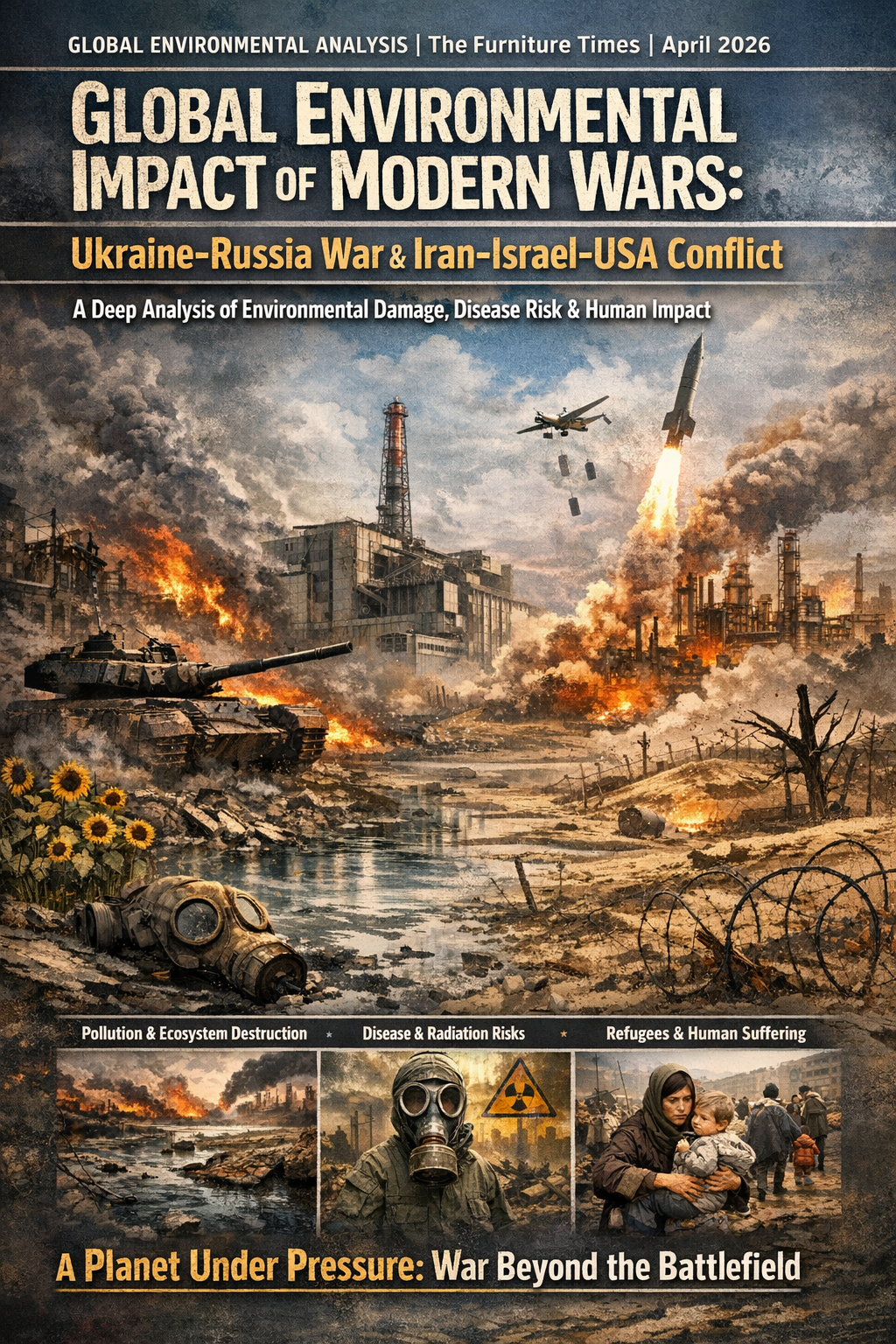
Global Environmental Impact of Modern Wars
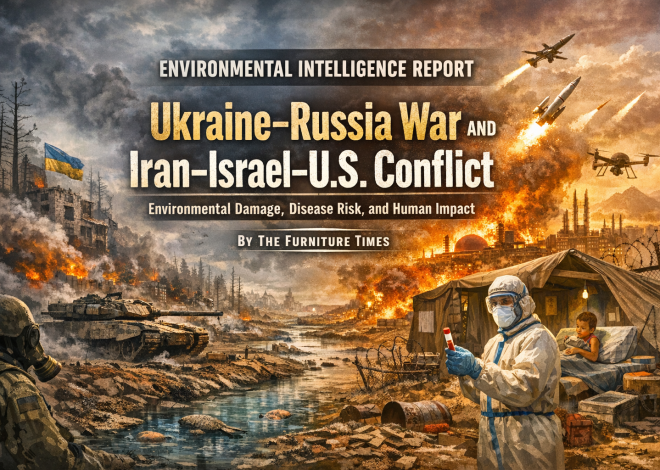
Ukraine–Russia War & Iran–Israel–USA Conflict
A Deep Analysis of Environmental Damage, Disease Risk & Human Impact
Global Environmental Analysis | The Furniture Times | April 2026
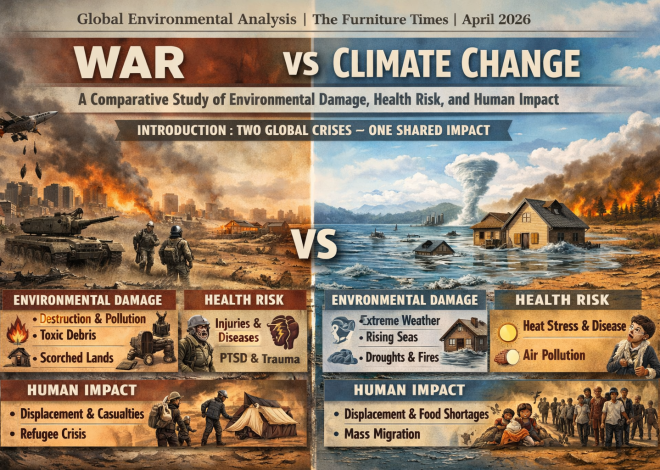
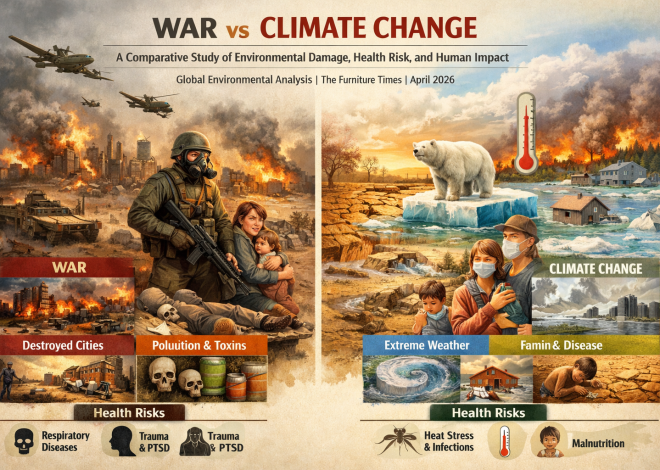
Modern warfare is no longer confined to territorial disputes—it is a multi-dimensional environmental catastrophe. From Eastern Europe to the Middle East, the ongoing conflicts are reshaping ecosystems, accelerating climate change, and exposing millions to long-term health risks.
The Ukraine–Russia war and the Iran–Israel–USA conflict are not just geopolitical crises—they are environmental turning points with consequences that may last decades.
1. Air Pollution & Climate Impact: War as a Carbon Bomb
- The Iran conflict alone generated over 5 million tonnes of CO₂ in just 14 days, exceeding the annual emissions of some countries
- Bombing of oil refineries and fuel depots has triggered massive black smoke clouds and acid rain events
- Ukraine war emissions and destruction of infrastructure have already released millions of tonnes of greenhouse gases, undermining global climate goals
Impact:
War is accelerating climate change at a time when the world is trying to reduce emissions. Every missile strike, every oil fire, pushes the planet further from sustainability targets.
2. Toxic Pollution: Soil, Water & Food Chain Contamination
- Explosions release heavy metals like lead, mercury, and toxic chemicals into soil and water systems
- In Iran, war has unleashed a toxic mix of chemicals threatening agriculture and drinking water
- Industrial attacks risk chemical spills and contamination across regions and borders
Impact:
- Farmland becomes unusable
- Groundwater contamination spreads silently
- Toxic substances enter the food chain, affecting generations
3. Water Systems Collapse: The Hidden Crisis
- War damages water treatment plants, pipelines, and sanitation systems
- Millions in Ukraine have already faced loss of clean drinking water
- Risks of targeting desalination plants and water infrastructure in the Middle East are rising
Impact:
- Waterborne diseases increase
- Communities rely on unsafe water
- Public health systems collapse under pressure
4. Disease Risk & Public Health Crisis
Environmental destruction directly translates into health disasters:
- Toxic air leads to respiratory diseases, cancers, and long-term lung damage
- Polluted water causes cholera, typhoid, and gastrointestinal infections
- Collapse of healthcare infrastructure worsens outbreaks
Experts warn that these health risks may persist for decades after the war ends
5. Biodiversity Loss & Ecosystem Collapse
- Over 12,000 km² of protected land in Ukraine has become war zones
- Wildlife migration disrupted, species habitats destroyed
- Forest fires, explosions, and pollution are wiping out ecosystems
Even animals are direct victims—recent strikes killed wildlife and destroyed veterinary facilities
6. Energy Infrastructure Attacks = Environmental Disaster
- Bombing of oil and gas facilities leads to:
- Massive oil spills
- Airborne toxic particles
- Long-term soil contamination
- The Middle East conflict has created one of the largest energy disruptions in history, affecting global supply chains
Impact:
Environmental damage spreads globally through energy shocks, increased fossil fuel reliance, and delayed green transitions.
7. Global Ripple Effect: Environment Knows No Borders
These wars are interconnected:
- Rising oil prices benefit some economies but increase global emissions
- Supply chain disruptions increase food insecurity and environmental stress
- Climate goals are delayed due to war-driven fossil fuel dependence
Conflicts are now global environmental events, not regional ones.
8. Strategic Insight by The Furniture Times
From an industry and sustainability perspective:
- War-driven inflation impacts raw materials, logistics, and manufacturing
- Environmental damage affects wood supply, metals, and energy costs
- Furniture and construction industries face rising costs and unstable supply chains
Opportunity Insight:
The crisis creates demand for:
- Sustainable materials
- Circular economy models
- Localized manufacturing systems
Final Thought: The True Cost of War
War today is not just about borders—it is about air we breathe, water we drink, and land we depend on.
The environmental scars of these conflicts will:
- Outlast political decisions
- Impact generations
- Redefine global sustainability priorities
Founder | The Furniture Times | FISE
“Peace is not just the absence of war—it is the presence of a livable planet.”