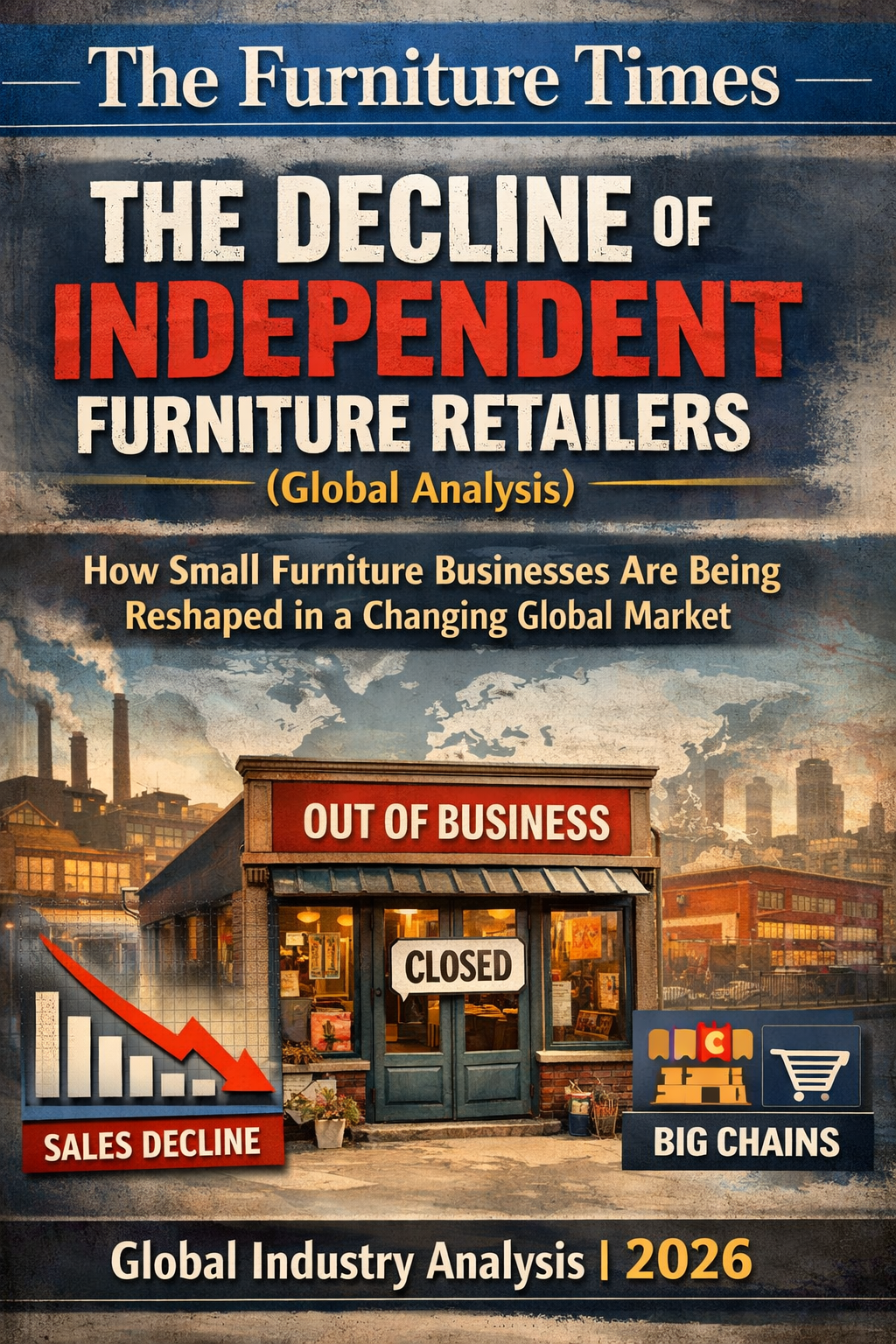
The Decline of Independent Furniture Retailers (Global Analysis)
How Small Furniture Businesses Are Being Reshaped in a Changing Global Market
Global Industry Analysis | The Furniture Times | 2026
Across cities, towns, and regions worldwide, a quiet but powerful shift is taking place: independent furniture retailers are declining.
These businesses—often family-owned, community-driven, and built over decades—are facing mounting pressure from structural changes that are redefining the global furniture retail landscape.
A Global Pattern, Not an Isolated Story
From North America to Europe and Asia, closures of independent furniture stores are becoming more frequent.
But this is not simply a story of failure.
👉 It is a story of transition.
Independent retailers are being squeezed between:
- rising operational costs
- changing consumer expectations
- competition from large-scale and digital-first players
Key Reasons Behind the Decline
1. The Rise of Large-Scale Retail Chains
Big players offer:
- lower prices
- wider selection
- stronger supply chains
👉 Scale has become a major competitive advantage.
2. E-Commerce Disruption
Consumers are increasingly:
- browsing online
- comparing prices instantly
- expecting fast delivery
👉 Physical-only retailers struggle to compete.
3. Changing Consumer Behavior
Modern buyers prioritize:
- convenience
- speed
- value
👉 Traditional showroom experiences are no longer enough.
4. Rising Costs
Independent retailers face:
- higher rent
- logistics expenses
- inventory risks
👉 Margins are shrinking.
5. Generational Transition
Many family-owned businesses are closing due to:
- retirement of owners
- lack of succession
👉 A legacy challenge across global markets.
The Human Side of the Shift
Behind every closure is:
- a family business ending
- employees losing jobs
- communities losing trusted names
👉 These stores are not just businesses—they are cultural anchors
Industry Transformation
The decline of independent retailers reflects a larger structural shift:
OLD MODEL:
- local showrooms
- relationship-driven sales
- limited reach
NEW MODEL:
- omnichannel retail
- data-driven decisions
- global supply chains
What Comes Next?
Independent retailers that survive will:
- adopt digital strategies
- specialize in niche markets
- focus on personalized experiences
👉 The future is not about size alone—
👉 it is about adaptability
Final Insight
The decline of independent furniture retailers is not the end of the industry.
👉 It is the evolution of retail
And those who evolve will redefine the next generation of furniture commerce.