Future of Co-Working Spaces & Furniture Demand
How Flexible Workspaces Are Reshaping the Furniture Industry
Market Intelligence Report | The Furniture Times | 2026
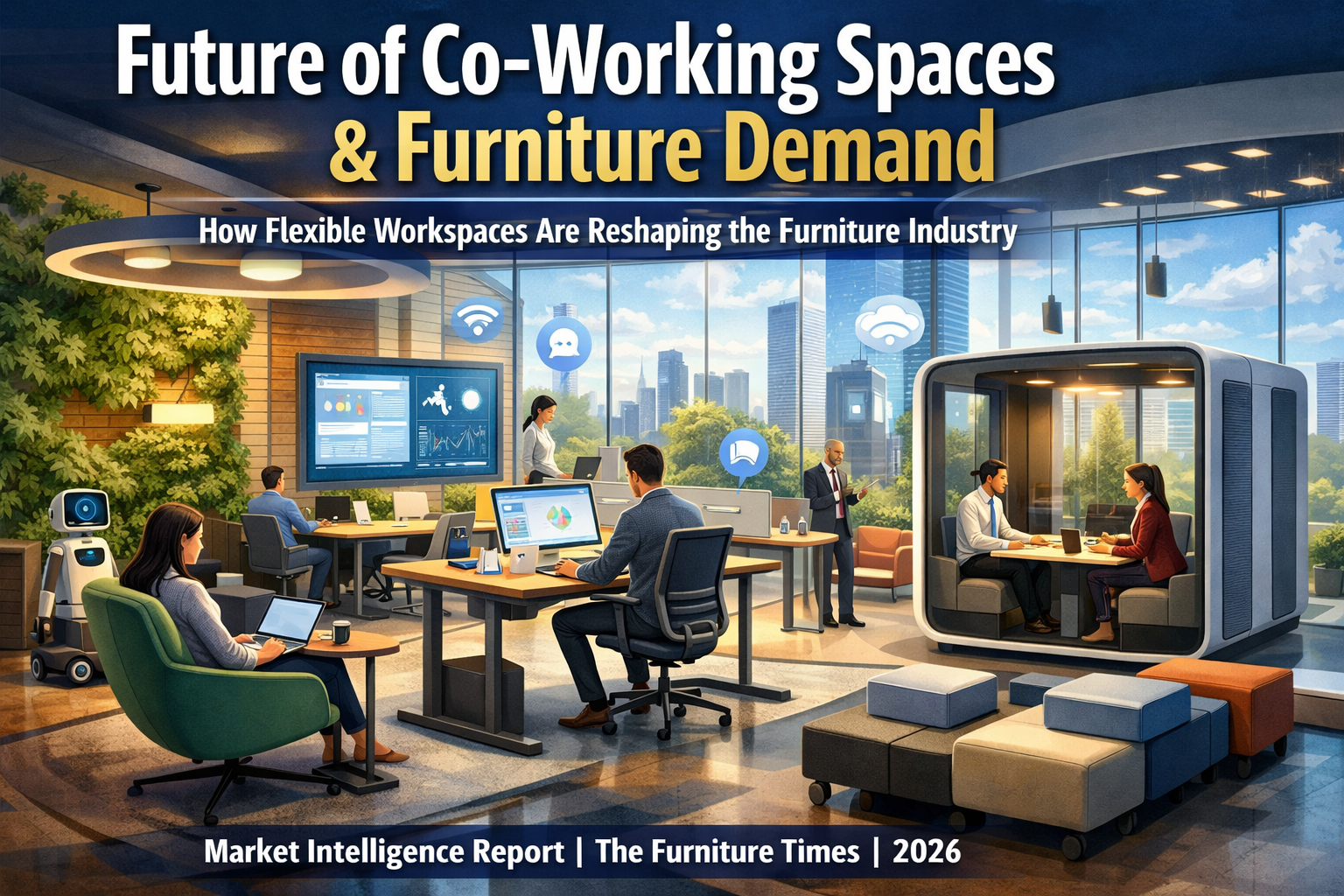
The rise of co-working spaces is one of the most transformative trends in the global office furniture industry. As businesses shift toward flexibility and cost efficiency, co-working is becoming a dominant model—reshaping demand for office furniture worldwide.
The Rise of Co-Working
Driven by:
- startups and entrepreneurs
- remote and hybrid work
- corporate flexibility strategies
Co-working spaces are expanding rapidly across global cities.
Impact on Furniture Demand
Co-working environments require furniture that is:
- modular and flexible
- durable and high-usage ready
- easy to reconfigure
- aesthetically appealing
👉 This creates new demand patterns for manufacturers.
Key Furniture Trends in Co-Working
1. Modular Workstations
- easy to rearrange
- scalable layouts
2. Collaborative Furniture
- open seating
- shared desks
- meeting pods
3. Multi-Functional Designs
- furniture that serves multiple purposes
- adaptable for different users
4. Lounge & Informal Spaces
- comfortable seating areas
- relaxed work environments
5. Smart & Connected Furniture
- integrated charging
- tech-enabled desks
Market Opportunity
Co-working growth is driving:
- recurring furniture demand
- bulk purchasing by operators
- long-term supply partnerships
👉 Furniture companies can tap into a high-growth B2B segment
Challenges
- high wear and tear of furniture
- frequent layout changes
- cost sensitivity of operators
👉 Products must balance durability + affordability + design
Future Outlook (2026–2030)
- expansion of co-working in emerging markets
- hybrid work integration
- demand for smart, flexible furniture
👉 Co-working will continue to shape the future of office furniture demand.
Final Insight
Co-working spaces are not just changing where people work —
👉 they are redefining how furniture is designed, used, and valued.