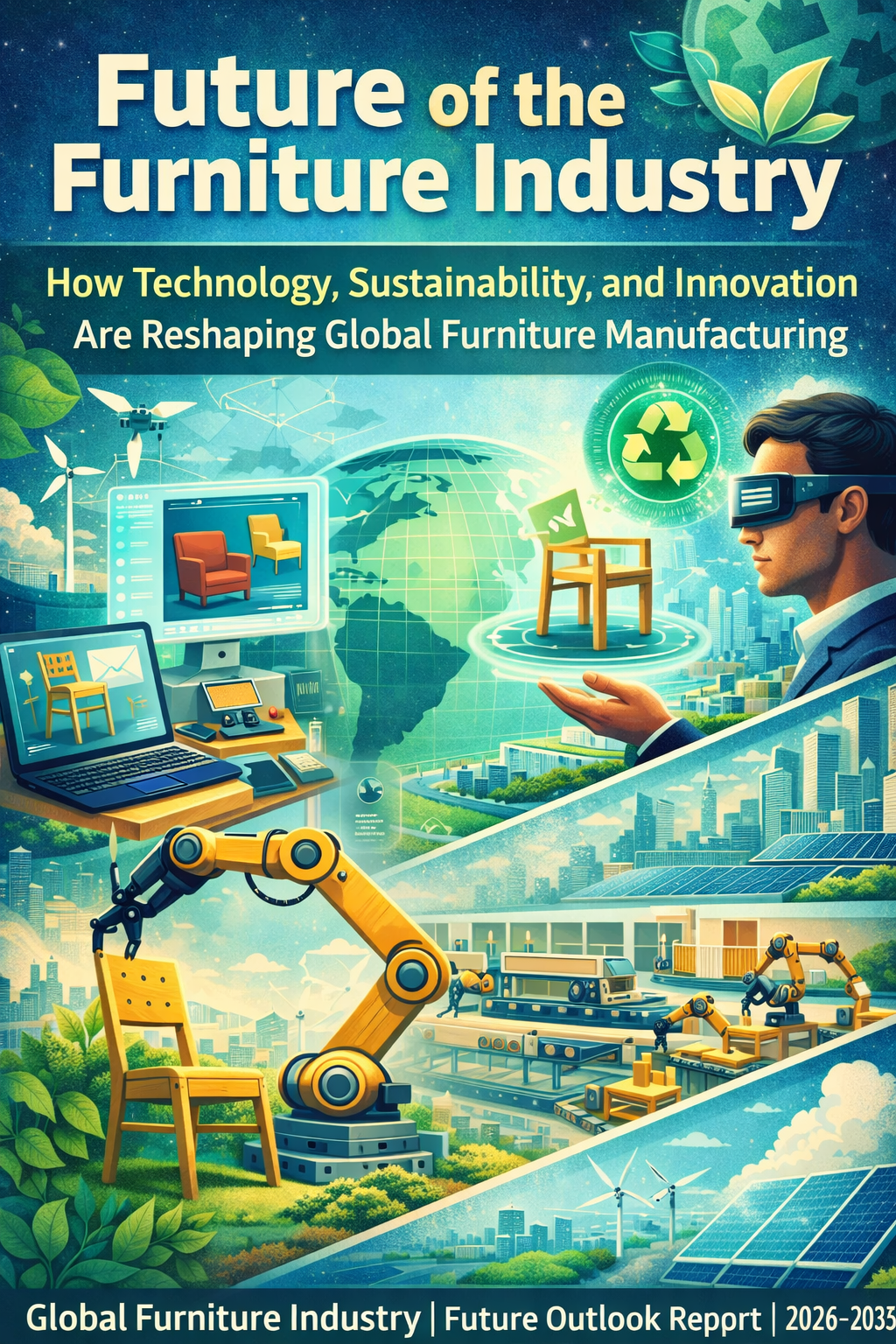
How Technology, Sustainability, and Innovation Are Reshaping Global Furniture Manufacturing
Global Furniture Industry | Future Outlook Report | 2026–2035
The global furniture industry is entering one of the most transformative decades in its history. Traditionally rooted in craftsmanship and manual production, the sector is now rapidly evolving through digital technology, sustainable manufacturing practices, and intelligent design systems.
From smart furniture connected to digital ecosystems to AI-assisted product design and automated factories, the industry is witnessing a shift that will redefine how furniture is designed, manufactured, distributed, and experienced by consumers.
Experts believe the next ten years will determine which companies become global leaders in the future furniture economy.
A Global Industry Worth Over $1 Trillion
The furniture sector already represents one of the largest consumer product industries in the world. Analysts estimate that the global furniture market could surpass $1.2 trillion by 2032, driven by urbanization, rising middle-class demand, and technological innovation.
However, the next phase of growth will not simply come from producing more furniture. Instead, the future will be defined by smarter products, sustainable production, and digitally integrated supply chains.
Manufacturers and designers across Europe, Asia, and North America are investing heavily in technologies that will reshape the industry.
Smart Furniture: When Furniture Meets Technology
One of the most exciting developments is the rise of smart furniture—products that integrate technology directly into everyday living environments.
Smart furniture incorporates features such as:
• wireless charging surfaces
• integrated lighting systems
• built-in speakers
• health monitoring sensors
• adjustable ergonomic controls
For example, modern desks now automatically adjust height based on posture preferences, while smart beds can track sleep patterns and optimize comfort.
As smart homes become more common, furniture is expected to evolve into interactive lifestyle products rather than static objects.
Furniture companies are beginning to collaborate with technology firms to create products that seamlessly connect with smartphones, home automation systems, and artificial intelligence platforms.
Sustainable Manufacturing Becomes an Industry Standard
Sustainability is no longer a niche concept—it is rapidly becoming a requirement for furniture manufacturers worldwide.
Environmental concerns are driving a shift toward eco-friendly materials, responsible forestry practices, and circular production models.
Many furniture companies are adopting practices such as:
• using FSC-certified wood
• recycling materials into new furniture components
• reducing carbon emissions in manufacturing
• eliminating harmful chemicals in finishes and adhesives
Consumers are also playing a critical role in this transition. Buyers today increasingly seek products that reflect environmental responsibility.
In response, furniture brands are redesigning their supply chains to reduce environmental impact while maintaining product durability and design quality.
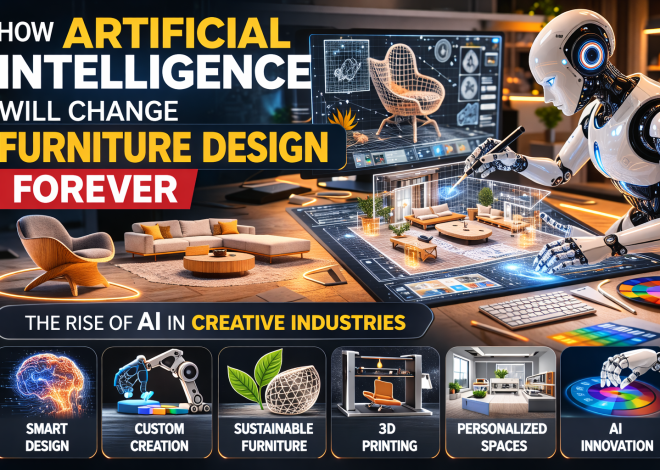
AI-Assisted Design: The Next Generation of Creativity
Artificial intelligence is becoming a powerful tool in furniture design.
Traditionally, furniture designers relied on manual sketches and computer-aided design software. Today, AI systems can analyze millions of design combinations, material options, and ergonomic data to help designers create innovative products faster than ever before.
AI-assisted design tools allow companies to:
• generate thousands of design concepts instantly
• simulate product durability and comfort
• optimize material usage
• predict consumer preferences
Rather than replacing designers, AI is acting as a creative partner, helping professionals experiment with ideas that might have taken months to explore manually.
This technology is expected to dramatically accelerate innovation in furniture design over the next decade.
Automation and Smart Factories Transform Production
Manufacturing processes within the furniture industry are also undergoing major technological transformation.
Modern furniture factories increasingly rely on automation, robotics, and digital manufacturing systems to improve efficiency and precision.
Advanced manufacturing technologies now include:
• robotic cutting and assembly
• automated upholstery production
• AI-driven quality control systems
• digital supply chain management
Automation helps manufacturers reduce production errors, improve consistency, and increase production speed.
However, the shift toward automation also raises important questions about workforce transformation. Industry experts emphasize that while technology will change factory operations, human expertise in craftsmanship, design, and quality control will remain essential.
The Rise of Global Furniture Innovation Hubs
Several regions are emerging as major innovation centers for the furniture industry.
Key global hubs include:
Europe – Known for design excellence and luxury furniture brands.
China – The world’s largest furniture manufacturing base.
Vietnam and Malaysia – Fast-growing export powerhouses in Southeast Asia.
United States – Strong in retail innovation and smart furniture technology.
International trade fairs such as Salone del Mobile in Milan, CIFF Guangzhou, High Point Market, and MIFF Malaysia continue to play an important role in showcasing the future of furniture design and manufacturing.
These global exhibitions allow companies to share ideas, build partnerships, and introduce new technologies that influence industry direction.
Challenges the Industry Must Address
Despite rapid innovation, the furniture sector also faces several challenges.
These include:
• rising raw material costs
• supply chain disruptions
• environmental regulations
• changing consumer expectations
Companies that fail to adapt to technological and environmental changes may struggle to remain competitive.
The future belongs to businesses that can combine innovation, sustainability, and operational efficiency.
Furniture in the Next Decade
Looking ahead to 2035, furniture is expected to evolve beyond traditional categories.
Industry observers predict several major shifts:
• furniture integrated with smart homes
• modular and adaptable living solutions
• sustainable circular production models
• AI-driven design and customization
• digitally connected supply chains
In essence, furniture will become part of a broader technology-enabled lifestyle ecosystem.
A Human Industry in a Technological Era
Even as artificial intelligence and automation reshape the furniture industry, one element will remain constant: people.
Behind every innovative design is a creative mind. Behind every finished product is the craftsmanship and expertise of skilled professionals.
The future of furniture will not simply be defined by machines or software. It will be shaped by the collaboration between technology and human creativity.
As the industry moves forward, companies that embrace innovation while preserving the artistry of furniture making will lead the next era of global furniture design.