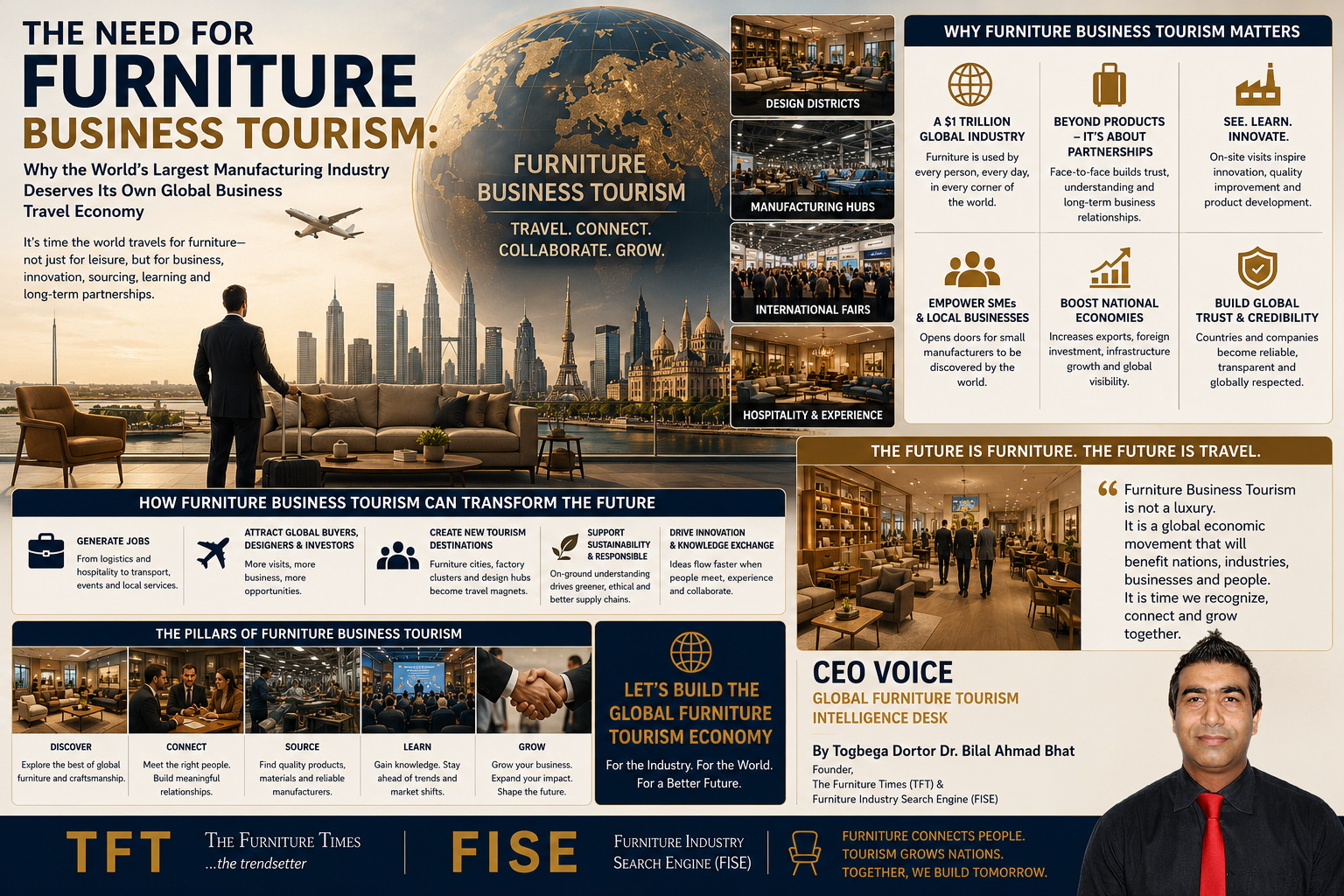
The Need for Furniture Business Tourism: Why the World’s Largest Manufacturing Industry Deserves Its Own Global Business Travel Economy
How Furniture Business Tourism Can Create Jobs, Strengthen National Economies, Empower SMEs, Build Global Trust & Transform the Future of the Furniture Industry
CEO Voice | Global Furniture Tourism Intelligence Desk
By Togbega Dortor Dr. Bilal Ahmad Bhat
Founder, The Furniture Times (TFT) & Furniture Industry Search Engine (FISE)
For decades, countries around the world have invested billions of dollars in promoting tourism.
Governments created strategies for:
Medical Tourism.
Educational Tourism.
Religious Tourism.
Sports Tourism.
Adventure Tourism.
Eco Tourism.
Food Tourism.
Luxury Tourism.
Business Tourism.
Conference Tourism.
Creative Tourism.
Industrial Tourism.
Every successful tourism sector has one common objective.
To attract people.
To generate economic activity.
To create employment.
To stimulate local businesses.
To strengthen international relationships.
Yet surprisingly, one of the world’s largest manufacturing industries has remained almost invisible within global tourism strategies.
The furniture industry.
This industry touches every home.
Every office.
Every hotel.
Every restaurant.
Every school.
Every hospital.
Every airport.
Every public building.
Every nation.
Yet very few countries have recognised furniture as a tourism asset.
This must change.
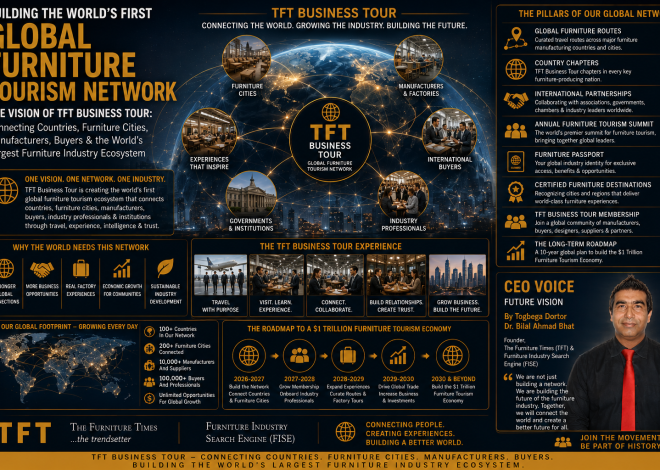
The time has come for the global furniture industry to introduce an entirely new economic movement.
Furniture Business Tourism.
This is not simply another business idea.
It is an economic development strategy.
A tourism strategy.
An export strategy.
An SME development strategy.
A national branding strategy.
And perhaps one of the greatest untapped opportunities for the global furniture ecosystem.
A Missing Piece in Global Tourism
When people think about tourism, they imagine beaches, mountains, shopping districts and historical monuments.
Very few imagine factory visits.
Manufacturing innovation.
Furniture craftsmanship.
Design studios.
Industrial clusters.
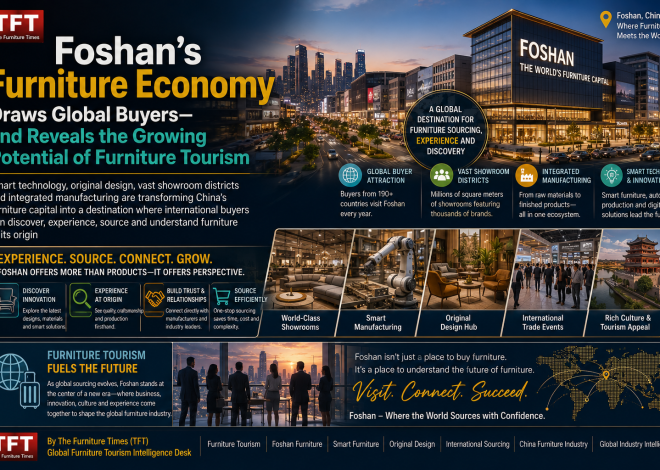
Yet millions of professionals already travel every year to visit furniture exhibitions, factories, sourcing centres, manufacturing parks and design districts.
The activity already exists.
What has been missing is recognition.
No industry has officially connected these activities into one organised global tourism vertical.
That is precisely the gap The Furniture Times (TFT) intends to fill.
Furniture Business Tourism Is Bigger Than Furniture
Many people mistakenly believe Furniture Business Tourism is only about visiting factories.
It is much bigger.
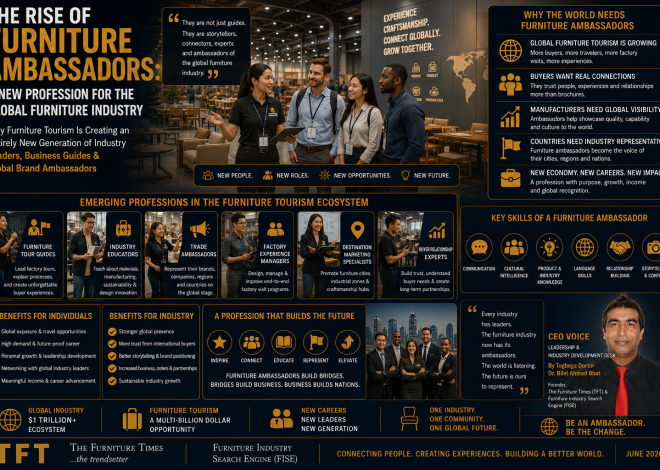
It connects entire ecosystems.
Manufacturers.
Retailers.
Interior designers.
Architects.
Hotels.
Restaurants.
Transport providers.
Universities.
Training institutions.
Government agencies.
Export councils.
Investors.
Technology companies.
Financial institutions.
Logistics providers.
Every business visitor supports dozens of local industries.
Furniture Business Tourism therefore creates value far beyond furniture itself.
Why Countries Should Invest in Furniture Business Tourism
Countries that possess strong furniture manufacturing capabilities have an extraordinary opportunity.
Instead of promoting only tourist attractions, they can also promote industrial excellence.
Imagine international campaigns inviting visitors to experience:
The world’s finest furniture factories.
Award-winning craftsmen.
Innovation laboratories.
Furniture museums.
Design centres.
Woodworking academies.
Smart manufacturing facilities.
Sustainable production plants.
Furniture cities become destinations.
Manufacturing becomes an attraction.
Industry becomes part of national identity.
This creates an entirely new tourism economy.
A Powerful Engine for Economic Growth
Every international visitor contributes directly and indirectly to the national economy.
Business travellers require:
Hotels.
Restaurants.
Air transportation.
Ground transportation.
Conference facilities.
Translation services.
Shopping.
Entertainment.
Professional services.
Local guides.
Printing companies.
Freight forwarders.
Inspection agencies.
Banks.
Insurance providers.
The economic impact extends far beyond the furniture industry.
One sourcing mission supports dozens of local businesses.
Thousands of sourcing missions can transform regional economies.
Furniture Business Tourism Creates Jobs
Employment generation is one of its strongest advantages.
Direct employment includes:
Tour coordinators.
Business consultants.
Industry guides.
Factory liaison officers.
Export specialists.
Interpreters.
Event organisers.
Industry researchers.
Marketing professionals.
Indirect employment expands further.
Hotels employ more staff.
Restaurants receive more visitors.
Transport companies increase operations.
Logistics companies expand.
Packaging suppliers grow.
Local retailers benefit.
Universities develop specialised training programmes.
The result is a wider employment ecosystem.
SMEs Finally Receive Global Exposure
One of the biggest challenges facing the furniture industry is visibility.
Large corporations possess international marketing budgets.
They participate in global exhibitions.
They invest heavily in advertising.
Small manufacturers rarely enjoy the same opportunities.
Thousands of SMEs produce world-class furniture.
Yet global buyers never discover them.
Not because quality is poor.
But because visibility is missing.
Furniture Business Tourism changes this completely.
Instead of waiting for buyers to discover them online, manufacturers become destinations.
Visitors experience products directly.
Relationships become personal.
Trust develops naturally.
Opportunities multiply.
Startups Gain Access to Global Markets
Startups often struggle with three challenges.
Visibility.
Credibility.
Market access.
Furniture Business Tourism provides all three.
Young companies gain opportunities to:
Present innovations.
Meet investors.
Connect with distributors.
Receive industry feedback.
Develop partnerships.
Learn from established manufacturers.
This dramatically shortens the journey toward international growth.
Building Trust Through Experience
Trust cannot always be built through websites.
Or brochures.
Or digital catalogues.
Trust grows when people meet.
When buyers walk through factories.
When they meet production teams.
When they understand quality systems.
When they see manufacturing processes.
Experience removes uncertainty.
Confidence increases.
Business relationships become stronger.
Furniture Business Tourism transforms trust into commercial value.
Strengthening National Brands
Countries compete internationally.
Not only through exports.
But through reputation.
Furniture Business Tourism allows countries to build stronger identities.
Italy became synonymous with design.
Scandinavia became known for simplicity.
Japan became associated with precision.
Countries with strong furniture industries can also build powerful global identities.
A national furniture brand strengthens export competitiveness.
Education Meets Industry
Furniture Business Tourism also supports education.
Students gain practical exposure.
Universities build stronger industry partnerships.
Researchers study manufacturing.
Young entrepreneurs understand business realities.
The future workforce becomes better prepared.
Education becomes connected with real industry.
Artificial Intelligence Will Accelerate the Movement
AI will make Furniture Business Tourism smarter.
Visitors will receive:
Personalised factory itineraries.
AI-powered sourcing recommendations.
Real-time language translation.
Digital factory profiles.
Interactive product catalogues.
Supplier matching.
Travel planning.
Business analytics.
Technology will simplify international business travel while improving decision-making.
Searchability Is the Foundation
None of this is possible without discoverability.
Manufacturers must become searchable.
Cities must become searchable.
Industrial parks must become searchable.
Furniture clusters must become searchable.
Business tourism begins with search.
This is exactly why Furniture Industry Search Engine (FISE) was created.
To make the global furniture ecosystem discoverable.
Why The Furniture Times Created This Vertical
According to Togbega Dortor Dr. Bilal Ahmad Bhat, Founder of The Furniture Times (TFT) and Furniture Industry Search Engine (FISE):
“For too long, the furniture industry has focused only on manufacturing and exhibitions. We asked a different question: Why can’t furniture itself become a reason for people to travel? Why can’t factory visits become business experiences? Why can’t furniture cities become international destinations? We realised there was a major gap in the global industry, and that gap became one of the most visionary verticals of The Furniture Times—Furniture Business Tourism.”
He continues:
“The largest companies already have visibility. They already receive international buyers. But thousands of SMEs, family businesses, startups and craftsmen never receive that opportunity. Furniture Business Tourism is about inclusion. It is about giving visibility to those who deserve to be discovered. It is about creating opportunity where none existed before.”
And adds:
“Our mission is simple. TFT tells their story. FISE helps the world find them. Furniture Business Tourism completes that journey by bringing the world directly to their factories, workshops and innovation centres.”
The Role of TFT & FISE
The Furniture Times is not simply reporting industry news.
It is creating new opportunities for the global furniture ecosystem.
Furniture Industry Search Engine (FISE) is not simply a search platform.
It is becoming the digital infrastructure that connects global buyers with furniture destinations, manufacturers, suppliers and innovators.
Together they introduce a completely new chapter in furniture industry development.
TFT & FISE Analysis
Furniture Business Tourism has the potential to become one of the most influential economic initiatives ever introduced into the global furniture industry.
It creates:
Greater exports.
Higher investment.
More employment.
Stronger SMEs.
Better education.
International partnerships.
Regional development.
Tourism diversification.
National branding.
Global visibility.
Digital discoverability.
Long-term business confidence.
It transforms furniture from a product into a destination.
Final Verdict
The future of the furniture industry will no longer be measured only by how many products are manufactured.
It will also be measured by how many people travel to experience the industry.
Countries that embrace Furniture Business Tourism will diversify their tourism economy.
Manufacturers will welcome global buyers.
SMEs will gain international exposure.
Startups will access global markets.
Young people will discover new careers.
Local economies will grow.
National brands will become stronger.
The world will begin to recognise furniture not only as an industry—but as a destination.
That is the vision behind Furniture Business Tourism.
That is why The Furniture Times created this vertical.
Because every great industry deserves more than visibility.
It deserves a movement.
And that movement begins today.
By Togbega Dortor Dr. Bilal Ahmad Bhat
Founder, The Furniture Times (TFT) & Furniture Industry Search Engine (FISE)
CEO Voice | Global Furniture Tourism Intelligence Desk
“TFT tells their story. FISE helps the world find them.”
The furniture industry ecosystem is a $1 Trillion Dollar Industry.