
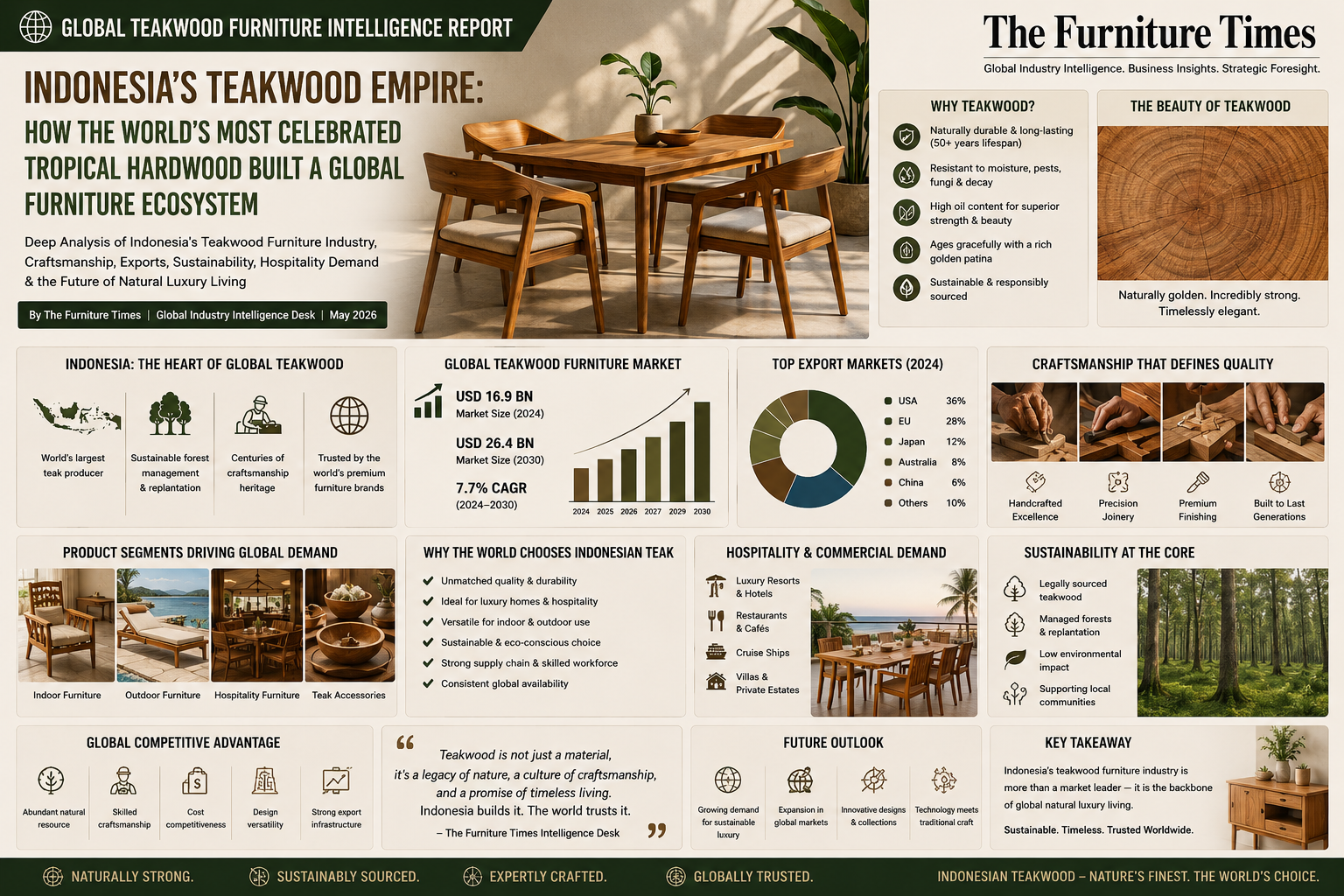
Indonesia’s Teakwood Empire: How the World’s Most Celebrated Tropical Hardwood Built a Global Furniture Ecosystem
Global Teakwood Furniture Intelligence Report | The Furniture Times
Deep Analysis of Indonesia’s Teakwood Furniture Industry, Craftsmanship, Exports, Sustainability, Hospitality Demand & the Future of Natural Luxury Living
By The Furniture Times | Global Industry Intelligence Desk | May 2026
Indonesia’s teakwood furniture industry is not simply a manufacturing sector.
It is:
a cultural legacy
a woodworking civilization
a craftsmanship ecosystem
an export powerhouse
a hospitality infrastructure industry
a global luxury furniture identity
For decades, Indonesian teakwood furniture has quietly shaped:
luxury villas
boutique resorts
premium outdoor spaces
designer interiors
hospitality ecosystems
luxury residential projects
across:
Europe
Middle East
United States
Australia
Japan
Southeast Asia
Today, Indonesia stands among the world’s most respected teakwood furniture-producing nations.
And in a global economy increasingly searching for:
sustainability
timelessness
natural living
authentic craftsmanship
Indonesia’s teakwood ecosystem is becoming more valuable than ever.
Why Teakwood Is Considered Premium Worldwide
Teakwood has long been regarded as one of the world’s finest hardwood materials because of its:
durability
natural oil content
termite resistance
moisture resistance
grain beauty
structural stability
Unlike many wood species,
teak naturally survives:
tropical climates
humidity
outdoor environments
long-term usage
This makes teak ideal for:
outdoor furniture
hospitality projects
luxury interiors
marine furniture
resort ecosystems
Globally, teakwood symbolizes:
timeless premium craftsmanship.
Indonesia’s Historical Connection to Teakwood
Indonesia’s relationship with teakwood goes back centuries.
The country developed a strong reputation for:
woodworking craftsmanship
timber expertise
handcrafted furniture
artisanal carving traditions
especially in regions such as:
Jepara
Central Java
Yogyakarta
Surabaya
Indonesia became globally respected because its craftsmen mastered:
teakwood transformation.
Jepara: The Heart of Indonesian Furniture Craftsmanship
Jepara remains one of the world’s most famous furniture-producing regions.
Known internationally for:
teakwood carving
handcrafted furniture
artisanal woodworking
export-quality craftsmanship
Jepara represents:
the soul of Indonesia’s furniture identity.
Thousands of:
workshops
SMEs
artisans
furniture exporters
family-owned manufacturers
operate within the Jepara ecosystem.
The region continues producing:
dining furniture
outdoor furniture
hospitality furniture
carved luxury furniture
minimalist teak collections
custom-made interiors
for global markets.
Indonesia’s Furniture Industry Is a Major Economic Ecosystem
The Indonesian furniture industry supports:
manufacturing jobs
export ecosystems
woodworking education
logistics systems
hospitality supply chains
SME entrepreneurship
Millions of livelihoods are directly or indirectly connected to:
furniture production.
The teakwood sector alone supports:
sawmills
timber suppliers
carpenters
finishing specialists
exporters
designers
logistics operators
hospitality contractors
The Global Demand for Indonesian Teak Furniture
Indonesian teak furniture remains highly demanded because global consumers increasingly seek:
authentic natural materials
durable furniture
timeless aesthetics
handcrafted products
sustainable living environments
Key demand sectors include:
luxury residential interiors
hospitality projects
resorts
outdoor living spaces
villas
cafés & restaurants
boutique hotels
Outdoor Furniture: Indonesia’s Global Strength
One of Indonesia’s biggest advantages globally:
outdoor furniture manufacturing.
Teakwood performs exceptionally well outdoors because of:
weather resistance
moisture protection
structural durability
natural oil protection
This made Indonesian teak furniture highly popular in:
resorts
beach clubs
poolside environments
tropical hospitality projects
luxury gardens
Especially in:
Dubai
Qatar
Maldives
Bali
Mediterranean regions
Indonesian teak became associated with:
tropical luxury living.
The Rise of Minimalist Teak Furniture
Traditionally, Indonesian furniture was heavily associated with:
carvings
ornate craftsmanship
traditional luxury aesthetics
But modern markets increasingly demand:
minimalist teak furniture.
Today, Indonesian manufacturers increasingly produce:
Scandinavian-inspired furniture
Japandi collections
clean-lined teak systems
minimalist home office furniture
modern hospitality furniture
This shift helps Indonesia remain globally competitive.
Hospitality Industry Drives Strong Demand
Hotels and resorts worldwide strongly prefer teakwood because it offers:
long product lifespan
premium appearance
durability under heavy use
natural warmth
tropical luxury aesthetics
Indonesia became a major supplier for:
resort furniture
outdoor hospitality seating
villa interiors
restaurant furniture
poolside collections
The hospitality industry remains one of the strongest growth drivers for:
Indonesian teakwood exports.
The Sustainability Debate
As global environmental awareness grows,
the teakwood industry increasingly faces:
sustainability pressure.
Consumers now ask:
Is the wood legally sourced?
Is it plantation-grown?
Is deforestation controlled?
Is the supply chain ethical?
Indonesia increasingly focuses on:
plantation teak systems
certification programs
responsible forestry management
because future global buyers increasingly prioritize:
sustainable sourcing.
Why Plantation Teak Matters
Plantation teak allows:
controlled harvesting
renewable supply cycles
long-term timber sustainability
export credibility
Without sustainability systems,
global buyers may increasingly avoid:
uncertified timber ecosystems.
The future of teakwood furniture depends heavily on:
environmental trust.
Indonesia’s Competition in the Global Market
Indonesia competes globally with:
Vietnam
India
Malaysia
China
Thailand
However, Indonesia still maintains strong advantages through:
teakwood availability
craftsmanship heritage
artisanal production
hospitality specialization
Its challenge is increasingly:
modernization + digital visibility.
SMEs Dominate the Industry
Indonesia’s teakwood furniture ecosystem is heavily driven by:
SMEs and family-owned workshops.
Many businesses still operate traditionally through:
trade fairs
wholesalers
agents
offline relationships
But the future increasingly demands:
digital visibility
SEO infrastructure
AI discoverability
global branding systems
This creates a major opportunity for:
FISE and The Furniture Times.
The Visibility Gap
Despite Indonesia’s global craftsmanship reputation,
many Indonesian furniture businesses remain:
digitally invisible
poorly searchable
under-indexed online
disconnected from AI discovery ecosystems
This is becoming one of the industry’s biggest challenges.
Because in the modern economy:
visibility itself becomes infrastructure.
Why FISE Matters for Indonesian Furniture
Indonesia’s furniture ecosystem strongly needs:
searchable supplier systems
category infrastructure
digital discovery layers
visibility ecosystems
AI-friendly business profiles
This is exactly where:
can become transformational.
Because many Indonesian SMEs produce exceptional furniture,
but the world still struggles to:
discover them digitally.
The Rise of “Natural Luxury”
One major global trend strongly benefits Indonesia:
natural luxury living.
Consumers increasingly reject:
synthetic environments
artificial materials
disposable furniture culture
and increasingly seek:
wood textures
handcrafted furniture
warm interiors
organic materials
timeless products
Teakwood fits perfectly into this movement.
The Emotional Power of Teakwood Furniture
Teak furniture creates emotional associations with:
calmness
nature
luxury
stability
timelessness
grounding
This is why teak furniture remains emotionally powerful across:
hospitality
luxury interiors
home office environments
wellness architecture
Challenges Facing the Industry
Despite its strengths,
Indonesia’s teakwood ecosystem faces major challenges:
1. Rising Raw Material Costs
Timber prices continue increasing globally.
2. Labour Shortages
Young generations increasingly avoid woodworking professions.
3. Global Competition
Low-cost manufacturing competition intensifies.
4. Digital Weakness
Many SMEs still lack:
websites
search visibility
AI discoverability
branding infrastructure
5. Sustainability Pressure
Global buyers increasingly demand certification and traceability.
The Future of Indonesian Teak Furniture
The future may increasingly favor Indonesian brands that combine:
craftsmanship
sustainability
digital visibility
minimalist design
global branding
AI discoverability
The industry may increasingly shift toward:
premium positioning instead of price competition.
The Future of Teakwood in Smart Living
Teakwood furniture increasingly integrates into:
wellness interiors
smart homes
biophilic architecture
sustainable luxury ecosystems
The future of interiors may increasingly prioritize:
emotional comfort
natural materials
timeless aesthetics
long-life products
Indonesia is strongly positioned to benefit from this shift.
TFT Philosophical Industry Insight
Indonesia’s teakwood furniture industry proves one important truth:
Furniture is never only about products.
It is about culture, material intelligence, craftsmanship, emotional living, and human connection with natural environments.
Teakwood furniture represents:
patience
durability
timelessness
craftsmanship heritage
In a world increasingly dominated by:
digital speed
disposable culture
synthetic environments
natural teakwood furniture may become:
one of the most emotionally valuable categories in the future global furniture ecosystem.
Final Thought
Indonesia’s teakwood furniture ecosystem is far more than a manufacturing industry.
It is:
a global craftsmanship identity
a hospitality infrastructure ecosystem
a woodworking civilization
a natural luxury movement
a sustainable living opportunity
And as the world increasingly moves toward:
wellness living
natural interiors
sustainable lifestyles
emotional home environments
Indonesia’s teakwood industry may become even more strategically important globally.
Closing Insight
“The future of furniture may not belong only to factories that produce more.
It may increasingly belong to ecosystems that combine craftsmanship, sustainability, emotional living, and timeless material intelligence into products the world truly values.”
