
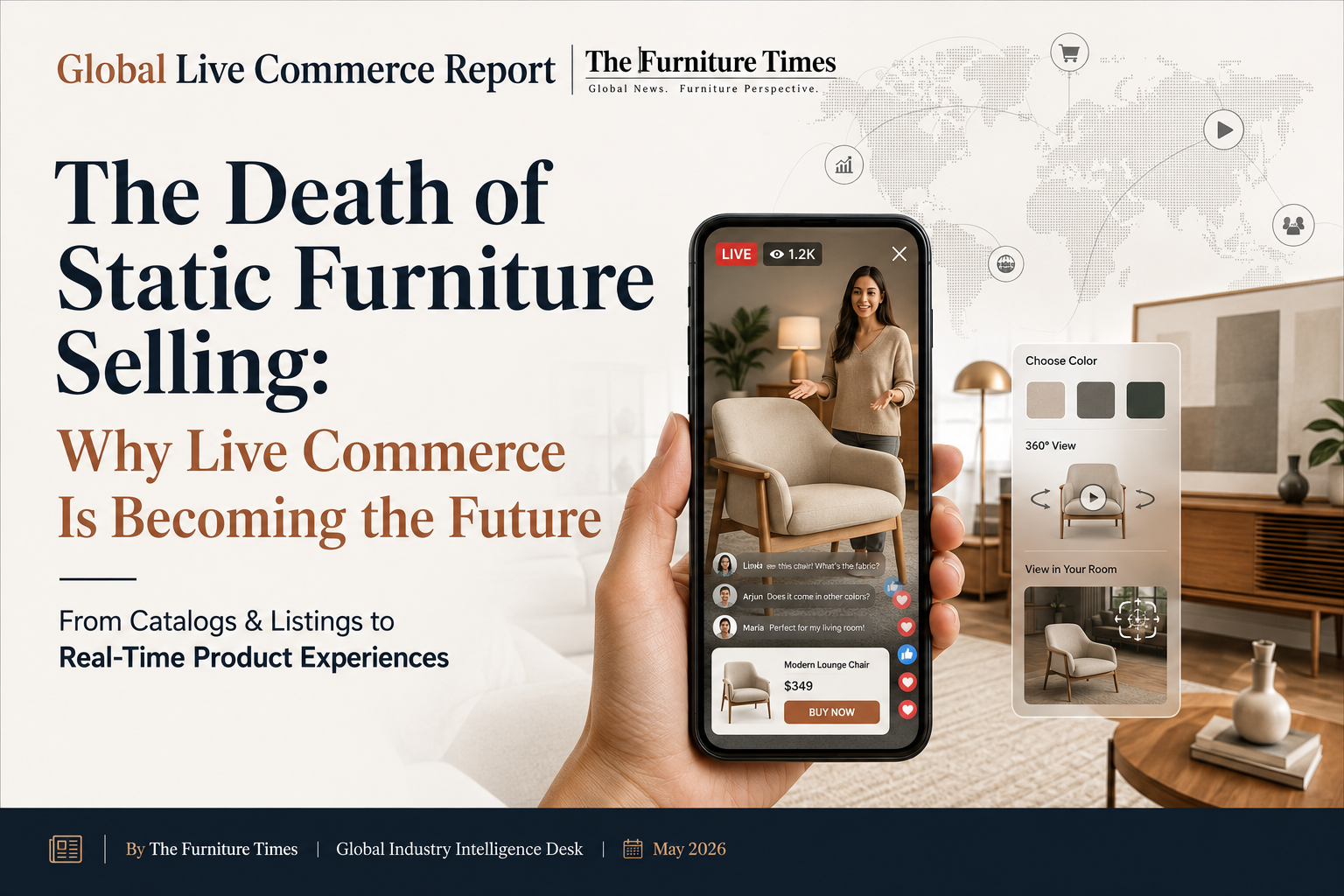
The Death of Static Furniture Selling: Why Live Commerce Is Becoming the Future
Global Live Commerce Report | The Furniture Times
From Catalogs & Listings to Real-Time Product Experiences
By The Furniture Times | Global Industry Intelligence Desk | May 2026
The way furniture is sold is beginning to change fundamentally.
For decades, the industry relied on:
- static catalogs
- showroom visits
- exhibitions
- PDFs
- websites
- image galleries
That model is now facing disruption.
Today’s buyers increasingly want:
- real-time interaction
- live demonstrations
- immediate communication
- product transparency
- instant engagement
And across global commerce, one major trend is accelerating rapidly:
Live commerce.
The furniture industry is now entering the era where products may no longer simply be displayed.
They may need to be:
- demonstrated
- streamed
- discussed
- experienced live
Static Selling Is Losing Attention
Traditional furniture selling has several limitations.
A static image cannot fully show:
- comfort
- material texture
- scale
- functionality
- craftsmanship
- movement
- production capability
The Modern Buyer Wants More Context
Buyers increasingly ask:
- “How does it look in real use?”
- “Can I see the factory?”
- “Can someone explain the product live?”
- “How quickly can I ask questions?”
Static websites alone often cannot deliver this experience.
Furniture is a visual and experiential product. And the market increasingly wants interaction.
1. Live Commerce Is Changing Global Buying Behavior
Across industries globally, live commerce is becoming one of the fastest-growing digital business models.
Consumers and buyers are increasingly comfortable purchasing through:
- livestreams
- live product demonstrations
- interactive video selling
- real-time Q&A sessions
Why Live Commerce Works
Because it combines:
- entertainment
- engagement
- trust
- communication
- instant action
The Psychology Behind It
Live sessions create:
- urgency
- emotional connection
- real-time transparency
- faster trust building
People increasingly buy from what they can experience instantly.
2. Furniture Is Naturally Built for Live Commerce
Furniture may become one of the strongest industries for live commerce because furniture buying is highly visual.
Buyers want to see:
- dimensions
- material quality
- movement
- finishing
- real-world scale
- styling possibilities
Static Listings Cannot Fully Deliver This
A product image cannot always communicate:
- craftsmanship
- durability
- factory capability
- installation functionality
Live Commerce Solves This Gap
Through live sessions, suppliers can:
- showcase products
- answer questions instantly
- demonstrate features
- present collections live
- interact directly with buyers
Live commerce transforms furniture from static products into interactive experiences.
3. Factory Transparency Is Becoming a Competitive Advantage
One of the biggest shifts in global trade is the growing demand for transparency.
Buyers increasingly want to know:
- where products are made
- how factories operate
- what production capability exists
- whether suppliers are trustworthy
Live Factory Tours Are Emerging
Factories can now livestream:
- production lines
- machinery
- packaging systems
- finishing processes
- quality control operations
Why This Matters
Live visibility creates:
- buyer confidence
- operational transparency
- stronger trust
- faster decision making
In the future, factories may compete not only on production…
but on visibility and transparency.
4. Live Commerce Combines Discovery + Communication
Traditional furniture selling is fragmented.
Typically:
- websites show products
- WhatsApp handles communication
- emails manage quotations
- trade fairs build relationships
Live Commerce Combines These Layers
Inside one experience:
- products are shown
- buyers ask questions
- quotations begin
- communication starts instantly
This Creates Faster Deal Flow
Instead of:
- waiting days for responses
buyers and suppliers engage immediately. The future of furniture selling may become real-time and conversation-driven.
5. Younger Buyers Expect Interactive Commerce
A new generation of buyers is reshaping expectations.
They increasingly prefer:
- video-first interaction
- instant engagement
- digital discovery
- mobile-first experiences
Static Catalogs Feel Outdated to Many Users
Especially for:
- younger procurement teams
- digitally native buyers
- modern consumers
The Shift Is Cultural
The world is moving from:
- browsing
toward:
- interactive engagement
The future customer increasingly expects commerce to feel live, fast, and interactive.
6. Global Trade Fairs Are Also Evolving
Trade fairs remain important.
But the industry is increasingly exploring:
- hybrid exhibitions
- virtual showcases
- digital product launches
- live streaming events
Why?
Because live digital systems:
- remove geographical barriers
- extend audience reach
- reduce travel dependency
- increase accessibility
This Creates a New Opportunity
Furniture businesses can now:
- launch collections globally
- reach buyers digitally
- host live demonstrations year-round
The future trade fair may become both physical and digital simultaneously.
7. The Rise of Live Commerce Infrastructure
The biggest shift is not only livestreaming itself.
It is the emergence of:
- connected live commerce ecosystems
- integrated communication systems
- RFQ-enabled livestreaming
- live supplier discovery
The Future May Include:
Live product showcases
Live supplier channels
Live RFQs
Live factory tours
Interactive buyer sessions
Real-time quotation systems
8. The Next Evolution: Industry-Specific Live Commerce
General live commerce platforms are growing globally.
But the furniture industry has unique needs:
- B2B sourcing
- project discussions
- factory verification
- large-scale procurement
- technical specifications
This creates demand for:
- industry-specific live commerce infrastructure
This Is Where Platforms Like:
FISE.live
begin to represent the next phase of the ecosystem.
What FISE.live Represents
A live commerce network built specifically for the global furniture industry.
Where suppliers can:
- showcase products live
- host factory tours
- launch collections
- interact with buyers
- receive RFQs instantly
The Ecosystem Flow
Search → Watch Live → Ask Questions → Request Quote → Connect → Deal The future furniture buying journey may become fully interactive.
TFT Deep Industry Insight
The death of static furniture selling does not mean websites will disappear.
It means:
- static systems alone are no longer enough
The industry is moving toward:
- engagement
- interaction
- transparency
- connected communication
- live experiences
The Future Competitive Advantage
The next-generation furniture businesses may win not only because of:
- manufacturing scale
- pricing
- product quality
But because of:
- visibility
- interaction
- communication speed
- digital engagement
- ecosystem integration
Strategic Recommendations
For Manufacturers
Experiment with live demonstrations and digital product showcases.
For Suppliers
Use video-driven engagement to build trust and visibility.
For Buyers
Leverage live product interaction for faster sourcing confidence.
For Industry Platforms
The future belongs to ecosystems combining:
- search
- communication
- live commerce
- RFQ systems
- connected infrastructure
Final Thought
The furniture industry is entering a new era.
An era where products are no longer only displayed.
They are:
- streamed
- explained
- demonstrated
- experienced live
The future of furniture commerce may no longer be static.
It may become live, interactive, and globally connected.
