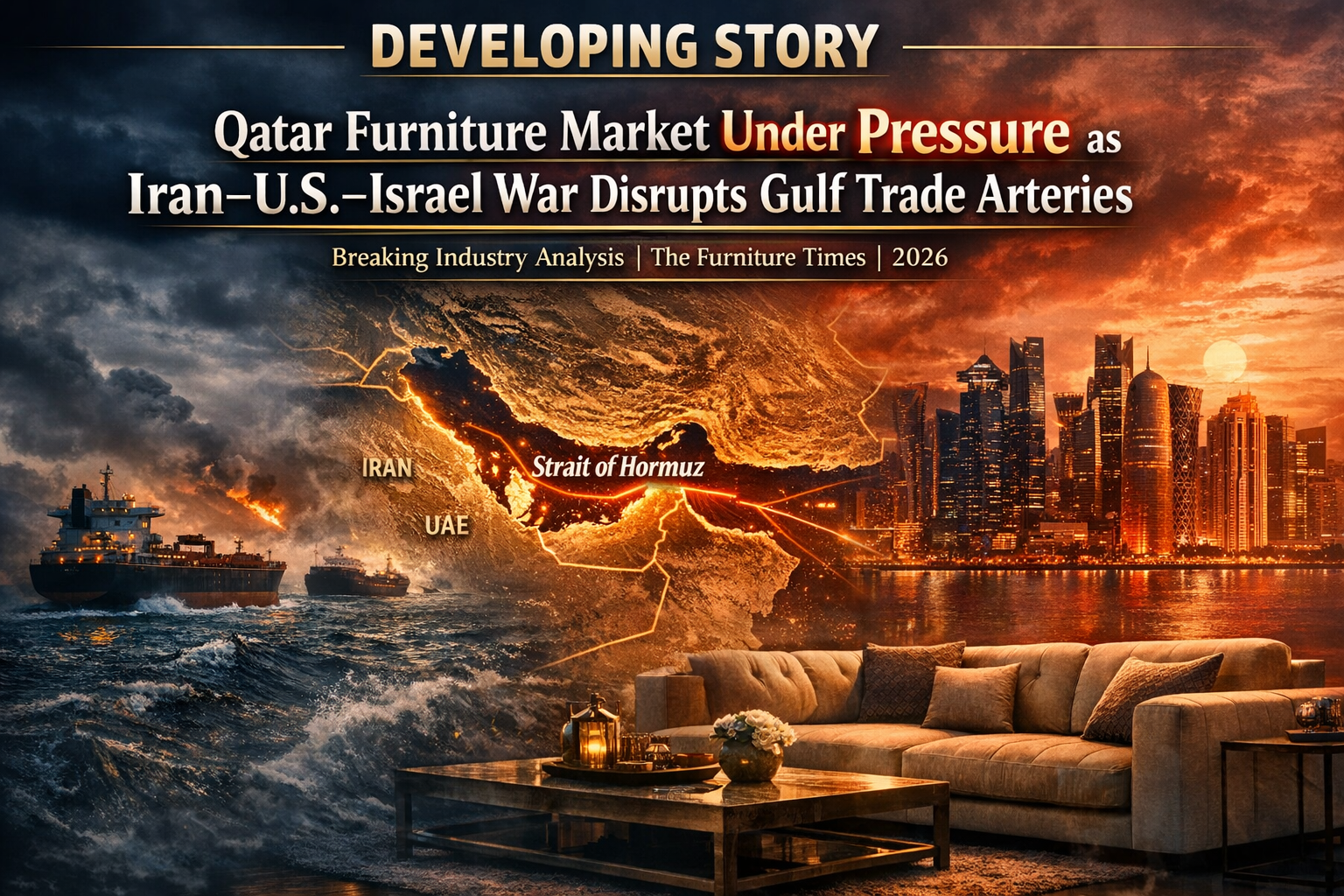
Qatar Furniture Market Under Pressure as Iran–U.S.–Israel War Disrupts Gulf Trade Arteries
Breaking Industry Analysis | The Furniture Times | 2026
The Situation Right Now (LIVE CONTEXT)
The Iran–U.S.–Israel conflict has entered a critical phase, with the Strait of Hormuz repeatedly closed, reopened, and militarized, creating one of the most unstable trade environments in modern Gulf history.
- Iran has re-closed the Strait and warned vessels, with ships reportedly attacked while attempting passage
- The route normally handles ~20% of global oil and major shipping flows, making disruption globally significant
- Shipping traffic has collapsed in phases, with insurers, fleets, and operators pulling back
- Qatar itself has seen economic pressure and market uncertainty, including stock index declines and LNG disruption
This is not just an energy crisis. It is a full-spectrum trade disruption—and the Qatar furniture market is directly exposed.
Why the Qatar Furniture Industry Is at Risk
The furniture ecosystem in Qatar is one of the most import-dependent sectors in the region.
Furniture flows into Qatar through:
- Container shipping via the Gulf
- Transshipment hubs linked to Hormuz
- Global suppliers (China, Turkey, Italy, Malaysia)
When Hormuz is disrupted:
Furniture doesn’t move → Projects stall → Revenue freezes
UNCTAD confirms that the shipping disruption in Hormuz creates global supply chain ripple effects, not limited to energy
Even container cargo—including furniture—has been directly affected
The Real Impact on Qatar’s Furniture Ecosystem
1. Supply Chain Breakdown (Immediate Loss)
- Shipping routes restricted or delayed
- Container traffic reduced or rerouted
- Transit times extended by weeks
Impact:
- Furniture imports delayed
- Showrooms run out of stock
- Project timelines collapse
2. Cost Explosion Across the Value Chain
The war has triggered:
- Fuel price volatility
- Shipping insurance increases (4–6x spikes reported)
- Logistics rerouting costs
Impact on furniture:
- Higher landed cost per product
- Reduced margins for traders
- Price increases for consumers
3. Project Delays & Contract Losses
Qatar’s furniture demand is tied to:
- Hospitality (hotels, resorts)
- Real estate development
- Office and commercial fit-outs
With instability:
- Developers delay procurement
- Contractors delay installation
- Hospitality projects slow down
Impact:
Loss of project-based revenue (largest segment of the industry)
4. Market Confidence Shock
- Gulf equity markets showing weakness
- War uncertainty affecting investor confidence
- Risk perception rising globally
Impact:
- Buyers postpone purchases
- Luxury furniture demand drops
- Commercial expansion slows
5. Inventory & Cash Flow Crisis
Businesses face a dangerous dual pressure:
- Some run out of stock
- Others hold high-cost inventory
Impact:
- Cash flow tightening
- Reduced reinvestment
- Smaller players pushed to survival mode
Estimated Industry Loss Pattern (Reality Check)
There is no official single figure yet—but based on current disruption patterns, the Qatar furniture ecosystem is likely facing:
Direct Losses
- Delayed or cancelled orders
- Margin compression from cost increases
Indirect Losses
- Slower project pipelines
- Reduced showroom conversions
- Deferred investments
Systemic Losses
- Supply chain instability
- Reduced ecosystem velocity
- Loss of business confidence
In real terms, this means:
Not just “less sales”
But slower money, slower movement, slower growth
The Bigger Strategic Threat
The 2026 war has been described as one of the largest global supply disruptions in modern history, triggering inflation, trade instability, and economic uncertainty
For Qatar, the deeper issue is:
Dependence Risk
- Heavy reliance on imports
- Limited local manufacturing
- Logistics tied to a single critical route
The war exposes a structural weakness in the furniture ecosystem.
Qatar’s Hidden Strength (Why Collapse Is Unlikely)
Despite the pressure:
- Qatar has strong reserves and logistics systems
- Air freight and alternative routes are being used to maintain supply
- Authorities claim no immediate shortage risk
But stability ≠ growth.
The market may survive…
But growth momentum is clearly under pressure
Strategic Conclusion (TFT Insight)
This is not just a geopolitical event.
This is a structural stress test for the Qatar furniture industry.
If the conflict continues:
- Margins will shrink
- Projects will slow
- Imports will become riskier
- Smaller players will struggle
- Market expansion will pause
The biggest loss is not revenue—it’s momentum
Because in the furniture industry:
Speed = Sales
Flow = Growth
Stability = Profit
And right now…
All three are under pressure.

Related Posts
Qatar Metal Table Legs Industry 2026: Market Size, Demand, Trends, Materials & Commercial Furniture Opportunities
Qatar Furniture Market Impact from the Iran–U.S.–Israel War: Deep Analysis of Disruption, Losses, and Ecosystem Risk