Top 10 Global Furniture Industry Risks in 2026
The Biggest Challenges Facing the Global Furniture Market
Global Furniture Industry | Risk Outlook Report | 2026
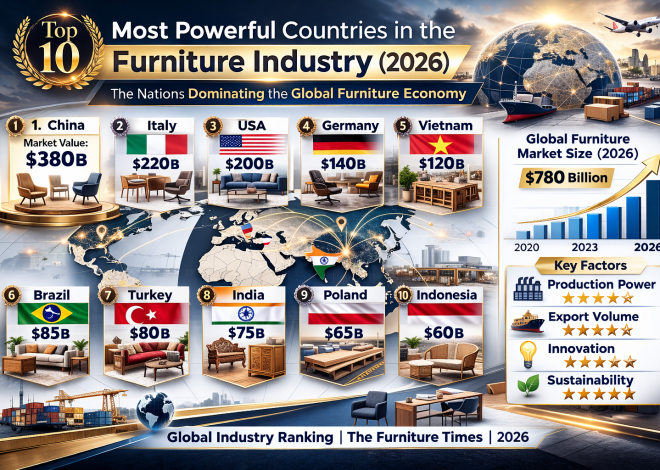
The global furniture industry—worth more than $800 billion in 2026—is expected to continue growing toward over $1 trillion by 2030.
However, the industry faces a complex mix of economic, geopolitical, technological, and supply-chain risks that could reshape markets in the coming years.
From rising tariffs and global conflicts to supply-chain instability and changing consumer behavior, manufacturers, retailers, and investors must navigate a rapidly evolving environment.
Below are the ten biggest risks expected to influence the global furniture industry in 2026.
1. Geopolitical Conflicts and Global Trade Disruptions
One of the most significant risks to the furniture industry is geopolitical instability. Conflicts affecting major shipping corridors and global alliances can disrupt trade routes, increase logistics costs, and delay shipments.
Global supply chains are increasingly sensitive to geopolitical tensions, forcing manufacturers to diversify sourcing and production strategies.
2. Supply Chain Instability
Furniture production depends on complex global supply chains that involve raw materials, manufacturing hubs, and international logistics.
Supply chain disruptions can cause delays, shortages, and cost increases. Key factors include:
- port congestion
- container shortages
- global freight volatility
- geopolitical trade restrictions
These disruptions can significantly impact manufacturing timelines and product availability.
3. Rising Raw Material Costs
Furniture manufacturing relies on materials such as:
- wood
- steel
- aluminum
- foam
- fabrics
- plastics
Global commodity markets can be highly volatile. Price increases in wood, metals, and other materials directly affect production costs and profit margins for furniture manufacturers.
4. Inflation and Economic Uncertainty
Economic conditions play a critical role in furniture demand. Furniture purchases are often discretionary, meaning they depend heavily on consumer confidence.
Industry surveys show that economic uncertainty and inflation remain among the biggest concerns for furniture retailers.
Higher inflation and interest rates can reduce consumer spending on home furnishings.
5. Housing Market Slowdowns
The furniture market is closely tied to real estate activity. When housing construction slows or mortgage rates rise, furniture sales often decline.
Residential furniture demand is heavily influenced by:
- new home purchases
- home renovations
- apartment construction
Weak housing markets can significantly reduce furniture demand.
6. Tariffs and Trade Policies
Tariffs have become a major concern for furniture companies that rely on international manufacturing.
Changes in tariffs on imports can increase product costs and disrupt supply chains. Recent tariff policies have already affected furniture retailers and manufacturers relying on global sourcing.
These policies can reshape where furniture is produced and sold.
7. Rising Logistics and Shipping Costs
Shipping costs remain volatile across global supply chains.
Industry reports show that logistics costs—including container shipping and transportation—have increased significantly in recent years, contributing to higher prices for consumer goods.
Furniture products are large and expensive to transport, making shipping costs a major factor in pricing.
8. Labor Shortages in Manufacturing
Furniture manufacturing often requires skilled labor for woodworking, upholstery, finishing, and assembly.
Many manufacturers report difficulty finding skilled workers, particularly in regions where furniture production is concentrated.
Labor shortages can slow production and increase operating costs.
9. Sustainability Regulations and Environmental Pressure
Environmental regulations are becoming stricter worldwide.
Governments are implementing policies related to:
- deforestation
- carbon emissions
- chemical usage
- waste management
Furniture companies must adapt to new sustainability standards while maintaining competitive pricing.
10. Rapid Technological Disruption
Technology is transforming the furniture industry through:
- AI-assisted design
- smart furniture development
- automated manufacturing
- digital retail platforms
Companies that fail to adopt new technologies risk losing competitiveness as more agile competitors introduce innovative products and production systems.
The Strategic Outlook for 2026
Despite these risks, the furniture industry remains resilient and continues to evolve.
Key strategies companies are adopting include:
- diversifying supply chains
- investing in automation
- expanding e-commerce platforms
- developing sustainable materials
- strengthening logistics networks
Businesses that build flexible, technology-driven operations will be best positioned to navigate the challenges of the coming decade.
A Transforming Industry
The global furniture industry has always balanced craftsmanship, manufacturing efficiency, and design creativity. In 2026, success will increasingly depend on the ability to manage risk across global supply chains, economic cycles, and technological change.
Companies that understand these risks—and adapt quickly—will help shape the next chapter of the global furniture market.