Global Furniture & Accessories Market
A Deep Analysis of a $800B–$1T+ Industry Transforming the World
Global Market Intelligence Report | The Furniture Times | 2026
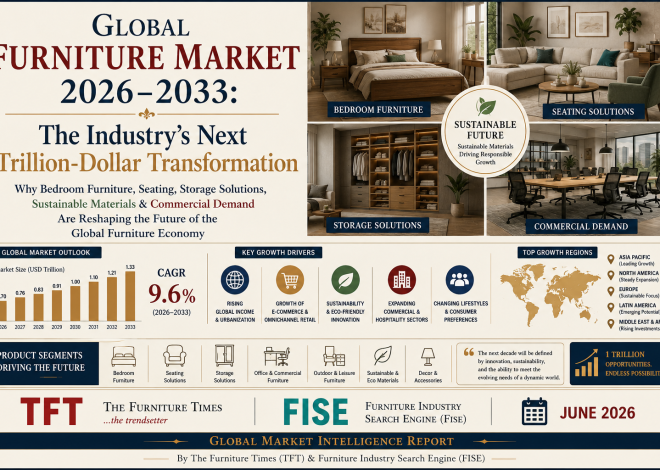
The global furniture and accessories market is one of the largest yet most fragmented industries in the world—quietly powering how people live, work, and interact with space.
In 2026, the industry has reached a scale that positions it among the largest consumer-driven sectors globally, with estimates placing the total market between:
👉 $730 billion – $830+ billion in 2026
👉 Expected to cross $1 trillion by 2030–2035
When including home accessories, décor, and furnishing retail ecosystems, the broader market expands even further—making it a multi-trillion-dollar lifestyle economy.
1. MARKET SIZE BREAKDOWN (CORE + EXTENDED)
Core Furniture Market (2026)
- Estimated: $729B – $833B+
- Growth rate: ~5%–7% CAGR
Furniture + Home Furnishing Ecosystem
- Retail + furnishing stores alone: $565B+ (2026)
- Accessories + décor + lifestyle products: rapidly expanding segment
Insight:
👉 Furniture is not just a product category
👉 It is a complete lifestyle economy
2. MARKET SEGMENTATION (DEEP STRUCTURE)
1. Household Furniture (Largest Segment)
- living room
- bedroom
- kitchen cabinets
👉 Dominates global demand due to housing growth
2. Office & Commercial Furniture
- corporate offices
- co-working spaces
- hospitality
👉 Driven by hybrid work transformation
3. Mattress & Bedding
- sleep technology
- wellness-driven demand
4. Home Accessories & Décor
- lighting
- rugs
- wall décor
- soft furnishings
👉 Fastest-growing lifestyle-driven segment
5. Contract Furniture (B2B)
- hotels
- hospitals
- institutions
👉 ~$73B+ market in 2026
3. REGIONAL ANALYSIS (GLOBAL POWER MAP)
Asia-Pacific (Dominant Market)
- largest production hub
- fastest growth
👉 Driven by:
- urbanization
- manufacturing scale
🇺🇸 North America
- high consumer spending
- strong e-commerce growth
🇪🇺 Europe
- premium design leadership
- sustainability focus
Emerging Markets (Next Growth Engine)
- Africa
- Middle East
- Southeast Asia
👉 Rising middle class = rising demand
4. KEY GROWTH DRIVERS
1. Urbanization & Housing Growth
More homes = more furniture demand
2. Hybrid Work Revolution
- home office demand surge
- flexible workspace furniture
3. Sustainability Shift
- eco materials
- circular furniture
4. Technology Integration
- smart furniture
- AI-driven design
5. E-Commerce Expansion
Online furniture sales reshaping distribution
5. INDUSTRY CHALLENGES
Economic Pressure
- inflation
- reduced discretionary spending
Supply Chain Disruptions
- logistics costs
- global trade instability
Cost of Raw Materials
- wood
- foam
- metals
Market Fragmentation
👉 No single global authority (KEY GAP)
6. STRUCTURAL SHIFT (VERY IMPORTANT)
The industry is moving from:
OLD MODEL:
- fragmented players
- local markets
- offline retail
NEW MODEL:
- global ecosystems
- digital platforms
- data-driven decisions
7. FUTURE OUTLOOK (2026–2035)
By 2030+, the industry will:
- exceed $1 trillion+
- become tech-integrated
- shift toward platform economies
- see rise of AI + smart furniture
8. THE BIG OPPORTUNITY
Despite its size:
👉 The furniture industry is still under-organized
👉 No central intelligence platform exists
This creates a massive opportunity for:
- platforms (like FISE)
- global media authority (like TFT)
- data-driven ecosystems
FINAL INSIGHT
The global furniture and accessories market is not just big—
👉 It is one of the last trillion-dollar industries without a central authority
And that is exactly where the next global leaders will emerge.