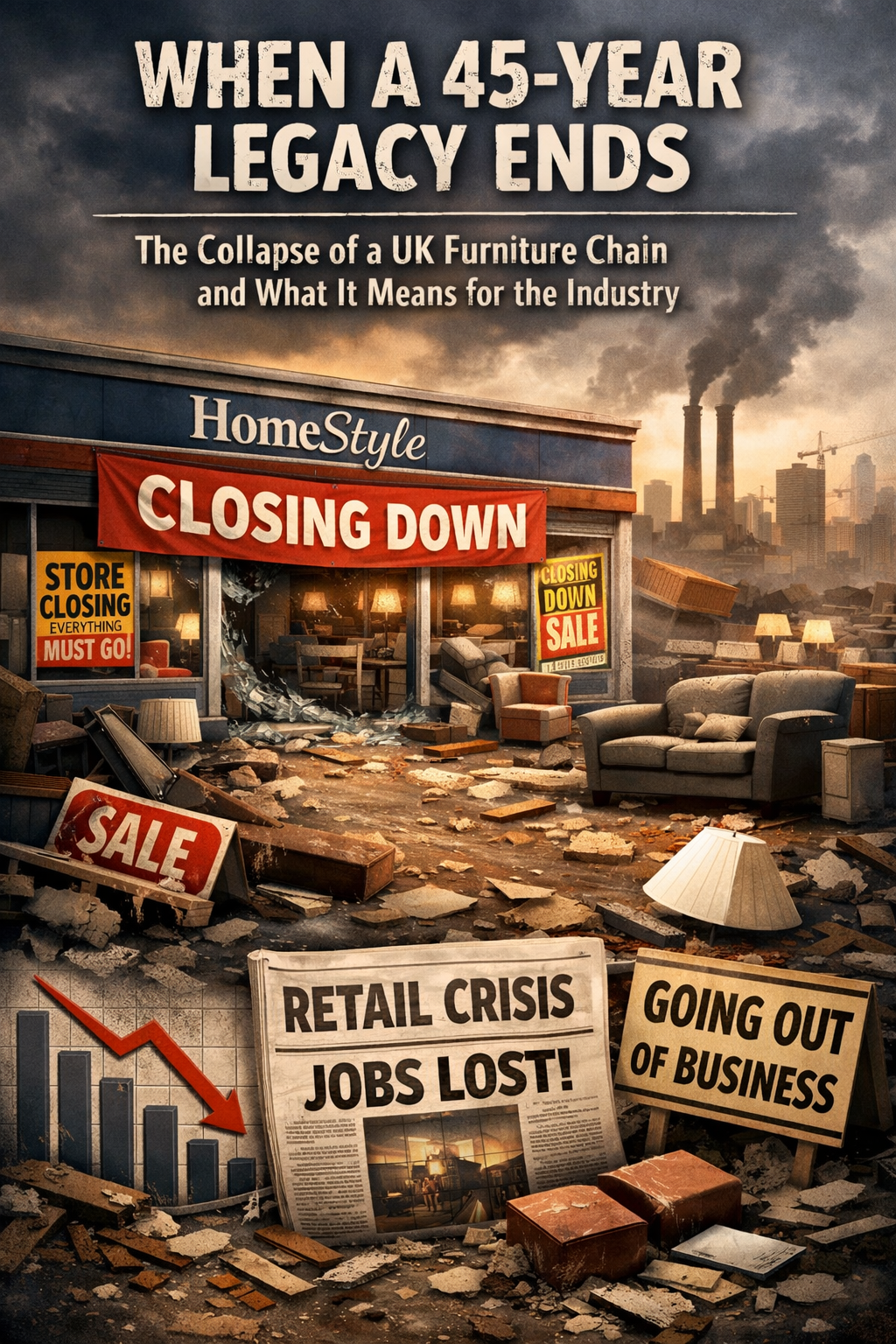
When a 45-Year Legacy Ends: The Collapse of a UK Furniture Chain and What It Means for the Industry
A Familiar Name Suddenly Falls Silent
For nearly half a century, customers walked into stores of Pagazzi Lighting searching for the perfect lamp, mirror, or decorative piece that would turn a house into a home.
Families redecorating their living rooms, couples setting up their first apartments, and homeowners renovating their spaces all shared something in common — many of them trusted this long-standing British retailer.
But this week, that familiar presence disappeared from the high street.
The Scotland-based furniture and lighting retailer has entered administration after 45 years of trading, forcing the closure of 11 stores and leaving around 70 employees without jobs.
For many communities, the shutdown is not just a business story — it is the loss of a place tied to everyday life.
Behind the Collapse
The company’s fall was not sudden.
Industry analysts say it was the result of several pressures building for years:
- Rising operating costs
- Declining high-street footfall
- Weak consumer spending
- Increasing competition from online retailers
Administrators explained that the business had experienced a “sustained period of poor trading” and worsening cash-flow problems.
Even well-known brands with decades of history are now struggling to survive the changing retail environment.
The Human Impact
While the headlines focus on numbers — stores closed, employees laid off — the reality is deeply personal.
Employees who worked for the company for years suddenly found themselves facing uncertainty.
Retail staff, warehouse workers, store managers — many of them built their careers around the brand.
For customers, the loss is also emotional.
Retail stores often become part of local culture:
- A place to browse on weekends
- A place where staff know regular customers
- A place where families pick furniture that stays in their homes for years
When such businesses disappear, communities feel the gap.
A Partial Lifeline: The Brand May Continue Online
Despite the collapse of many physical stores, the story is not entirely over.
The retailer’s online division has acquired parts of the business, allowing the brand to continue operating digitally and potentially maintain a limited retail presence.
This reflects a wider shift happening across the global furniture industry:
Retail is moving online faster than ever before.
Traditional showrooms are shrinking while e-commerce continues to expand.
A Warning Sign for the Global Furniture Industry
Retail failures like this are becoming increasingly common in the UK.
Retail sector data shows dozens of businesses entering administration every year due to economic pressure, shifting consumer behavior, and the rise of digital shopping.
For the furniture industry, the collapse highlights several lessons:
- Physical retail must evolve – Experience-based showrooms are replacing traditional stores.
- Omnichannel is essential – Brands must integrate online and offline sales.
- Operational efficiency is critical – Rising costs leave little margin for error.
- Consumer trust still matters – Legacy brands must innovate to stay relevant.
The Bigger Question: Is High-Street Furniture Retail Dying?
Furniture remains one of the most essential products in the world — every home needs it.
Yet the way people buy furniture has changed dramatically.
Consumers today often:
- Compare prices online
- Read reviews before buying
- Order directly from digital platforms
- Expect fast delivery and simple returns
Traditional retailers that cannot adapt to these habits risk disappearing.
The End of a Chapter — and the Start of a New Era
The story of this 45-year-old retailer is not just about one company’s collapse.
It represents a larger transformation happening across the global furniture industry.
The brands that survive in the next decade will be those that combine:
- Digital commerce
- Strong branding
- Efficient logistics
- Trust built with customers
As one historic retailer closes its doors, the industry is reminded that even long-standing names must constantly evolve.
Because in today’s retail world, legacy alone is no longer enough to survive.

Related Posts

Global Furniture Industry in Motion: Innovation, E-Commerce, and New Opportunities Shape 2026

MIFF 2026 Awards Celebrate Innovation and Craftsmanship in the Global Furniture Industry