Mapping the World’s Furniture Industry Ecosystem
The Furniture Times Global Furniture Map
Mapping the World’s Furniture Industry Ecosystem
Special Intelligence Feature | The Furniture Times
The global furniture industry operates through an interconnected network of manufacturing centers, design capitals, trade routes, and retail markets. To understand how the industry truly functions, it helps to visualize it geographically.
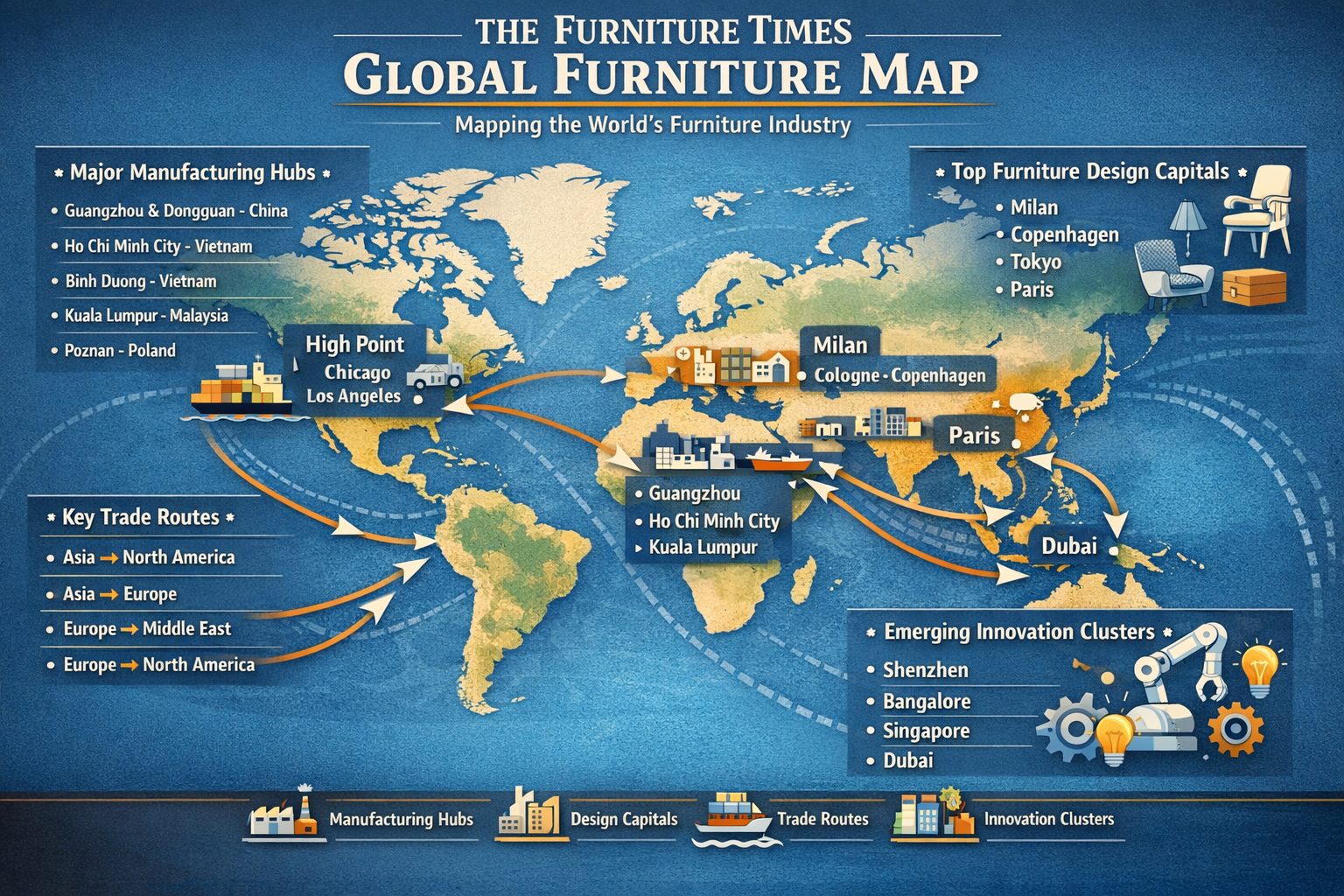
The Furniture Times Global Furniture Map highlights the major regions and cities where furniture is designed, produced, traded, and sold. This map provides valuable insights into how the furniture ecosystem is distributed across continents.
Global Furniture Manufacturing Hubs
Manufacturing remains the backbone of the furniture economy. Several regions dominate global production due to their skilled labor, supply chains, and export infrastructure.
Asia: The Manufacturing Powerhouse
Asia produces a significant portion of the world’s furniture.
Key hubs include:
- Guangzhou – one of the largest furniture manufacturing regions
- Dongguan – major furniture production cluster
- Ho Chi Minh City – fast-growing export manufacturing hub
- Binh Duong – industrial furniture manufacturing center
- Kuala Lumpur – ASEAN trade and export gateway
Countries across Southeast Asia continue to attract global buyers seeking diversified supply chains.
Europe: Design Excellence and Premium Manufacturing
Europe is widely recognized for high-end furniture design and craftsmanship.
Key cities include:
- Milan – global design capital and host of the famous Salone del Mobile
- Cologne – host of the IMM Cologne
- Copenhagen – Scandinavian furniture design hub
- Stockholm – center of Nordic design innovation
European manufacturers often lead in luxury furniture and sustainable design practices.
North America: Retail and Market Innovation
North America plays a crucial role as one of the world’s largest furniture consumer markets.
Key hubs include:
- High Point – host of the globally influential High Point Market
- Chicago – major furniture showroom center
- Los Angeles – design and interior innovation hub
The region is known for retail innovation, e-commerce furniture platforms, and global brand development.
Global Furniture Trade Routes
Furniture is one of the most widely traded consumer products in the world.
Major trade flows include:
Asia → North America
Large volumes of furniture exported from Asia to the United States and Canada.
Asia → Europe
Exports from Vietnam, China, and Malaysia supply European retailers.
Europe → Middle East
Luxury furniture brands export high-end products to hospitality and residential projects.
Europe → North America
Premium design brands export furniture to global markets.
These trade routes illustrate how global supply chains connect manufacturers, designers, and retailers.
Global Furniture Design Capitals
Certain cities are widely recognized for influencing global furniture trends.
Major design centers include:
- Milan – luxury and contemporary furniture design
- Paris – high-end interior design and craftsmanship
- Tokyo – innovative minimalist design
- Copenhagen – Scandinavian design philosophy
These cities shape global design movements that influence furniture collections worldwide.
Emerging Furniture Innovation Clusters
The future of the furniture industry is increasingly driven by new innovation clusters.
Emerging hubs include:
- Shenzhen – smart furniture and design technology
- Bangalore – furniture technology startups
- Singapore – design and architecture innovation
- Dubai – luxury interior and hospitality projects
These locations are becoming important centers for design experimentation and technological development.
Why the Global Furniture Map Matters
Understanding the geographic structure of the furniture industry helps businesses identify:
• manufacturing opportunities
• new sourcing markets
• design innovation hubs
• trade expansion routes
For manufacturers, designers, and investors, the global furniture map provides valuable strategic insight into where the industry is heading.
The Furniture Times Global Vision
The Furniture Times Global Furniture Map is designed to connect the global furniture ecosystem—highlighting the cities, factories, designers, and companies that shape how the world furnishes its homes and workplaces.
As the furniture industry continues to evolve through innovation and global collaboration, understanding this interconnected map will become increasingly important.