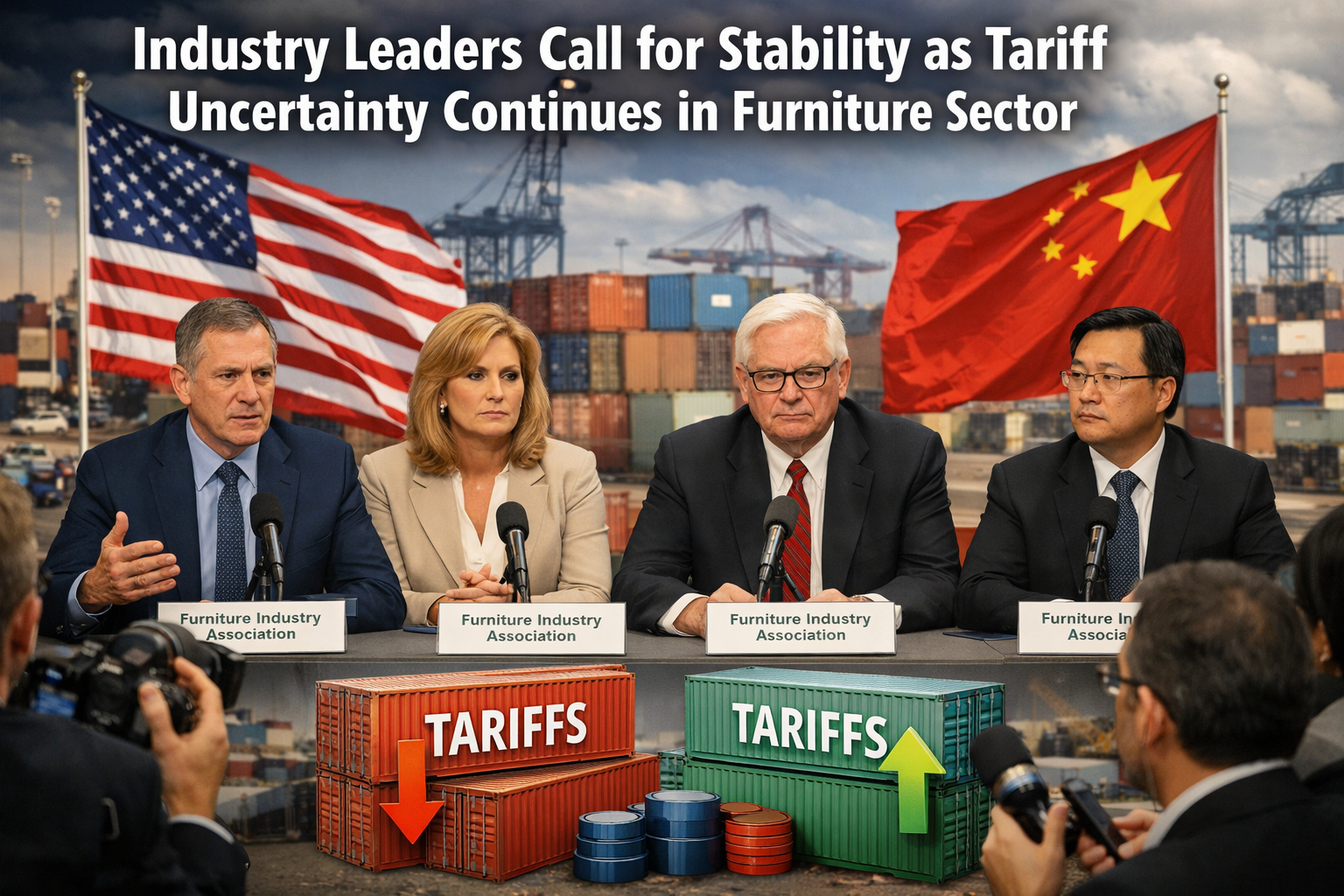
Industry Leaders Call for Stability as Tariff Uncertainty Continues in Furniture Sector
Following the recent decision by the Supreme Court of the United States to strike down certain tariffs imposed under emergency trade powers, furniture industry leaders say the ruling offers symbolic relief — but not yet operational clarity.
Despite the decision, many furniture-specific duties imposed under other trade statutes remain active, leaving retailers, manufacturers, and exporters navigating continued cost pressures.
Dr. Bilal Ahmad Bhat, Founder & CEO of The Furniture Time, emphasized the need for long-term policy consistency.
“The ruling is important, but businesses don’t operate on headlines — they operate on certainty. The furniture industry needs predictable trade frameworks to plan sourcing, pricing, and expansion strategies,” he said.
Executives across the sector echo similar sentiments. Many small and mid-sized retailers continue to face elevated import costs, which have squeezed margins over the past several years. Larger chains have been better positioned to absorb shocks due to diversified sourcing and stronger capital reserves.
Industry leaders are urging policymakers to prioritize clarity in trade regulations, warning that prolonged uncertainty could discourage investment, hiring, and innovation across the furniture value chain.
“Global furniture trade is interconnected. Stability benefits manufacturers, retailers, logistics providers, and ultimately consumers,” Dr. Bhat added.
The consensus among CEOs is clear: while legal adjustments are welcome, sustained growth requires consistent and transparent trade policies.
2. Investment & Stock Market Impact Angle
Furniture Stocks Face Cautious Outlook Amid Ongoing Tariff Pressures
The recent tariff ruling by the Supreme Court of the United States initially sparked optimism among investors in the furniture and home furnishings sector. However, analysts now suggest that the market reaction may be tempered as many furniture-specific duties remain in place.
Publicly traded furniture retailers and manufacturers experienced short-term volatility following the announcement. Investors had hoped the decision would immediately lower import costs, improve margins, and stimulate sector recovery.
However, analysts caution that:
- Section-based tariffs affecting furniture imports are still active.
- Input costs for materials and finished goods remain elevated.
- Consumer demand remains sensitive amid housing market slowdowns.
Investment firms note that the sector’s performance in the coming quarters will likely depend more on consumer confidence, interest rates, and housing activity than on isolated legal decisions.
Smaller-cap furniture retailers may remain vulnerable due to limited pricing flexibility, while diversified global brands with multi-country sourcing strategies may be better positioned to manage trade disruptions.
Market observers recommend cautious optimism, advising investors to monitor trade policy developments, supply chain adjustments, and earnings guidance closely.
Until comprehensive trade clarity emerges, the furniture industry may continue to reflect moderate volatility rather than a sustained bullish reversal.
3. Policy-Focused Trade Analysis for Industry Associations
Trade Associations Urge Comprehensive Reform After Partial Tariff Rollback
Furniture industry associations are calling for broader trade reform following the Supreme Court’s decision to invalidate certain emergency-based tariffs.
While the ruling removes one layer of trade enforcement, furniture imports remain subject to other statutory duties. Industry groups argue that piecemeal policy adjustments fail to address the systemic uncertainty affecting long-term planning.
Key policy concerns raised by trade bodies include:
1️⃣ Need for Transparent Trade Frameworks
Businesses require clear timelines and stable regulatory environments to structure global supply contracts.
2️⃣ Impact on Small & Medium Enterprises
SMEs face disproportionate burdens when tariff costs fluctuate unpredictably. Larger corporations may hedge risks, but smaller firms often cannot.
3️⃣ Global Competitiveness
Prolonged tariff structures may alter international competitiveness, affecting both importers and exporters.
4️⃣ Consumer Price Implications
Persistent duties often translate into higher retail prices, influencing consumer purchasing power and market demand.
Industry associations are encouraging dialogue between policymakers and stakeholders to design balanced trade solutions that protect domestic interests while ensuring supply chain efficiency.
Many policy experts argue that long-term reform — rather than temporary legal adjustments — is essential to stabilize the global furniture trade ecosystem.
GLOBAL INDUSTRY IMPACT
1️⃣ Malaysia Export Impact
Malaysian Exporters Monitor U.S. Market Carefully
Furniture manufacturers in Malaysia — one of the world’s leading furniture exporters — are closely watching developments in the United States.
The U.S. remains a key destination market. However, ongoing duties and unpredictable policy adjustments have encouraged Malaysian manufacturers to:
- Diversify export destinations
- Move toward higher-value product categories
- Strengthen supply chain efficiency
- Invest in automation and R&D
While optimism exists, exporters acknowledge that long-term trade clarity is still needed to unlock full growth potential.
2️⃣ Cross-Border Market Response
Supply Chains Shift, But Caution Remains
Across Asia, Europe, and North America, furniture companies are adapting:
- Supply Chain Diversification: Expanding sourcing beyond traditional manufacturing hubs
- Nearshoring Strategies: Reducing exposure to cross-border volatility
- Dynamic Pricing Models: Adjusting retail prices based on tariff impact
- Domestic Production Investment: Strengthening local manufacturing capacity
Global furniture trade remains interconnected — meaning disruption in one major market affects the entire ecosystem.
3️⃣ CEO Commentary
Industry Leadership Calls for Stability
Dr. Bilal Ahmad Bhat, Founder & CEO of The Furniture Time, commented:
“The furniture industry doesn’t need temporary relief — it needs predictable and transparent trade policy. Stability encourages innovation, hiring, and long-term investment.”
Industry executives agree that without regulatory clarity, expansion plans remain conservative and hiring decisions cautious.
4️⃣ Investment & Market Outlook
Furniture Stocks Show Measured Reaction
Investors initially responded positively to the court ruling. However, analysts quickly noted:
- Existing tariffs still impact margins
- Housing market softness affects demand
- Consumer spending remains cautious
Larger retailers with diversified sourcing strategies are positioned more defensively, while smaller operators continue to face tighter cost pressures.
Market experts suggest moderate volatility may persist until clearer trade frameworks are established.
5️⃣ Policy & Trade Reform Perspective
Industry associations are urging comprehensive reform rather than incremental legal adjustments.
Key concerns include:
- SME vulnerability
- Consumer price impacts
- Long-term global competitiveness
- Regulatory transparency
Trade bodies advocate structured dialogue between policymakers and industry stakeholders to build sustainable solutions.

Related Posts

Global Furniture Industry in Motion: Innovation, E-Commerce, and New Opportunities Shape 2026

MIFF 2026 Awards Celebrate Innovation and Craftsmanship in the Global Furniture Industry