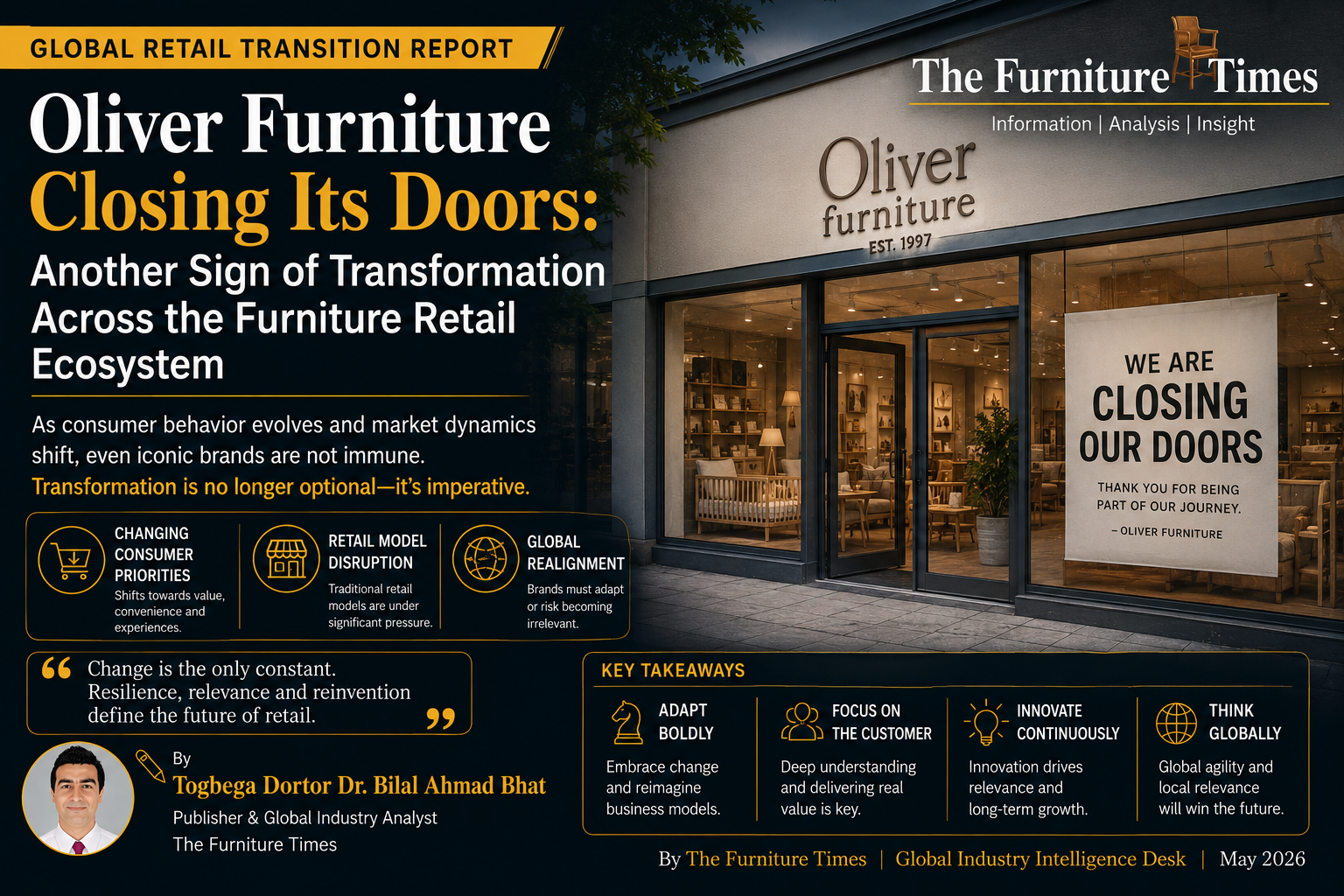
Oliver Furniture Closing Its Doors: Another Sign of Transformation Across the Furniture Retail Ecosystem
Global Retail Transition Report | The Furniture Times
By The Furniture Times | Global Industry Intelligence Desk | May 2026
Another long-standing furniture retailer in the United States is preparing to close its doors, highlighting the continuing transformation taking place across the global furniture retail ecosystem.
According to local business reports, Oliver’s Furniture in White Hall, Arkansas, owned by Grant Oliver, is shutting down operations after years of serving regional customers across Arkansas. The closure also includes the company’s Little Rock location, while the Hot Springs store is reportedly in the process of winding down operations.
The decision marks more than the end of a regional furniture retailer.
It reflects broader changes happening across:
- furniture retail
- consumer buying behavior
- local showroom economics
- digital competition
- generational business transitions
throughout the furniture industry ecosystem.
A Family Furniture Business Comes to an End
Oliver’s Furniture represented a third-generation furniture retail business rooted in Arkansas.
Grant Oliver, who reportedly purchased the company from his father in the late 1990s, spent decades operating within the furniture business before deciding to retire early and pursue personal interests and family life.
The White Hall showroom itself was originally planned as a warehouse facility before evolving into a retail operation as the surrounding region experienced commercial and residential growth.
Despite the closure, Oliver expressed continued confidence in the importance of physical furniture retail.
According to the report, he believes many consumers still want to:
- see products physically
- touch materials
- experience furniture before purchasing
particularly for large purchases such as sofas and mattresses.
The Global Furniture Industry Is Facing Structural Change
The closure of regional furniture businesses is becoming increasingly common across many markets globally.
The reasons are complex and interconnected.
1. Furniture Retail Is No Longer Operating the Same Way
Traditional furniture retail models were built around:
- showroom traffic
- local advertising
- relationship selling
- physical browsing
But modern consumer behavior has shifted dramatically.
Today’s buyers increasingly expect:
- online discovery
- fast communication
- digital quotations
- product visualization
- omnichannel experiences
2. Consumer Expectations Are Evolving
Furniture buyers are becoming:
- more research-driven
- more price-sensitive
- more digitally connected
Consumers now compare:
- pricing
- reviews
- delivery timelines
- customization
- supplier credibility
before entering physical stores.
This has fundamentally changed how furniture businesses attract and convert customers.
3. Operating Costs Continue Rising
Retail furniture businesses globally continue facing pressure from:
- rising rents
- staffing costs
- warehousing expenses
- logistics inflation
- marketing costs
- inventory holding pressure
At the same time, competition from:
- e-commerce
- online marketplaces
- direct-to-consumer brands
continues increasing.
4. The Industry Is Moving Toward Ecosystem Infrastructure
The furniture industry is increasingly evolving beyond standalone stores.
The future ecosystem is shifting toward:
- searchable supplier systems
- connected communication infrastructure
- live commerce
- AI-driven sourcing
- integrated lead management
This transformation is changing how buyers and suppliers interact globally.
The Emotional Side of Family Business Closures
Closures such as Oliver’s Furniture also reflect a human reality often overlooked in industry analysis.
Many furniture businesses globally are:
- family-owned
- multi-generational
- community-rooted
When these businesses close, the impact extends beyond commerce.
It affects:
- local communities
- employees
- suppliers
- customer relationships
- regional identity
The emotional connection between local furniture stores and communities remains deeply significant.
A Shift From Traditional Retail to Connected Ecosystems
The furniture industry is not disappearing.
It is reorganizing around:
- visibility
- systems
- communication
- digital infrastructure
- connected ecosystems
The future may increasingly belong to businesses that can combine:
- physical trust
- digital discoverability
- fast communication
- structured lead systems
- live engagement
inside unified ecosystems.
TFT Industry Insight
The closure of Oliver’s Furniture is not simply about one retailer retiring.
It represents a larger transition occurring throughout the furniture industry globally:
The industry is moving from isolated local operations toward connected digital ecosystems.
Businesses that adapt to:
- modern communication systems
- searchable visibility
- ecosystem infrastructure
- omnichannel engagement
may emerge stronger in the next phase of furniture industry evolution.
Final Thought
Furniture retail is no longer only about selling products inside stores.
It is increasingly about visibility, trust, speed, communication, and connected experiences across digital and physical ecosystems.
The businesses that understand this shift earliest may define the future of the industry.

Related Posts
Global Furniture Industry Shows Signs of Strategic Transformation Amid Economic Uncertainty
Why Core Values Will Become the New Competitive Advantage in the Furniture Industry