
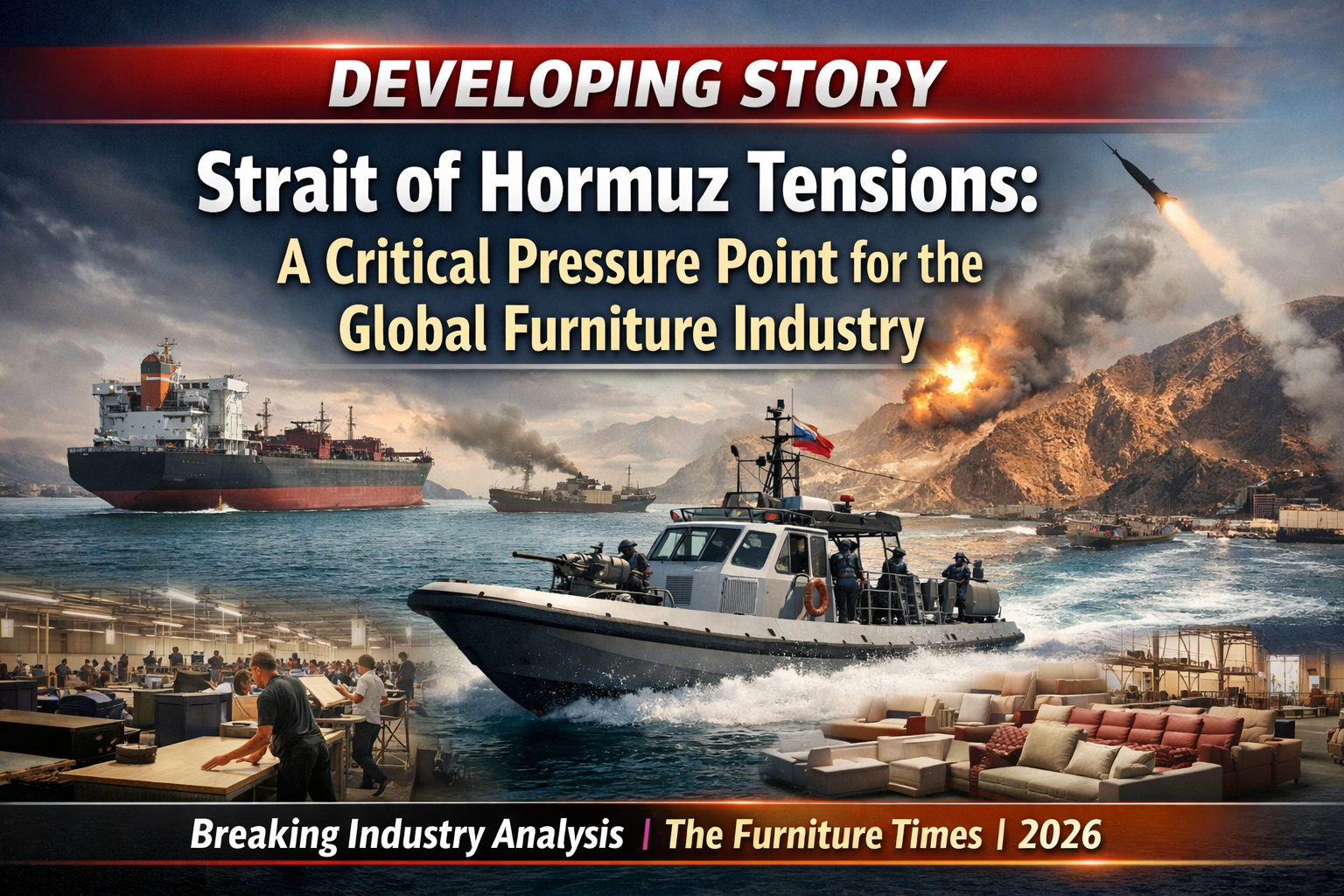
Strait of Hormuz Tensions: A Critical Pressure Point for the Global Furniture Industry
Developing Story
Breaking Industry Analysis | The Furniture Times | 2026
INTRODUCTION: A GLOBAL CHOKEPPOINT UNDER STRESS
The Strait of Hormuz, one of the world’s most strategic maritime corridors, has rapidly become a focal point of geopolitical tension following the escalating Iran–Israel–U.S. conflict.
While headlines focus on oil and military implications, a deeper and less visible crisis is unfolding:
The global furniture industry is being directly and indirectly affected
CORE REALITY:
The furniture industry depends on:
- energy
- shipping
- global trade
And all three are now under pressure.
1. WHY THE STRAIT OF HORMUZ MATTERS
The Strait of Hormuz handles:
- ~20% of global oil shipments
- critical maritime routes linking Asia, the Middle East, and Europe
WHAT THIS MEANS:
Any disruption leads to:
✔ rising fuel costs
✔ shipping delays
✔ global trade instability
DIRECT IMPACT:
Furniture = one of the most logistics-heavy industries
2. ENERGY SHOCK: COSTS RISING FAST
With tensions increasing:
- oil prices are volatile
- fuel costs rising
IMPACT ON FURNITURE:
Manufacturing:
- higher electricity costs
- increased production expenses
Logistics:
- higher freight rates
- increased delivery costs
Result: shrinking profit margins
3. SHIPPING DISRUPTION: THE SILENT CRISIS
Shipping companies are:
- rerouting vessels
- increasing insurance premiums
- delaying shipments
IMPACT:
Longer delivery times
Higher container costs
Unpredictable supply chains
For furniture: delays = lost sales
4. GLOBAL SUPPLY CHAIN IMPACT
ASIA → EUROPE TRADE
Key furniture supply flows:
- China → Europe
- Vietnam → Europe
- Malaysia → Europe
All depend on stable maritime routes
DISRUPTION EFFECT:
- increased transit time
- higher cost per shipment
- inventory shortages
5. RETAIL IMPACT: DEMAND UNDER PRESSURE
As costs rise:
- prices increase
- consumers reduce spending
RESULT:
delayed purchases
lower showroom traffic
pressure on retailers
Furniture becomes: a postponed purchase
6. INDUSTRY RISK LEVEL: RISING
CURRENT RISK FACTORS:
Energy volatility
shipping instability
geopolitical uncertainty
INSIGHT:
This is not a short-term disruption
It is a system-level risk
7. WHO IS MOST EXPOSED?
HIGH RISK:
- import-heavy businesses
- low-margin retailers
- long supply chains
LOWER RISK:
- local manufacturers
- regional suppliers
- agile logistics systems
The industry is shifting toward:
resilience over cost
8. STRATEGIC INDUSTRY SHIFT
FROM:
- global optimization
- lowest-cost sourcing
TO:
- regional sourcing
- diversified supply chains
- faster delivery models
NEW STRATEGY:
“Don’t depend on one route”
9. WHAT HAPPENS NEXT?
SHORT TERM:
- rising costs
- slower deliveries
MID TERM:
- supply chain redesign
- price adjustments
LONG TERM:
Industry evolves into:
regional + resilient model
FINAL INSIGHT
The Strait of Hormuz is not just an oil story—
It is a global trade story
And trade disruption affects:
every industry
every product
every consumer
FINAL MESSAGE
The furniture industry is entering a new phase:
- less predictable
- more expensive
- more strategic
“When a single shipping route is at risk, the entire global furniture industry feels the impact.”
