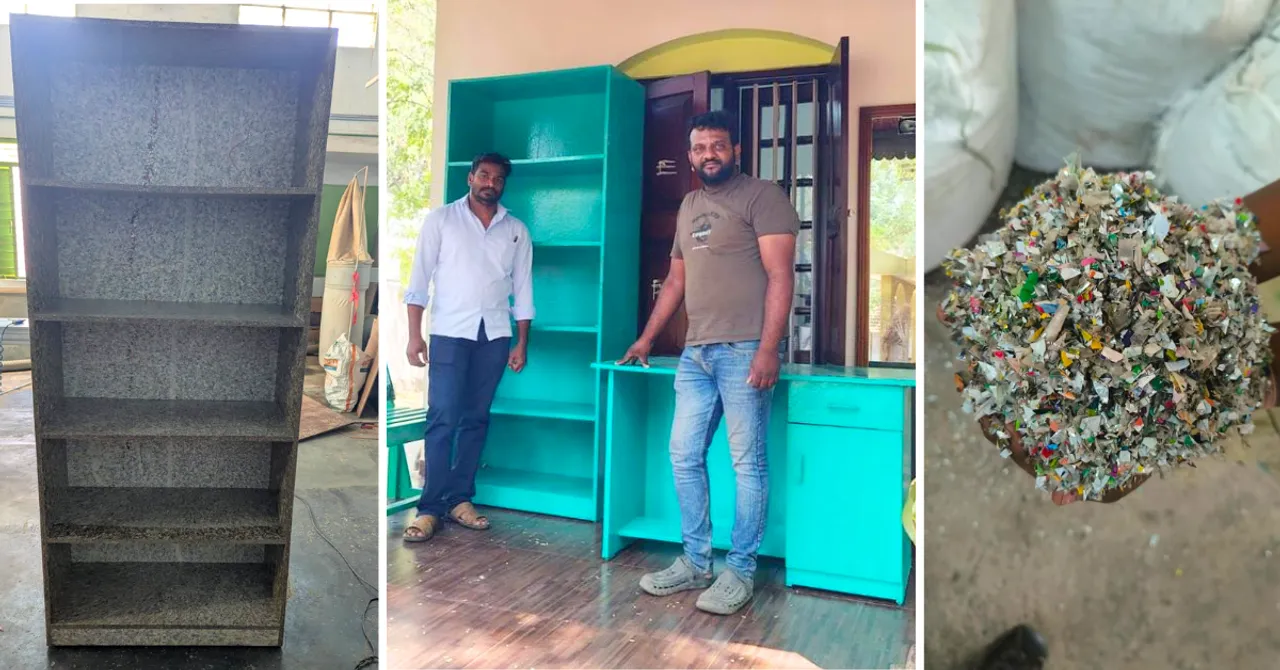
Coimbatore Startup Turns Plastic Waste from Vellingiri Hills Into Functional Furniture, Leading Environmental Innovation
By The Furniture Times – Sustainability & Innovation Desk
COIMBATORE, India — A pioneering clean-tech initiative is turning one of the most persistent environmental challenges into valuable assets. Plastic waste collected from the Vellingiri Hills pilgrimage route in Tamil Nadu is being transformed into furniture and public infrastructure through a collaboration between the Tamil Nadu Forest Department and clean-technology startup Recompose Recycling Private Limited.
Located near the sacred Vellingiri Hills — often called the “Kailash of the South” and visited by tens of thousands of devotees each year — the area has long faced a growing plastic waste problem due to the high volume of pilgrim traffic. Volunteers and forest officials routinely collect discarded water bottles, snack wrappers, sachets, and other multilayer plastics (MLP) that are notoriously difficult to recycle through conventional means.
Turning Waste into Furniture and Public Goods
Instead of allowing this waste to accumulate in landfills or damage local ecosystems, Recompose Recycling and the Forest Department have developed a structured recycling programme that cleans, processes, and upcycles multilayer plastic waste into useful products. These include roofing sheets, covering sheets, paver blocks, and now furniture installed at the Forest Range Office in Booluvampatti, such as tables, seating, and storage units made entirely from recycled plastic recovered from the hills.
This approach not only reduces environmental pollution but also creates a visible circular-economy model — where plastic waste generated by visitors becomes part of the very infrastructure that supports forest conservation and park management.
Community-Driven Recycling Beyond the Hills
The reuse model extends into neighbouring communities as well. In Kittampalayam village in Coimbatore district, Recompose Recycling has collaborated with the local panchayat to build a bus shelter completely from 1,908 kilograms of recycled multilayer plastic collected over nine months. The structure has replaced a damaged shelter and serves as an everyday example of how difficult-to-recycle plastic waste can be repurposed into durable, long-lasting infrastructure — provided segregation and collection systems are in place.
Local leaders have also encouraged residents to adopt source segregation practices, teaching them how to separate organic waste for composting and multilayer plastic waste for upcycling. This direct community involvement not only supports the recycling ecosystem but also encourages behaviour change around waste generation.
Sustainable Models Influencing Wider Action
The Vellingiri initiative is part of a broader movement within India exploring innovative plastic waste management solutions. Other organisations have converted plastic waste into construction materials, road-surfacing products and even award shields for public celebrations. However, what distinguishes Recompose’s approach is its focus on local reuse and visible infrastructure transformation, especially at sites with high footfall like Vellingiri Hills.
By placing the recycled furniture within the forest office itself — where visitors and forest workers can see it daily — the project reinforces the connection between consumption, waste, and reuse, making sustainability visible and meaningful to the community.
Towards a Plastic-Positive Future
While multilayer plastics have traditionally posed recycling challenges due to their mixed composition, the success of this initiative highlights how coordinated action between governments, startups, and local communities can unlock mechanisms for transforming waste into resources. With growing environmental awareness and the spread of such models nationwide, India’s plastic recycling landscape is evolving — one pilgrimage, one bus shelter, and one piece of furniture at a time.